
NKT DC-250/50-PM-Tm Thulium Fiber: Cost-Smart Surgical Uptime Upgrade
Upgrading aging holmium and thulium medical lasers with premium NKT Photonics DC-250/50-PM-Tm photonic crystal fiber is a financially defensible move when you factor in OR downtime, cancelled cases, and asset life extension. Replacing degrading…
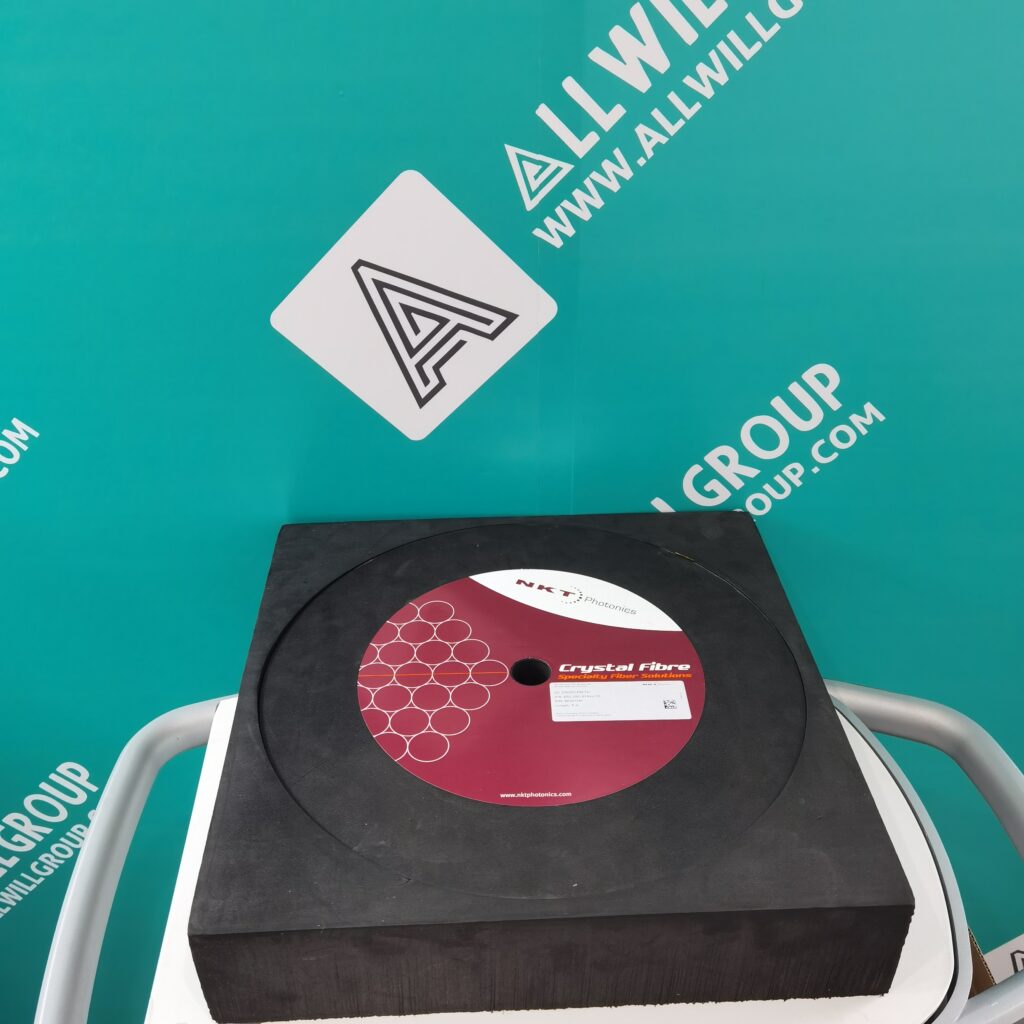
Upgrading aging holmium and thulium medical lasers with premium NKT Photonics DC-250/50-PM-Tm photonic crystal fiber is a financially defensible move when you factor in OR downtime, cancelled cases, and asset life extension. Replacing degrading factory passive fiber with single‑mode, double‑clad, polarization‑maintaining thulium gain fiber reduces overheating risk and stabilizes output, lowering the probability of mid‑surgery system failure and downstream hemodynamic sensor errors.
What DC-250/50-PM-Tm Fiber Does & Who It’s For
DC-250/50-PM-Tm is a thulium‑doped, double‑clad photonic crystal fiber (PCF) designed as a single‑mode, polarization‑maintaining gain medium for fiber lasers around 1930–2000 nm. It features a large mode‑field diameter (about 38 µm at 1930 nm), a high‑NA pump cladding (≥ 0.5 at 800 nm), and a pump cladding diameter around 250 µm, enabling efficient multi‑mode pumping and robust power handling.
Key properties include:
- Large mode area (>900 µm²) for high peak power and pulse energy.
- High‑temperature acrylate coating and pure silica cladding for thermal robustness.
- Polarization‑maintaining design (Δn ≥ 1×10⁻⁴ at 2 µm) for stable beam delivery.
This fiber is best suited for:
- Hospital and institutional laser systems used in endourology, ENT, and soft‑tissue surgery where thulium or holmium output at ~2 µm is central to the procedure.
- Clinical engineering teams running multi‑shift surgical schedules who have observed increasing fiber‑related faults, thermal alarms, or unstable beam profiles.
- Procurement officers responsible for asset‑management strategies where a failed laser can cancel a full day of cases.
ALLWILL can coordinate NKT DC-250/50-PM-Tm sourcing, integration with CPO or existing lasers, and expert matching with repair partners, ensuring that the upgrade is engineered rather than improvised.
Core Analysis: Physics-Driven Uptime, Overheating Risk, and Sensor Stability
Because this title centers on “upgrading Holmium and Thulium medical lasers,” “photonic crystal fiber,” and “surgical uptime,” the routing rules dictate a hardware‑physics and uptime‑focused analysis, supported by a biomedical engineering maintenance decision aid rather than a simple price table.
How Premium PCF Mitigates Overheating and Beam Instability
Thulium fiber lasers operate around 1940–2013 nm and are increasingly favored in endourology because they offer smooth cutting and vaporization effects with lower retropulsion compared to holmium lasers. However, high‑power thulium architectures are constrained by nonlinear optical effects and heat buildup in the gain fiber and cladding, which can lead to beam distortion or catastrophic component failure.
DC-250/50-PM-Tm addresses these issues through:
- Large mode area and single‑mode operation: By spreading optical power over a larger cross‑section while maintaining single‑mode output, the fiber reduces intensity‑driven nonlinearities and hot spots that can cause localized overheating.
- High NA pump cladding and strong pump absorption: NA ≥ 0.5 and pump absorption around 1.35 dB/m at 1180 nm and ≈5.5 dB/m at 793 nm allow lower‑brightness diodes and efficient pump capture, reducing the need to overdrive pumps and decreasing thermal stress.
- Coil Control and planar coiling: Manufacturer documentation emphasizes Coil Control for single‑plane coiling, improving mode stability and reducing coiling‑induced mode area compression that otherwise generates hotspots.
In contrast, older, factory‑installed passive delivery fibers may have smaller effective mode areas, lower pump NA, or non‑optimized cladding structures, making them more susceptible to thermal accumulation and microcracking after repeated sterilization and mechanical handling. Over time, this degradation manifests as:
- Irregular beam profiles that challenge alignment with hemodynamic sensors or imaging systems.
- Unpredictable coupling efficiencies, leading to fluctuating output power and unstable tissue interaction.
- Increased likelihood of sudden failure during surgery, forcing case cancellation or emergency switching to backup devices.
Links to Hemodynamic Sensor Errors and Mechanical Overheating
Many modern ORs integrate lasers with imaging, navigation, or hemodynamic monitoring systems. When a laser’s fiber delivery path becomes unstable, several risk pathways open:
- Sensor misinterpretation: Beam shape changes can alter reflected light profiles or energy deposition patterns, potentially affecting sensor algorithms that assume stable light delivery.
- Mechanical overheating of distal fibers and connectors: Poor cladding design or degraded coatings can cause heat accumulation near connectors or handpieces, increasing risk of thermal alarms, damage to lenses, or discomfort for staff.
Upgrading to a high‑NA, double‑clad PCF with proven high power handling allows clinical engineers to significantly reduce these risks, supporting more stable integration between laser output and monitoring systems.
Mid‑article CTA: If your laser logs show repeated over‑temperature alarms or output fluctuations, request a quote from ALLWILL for DC-250/50-PM-Tm fiber and integration support so you can address root‑cause physics rather than just swapping handpieces.
Revenue and Operational Impact: Payback Math for Fiber Upgrades
The economic logic of upgrading fiber rather than waiting for a full laser failure rests on avoided downtime, extended asset life, and lower emergency repairs.
Key Financial Drivers
Consider:
- Cost of replacement photonic crystal fiber: Specialty thulium double‑clad PCF can fall in the mid‑ to high‑four‑figure range per 5‑meter prototype unit, depending on volume and contract.
- Cost of full laser replacement or major repair: Surgical‑grade thulium fiber lasers typically cost in the tens to hundreds of thousands of USD, and unplanned major repairs can reach mid‑five figures.
- Downtime cost per cancelled OR block: An OR block cancellation can represent tens of thousands of USD in lost revenue when factoring surgeon time, anesthesia, staff wages, and opportunity cost.
- Risk‑weighted probability of failure: As fibers age, microscopic damage and connector wear increase the probability of failure events during high‑demand cases.
Illustrative Payback Scenario
Assume:
- A hospital runs a thulium laser for urology with an average of two full surgical blocks per week.
- Each block generates 15,000–30,000 USD in billable services and internal value.
- A catastrophic fiber failure mid‑case forces shut‑down and cancels the day, costing roughly one block (15,000–30,000 USD) plus emergency repair and reputational damage.
If a comprehensive fiber upgrade program—DC-250/50-PM-Tm plus installation and testing—costs in the 5,000–10,000 USD range, preventing even a single catastrophic failure can pay for itself. Over a 3–5 year horizon, the ROI improves further as upgraded fibers reduce incremental service calls, extend laser usable life, and allow clinical engineers to confidently run higher utilization without fearing thermal limits.
For institutions, this is asset‑management logic: invest modestly in high‑grade fiber to avoid high‑impact downtime events and premature capital write‑offs.
Mid‑article CTA: Map your OR revenue per block and current laser failure incidents, then request a quote from ALLWILL for DC-250/50-PM-Tm fiber and any necessary retrofit kits so you can test the ROI assumptions with real numbers.
Differentiated Advantage: Why DC-250/50-PM-Tm Commands a Premium
DC-250/50-PM-Tm sits at a higher unit price than generic fiber because it combines several advanced features:
- Air‑clad photonic crystal design: PCF construction enables extremely high pump NA (≥0.5) and efficient multi‑mode pumping, allowing high power operation with less stringent pump optics.
- Single‑mode, polarization‑maintaining core: This improves beam quality, output stability, and polarization control, which can be critical in some surgical techniques and high‑precision applications.
- Large mode area and optimized coiling behavior: High mode area supports high peak power while maintaining single‑mode operation, and Coil Control ensures coiling in a single plane, preventing coiling‑induced instabilities.
Alternative fibers include generic double‑clad thulium fibers from other vendors and non‑PCF designs with lower NA and smaller mode areas. They may be cheaper per meter but often lack the combination of air‑clad pump design, polarization control, and high‑temperature coatings, increasing the risk of thermal limitations or mode instability at higher power.
In practice, clinical engineering teams must weigh:
- Lower upfront cost of standard fibers against higher risk of performance limits and earlier failure.
- Higher upfront cost of DC-250/50-PM-Tm against lower risk of poor beam quality, overheating, and downtime.
ALLWILL’s value lies in connecting institutions with NKT’s specialty fibers and helping coordinate testing and retrofit so that the premium is justified by measurable uptime and performance gains.
Practical B2B Decision Aid: Sourcing Decision Matrix (Landed Cost vs Downtime Cost)
Because the working title emphasizes “sourcing photonic crystal fiber” and “surgical uptime,” the mandated decision aid is a sourcing matrix that compares landed cost against downtime cost and operational risk. Figures below are illustrative ranges and estimates designed for institutional planning.
Photonic Crystal Fiber Sourcing Decision Matrix
| Dimension | Option 1: Premium DC-250/50-PM-Tm PCF | Option 2: Standard Double-Clad Thulium Fiber |
|---|---|---|
| Landed fiber cost per 5 m unit (USD) | 5,000–10,000 (estimate) | 2,000–5,000 (estimate) |
| Pump cladding NA | ≥0.5 air‑clad high NA | ~0.3–0.5 typical NA |
| Mode-field diameter at 1930 nm | ~38 µm (large mode area) | ~20–30 µm (smaller mode area) |
| Beam quality & polarization | Single‑mode, PM; high stability | Single‑mode or multi‑mode; limited PM options |
| Thermal robustness | Pure silica cladding, high‑temp acrylate coating; optimized coiling | Mixed designs; may have lower thermal margins |
| Expected laser downtime risk (5 yrs) | Low to moderate; upgrade mitigates overheating and instability | Moderate to high; higher chance of cladding failures or mode issues |
| OR block downtime cost per failure (USD) | 15,000–30,000 per cancelled block | Same 15,000–30,000 per cancelled block |
| Probability of catastrophic fiber failure | Lower with premium PCF and proactive maintenance | Higher as fiber ages, especially at high power |
| Five-year expected total cost (fiber + downtime) | 20,000–40,000 including one planned upgrade and low downtime risk | 30,000–60,000 including lower fiber cost but higher expected downtime |
The matrix highlights that while Option 2 offers lower landed cost, even one or two significant downtime events over five years can erase the savings. Option 1’s higher upfront cost is often justified by reduced risk and improved predictability, especially in high‑utilization ORs.
Mid‑article CTA: Use this matrix as a template with your own OR revenue and service incident data, then request a quote from ALLWILL for DC-250/50-PM-Tm and any alternative fibers you’d like to model so you can finalize your sourcing plan based on real landed costs.
Compliance and Asset Protection
Laser systems are subject to stringent regulatory and safety frameworks. Fiber upgrades must preserve or improve compliance rather than compromise it.
Institutional buyers should verify:
- Regulatory and OEM alignment: Confirm that fiber specifications match or exceed original design parameters and that the upgrade is carried out in a way that maintains device certifications or clearances for intended indications (e.g., urology, ENT surgery).
- Electrical and thermal safety: Ensure that power handling, connector interfaces, and coiling practices comply with manufacturer recommendations and standards such as IEC laser safety guidance.
- Documentation: Maintain detailed records of fiber type, length (e.g., 5‑meter units), coiling diameter, integration tests, and any OEM approvals or engineering reports.
- Service and warranty implications: Clarify whether upgrading fiber with a third‑party vendor affects OEM warranties and negotiate coverage with service providers where necessary.
For CPO lasers, asset protection includes verifying refurbishment quality, calibration after fiber replacement, and any modifications carried out before acquisition. ALLWILL can help institutions source CPO lasers that either already use premium fibers or are suitable candidates for a fiber upgrade, with documentation ready for audits.
Procurement Risks to Avoid + ALLWILL Expert View
Common mistakes when sourcing fibers for medical lasers include:
- Selecting fibers based solely on per‑meter price without modeling downtime risk.
- Upgrading only distal delivery fibers while leaving degraded internal gain fibers untouched.
- Ignoring coiling guidelines and pump NA requirements, leading to poor coupling and thermal hotspots.
- Failing to document upgrade pathways, which can complicate future compliance reviews and resale.
ALLWILL Expert View: Building a Laser Fiber Strategy Around Uptime, Not Just Cost
Engineering teams often treat laser fibers as consumables: they replace them when something breaks and try to minimize the line item cost. That approach ignores the true economic driver—surgical uptime. A more strategic model treats DC-250/50-PM-Tm and similar fibers as high‑value components within the laser’s asset lifecycle. Start by mapping your current thulium and holmium systems, their age, recent thermal alarms, and any cancelled cases linked to laser issues. Then estimate the revenue per OR block and the probability of at least one serious fiber‑related failure over the next three to five years. When you plug in realistic numbers, the ROI of a proactive upgrade to premium PCF often becomes obvious: a single avoided cancellation can pay for a fiber retrofit. Working with ALLWILL, institutions can pair these calculations with vetted sourcing, CPO options, and expert installation support so the upgrade improves both physics and documentation, making lasers more reliable assets in high‑stake surgical environments.
Closing CTA: Once you’ve mapped your laser fleet and OR economics, request a quote from ALLWILL for DC-250/50-PM-Tm and compatible integration services so you can convert uptime risk into a structured, documented fiber upgrade program.
Frequently Asked Questions
What is the typical price range for NKT DC-250/50-PM-Tm fiber?
Specialty thulium double‑clad PCF such as DC-250/50-PM-Tm generally falls in the mid‑ to high‑four‑figure USD range per 5‑meter unit, depending on order volume, region, and integration services. Procurement teams should request a quote from ALLWILL to obtain current landed cost estimates.
Can certified pre-owned lasers benefit from DC-250/50-PM-Tm upgrades?
Yes. CPO thulium or holmium lasers can often be retrofitted with premium fibers, extending usable life and reducing downtime risk. Buyers must verify refurbishment quality, OEM compatibility, and post‑upgrade calibration, ideally through a sourcing partner such as ALLWILL.
How does upgraded fiber affect regulatory compliance?
Fiber upgrades must maintain or enhance device performance within the original regulatory framework. Institutions should document specifications, integration methods, and test results, and confirm with OEMs or notified bodies as needed to ensure their lasers remain cleared or certified for intended indications.
What lead times apply when sourcing premium PCF fibers?
Lead times for specialty fibers vary from several weeks to a few months depending on production schedules and logistics. Planning upgrades in advance—rather than waiting for failures—allows institutions to align delivery with scheduled maintenance windows.
How can we quantify downtime cost to justify the upgrade?
Estimate average revenue per OR block and count the number of blocks at risk if a laser fails, then multiply by a conservative number of potential failures over the fiber’s life. Comparing that total to the upgrade cost reveals whether DC-250/50-PM-Tm is financially justified; requesting a quote from ALLWILL helps refine those calculations with accurate pricing.
-
References
-
DC-250/50-PM-Tm Single-mode, PM Double-Clad Thulium Fiber Datasheet – NKT Photonicssevensix
-
Single-mode PM Double-Clad Thulium Fiber – NKT Photonics Technical PDFnktphotonics
-
Double-Clad Fibers – Aryan Beris Overview of NKT Ytterbium and Thulium Fibersaryanberis
-
Tm-Doped Double-Clad Photonic Crystal Fiber Specification – Sevensixsevensix.co
-
Medical Fibers for Surgery, Imaging and Spectroscopy – Coherentcoherent
-
Healthcare Applications of Laser Technology – WEINERT Industriesweinert-industries
-
Thulium Lasers in Endourology – Current Use and Future Perspectivespubmed.ncbi.nlm.nih
-
Reality and Expectations About the New Thulium Fiber Laser Lithotripterpmc.ncbi.nlm.nih
-
Thulium Fiber Laser: Bringing Lasers to a Whole New Levelpmc.ncbi.nlm.nih
-
Thulium Fiber Laser: The New Kid on the Blockpmc.ncbi.nlm.nih
-
Self-Adapting Fiber Component Tackles Heat Challenges in High-Power Fiber Lasersphys
-
Medical Optical Fibers for Laser Surgery – FotonMedixfotonmedix
-
Related articles
 Onda Pro Results: What Determines the Outcome in a Working ClinicKnowledge
 A Used Thermage FLX Console Earns Its Price with Verifiable Firmware, Handpiece, and Tip SupplyKnowledge
 How to Compare Quotes for the Same Used Aesthetic Device ModelKnowledge
 Used Medical Aesthetic Device Condition Grades: New, Like-New, Excellent, Working, and PartsKnowledge