
Fotona SP Dynamis EFC: Engineering Stability That Protects Your Clinic’s Revenue
Fotona’s Energy Feedback Control (EFC) in the SP Dynamis continuously samples each laser pulse with an internal photodiode and automatically corrects output so the energy delivered to tissue matches the parameters on the screen…
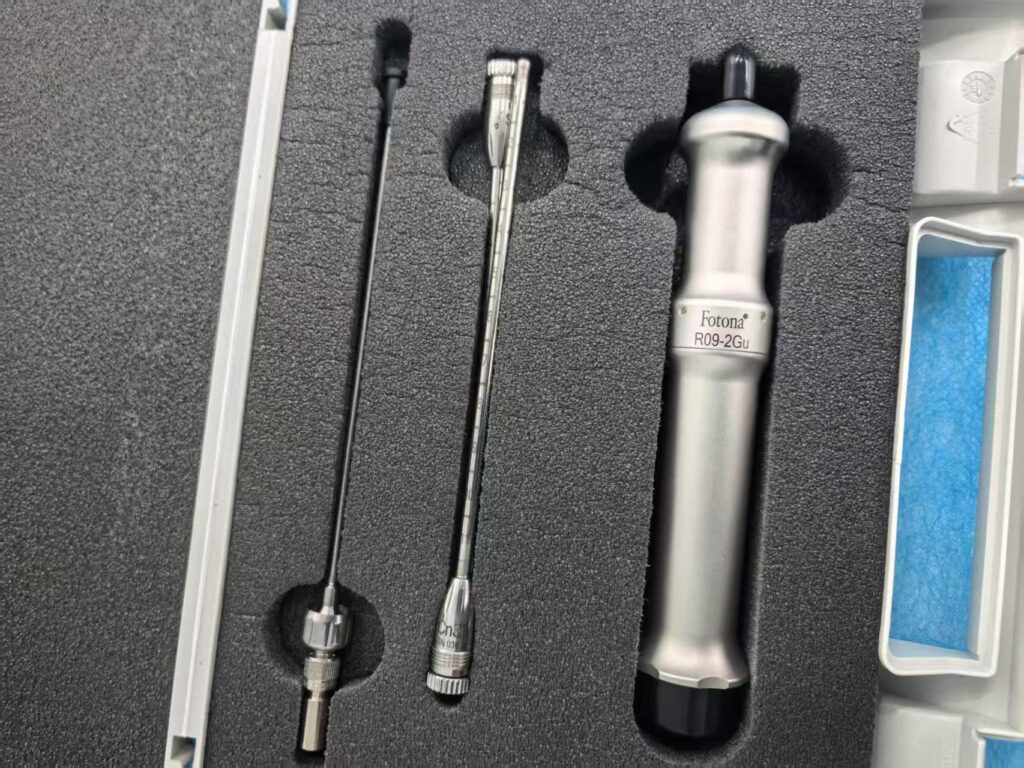
Fotona’s Energy Feedback Control (EFC) in the SP Dynamis continuously samples each laser pulse with an internal photodiode and automatically corrects output so the energy delivered to tissue matches the parameters on the screen within tight tolerances. For high‑volume aesthetic clinics, this closed-loop control dramatically reduces calibration drift, unexpected error codes, and treatment interruptions, helping protect both patient safety and daily treatment revenue.
What the SP Dynamis Does & Who It’s For
The Fotona SP Dynamis is a dual-wavelength Er:YAG 2940 nm and Nd:YAG 1064 nm platform designed as a full aesthetic and dermatology workstation. It supports applications across skin resurfacing, rejuvenation, vascular and pigmented lesions, hair removal, body contouring, surgical procedures, and selected gynecologic indications, depending on software and accessories. Clinics running combination protocols such as TightSculpting, Fotona 4D, NightLase, and fractional resurfacing typically push the system across long treatment lists and varied fluence settings in a single day. For these environments, energy stability and uptime matter as much as headline power or pulse modes.
ALLWILL typically sees the SP Dynamis shortlisted by multi-room medspas, dermatology and plastic surgery centers, and hospital-based laser suites that want one core platform to replace or consolidate multiple single-tech devices. Through ALLWILL, buyers can compare new and certified pre-owned SP Dynamis units, including condition grading, service history, and current firmware status, before committing to a capital purchase.
Inside Fotona’s EFC: How the Feedback Loop Really Works
Energy Feedback Control is not a simple “calibrated at factory” claim; it is an active, per‑pulse monitoring system embedded in the SP Dynamis laser cavity and beam delivery path. At a high level, EFC uses an internal beam sampler and photodiode that intercepts a fixed fraction of every laser pulse and converts that light into an electrical signal proportional to pulse energy. The device’s control electronics compare this measured value to the energy set on the touchscreen and apply corrections in real time by adjusting pump energy and Q‑switch or pulse parameters within the laser head.
Because the sampling ratio between the main beam and the photodiode is mechanically fixed, changes in the measured signal directly reflect real shifts in output energy due to temperature, component ageing, or cavity alignment drift. Over successive pulses, the control loop maintains the error between target and measured energy essentially at zero, within a narrow tolerance band specified by Fotona, which is typically on the order of a few percent for medical-grade systems. This is fundamentally different from lasers that rely on periodic manual calibration with external power meters and assume stability between service intervals.
The result is “zero-drift” behavior in routine clinical use: the system continuously re-calibrates itself while you treat, rather than asking you to pause mid‑session to troubleshoot energy inconsistency. For a clinic, that means less dependence on operator intuition (“this feels hotter than usual at the same settings”) and a much lower chance of unsafe energy overshoot on sensitive indications or high-risk skin types.
Why This Reduces Error Codes and Surprises on Busy Days
Under heavy clinical load—full days of long-body passes, stacked facial procedures, and back-to-back high-fluence Nd:YAG sessions—internal temperatures and component characteristics in any laser shift subtly over time. In systems without active feedback, these shifts accumulate as calibration drift: the same screen setting gradually corresponds to a different delivered fluence on tissue. When drift exceeds internal safety thresholds, many platforms trigger error codes, thermal lockouts, or enforced cooldown cycles, effectively removing the device from your schedule for an unpredictable window.
In the SP Dynamis, EFC mitigates this failure mode by continuously detecting and correcting small deviations in real time, keeping actual output within specification so internal safety monitors do not see the kind of out-of-range conditions that produce nuisance shutdowns. Because the energy is held tightly around the setpoint, separate safety subsystems (such as temperature, interlock, and beam path integrity monitors) are less likely to misinterpret normal warm-up or long-session behavior as a fault. That translates into fewer mid-day surprises and less need to “shuffle the list” when a laser suddenly demands service in the middle of your busiest afternoon.
From an uptime standpoint, each avoided error event matters more in high-throughput clinics where a single lost half-day can mean dozens of rescheduled patients. Continuous EFC control supports a more predictable daily capacity, enabling clinics to safely book tighter schedules without having to build large buffers for equipment uncertainty.
Midway through the buying process, this is the point where many clinics working with ALLWILL request a quote specifically to compare projected uptime and maintenance profiles of a new versus certified pre-owned SP Dynamis, including how EFC performance is validated on refurbished units. Request a quote from ALLWILL to obtain current availability, condition reports, and service options tailored to your operating model.
How EFC Helps Prevent Accidental Epidermal Overheating
Thermal side effects in laser aesthetics are rarely due to a single factor; they emerge from the interaction between energy, pulse width, spot size, overlap, skin optics, and operator technique. However, one major controllable factor is whether the fluence you think you are delivering actually matches what the system outputs at the handpiece. If a platform drifts 20–30% above nominal during a long session, even small technique deviations can tip otherwise safe protocols toward unwanted epidermal heating, especially in darker or recently tanned skin.
By maintaining a tight coupling between set and delivered pulse energy through its internal photodiode loop, EFC substantially narrows the gap between protocol design and real tissue exposure. When a physician sets fluence and pulse duration based on published parameters, training, or in-house protocols, they can reasonably assume that each subsequent pulse—even at the end of a demanding day—is within a narrow band of that value. That means your other safeguards (test spots, conservative escalation, appropriate spot sizes, and cooling strategies) are all operating on the right baseline.
This is particularly relevant for Er:YAG resurfacing where ablation depth is highly sensitive to energy per pulse and Nd:YAG bulk heating regimens where small fluence increments can materially change peak temperatures in the dermis. Consistent energy supports repeatable thermal profiles from shot to shot and session to session, which is crucial in building reliable, evidence-aligned treatment plans and minimizing preventable adverse events.
While no technology can fully eliminate risk, an actively monitored, zero-drift energy system reduces one important variable that contributes to accidental epidermal burning and associated complications. For clinic owners, that reduces clinical variability, supports more predictable patient experiences, and can strengthen your position when demonstrating adherence to best practices in the event of a complaint or claim.
Revenue and Operational Impact of Higher Stability
From a business perspective, SP Dynamis EFC contributes to revenue protection in three main ways: uptime, throughput, and reputational risk management. Uptime improves when the platform encounters fewer out-of-range conditions that would otherwise trigger error codes, require manual re-calibration, or force unscheduled technical interventions. Throughput increases when staff can rely on predictable device behavior across the entire day, allowing tighter scheduling and reduced buffer time between laser cases.
Reputationally, avoiding energy-related complications contributes to steadier word-of-mouth and fewer review-damaging patient experiences. Although literature on lasers emphasizes calibration for accurate dosimetry rather than direct legal risk, consistent energy delivery is a key element in any defensible risk management framework for photothermal devices. Clinics that track device QA logs and include calibration performance as part of their quality governance often align more easily with insurer expectations and internal audit standards.
When buyers work with ALLWILL, these operational aspects are modeled alongside acquisition price. For example, a slightly higher upfront cost for a well-documented SP Dynamis with verified EFC performance and recent preventive maintenance can compare favorably, in net present value terms, to a cheaper but less stable platform once you factor in potential downtime, servicing, and schedule disruption.
Why SP Dynamis Commands a Higher Ticket
The SP Dynamis sits at the premium end of hybrid Er:YAG / Nd:YAG platforms, alongside systems such as Sciton’s Joule-based resurfacing and long-pulsed Nd:YAG configurations or multi-platform workstations from other Tier-1 brands. Its value proposition is not only about peak power; it’s the combination of wavelength pair, Variable Square Pulse (VSP) shaping, multiple pulse modes, and safety engineering elements such as EFC.
EFC is central to that engineering story. Where some lower-cost platforms rely on looser tolerances and operator experience to manage variability, Fotona invests in real-time monitoring and control that behaves more like industrial or laboratory laser systems known for sub‑percent stability over many hours. For a clinic, that translates into the ability to scale complex protocols—like TightSculpting or multi-step facial sequences—across multiple operators without having to “relearn” the laser’s behavior at different times of day.
When ALLWILL evaluates SP Dynamis units for listing, EFC functionality is treated as a core safety and performance feature, not a marketing add-on. Units with incomplete service histories, unresolved energy calibration anomalies, or inconsistent EFC responses during QA may be flagged for further refurbishment, component replacement, or exclusion from certified pre-owned inventory to protect buyer outcomes.
BME Technical Maintenance Checklist for SP Dynamis Stability
For biomedical engineers, practice managers, or owners overseeing fleet performance, a structured maintenance approach complements Fotona’s EFC and ensures the platform delivers its designed stability over its full service life. The checklist below focuses on tasks and documentation that directly impact energy accuracy, uptime, and audit readiness.
SP Dynamis EFC-Focused BME Maintenance Checklist
Pre-use function checks logged daily (interlocks, key switch, emergency stop, aiming beam, footswitch, warning lights).
Confirmation that displayed fluence correlates to expected clinical endpoint on standard test material for both Er:YAG and Nd:YAG at least monthly.
Internal QA/Service logs reviewed quarterly, including any EFC-related warnings, drift events, or energy adjustment records.
Annual or manufacturer-recommended external energy verification using a calibrated power/energy meter, with results archived.
Inspection of articulated arm or fiber connectors for mechanical wear, contamination, or misalignment that could affect beam sampling or delivery.
Environmental controls verified: temperature, humidity, and dust conditions within manufacturer specifications for the laser room.
Firmware and software versions checked annually, with any EFC or safety-related updates prioritized and documented.
Service visits by manufacturer-authorized or equivalently qualified technicians scheduled on time; all EFC calibrations or component replacements recorded.
Operator training records maintained, with explicit modules on interpreting system messages, recognizing atypical energy behavior, and escalation pathways.
Incident log maintained for any suspected over- or under-treatment potentially linked to energy delivery, with root-cause analysis and corrective actions documented.
ALLWILL can support clinics in operationalizing this checklist by coordinating pre-purchase QA reports, arranging independent on-site acceptance tests, and aligning service contracts that explicitly include EFC performance verification.
Compliance, Documentation, and Asset Protection
Regulators and professional bodies emphasize that energy-based devices must be calibrated and maintained to ensure safe and effective use, but they rarely specify exact engineering solutions, leaving that to manufacturers and institutional QA. In this context, EFC serves as one manufacturer-specific mechanism to support consistent dosimetry, but it does not replace the need for documented calibration, maintenance, and user training.
Clinics should ensure any SP Dynamis—new or certified pre-owned—comes with accessible documentation on EFC function, service history, and calibration records. That includes manuals describing the feedback system, commissioning test reports, and proof that any critical safety-related field actions or software updates have been applied. For jurisdictions where specific regulatory clearances apply to laser indications, buyers must verify current device status and indications in their market, as registrations and approvals can vary and change over time.
From an asset-protection perspective, including EFC performance in your equipment governance framework helps demonstrate due diligence to insurers, regulators, and internal clinical governance boards. ALLWILL encourages clients to obtain written confirmation of calibration status and EFC functionality at the point of sale, especially for pre-owned units, and can facilitate structured documentation packages that integrate into your existing QA systems.
Procurement Risks to Avoid + ALLWILL Expert View
Without careful vetting, buyers can encounter SP Dynamis units whose EFC functionality is impaired by undocumented component swaps, incomplete refurbishments, or skipped manufacturer updates. Common risks include units with outdated firmware that does not reflect the latest safety enhancements, incomplete service logs, or mismatches between claimed and actual handpiece compatibility that can affect energy delivery integrity. Another red flag is the absence of recent external energy verification, especially if the laser has been relocated or used in challenging environmental conditions.
Working with a sourcing partner that understands both the clinical and engineering implications of EFC makes it easier to filter out these risks before they reach your treatment rooms. ALLWILL’s approach emphasizes documentation, QA, and long-term support rather than one-off transactions, which is particularly important for high-ticket, multi-indication platforms such as the SP Dynamis.
ALLWILL Expert View
In capital-laser procurement, “zero-drift” is not a marketing phrase—it’s a measurable behavior that should appear in your acceptance-test results and service reports. For a pre-owned Fotona SP Dynamis, we advise structuring your purchase around three technical proofs: a recent independent energy test across representative Er:YAG and Nd:YAG settings, a clean EFC error log, and written confirmation that all manufacturer-recommended EFC calibrations and software updates are current. Clinics that secure these documents up front typically experience smoother onboarding, fewer early-life service events, and clearer governance conversations with insurers and regulators when they later expand indications. In our experience, the most financially resilient clinics treat laser physics—EFC included—as part of their risk and revenue model, not as a black box buried in the service contract.
As you narrow your shortlist, this is the point to move from generic research to device-specific validation. Request a quote from ALLWILL for SP Dynamis units that already meet defined QA thresholds, and ask for sample acceptance-test templates you can adapt to your own facility.
Frequently Asked Questions
What is the typical price range for a Fotona SP Dynamis?
Market observations suggest that new SP Dynamis configurations generally sit in the higher tier of aesthetic laser pricing, while certified pre-owned units often transact at a substantial discount depending on age, usage, and included handpieces. Exact numbers vary widely by region and configuration, so it is best to request a quote from ALLWILL for a current, configuration-specific estimate.
How does Energy Feedback Control affect my maintenance costs?
EFC can reduce unplanned service calls related to energy drift or error codes by keeping output within specification during routine use. However, it does not eliminate the need for scheduled preventive maintenance, external energy verification, or component replacement over time. Buyers should budget for manufacturer-recommended service intervals and confirm that EFC checks are included in their service plan.
Is a certified pre-owned SP Dynamis as safe as a new one?
A well-refurbished SP Dynamis with verified EFC function, current software, and documented calibration can deliver energy stability comparable to a new unit under normal conditions. Safety depends on the quality of refurbishment, parts used, and adherence to manufacturer standards rather than age alone. When in doubt, request an independent QA report and energy test before finalizing the purchase.
What documentation should I request before buying an SP Dynamis?
At minimum, ask for service and calibration records, software version history, any EFC-related repairs or updates, and evidence of recent external energy verification. For imports, you should also confirm serial-number authenticity and current regulatory status in your country or region. Requesting this documentation through ALLWILL can streamline verification and reduce the risk of compliance gaps.
How quickly can an SP Dynamis purchase start contributing to revenue?
Payback timing depends on your case volume, pricing, and mix of indications, but the broad application range of the SP Dynamis allows clinics to integrate it into multiple service lines from day one. Stable energy via EFC supports efficient protocol standardization across operators, which can accelerate utilization ramp-up once training is complete. For a realistic payback model, request a quote from ALLWILL along with scenario-based utilization projections.
References
Related articles
 Onda Pro Results: What Determines the Outcome in a Working ClinicKnowledge
 A Used Thermage FLX Console Earns Its Price with Verifiable Firmware, Handpiece, and Tip SupplyKnowledge
 How to Compare Quotes for the Same Used Aesthetic Device ModelKnowledge
 Used Medical Aesthetic Device Condition Grades: New, Like-New, Excellent, Working, and PartsKnowledge