
Jeisys Linear Z HIFU: SMAS-Depth Accuracy, Safety, and Calibration for Clinic Buyers
Jeisys Linear Z is a multi-depth HIFU platform designed to deliver focused ultrasound energy from the dermis down to deep fat and SMAS using interchangeable cartridges and dot/linear modes, with depth selectable in fine…
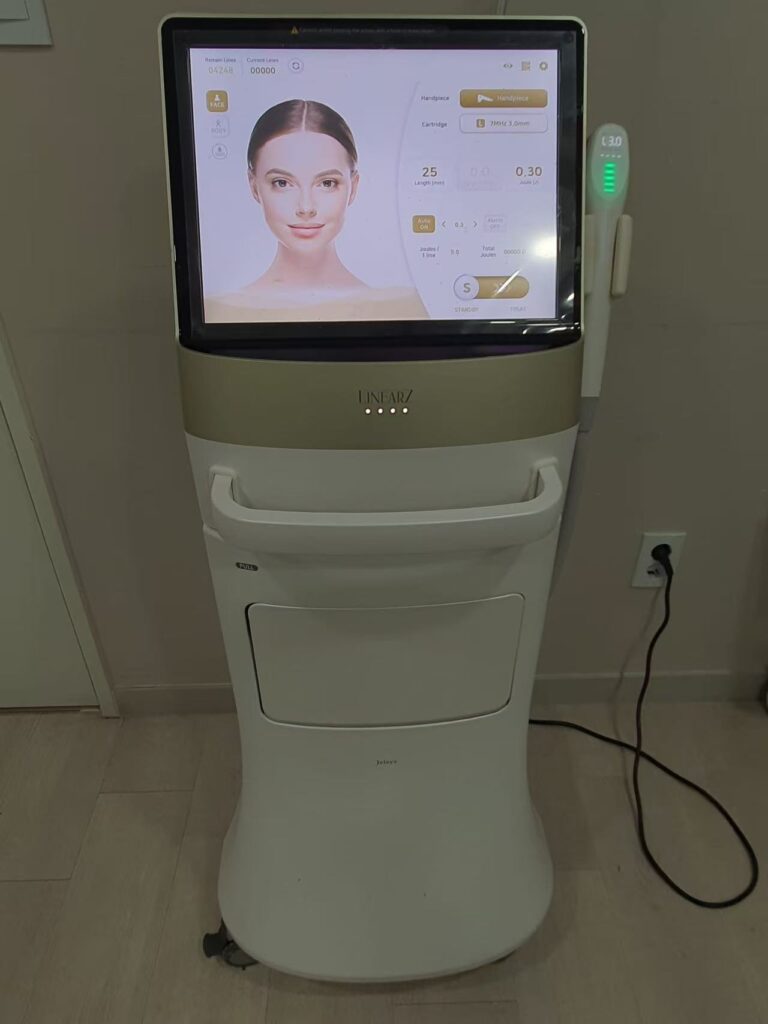
Jeisys Linear Z is a multi-depth HIFU platform designed to deliver focused ultrasound energy from the dermis down to deep fat and SMAS using interchangeable cartridges and dot/linear modes, with depth selectable in fine increments. For clinic owners evaluating new or certified pre-owned (CPO) units, the key question is whether the system can still accurately contract the SMAS without heating the periosteum or injuring nerves — and how to validate that a used platform’s transducers remain within factory-equivalent calibration. This article approaches that question from a biomedical engineering perspective to support safe, decision-grade purchasing through partners like ALLWILL.
What Jeisys Linear Z Does & Who It’s For
Jeisys Linear Z is a high-intensity focused ultrasound (HIFU) system that delivers thermal coagulation points and lines at controlled depths using cartridges covering the epidermis, dermis, subcutaneous fat, and SMAS/deep fascia. The device offers dot and linear irradiation modes, allowing practitioners to tailor energy distribution for lifting, tightening, and contouring protocols based on anatomical layer and skin thickness.
Cartridges span roughly 1.5–13.0 mm, with SMAS-targeting depths typically around 4.5–6.0 mm and deeper fat-contouring cartridges at 9.0–13.0 mm. This range makes Linear Z relevant for facial rejuvenation, submental contouring, and body applications in dermatology clinics, medical spas, and plastic surgery centers that need layer-specific HIFU without sacrificing throughput or safety.
Clinics that already operate ultrasound-based platforms (for example, Ulthera or ULTRAcel [zi:]) will find Linear Z particularly attractive when building a 3D “multi-layer” protocol that sequentially treats dermis, SMAS, and fat. For these buyers, ALLWILL can source both new and CPO Linear Z units, matching system configuration and cartridge sets to the clinic’s treatment mix and regulatory context.
Technical Core: Multi-Depth SMAS Targeting Without Nerve or Bone Injury
From a biomedical engineering standpoint, the key strength of Linear Z is its fine-grained depth control and mode switching within a single cartridge, which allows precise coupling of thermal focus to the intended anatomical layer. Unlike fixed-depth consumer HIFU devices, Linear Z transducers can be set in 0.5 mm increments in some cartridge series, enabling more accurate alignment with a patient’s SMAS and fat thickness.
SMAS Layer Targeting Physics
Clinical and didactic materials place the facial SMAS/superficial fascia at approximately 4.5 mm in many regions, with deeper fascia (or SMAS over muscle) extending beyond 5 mm in some zones. Linear Z and related Jeisys HIFU platforms deliver energy at depths such as 2.0, 3.0, 4.5, 6.0 mm (and higher via contouring cartridges), producing focal temperatures in the 60–65 °C range where protein denaturation and neocollagenesis are initiated.
Because ultrasound energy attenuates as it passes through tissue, each depth setting corresponds to focal placement at a defined geometric focus below the transducer face rather than at the skin surface. This focusing concentrates energy within a small treatment cell volume (on the order of cubic millimeters), leaving superficial layers and underlying bone largely unaffected when coupling and positioning are correct.
Avoiding Periosteal Heating
Periosteal pain and bone heating occur when the acoustic focus overlaps or sits immediately adjacent to bony structures, particularly over thin soft tissue areas such as the zygomatic arch or mandibular border. Linear Z reduces this risk via:
– Layer-appropriate cartridge selection, avoiding deep SMAS/fat cartridges over areas where soft tissue thickness is less than the focal depth.
– Adjustable depth increments that allow the practitioner to “back off” the focus from bone while still engaging fibrous fascia.
– Dot vs linear modes: dot mode concentrates energy into discrete coagulation points, while linear mode spreads energy along a line, allowing lower per-point intensity and more uniform heating where safety margins are tight.
When combined with ultrasound imaging — as demonstrated by clinicians using handheld scanners to map SMAS and fat thickness before HIFU — depth selection can be tuned so the focal point sits within fascia or fat, with an adequate margin from bone surfaces. This imaging-assisted workflow is particularly important for thin patients or areas like the preauricular region, where the SMAS is shallow and underlying parotid or bone structures are close.
Minimizing Nerve Injury Risk
Published Jeisys training content and clinical webinars emphasize nerve-safe treatment planning, noting that irradiation at 4.5 mm near the labiomandibular fold is contraindicated due to proximity to mental nerve branches. Similar caution applies around supraorbital and facial nerve trunks, where HIFU at conventional SMAS depths could overlap neurovascular bundles in thin tissue zones.
Linear Z helps mitigate these risks by:
– Allowing cartridge and depth changes on a per-zone basis, rather than forcing a single depth across the entire face.
– Supporting lower energies (e.g., 0.3–0.6 J) and line counts in high-risk zones while maintaining full-dose lines in safer areas.
– Encouraging anatomical mapping and pre-treatment design of lines based on individual skin thickness and nerve pathways.
From a BME perspective, safe SMAS targeting depends on three pillars: accurate layer depth estimation, calibrated transducer focus, and strict adherence to “no-irradiation” zones defined by nerve and bone anatomy. Linear Z’s hardware configuration supports these pillars; the remaining risk is procedural and should be managed via training, imaging, and standardized protocols.
Revenue and Operational Impact for Clinics
Economically, the value of Linear Z lies in its ability to deliver multi-layer HIFU protocols from a single platform, reducing the need for separate dermal and SMAS devices and simplifying staff workflow. Multi-depth cartridges enable clinics to offer non-invasive lifting and contouring packages that span fine-line dermal tightening, SMAS-level lifting, and selective fat reduction, which can be positioned as tiered services with differentiated pricing.
Typical professional HIFU session pricing for facial lifting often sits in an illustrative range of roughly USD 600–1,500 per full-face protocol depending on geography and clinic positioning, with add-on areas (neck, submental, body zones) billed separately. At moderate utilization (e.g., 20–40 comprehensive HIFU cases per month), a Linear Z system can contribute meaningful incremental revenue, though actual ROI will vary with local demand, marketing, and treatment mix.
Operationally, depth-adjustable cartridges and dual dot/linear modes allow practitioners to use a single handpiece to serve diverse indications, reducing patient chair time and staff training complexity. The ability to maintain treatment quality on a certified pre-owned Linear Z unit, when properly calibrated and maintained, can significantly lower capital cost while preserving revenue potential — which is where a sourcing partner like ALLWILL becomes critical.
Differentiated Advantage and High-Ticket Rationale
The main differentiated advantage of Linear Z versus generic HIFU platforms is its combination of:
– Multi-cartridge depth coverage from superficial dermis to deep fat.
– 0.5 mm depth adjustment granularity available in specific cartridge series.
– Seamless dot/linear mode switching for both focal and line-based thermal delivery.
Many professional HIFU systems target SMAS at fixed depths such as 4.5 mm, relying on pressure and coupling adjustments rather than actual geometric focus change to compensate for anatomical variability. Jeisys’ approach — seen in Linear Z and ULTRAcel [zi:] — adds depth and mode flexibility that better aligns with modern multi-layer treatment concepts and imaging-guided protocols.
For clinics considering alternatives such as Ulthera or other branded SMAS-focused HIFU devices, Linear Z offers a competitive pathway to SMAS and fat targeting while emphasizing adjustable depth and line design. This engineering emphasis supports consistent layer-specific treatments across varied face and body anatomies, which is core to sustaining a high-ticket positioning without overpromising clinical outcomes.
ALLWILL’s role in this context is to match device configuration (number and type of cartridges, software options, accessories) to the clinic’s procedural mix, ensuring that the purchased asset genuinely supports the intended premium service menu instead of being underutilized.
BME Technical Maintenance Checklist for Linear Z (New vs CPO)
The most useful practical tool for a buyer is a BME-grade maintenance and validation checklist rather than a price table. The following framework is suitable for both new and certified pre-owned Linear Z systems sourced through ALLWILL or other vendors.
Jeisys Linear Z BME Technical Maintenance & Calibration Checklist
1. Initial Acceptance and Documentation
– Verify model, serial numbers, and year of manufacture against Jeisys documentation or distributor records.
– Confirm delivery of user manuals, service logs (for CPO), and software version reports.
– Obtain written statements on refurbishment scope, replaced parts, and functional testing performed (for CPO units).
2. Transducer and Cartridge Integrity
– Inspect all cartridges (Basic, Essential, Core, Contour series) for physical damage, connector wear, and coupling surface condition.
– Check that each cartridge’s labeled depth range (e.g., 2.0, 3.0, 4.5, 6.0, 9.0, 11.0, 13.0 mm) is recognized correctly by the console UI.
– Ensure 0.5 mm incremental settings (where applicable) can be selected and saved in treatment presets.
3. HIFU Output Calibration Verification
– Use manufacturer-recommended acoustic test phantoms or third-party ultrasound measurement systems to verify focal position at key depths (e.g., 3.0, 4.5, 6.0 mm).
– Measure relative energy output (J/shot) at standard settings and compare with Jeisys tolerances or factory calibration data where available.
– Confirm that dot vs linear modes deliver expected line lengths and spacing based on console settings (5–25 mm dot mode length, fixed 25 mm linear).
4. Safety Interlocks, Cooling, and Uptime
– Test handpiece triggers, emergency stop, and any system interlocks preventing firing without proper skin contact or coupling.
– Verify system self-check routines at start-up and log any error codes for vendor or service review.
– Assess handpiece and console operating temperatures under continuous use to ensure thermal management remains within specified limits.
5. Anatomical Targeting and Imaging Integration
– Where possible, integrate handheld ultrasound imaging to cross-check typical SMAS and fat depths for the clinic’s patient population and map them to cartridge settings.
– Validate that default protocol depths for facial and body areas align with current professional guidelines and Jeisys training materials.
– Document “no-irradiation” zones and maximum allowed depths in a clinic protocol manual referencing nerve and bone anatomy.
6. Routine Preventive Maintenance
– Implement a quarterly or semi-annual inspection schedule for cartridges, cables, and connectors, with replacement thresholds based on shot counts and physical wear.
– Record shot counts per cartridge and monitor for output drift using phantom testing at defined intervals.
– Keep all firmware/software up to date within regulatory and manufacturer guidance, documenting each update.
7. Third-Party Verification and Vendor Support
– Require written calibration and performance reports from any refurbisher or reseller, including ALLWILL, before commissioning CPO units.
– Maintain direct or indirect access to Jeisys-authorized service for complex repairs or major calibration adjustments.
– For cross-border purchases, verify voltage compatibility, accessories, and regional service coverage in advance.
Applied diligently, this checklist allows a clinic’s biomedical engineer or external service provider to maintain used Linear Z platforms at or near factory-equivalent performance, supporting safe SMAS targeting and predictable thermal profiles over the asset’s life.
Compliance and Asset Protection
HIFU systems such as Jeisys Linear Z occupy a regulated category in many markets, with requirements that can include device registration, facility licensure, operator qualifications, and restrictions on non-medical use. For example, high-intensity ultrasound for aesthetic purposes has been restricted from non-medical beauty salons in certain jurisdictions, underscoring the need for operator training and clinical oversight.
When sourcing new or CPO Linear Z units, clinics should verify:
– Whether the specific configuration holds appropriate approvals or registrations for their country or region (e.g., FDA 510(k) clearance or CE marking for certain indications), and clarify the exact scope of that clearance where applicable.
– That refurbishment (for CPO units) has not altered core hardware or software in ways that affect regulatory status, and that serial numbers remain traceable.
– That manuals, safety labeling, and operator training materials are complete and current, enabling compliance during inspections.
ALLWILL positions itself as a compliance-aware sourcing partner that can help clinics gather the necessary documentation: device identifiers, refurbishment and calibration reports, and warranty terms tailored to local regulatory frameworks. Buyers should still obtain independent legal and regulatory advice as needed and confirm all claims in writing before committing to a purchase.
Procurement Risks to Avoid and ALLWILL Expert View
Procurement risks for Linear Z include acquiring units from non-specialist resellers without proper calibration records; purchasing cartridges near or beyond their shot-life; and importing devices without clear regulatory or service support. Additional risk stems from underestimating the importance of anatomical training and imaging: even a well-calibrated system can produce adverse events if depths and line designs ignore nerve and bone pathways.
From an asset-protection standpoint, clinics should avoid:
– Buying “as-is” units with sparse service history or unknown transducer exposure, especially when planning SMAS-level treatments.
– Skipping independent or vendor-assisted phantom testing before putting a CPO device into routine patient use.
– Treating cartridges as consumables without structured tracking of shot counts, output drift, and physical wear.
ALLWILL Expert View
For a system like Jeisys Linear Z, the difference between a high-performing asset and a liability is rarely the console — it’s the transducers, protocols, and documentation. In practice, we see the strongest long-term ROI in clinics that treat HIFU platforms like imaging equipment: every new or certified pre-owned unit arrives with traceable serials, a recent calibration and performance report, and a clear preventive-maintenance plan. These clinics pair depth-adjustable cartridges with anatomical mapping and, where feasible, ultrasound imaging, so SMAS and fat targeting are verified, not assumed. Capital budgeting then focuses on cartridge lifecycle and service coverage rather than chasing the lowest acquisition price. When ALLWILL sources Linear Z units, our priority is to align shot-life, service history, and warranty with the clinic’s projected utilization, enabling sustainable revenues without compromising safety. Request a quote from ALLWILL if you need a current-condition summary, calibration documentation, and projected cartridge replacement schedule for a Linear Z unit.
Frequently Asked Questions
What is the typical price range for a Jeisys Linear Z system?
Market pricing for professional multi-depth HIFU platforms like Linear Z typically falls into a broad estimated range from tens of thousands of dollars for new units to meaningfully lower prices for certified pre-owned systems, depending on region, configuration, and age. Exact numbers vary; Request a quote from ALLWILL for current, configuration-specific pricing and availability.
How does a certified pre-owned Linear Z compare to a new unit?
A properly refurbished and calibrated CPO Linear Z can deliver similar functional performance to a new unit, provided transducers, connectors, and software have been inspected, repaired, or replaced as needed. Buyers should insist on documented calibration, shot counts, and service history, and consider vendor-backed warranty and support before committing.
What warranty and service support should I expect for Linear Z?
Warranty terms on HIFU platforms vary widely, but typically cover major console components for 1–3 years, with cartridges often subject to shorter coverage or shot-based limits. Clinics should secure written details on what is covered, service response times, and availability of Jeisys-authorized or experienced technicians; ALLWILL can help align those terms to your risk tolerance and utilization plans.
What compliance checks are essential before importing a Linear Z unit?
Before cross-border acquisition, clinics should confirm that the specific Linear Z configuration meets local device registration requirements, electrical standards, and operator licensing rules. Verifying serial numbers, approval status, and documentation in writing from the seller reduces regulatory risk; a tailored quote and compliance summary request can streamline this process.
How quickly can a Linear Z purchase pay back the investment?
Payback depends on case volume, pricing, and how effectively the clinic integrates multi-layer HIFU into its treatment portfolio. Some clinics achieve shorter payback periods when packaging SMAS lifting with dermal and contouring indications; others require longer horizons. Request a quote from ALLWILL with a sample payback model based on your projected monthly HIFU volumes.
References
-
HIFU for Improving Sagging Skin: A New Standard in Treatment – Jeisys Webinar
-
Effective HIFU Treatment Using a Handheld Ultrasound Scanner – Jeisys Webinar
-
Level 5 Diploma in Contemporary Skin Rejuvenation – HIFU Layer Targeting
-
Facial Skin Tightening With Microfocused Ultrasound and Dermal Fillers – JDDonline
-
How To Choose A Professional Hifu Face And Body Lifting Machine
Related articles
 Onda Pro Results: What Determines the Outcome in a Working ClinicKnowledge
 A Used Thermage FLX Console Earns Its Price with Verifiable Firmware, Handpiece, and Tip SupplyKnowledge
 How to Compare Quotes for the Same Used Aesthetic Device ModelKnowledge
 Used Medical Aesthetic Device Condition Grades: New, Like-New, Excellent, Working, and PartsKnowledge