
NKT DC-250/50-PM-Tm Fiber: Surgical Laser Stability and Clinical Safety Guide
The NKT DC-250/50-PM-Tm is a thulium-doped, double-clad polarization-maintaining (PM) active fiber engineered to deliver stable, low-latency laser output and robust flow stability for advanced surgical systems. By preserving linear polarization under mechanical stress and…
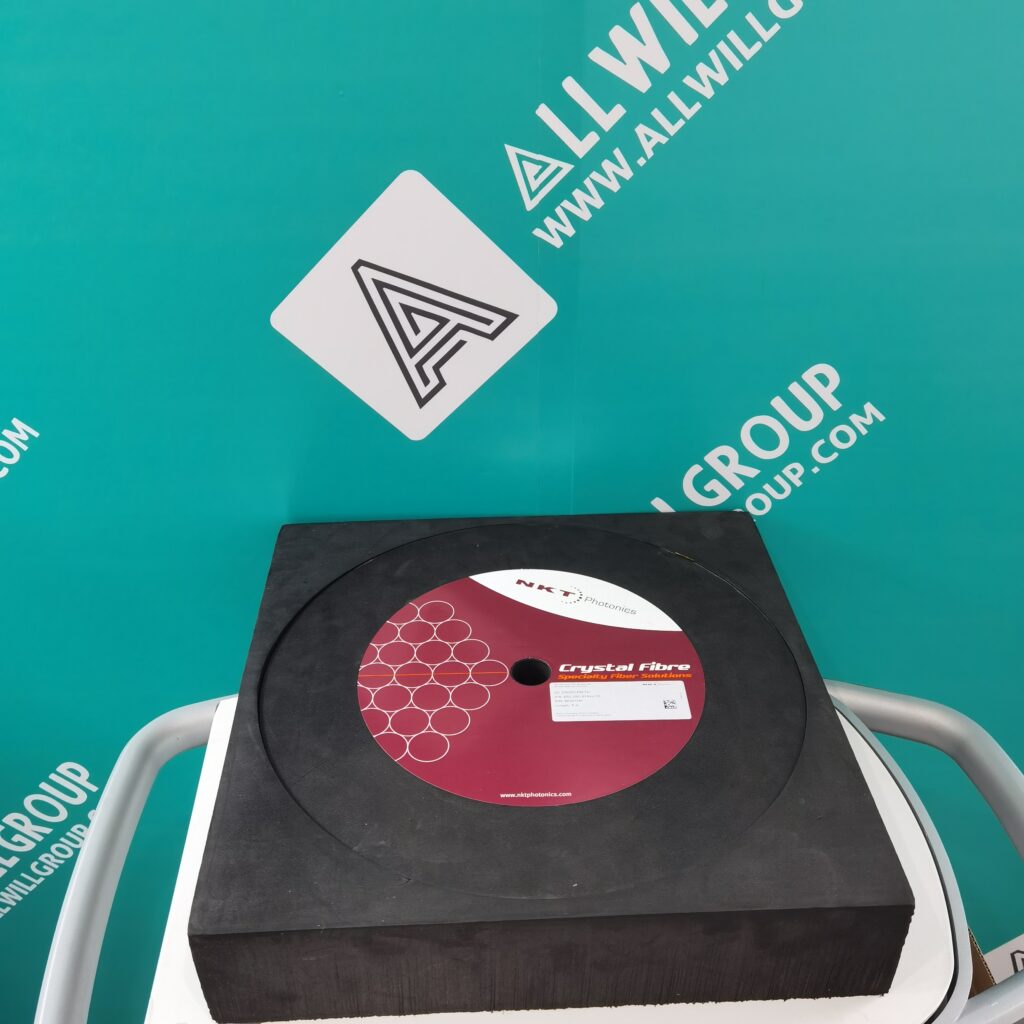
The NKT DC-250/50-PM-Tm is a thulium-doped, double-clad polarization-maintaining (PM) active fiber engineered to deliver stable, low-latency laser output and robust flow stability for advanced surgical systems. By preserving linear polarization under mechanical stress and minimizing polarization mode dispersion, it helps prevent millisecond-scale signal latency in diagnostic feedback loops, supporting more reliable real-time tissue differentiation and reducing the risk of inadvertent thermal injury to blood elements.
What This Fiber Does and Who It’s For
The NKT DC-250/50-PM-Tm is an active, thulium-doped double-clad PM fiber designed for integration into surgical and interventional lasers operating around the 2 µm wavelength region. Its geometry and doping profile support efficient pump absorption in the inner cladding and single-mode signal guidance in the core while maintaining a stable linear polarization state for the surgical output beam.
This platform is intended for OEM laser manufacturers, hospital biomedical engineering teams, and high-end aesthetic surgery centers that rely on thulium-based systems for precise soft-tissue cutting, ablative resurfacing, or controlled coagulation. It is particularly relevant for buyers evaluating new or certified pre-owned surgical lasers where fiber architecture, polarization retention, and feedback-loop responsiveness directly influence intraoperative safety and quality of tissue differentiation.
Technical Core Analysis: Signal Latency, Flow Stability, and Polarization Drift
In fiber-based surgical lasers, diagnostic feedback loops—whether based on optical backscatter, fluorescence, or thermal monitoring—depend on stable, time-synchronized signals to adjust energy delivery in real time. Polarization drift in low-quality or non-PM fibers introduces random changes in polarization state and differential group delay between polarization modes, a form of polarization mode dispersion that can smear or delay the feedback signal by picoseconds to milliseconds over typical fiber lengths.
Such latency and noise compromise the reliability of closed-loop control algorithms, which may respond to outdated or averaged data rather than the instantaneous state of the tissue. In a surgical context, this can translate into overshooting energy deposition during fine dissection or coagulation, reducing the margin of safety around sensitive structures and undermining the differentiation between high-water-content soft tissue and blood-rich regions.
Polarization-maintaining optical fiber intentionally introduces strong, linear birefringence so that light launched along one principal axis maintains its linear polarization with minimal cross-coupling. By preventing significant coupling into the orthogonal polarization mode, PM fiber suppresses polarization mode dispersion and keeps the output polarization extinction ratio at high levels (often >20 dB for well-designed PM fibers), supporting predictable interaction with downstream modulators and sensors.
In a thulium-doped, double-clad PM platform like the NKT DC-250/50-PM-Tm, polarization retention under bending and stress maintains the integrity of both the surgical beam and any co-propagating diagnostic channels that rely on polarization-defined detection. This structural stability is central to maintaining flow stability in pulsed or modulated surgical lasers, where fluctuations in polarization can otherwise translate into irregular pulse energy and temporal jitter.
Mid-article decision step: At this stage, it is sensible to request a quote from ALLWILL for surgical lasers incorporating NKT DC-250/50-PM-Tm or equivalent PM thulium fibers, including a technical brief on polarization retention, PMD characteristics, and feedback-loop performance under typical surgical loads.
Revenue and Operational Impact: Uptime, Complication Risk, and Payback Math
Surgical and high-end aesthetic lasers are capital-intensive assets whose ROI depends on predictable uptime, low complication rates, and efficient session throughput. Systems using non-PM or marginal-quality fibers may experience greater drift, higher noise in feedback channels, and more frequent service calls to address instability or alignment issues. This increases downtime and erodes the economic case for the laser over its service life.
Laser platforms built on robust PM active fibers like NKT DC-250/50-PM-Tm can offer more stable output and reduced sensitivity to environmental and mechanical stress, lowering the probability of unplanned maintenance related to optical instability. While individual ROI figures vary by clinic, improved system reliability allows more predictable scheduling, fewer aborted procedures due to laser faults, and more confidence in delivering complex treatments that command premium pricing.
Over typical payback horizons of 3–5 years for advanced surgical lasers, even modest reductions in downtime and complication incidents can materially affect net revenue. For example, avoiding a handful of procedure cancellations or complication-related revisits per month may help absorb the incremental cost of specifying PM active fibers in new acquisitions. ALLWILL can support procurement teams in modeling this payback by combining vendor data with clinic-specific utilization assumptions when you request a quote for systems built on PM thulium platforms.
Differentiated Advantage: Active PM Thulium Design and Clinical Risk Mitigation
The NKT DC-250/50-PM-Tm fiber leverages a double-clad architecture that allows high pump absorption through a large inner cladding while maintaining single-mode propagation for the signal in the core, supporting high-brightness thulium laser output. When this gain medium is polarization-maintaining, the resulting surgical beam can be delivered through polarization-dependent components (modulators, isolators, sensors) without losing the defined polarization state, enabling more sophisticated control schemes.
Polarization stability under stress, bending, and thermal variation is particularly important in surgical settings where the fiber may be routed through articulated arms or movable gantries. PM fibers with high birefringence and well-characterized polarization extinction ratios provide assurance that the output polarization remains aligned with system design assumptions, limiting polarization-induced artifacts in detection channels.
Clinically, this stability contributes to safer interaction with blood and vascular structures. Thulium lasers operating near 2 µm interact strongly with water and can be configured to minimize deep penetration, which is advantageous for soft-tissue ablation and coagulation. When feedback loops accurately track tissue response without polarization-induced latency or noise, system designers can more reliably constrain energy delivery within safe boundaries, helping reduce inadvertent hemolysis or excessive thermal exposure that might contribute to endothelial damage and thrombosis risk.
For buyers comparing alternative platforms—such as systems based on non-PM thulium fibers or alternative wavelengths—the PM thulium architecture offers a differentiated combination of high absorption in water-rich tissue and stable polarization for advanced sensing and modulation. ALLWILL can help position these trade-offs against clinical case-mix and risk tolerance when you request a quote and technical comparison.
Practical B2B Decision Aid: BME Technical Maintenance Checklist for PM Thulium Lasers
Given that the title and content focus on technical specs, physics, and clinical side effects, the most actionable decision aid is a Biomedical Engineering (BME) technical maintenance checklist for systems built around NKT DC-250/50-PM-Tm or comparable PM thulium fibers.
BME Technical Maintenance Checklist: PM Thulium Surgical Lasers
| Maintenance Axis | Key Tasks for BME Teams | Typical Frequency / Baseline Expectation |
|---|---|---|
| Polarization extinction ratio (PER) | Measure output PER of the PM fiber path using a PER meter or equivalent tool, ensuring the ratio of correctly to incorrectly polarized light meets OEM thresholds (often >20 dB). | At installation, after major servicing, and at least annually or after significant mechanical stress events. |
| Fiber routing and mechanical stress | Inspect fiber routing for bends below manufacturer’s minimum radius, kinks, or clamp points that induce undue stress, which can affect birefringence and PMD. | Visual inspection during routine preventive maintenance; verify compliance after room reconfigurations or arm adjustments. |
| Signal latency in feedback loops | Run system self-tests or diagnostic routines to measure response time of feedback channels (e.g., backscatter, temperature sensing) and compare with baseline installation values. | At commissioning and quarterly; investigate any drift beyond specified tolerance window. |
| Output stability and flow | Monitor pulse energy, repetition rate, and temporal jitter using appropriate test equipment to confirm stable flow characteristics under typical clinical workloads. | At least semi-annually, and after firmware updates or major optical component replacement. |
| Pump coupling and double-clad integrity | Check pump diode coupling efficiency and inspect inner cladding for signs of contamination or damage that could reduce pump absorption. | During annual service; more often if output power drift or unusual noise is reported. |
| Safety interlocks and emergency stops | Confirm functional integrity of interlocks and emergency stop circuits that depend on feedback signals, ensuring no latency or mis-read due to polarization issues. | With every preventive maintenance visit and after any safety-related incident or software update. |
| Documentation and firmware alignment | Verify that system firmware, calibration files, and PM fiber specs match the installed hardware configuration for accurate diagnostic computations. | At installation and after any hardware or firmware upgrades; maintain logs for regulatory audits. |
BME teams empowered with this checklist can better preserve the performance characteristics that justify premium investment in PM thulium architectures. ALLWILL’s Smart Center can help clinics integrate these tasks into their maintenance contracts and condition reports when requesting a quote for new or certified pre-owned systems.
Compliance and Asset-Protection Guardrails
For YMYL-class surgical lasers, regulatory compliance and biocompatibility considerations must be integrated with optical design. Devices using thulium-doped PM fibers require appropriate regulatory clearance (e.g., FDA 510(k) or CE marking) for specific surgical indications, and buyers must verify current status for their region and intended use. Polarization-maintaining fiber design itself is not directly regulated, but the overall system must demonstrate safety and effectiveness across its optical and control subsystems.
Biocompatibility and safety testing encompass aspects such as thermal impact on tissue, blood compatibility, and the reliability of safety interlocks and feedback mechanisms that depend on stable signal transmission. Clinics should insist on manufacturer documentation describing how PM fiber choice reduces polarization mode dispersion and supports reliable closed-loop control, while recognizing that no design fully eliminates risk.
From an asset-protection perspective, procurement contracts should include performance commitments around output stability, latency in feedback systems, and PM fiber integrity, supported by service-level agreements and condition reporting for certified pre-owned units. Requesting a quote from ALLWILL that bundles hardware specifications, maintenance obligations, and compliance documentation ensures that the fiber architecture is properly reflected in contractual expectations and risk management plans.
Procurement Risks to Avoid and ALLWILL Expert View
Procurement risks include prioritizing headline power or price over signal stability and fiber architecture, resulting in systems that perform well in simple scenarios but become unreliable under complex surgical demands. Another risk is acquiring lasers with PM fibers but lacking internal expertise or maintenance workflows to preserve polarization stability over time, effectively negating the benefits of the design.
Buyers should also avoid assuming that any “PM” label guarantees robust performance; PM fibers vary in birefringence, attenuation, and PER, and these parameters must be matched to the system’s intended clinical use and mechanical environment. ALLWILL can help buyers interpret OEM specifications, compare alternative architectures (e.g., non-PM thulium platforms or other wavelengths), and align system choice with the clinic’s case mix and risk tolerance.
ALLWILL Expert View: Turning Polarization Stability into Clinical and Financial Value
Many procurement decisions focus on peak power, wavelength, and price, leaving polarization architecture and feedback-loop responsiveness as “engineering details” that rarely make it to the commercial discussion. Yet in advanced thulium-based surgical systems, polarization stability is a primary determinant of signal clarity and latency in real-time diagnostics. Random polarization drift and PMD can quietly degrade feedback quality, forcing surgeons to rely more on visual cues and experience, increasing variability and stress during complex cases.
From a financial standpoint, investing in PM active fibers like NKT DC-250/50-PM-Tm pays off through smoother workflows and fewer troubleshooting sessions. Each avoided case delay, aborted procedure, or extended intraoperative calibration sequence protects billable time and strengthens clinician confidence in the equipment. For buyers, the key is not simply to select PM-based systems but to pair that choice with robust maintenance protocols and clear performance documentation. When you request a quote from ALLWILL, ask not only for price and availability but for detailed PM fiber specifications, PER baselines, and support for integrating polarization checks into your preventive-maintenance strategy. This transforms polarization stability from an abstract physics concept into a practical lever for safety, uptime, and ROI.
To operationalize this insight, request a quote from ALLWILL for surgical lasers incorporating NKT DC-250/50-PM-Tm or equivalent PM thulium fibers, along with condition reports, technical specs, and maintenance frameworks tailored to your surgical workload and risk profile.
Frequently Asked Questions
What is the typical price range for thulium-based surgical lasers using PM fibers?
Thulium surgical lasers built on PM active fibers occupy the higher end of the capital spectrum, with list prices varying widely depending on power class, integration level, and OEM. Buyers typically see ranges from mid five figures to low six figures per system, and should request a quote from ALLWILL for current pricing and certified pre-owned options aligned with their budget.
Does specifying NKT DC-250/50-PM-Tm change maintenance requirements?
Systems using NKT DC-250/50-PM-Tm require focused attention on polarization extinction ratio, fiber routing, and feedback-loop performance but do not necessarily demand more frequent servicing than non-PM systems. The key difference is the need to incorporate polarization and latency checks into routine maintenance, which ALLWILL can help structure in collaboration with OEM service partners.
How does polarization stability relate to hemolysis and thrombosis risk?
Stable polarization and low PMD support reliable feedback in closed-loop control, improving the system’s ability to modulate energy delivery during tissue interaction and minimize excessive thermal exposure to blood. While many factors influence hemolysis and thrombosis risk, maintaining accurate, timely diagnostic signals reduces the chance of inadvertent overdelivery in vascular-adjacent procedures.
Are PM thulium systems appropriate for certified pre-owned acquisition?
PM thulium systems can be excellent candidates for certified pre-owned acquisition if fiber integrity, PER, and output stability are carefully evaluated and documented. Clinics should request condition reports, maintenance histories, and polarization performance tests as part of the quote process with ALLWILL to ensure that the PM fiber benefits are preserved in CPO units.
How should clinics compare PM thulium architectures with alternative laser platforms?
Clinics should compare wavelength-tissue interactions, feedback-loop capabilities, polarization requirements, and maintenance complexity across platforms such as holmium, Er:YAG, or non-PM thulium lasers. PM thulium designs offer strong water absorption and advanced control potential, but the optimal choice depends on case mix and budget; requesting a quote and comparative briefing from ALLWILL is a practical way to structure this evaluation.
If you want to align your next surgical laser acquisition with polarization-stable, low-latency performance and a clear maintenance roadmap, the next step is to request a quote from ALLWILL that includes NKT DC-250/50-PM-Tm–based options, technical documentation, and tailored ROI modeling for your clinical environment.
References
-
Single Longitudinal Mode Narrow Linewidth Thulium-Doped Fiber Laserpublic-pages-files-2025.frontiersin
-
Complete Characterization of Polarization-Maintaining Fibers Using Distributed Polarization Analysislunainc
-
Polarization-Maintaining Large-Mode-Area Solid-Core Anti-Resonant Fiber for High-Power Fiber Laserssciencedirect
-
Active Polarization Control for Quantum Communication in Long-Distance Fiber Transmissionarxiv
-
Basics of Biocompatibility: Information Needed for Assessment by the FDAfda
Related articles
 Sofwave Machine Cost: Purchase Price Versus Per-Treatment EconomicsAesthetic Device Buying
 Mobile MRI Machine Cost: When the Trailer Beats BuyingAesthetic Device Buying
 How Much Does a CT Scanner Cost: The Configuration Lines That Set the PriceAesthetic Device Buying
 Medical Equipment Buyback: What Buyers Accept and What They Will NotKnowledge