
PCB 137B22B Price & Uptime Guide: Eliminating ESWL Shock Wave Signal Latency
For BMEs struggling with truncated pressure-time profiles and apparent signal latency during extracorporeal shock wave lithotripsy (ESWL) calibration, the core solution is replacing standard dynamic sensors with a quartz free-field ICP pencil probe such…
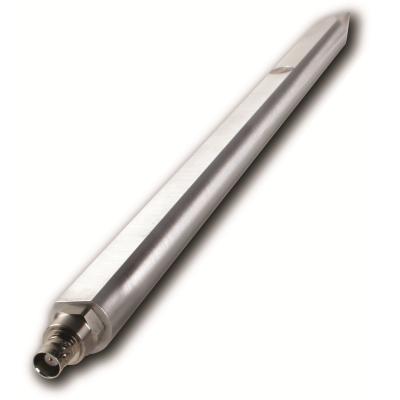
For BMEs struggling with truncated pressure-time profiles and apparent signal latency during extracorporeal shock wave lithotripsy (ESWL) calibration, the core solution is replacing standard dynamic sensors with a quartz free-field ICP pencil probe such as the PCB 137B22B, correctly integrated and verified. Generic sensors often lack the bandwidth, range, and stability needed for microsecond shock waves, while the 500 psi range, 10 mV/psi sensitivity, and ≥400 kHz resonant frequency of the 137B22B preserve the full waveform without systemic data distortion. Clinics evaluating new or CPO lithotripters should treat sensor choice and calibration practice as uptime-critical factors before requesting a quote from ALLWILL.
What PCB 137B22B Does and Ideal Clinic Profile
The PCB 137B22B is a quartz, free-field, ICP blast pressure pencil probe designed to capture fast shock waves with high fidelity. It offers a 500 psi (≈3447 kPa) measurement range, 10 mV/psi sensitivity, and a resonant frequency of at least 400 kHz, with rise times for incident shocks of ≤6.5 microseconds. In ESWL, these characteristics allow accurate measurement of peak pressures and detailed pressure-time curves at or near the shock focus.
Ideal users include hospital BMEs, urology engineering teams, and advanced clinics that:
- Routinely verify lithotripter performance, pressure levels, and focal characteristics as part of preventative maintenance.
- Rely on precise shockwave calibration to support device longevity, safety protocols, and treatment standardization.
Such teams need a sensor that faithfully captures both the initial shock front and subsequent microsecond-scale cavitation-related events seen in ESWL, rather than smearing or delaying them. ALLWILL can integrate the PCB 137B22B into calibration kits and service strategies for new or certified pre-owned ESWL units, aligning sensor capabilities with clinical throughput and compliance expectations.
Problem–Cause–Solution Core Analysis: Why Standard Sensors Fail
Problem: Pressure-Time Profile Truncation and Latency
BMEs often observe that ESWL calibration traces show rounded peaks, delayed rise times, or truncated tails, even when the lithotripter appears to function normally. Typical signs include:
- Apparent delay between expected shock timing and measured peak.
- Lower-than-expected peak pressure values under nominal settings.
- Missing or greatly attenuated secondary peaks linked to cavitation activity within the first few hundred microseconds after the shock.
These artifacts lead to misinterpretation of lithotripter performance, incorrect parameter adjustments, and possible over- or under-exposure during clinical use.
Cause: Sensor Bandwidth, Range, and Drift Limitations
Standard dynamic pressure sensors or hydrophones often fail to track microsecond-level acoustic events in ESWL due to several physics-limited factors:
- Insufficient bandwidth and resonant frequency: Shock waves and cavitation emissions in ESWL span high-frequency components; acoustic emission studies have shown microsecond-scale peaks and rapid decay within ≈500 µs. Sensors with lower resonant frequencies act as filters, smoothing and delaying the waveform.
- Inadequate pressure range and non-linearity: When peak pressures approach or exceed rated ranges, sensors saturate or compress the response, truncating peak values and distorting the profile.
- Slow rise time and discharge behavior: Sensors with longer rise times or poorly matched time constants cannot accurately follow the rapid pressure changes inherent to ESWL shocks.
- Cable and electronics-induced drift: ICP sensors require proper coupling and current; signal drift and stabilization issues arise if readout devices and cables are not correctly configured or thermally stabilized.
The PCB 137B22B and related quartz free-field ICP probes are explicitly engineered to mitigate these weaknesses: the pencil shape minimizes disturbance of the shock wave, while quartz sensing and ICP electronics deliver fast, linear response over the specified range.
Solution: Deploying PCB 137B22B in a Structured Diagnostic Workflow
By switching to a PCB 137B22B and following a disciplined calibration process, BMEs can capture true pressure-time profiles and eliminate pseudo-latency caused by sensor limitations. This ensures ESWL system adjustments reflect actual lithotripter performance, not measurement artifacts.
For clinics evaluating ESWL systems, specifying PCB 137B22B-class sensors as part of the calibration toolkit should be treated as a quality and uptime requirement, not an optional accessory. ALLWILL can source these probes and bundle them with CPO lithotripter offerings or service programs, improving data reliability across the device lifecycle.
Step-by-Step Diagnostic Guide: Identifying and Fixing ESWL Signal Latency
When ESWL calibration traces show latency or truncation, BMEs can follow this structured diagnostic path:
- Confirm triggering and timing alignment
Verify that the data acquisition system and lithotripter trigger are synchronized; misaligned triggering can mimic latency. Check hardware trigger lines and software timing offsets. - Assess sensor bandwidth and resonant frequency
Determine the installed sensor’s resonant frequency and usable bandwidth. ESWL shock waves and cavitation emissions require high-frequency, microsecond-capable response; sensors with significantly lower resonant frequencies will smear and delay the waveform. - Compare sensor range to expected peak pressures
Compare lithotripter’s rated focal pressures with sensor range. If expected peaks approach or exceed sensor limits, non-linearity and saturation will compress both peaks and rising edges. - Inspect sensor positioning and free-field conditions
Ensure the probe is placed correctly in the acoustic field and that the pencil-shaped sensor’s free-field design is respected, avoiding reflections and structural interference. Misplacement can add apparent delays and distortions. - Evaluate electronics and cable behavior
For ICP sensors, confirm the signal conditioner’s current setting and cable integrity. PCB guidance notes that signal drift can occur when connecting cables, and stabilization time is required before measurement. - Replace or upgrade to PCB 137B22B
If the above checks implicate sensor limitations, transition to PCB 137B22B, ensuring proper integration with compatible ICP signal conditioners and data acquisition systems. Re-run calibration to compare waveforms. - Validate rise time, peak capture, and secondary events
Using the 137B22B, confirm that rise times fall within expected microsecond ranges, peaks match lithotripter specifications, and secondary cavitation-related peaks within ≈100–500 µs are visible.
This stepwise approach turns ESWL calibration from trial-and-error into a structured mechanical and sensor-physics assessment. At the point where sensor upgrade is indicated, clinics can request a quote from ALLWILL for PCB 137B22B probes and compatible conditioners, matched to their lithotripter fleet.
Revenue and Operational Impact: Why Latency-Free Calibration Matters
Although a pressure sensor is a relatively small purchase compared with an ESWL unit, its behavior directly affects uptime, safety assurance, and economic performance. Inaccurate shockwave measurements can lead to:
- Mis-tuned lithotripter settings: Underestimated peaks may prompt unnecessary power increases, stressing hardware; overestimated values may lead to non-optimal treatment strategies.
- Inconsistent treatment outcomes: Variability in actual delivered shock profiles undermines procedural predictability and clinician confidence.
- Extended maintenance cycles and troubleshooting: BMEs spend more time chasing phantom issues or recalibrating with unreliable data.
By eliminating signal latency and truncation with PCB 137B22B, clinics can:
- Stabilize calibration workflows and reduce engineering time per ESWL device.
- Support consistent, documented performance over time, aiding compliance and quality assurance.
- Protect high-ticket ESWL assets from misaligned settings that may accelerate wear or require premature repairs.
The payback logic hinges on avoided troubleshooting hours, reduced repeat calibrations, and mitigation of potential device stress. In high-volume centers, even incremental gains in ESWL uptime and calibration efficiency can justify the sensor investment. ALLWILL can help build such ROI scenarios and integrate PCB 137B22B procurement into broader ESWL asset strategies.
Differentiated Advantage: Why PCB 137B22B Commands a Higher Ticket
Compared with generic pressure sensors, PCB 137B22B offers performance characteristics tailored to shockwave applications:
- Quartz free-field design: The pencil geometry and quartz element enable accurate measurement of incident shocks in air with minimal disturbance, suitable for blast and ESWL-like waves.
- High range with linearity: 500 psi measurement range and ≤1% full-scale non-linearity support accurate capture of strong shock fronts.
- High resonant frequency and fast rise time: ≥400 kHz resonant frequency and ≤6.5 µs rise time allow tracking of microsecond waveforms and high-frequency components.
- ICP architecture and robust discharge time: An ICP configuration with discharge time constant ≥0.2 s at room temperature supports stable measurements and long-term drift control when correctly conditioned.
Alternative sensors, such as other quartz ICP blast probes or specialized hydrophones, may be considered where acoustic coupling or specific geometries are required, but they must be evaluated for bandwidth, range, and integration in ESWL environments. ALLWILL can present neutral options, comparing PCB 137B22B with other suitable probes based on physics and documentation rather than brand alone.
Midway through this evaluation, procurement teams that recognize calibration as an uptime-critical function should request a quote from ALLWILL for PCB 137B22B units and associated accessories, including indicative price ranges and deployment plans across their ESWL fleet.
Practical BME Technical Maintenance Checklist: ESWL Shock Wave Measurement Accuracy
Because this article clearly focuses on technical behavior and sensor physics, the decision aid is a BME Technical Maintenance Checklist rather than a cost table.
BME Technical Maintenance Checklist for Eliminating ESWL Signal Latency
- Confirm data acquisition trigger alignment with lithotripter pulse timing; correct any trigger or software offset issues.
- Record current sensor model, pressure range, sensitivity, and resonant frequency; assess suitability for microsecond shock waves and expected ESWL peak pressures.
- Evaluate calibration traces for peak timing, rise time, and presence of secondary cavitation-related peaks within the first 500 µs; identify signs of truncation or smoothing.
- Check sensor positioning and free-field conditions, ensuring minimal structural interference and proper coupling in the shock path.
- Inspect cables and ICP signal conditioners for drift and stabilization behavior; follow PCB guidance on warm-up and current settings.
- If sensor limitations are confirmed, upgrade to PCB 137B22B, verifying compatibility with existing conditioners and DAQ systems, then validate waveforms against ESWL specifications.
ALLWILL can operationalize this checklist into a calibration support package, helping clinics standardize procedures and deploy PCB 137B22B probes across multiple lithotripters. Request a quote from ALLWILL to align sensor upgrades with scheduled ESWL maintenance and documentation requirements.
Compliance and Asset Protection
Accurate ESWL calibration is not only a technical concern but a compliance and asset-protection requirement. Many regulatory and institutional frameworks expect documented proof that lithotripters operate within specified performance ranges, and shockwave measurement integrity directly affects this assurance.
Key guardrails include:
- Maintaining traceable calibration records that include sensor specifications, dates, and conditions.
- Ensuring that selected sensors meet relevant standards and manufacturer recommendations for ESWL measurement.
- Verifying that any certified pre-owned lithotripters are recalibrated with appropriate sensors and that calibration data is included in condition reports.
From an asset-protection standpoint, miscalibrated systems may be operated outside optimal ranges, potentially increasing wear or elevating risk of failure. Using PCB 137B22B-class sensors supports precise, repeatable calibration, extending ESWL asset life and underpinning defensible quality assurance processes. ALLWILL positions sensor sourcing within broader device lifecycle management, rather than as isolated purchases.
Procurement Risks to Avoid + ALLWILL Expert View
Common ESWL calibration procurement risks include:
- Selecting sensors primarily on price without verifying bandwidth, range, and rise time against ESWL requirements.
- Using sensors or conditioners with incomplete documentation or unclear suitability for microsecond shockwaves.
- Failing to integrate sensor choice into ESWL acquisition and CPO inspection strategies, leaving calibration accuracy as an afterthought.
ALLWILL Expert View
In ESWL environments, we see a recurring pattern: clinics invest heavily in lithotripters, then rely on legacy or generic sensors for calibration and performance checks. The result is a misleading view of how shockwaves behave at focus. Quartz free-field ICP probes like PCB 137B22B were developed precisely to bridge that gap, offering range, bandwidth, and geometry tuned to blast-like events. From a procurement standpoint, the essential step is to treat calibration sensors as integral components of the ESWL system, with specifications and documentation reviewed alongside the lithotripter itself. When clinics do this, they not only eliminate signal latency and truncation but also simplify preventative maintenance and regulatory reporting. Requesting a quote that bundles PCB 137B22B probes, conditioners, and calibration protocols with ESWL assets is how engineering teams convert good technical intentions into sustained uptime and defensible quality records.
Clinics ready to elevate ESWL calibration from a convenience to a strategic uptime and compliance tool can request a quote from ALLWILL for PCB 137B22B sensors and integrated support, covering price ranges, availability, and deployment plans.
Frequently Asked Questions
What is the typical price range for PCB 137B22B compared with generic pressure sensors used in ESWL calibration?
Quartz free-field ICP probes like PCB 137B22B generally occupy a higher price tier than generic dynamic sensors due to their 500 psi range, 10 mV/psi sensitivity, and microsecond-capable bandwidth. Exact pricing depends on region and purchasing structure; clinics should request a quote from ALLWILL for current ranges.
Can PCB 137B22B be used with existing signal conditioners and data acquisition systems?
PCB guidance indicates that most line-powered signal conditioners are compatible, provided their current settings and connectors match ICP requirements. BMEs must verify specifications, connector type (e.g., BNC), and current ranges before integration.
Does using PCB 137B22B change our ESWL device’s regulatory status or require new approvals?
Calibration sensors typically operate as measurement accessories rather than altering device classification, but clinics should confirm manufacturer recommendations and local regulations. Proper documentation of calibration tools and procedures supports compliance without fundamentally changing ESWL approval scope.
How does a higher-spec sensor like PCB 137B22B influence ROI and payback for ESWL devices?
Improved calibration fidelity reduces troubleshooting time, repeat measurements, and mis-tuned settings, helping preserve ESWL uptime and asset health. ROI depends on case volume and maintenance demands; clinics can model savings from avoided engineering hours and downtime when considering PCB 137B22B deployment.
What lead times and logistics should we expect for sourcing PCB 137B22B and related calibration accessories?
Availability is influenced by manufacturer stock, regional distribution, and any bundling with conditioners or cables. ALLWILL can forecast lead times and schedule deliveries to align with ESWL maintenance windows and CPO inspections.
References
-
Model 137B22B – Quartz, Free-Field, ICP Blast Pressure Pencil Probe Specificationspcb
-
Model 137B22B ICP Pressure Sensor Installation and Operating Manualpcbpiezotronics
-
Model 137B22B Quartz, Free-Field, ICP Blast Pressure Pencil Probe – Datasheetpcb
-
ICP Free-Field Blast Pressure Sensors – Series 137B Overviewpcb
-
Quartz, Free-Field, ICP Blast Pressure Pencil Probe – Series 137B Application Notepcb
-
Detection of Acoustic Emission from Cavitation in Tissue during Clinical ESWLpubmed.ncbi.nlm.nih
-
Model 137B32 Quartz Free-Field ICP Blast Pressure Pencil Probe Manualpcb
-
Acoustic Battlefield – PCB Piezotronics Shock and Blast Measurement Guidepcbpiezotronics
-
Preparation and Processing of Human Allogenic Dermal Matrix for Soft Tissue Repair
Related articles
 Onda Pro Results: What Determines the Outcome in a Working ClinicKnowledge
 A Used Thermage FLX Console Earns Its Price with Verifiable Firmware, Handpiece, and Tip SupplyKnowledge
 How to Compare Quotes for the Same Used Aesthetic Device ModelKnowledge
 Used Medical Aesthetic Device Condition Grades: New, Like-New, Excellent, Working, and PartsKnowledge