
How to Protect Your Clinic’s Revenue, Patients, and Reputation?
Modified EEPROM chips and “reset” HIFU/Ultherapy cartridges can quietly undermine treatment precision, create regulatory exposure, and erode patient trust, even if the outer device looks genuine. For most clinics, the apparent consumable savings are…
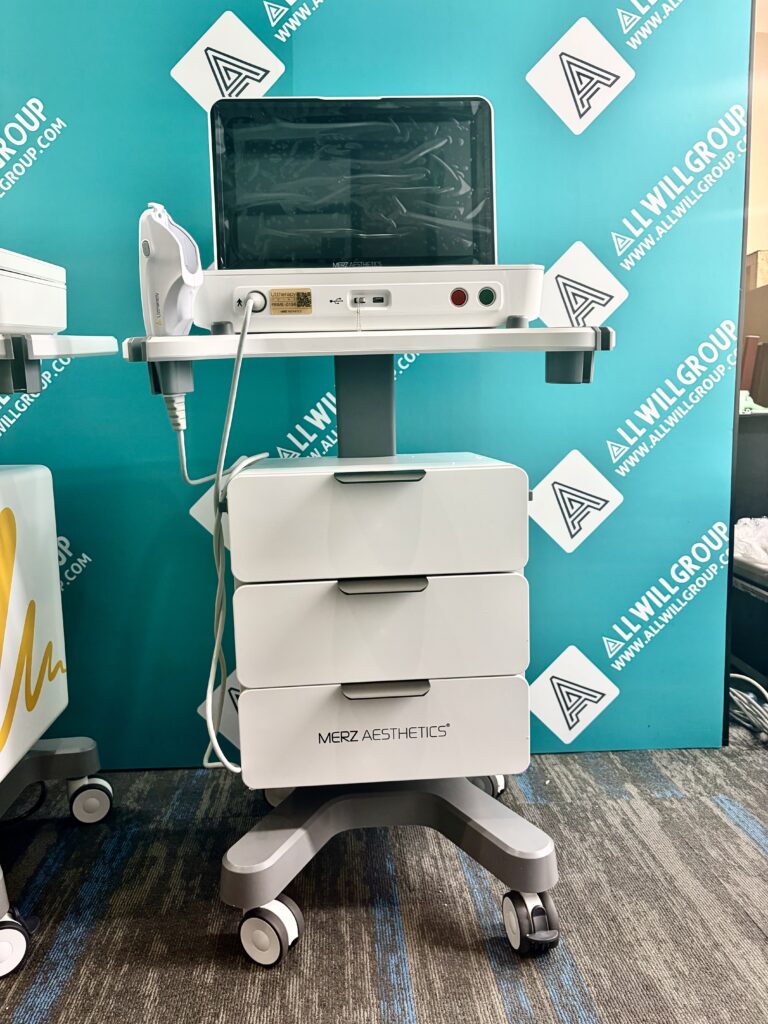
Modified EEPROM chips and “reset” HIFU/Ultherapy cartridges can quietly undermine treatment precision, create regulatory exposure, and erode patient trust, even if the outer device looks genuine. For most clinics, the apparent consumable savings are quickly outweighed by increased adverse‑event risk, unplanned downtime, and potential insurance or regulator challenges. When evaluating new or certified pre‑owned systems, the safest and most profitable path is to insist on authentic, traceable electronics from vetted suppliers and to avoid any cartridge whose chip has been reprogrammed or tampered with.
What these devices do & who they’re for
- High‑intensity focused ultrasound (HIFU) and Ultherapy‑type systems deliver focused acoustic energy into precise tissue depths to create controlled thermal coagulation points for non‑invasive lifting and tightening indications, typically in the face, neck and selected body areas, according to manufacturer specifications and cleared indications in each jurisdiction.
- Each treatment cartridge contains transducers, coupling structures, and a small memory or EEPROM device that tracks shot counts, protocol parameters, and sometimes calibration factors to keep energy delivery within the intended design envelope.
- These platforms are generally suited to:
- Medical aesthetic clinics and dermatology centers wanting non‑surgical tightening options within an existing energy‑based device portfolio.
- Medspas with physician oversight looking to offer premium “lifting” procedures at higher price points, where device uptime and repeatable energy delivery are central to patient experience and word‑of‑mouth.
- For many buyers, certified pre‑owned (CPO) HIFU systems from reputable brands can offer a lower entry ticket while still meeting clinical and regulatory expectations, provided that all consumables and electronics remain genuine and traceable.
- ALLWILL is often engaged at this stage to help clinics match brand, generation, and configuration to their case mix, and to verify that any included handpieces or cartridges are original, non‑modified components with documented service history.
Core risk: EEPROM emulation and “reset” cartridge fraud
Because your working title and brief focus on hacked cartridges and modified chips, the core analysis in this article centers on hardware integrity, safety, and uptime rather than headline price.
- In many cartridge designs, a small EEPROM or similar memory IC stores shot count, transducer ID, and occasionally calibration offsets used by the main system to interpret and limit energy output.
- “Reset” or “unlocked” cartridges are commonly created by:
- Desoldering the original chip and replacing it with a clone pre‑programmed to emulate “new” status.
- Soldering add‑on boards or “55EEPROM emulators” between the cartridge and device harness to spoof identity or lifetime data.
- Directly re‑flashing the original memory with unauthorized tools, sometimes disabling safety‑related flags or usage limits.
- These interventions are rarely validated against manufacturer engineering requirements and can defeat:
- Lifetime and shot‑count limits intended to remove the cartridge before transducer wear degrades beam focus.
- Error codes that would otherwise stop a damaged or overheated handpiece from firing.
- Traceability of which cartridge was in use if an adverse event must be investigated.
- From a clinic’s perspective, what looks like a standard cartridge with “more shots unlocked” may, in practice, be:
- Operating outside its acoustic design range.
- Providing inconsistent energy delivery across a single treatment session.
- Leaving you exposed if a patient experiences burns or suboptimal outcomes and litigation or insurer scrutiny follows.
- ALLWILL’s technical screening processes for CPO assets explicitly look for signs of non‑OEM electronics, aftermarket boards, or reprogrammed chips in cartridges and handpieces before equipment is accepted into inventory.
Revenue and operational impact of using modified chips
Even if hacked cartridges appear to lower consumable costs, the financial risk profile usually moves in the wrong direction.
- On‑label, manufacturer‑supplied HIFU/Ultherapy cartridges tend to account for a significant share of variable treatment cost, especially in high‑volume clinics, which is why “resetters” are aggressively marketed on informal channels.
- Short‑term perceived savings:
- Reset cartridges may appear to offer additional “free” shots beyond the OEM limit, lowering nominal cost per treatment on paper.
- Gray‑market EEPROM solutions are often priced noticeably below official consumables, tempting procurement teams under pressure to reduce cost of goods.
- Hidden and long‑tail costs:
- Increased risk of non‑uniform or inaccurate energy delivery can lead to patient dissatisfaction, refunds, retreatments, or discounts that rapidly erode any cartridge savings.
- A single serious adverse event linked to unapproved components may trigger compensation, legal fees, and reputational losses dwarfing years of consumable spend.
- Device manufacturers or authorized service partners may decline warranty or support if they discover tampered cartridges were used with the system, increasing future repair costs.
- Operational disruptions:
- Hacked electronics often have higher failure and error rates than original parts, leading to more frequent treatment interruptions, last‑minute rescheduling, and under‑utilization of staff and treatment rooms.
- Inconsistent system behavior caused by counterfeit or modified chips may require more frequent clinical troubleshooting, protocol adjustments, or equipment checks, consuming clinical and management time.
- For buyers considering a CPO platform, factoring in the cost of switching entirely back to OEM cartridges is essential. ALLWILL routinely models these consumable costs with clinics so they can compare new versus pre‑owned device options on an apples‑to‑apples basis.
Mid‑article next step: If you are actively comparing systems or evaluating a suspected gray‑market supply of cartridges, request a quote from ALLWILL that includes both device pricing and a realistic OEM‑only consumables cost forecast for your expected monthly volume.
Why hacked HIFU electronics undermine a premium positioning
HIFU and Ultherapy‑type treatments are often positioned at the top end of a clinic’s menu, meaning any perceived corner‑cutting in hardware can quickly damage brand trust.
- Patients paying premium fees for non‑invasive lifting expect not only comfort and outcomes but also visible investment in proper equipment, safety, and traceability.
- If a device behaves unpredictably because of modified EEPROMs, staff may quietly adjust techniques or parameters to “work around” inconsistencies, which can lead to variable results from practitioner to practitioner.
- From a marketing and branding standpoint:
- Consistency of experience is critical when building a reputation around a headline procedure.
- Stories of equipment malfunction, even if minor, spread faster than positive testimonials and are often shared in patient forums and social media.
- Insurers and regulators increasingly focus on supply chain integrity and the use of counterfeit or substandard medical devices; using reset cartridges can complicate claims and audits if documentation cannot prove authenticity.
- By contrast, a clinic able to show invoices, serial numbers, and maintenance logs for genuine cartridges and unmodified electronics reassures both patients and oversight bodies that it treats patient safety and device integrity as non‑negotiable.
- ALLWILL positions CPO devices with this context in mind, emphasizing that cost advantage can never come from cutting corners on core safety‑related components or firmware.
Supplier vetting framework: avoiding EEPROM emulation frauds
Because this topic centers on sourcing and fraud avoidance, your practical decision aid is a Supplier Vetting Framework that procurement and clinical engineering teams can apply when evaluating both devices and cartridges.
Supplier vetting framework for HIFU/Ultherapy systems and cartridges
Use this table as a working checklist during vendor selection and annual reviews.
| Vetting Dimension | What to Verify in Practice | Red Flags to Watch For |
|---|---|---|
| Regulatory status | Written confirmation of device model’s current clearance or registration in your region (e.g., FDA 510(k), CE marking), including indications; cross‑check in official databases where available. | Vague statements like “approved worldwide,” reluctance to share model numbers, or mismatches between documentation and device labels. |
| Device authenticity | Serial numbers on main console and handpieces; manufacturer labels; images of data plates; confirmation that firmware has not been altered outside authorized updates. | Scratched or re‑engraved labels, inconsistent branding, or serial number that the OEM cannot verify. |
| Cartridge provenance | OEM invoices or distributor records for the cartridges offered, including lot and batch numbers; confirmation that EEPROMs and boards are original, with no reprogramming. | Seller offering “unlimited shot” or “reset” cartridges, lack of batch records, or cartridges with non‑standard stickers or extra wires/boards. |
| Service & maintenance | Service logs, repair invoices, and calibration records from qualified technicians; clarity on which entity will service the unit post‑purchase. | No documented maintenance history, reliance on unnamed third‑party repairers without references, or refusal to provide sample records. |
| Quality & testing | Pre‑shipment functional test report (including energy output checks within manufacturer tolerance) and burn‑in process; clear DOA/early failure policy. | “As‑is” or “no test” language, or vendors unable to describe their testing protocol in detail. |
| Warranty & liability | Written warranty terms covering key subsystems; clarity on what is excluded if non‑OEM cartridges are later used; proof of business insurance where relevant. | Overly broad verbal assurances with no written warranty, exclusions hidden in small print, or unwillingness to discuss liability. |
| Traceability & documentation | Full handover pack including manuals, previous owner de‑identification, service reports, cartridge tracking templates, and training materials. | Missing documentation, generic manuals that do not match the model, or no plan for transferring prior service information. |
| Commercial transparency | Clear quotation separating console, handpieces, and cartridge costs; explanation of any refurb steps undertaken; declared origin and shipping route. | Prices significantly below market without explanation, insistence on cash or non‑traceable payment, or complex multi‑hop shipping with unclear exporter. |
- ALLWILL’s sourcing and Smart Center processes closely mirror this framework, which is one reason clinics and hospital groups use the platform as a second set of eyes when rationalizing fleets or adding new modalities.
Compliance, documentation, and asset protection
A disciplined approach to compliance and documentation is often what separates sustainable use of CPO devices from high‑risk, short‑term cost cutting.
- Many jurisdictions treat counterfeit or non‑compliant medical devices as regulatory violations in their own right, irrespective of whether harm has occurred.
- Using cartridges with modified chips can, in some cases, be considered a de‑facto modification of the medical device, potentially invalidating original regulatory clearances if not assessed and documented appropriately.
- To protect the asset and the clinic:
- Maintain a device file containing purchase contracts, serial‑number lists, regulatory clearance evidence, service logs, and consumable purchase records.
- Ensure that procurement contracts specifically exclude the use of non‑OEM or modified cartridges unless explicitly assessed by qualified engineering and regulatory staff (which is rarely economically justifiable in a medspa setting).
- Implement an internal policy requiring that any suggestion to use resetters or EEPROM emulators be escalated to clinical leadership and risk management, not handled ad‑hoc by front‑line staff.
- Some insurers may require evidence that a device was maintained and used according to manufacturer instructions before honoring claims related to treatment complications.
- For clinics sourcing through ALLWILL, many of these asset‑protection basics are integrated into the procurement and onboarding process: matching documentation to each unit, flagging missing records, and connecting you with regional experts where local regulatory nuance is significant.
Procurement risks to avoid + ALLWILL Expert View
Key procurement risks to avoid
- Buying consoles bundled with “lifetime” or “unlimited” cartridges from non‑authorized channels, where price is far below market norms and documentation is minimal.
- Accepting verbal assurances that cartridges are “the same as OEM” despite visible differences in connectors, chips, labels, or housing.
- Mixing authentic and hacked cartridges on the same system, which complicates troubleshooting and may obscure root causes when issues arise.
- Failing to involve biomedical engineering, risk management, or an external technical partner when evaluating pre‑owned systems or suspiciously low‑cost consumables.
- Not defining in writing who is responsible if a regulator, manufacturer, or insurer later determines that non‑approved components were used with the device.
ALLWILL Expert View: Why authentic cartridges and clean electronics matter more than headline price
Many clinics concentrate negotiation energy on console price and discount levels but treat consumables as an afterthought until volumes increase. In HIFU and Ultherapy‑type platforms, the cartridge is not just a “ticket to treat”; it holds the acoustic stack and sometimes the calibration logic that determines how energy is distributed in tissue. When that logic is altered via resetters or cloned EEPROMs, you may still see shots counted on the screen, yet the device’s inner assumptions about transducer age, output, and safety margins no longer hold.
From a risk and ROI standpoint, the biggest avoidable cost we observe is not “paying too much” for OEM cartridges but underestimating the downstream costs when hacked electronics cause inconsistent outcomes, disputes, or system damage. Clinics that standardize on genuine cartridges, document their supply chain, and periodically audit their vendors generally report fewer disputes and steadier revenue, even if their per‑shot consumable cost looks higher on paper. When ALLWILL supports a purchase, we encourage buyers to model ROI on conservative assumptions: authentic consumables only, realistic utilization, and clear separation of console versus cartridge economics. That approach tends to surface whether a pre‑owned unit plus OEM consumables is more sustainable than chasing aggressive but fragile cartridge savings.
Closing next step on risk: If you are unsure whether your current or prospective supplier can meet this standard, request a quote and compliance review from ALLWILL that explicitly covers cartridge authenticity, documentation package, and post‑sale technical support.
Frequently Asked Questions
What is the typical price range for a quality HIFU or Ultherapy‑type system?
- Market prices vary widely by brand, generation, configuration, and region, but capital costs often sit in the multi‑tens‑of‑thousands range for reputable platforms, whether new or certified pre‑owned, based on recent industry reports and distributor listings. Exact figures should be confirmed with current quotations and local taxes in mind. Request a quote from ALLWILL for a unit‑specific price view and configuration options.
How does a certified pre‑owned system compare economically with a new unit?
- A well‑refurbished, fully documented CPO system can reduce upfront capital outlay compared with a new device, sometimes significantly, while still meeting many clinics’ clinical and operational needs. However, ongoing cartridge costs, warranty coverage, and support access must be factored into total cost of ownership. Buyers should validate that only authentic cartridges are used and supported.
Are hacked or reset cartridges ever acceptable if performance seems fine?
- Even if early treatments appear normal, hacked or reset cartridges carry inherent uncertainty about beam focus, energy output, and safety margins, because modifications do not follow manufacturer validation processes. They may also jeopardize warranty, insurance, and regulatory compliance. Most clinics aiming for sustainable, premium positioning treat such cartridges as incompatible with their risk tolerance.
How can I tell if a cartridge or chip has been modified?
- Warning signs include “unlimited shot” marketing language, non‑standard labels, extra boards or wiring, inconsistent housing quality, or cartridges sold outside authorized channels at unusually low prices. When in doubt, involve a biomedical engineer or trusted technical partner to inspect components, and request documentation and batch traceability from the vendor.
What due‑diligence steps should I take before importing a HIFU system?
- Confirm the specific model’s regulatory status for your country or region, verify serial numbers and authenticity with the OEM or an authorized partner, and ensure the supplier can provide full documentation and support arrangements. Include explicit contract language about cartridge provenance and prohibition of modified EEPROMs or reset devices unless fully validated. Request a quote from ALLWILL that bundles this due‑diligence support with the device offer if you need a structured acquisition path.
References
- Counterfeiting – Public Health – European Commission
- Combating Substandard and Counterfeit Medical Devices – ECRI
- Counterfeit Medical Devices – A Risk Indication (RIVM report)
- Counterfeits Threaten Patient Safety – Biomedical Instrumentation & Technology
- Analysis of Counterfeit Electronics – Microelectronics Reliability
- Dangerous Fakes: Trade in Counterfeit Goods – OECD
- Counterfeit Medical Devices: The Money You Save Up Front Will Cost You Big in the End – Aesthetic Surgery Journal
- stm32h5 Flash Dual Bank + EEPROM Emulation – ST Community Discussion
Related articles
 How to Compare Quotes for the Same Used Aesthetic Device ModelKnowledge
 Used Medical Aesthetic Device Condition Grades: New, Like-New, Excellent, Working, and PartsKnowledge
 Eufoton Endolift Lasemar 1500 L: Reading Prices and Building the Right QuoteKnowledgeEndolift Lasemar Used-Unit Checks: Fiber Kits, LightScan, and Distributor EvidenceKnowledge