
Ulthera DS 10-1.5N Cost & ROI: The Red 1.5 mm Finishing Cartridge for Texture
For clinics running Ultherapy, the Ulthera DS 10-1.5N “red” 1.5 mm cartridge is the supervised finish line for epidermal and superficial dermal polishing after deep 3.0–4.5 mm vectors are set, adding macrotextural refinement without…
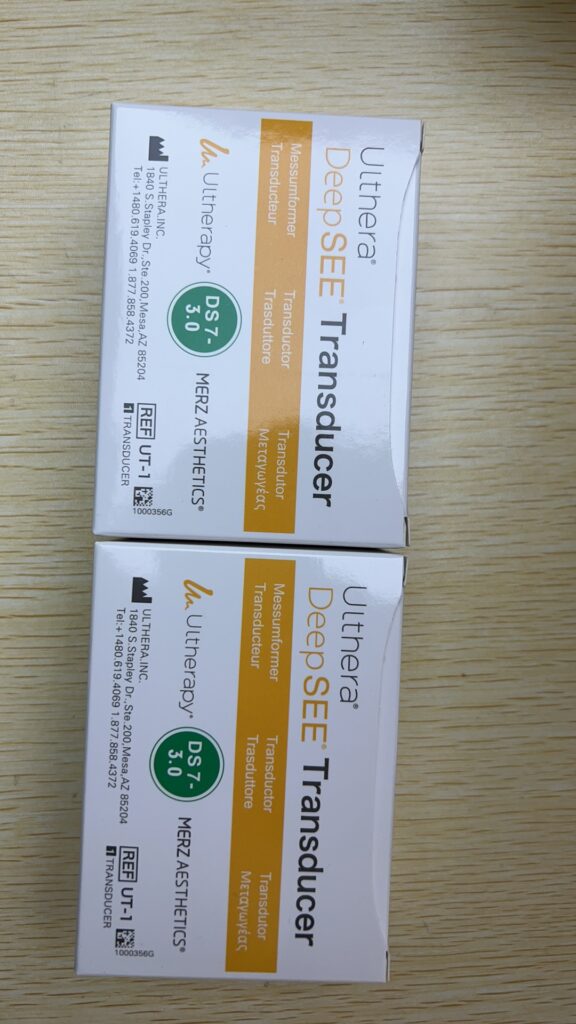
For clinics running Ultherapy, the Ulthera DS 10-1.5N “red” 1.5 mm cartridge is the supervised finish line for epidermal and superficial dermal polishing after deep 3.0–4.5 mm vectors are set, adding macrotextural refinement without another capital purchase. With typical new-unit pricing around USD 2,300–3,000 and 2,200–2,400 lines per cartridge, it becomes an ROI lever when integrated as a planned finishing pass, not an optional add-on.
What It Does and Ideal Clinic Profile
The Ulthera DS 10-1.5N transducer is a 10 MHz, 1.5 mm narrow DeepSEE cartridge engineered for superficial, small-field work—periorbital polishing, perioral crepiness, and fine-line macrotexture in the upper dermis. At 1.5 mm, microfocused ultrasound deposits small thermal coagulation points within the collagen-rich dermis, bypassing the epidermal surface while avoiding subcutaneous fat and deeper fascial structures.
Clinically, DS 10-1.5N is not a primary lifting cartridge; it complements deep transducers (3.0 and 4.5 mm) by addressing residual crepiness and surface laxity once deep vectors have been treated. Ideal adopters are dermatology, aesthetic surgery, and medspa practices that already own Ultherapy systems and want a consistent, protocol-based final pass to improve perceived smoothness and uniformity of treated skin fields without changing platform.
This cartridge is particularly valuable in clinics targeting high-expectation patients—periorbital, perioral, and cheek fine lines—where “lift without polish” feels incomplete and undermines the perceived value of MFU-based treatments. ALLWILL typically positions DS 10-1.5N as part of a structured Ultherapy transducer stack rather than a stand-alone consumable, aligning supply with the clinic’s treatment mix and anatomical priorities.
Core Analysis: 1.5 mm “Finish Line” Physics and Treatment Profile
Depth and tissue interaction
Ultherapy cartridges are defined by frequency and focal depth; the DS 10-1.5N operates at 10 MHz with a nominal treatment depth of 1.5 mm and DeepSEE visualization down to approximately 8 mm. At this shallow depth, energy is focused into the upper to mid dermis, where collagen bundles, elastic fibers, and microvasculature contribute to visible texture and fine-line patterns.
Microfocused ultrasound at 1.5 mm creates small, discrete thermal coagulation points that initiate controlled neocollagenesis and tissue remodeling without breaching the epidermis. Because treatment fields are narrow (the “N” designation) and line density can be high, DS 10-1.5N allows operators to contour coverage precisely around periorbital rims, nasolabial folds, upper lip lines, and localized crepey patches.
Role in complete treatment profiles
In advanced MFU workflows, deep cartridges (DS 4-4.5, DS 7-4.5, DS 7-3.0) lay lifting vectors by targeting SMAS and deep dermal planes, while DS 10-1.5N addresses the superficial “finish.” Without this finishing pass, patients with meaningful deep lifting may still perceive scattered surface crepiness around the eyes or mouth, generating a sense of incomplete improvement despite correct deep-plane work.
By planning DS 10-1.5N lines into the protocol—often as a final stage after deep cartridges—clinics can standardize macrotextural refinement, reduce variability in perceived skin smoothness, and align anatomical treatment with patient expectations for both contour and surface. This doesn’t guarantee specific clinical outcomes, but it reduces the gap between deep-plane tissue change and visible texture over time.
HIFU and macrotexture
High-intensity focused ultrasound (HIFU), including Ultherapy, has been documented as a noninvasive modality for skin tightening and facial rejuvenation with improvements in skin laxity and fine wrinkles across lower face, neck, and periorbital areas. Systematic reviews highlight dermal collagen reorganization and modest wrinkle reduction when shallow focal depths are used appropriately and protocols are standardized.
DS 10-1.5N sits within this broader HIFU evidence base as a targeted tool for dermal-level macrotexture, designed to complement rather than replace deeper lifting cartridges. ALLWILL encourages clinics to align DS 10-1.5N usage with published HIFU safety and protocol guidance, particularly regarding energy settings, patient selection, and cumulative line counts.
Revenue and Operational Impact & Payback Math
Price and line economics
Market listings and distributor data place new DS 10-1.5N transducers broadly around USD 2,300–3,000 per unit, depending on channel, region, and any bundled service terms. Typical line capacity is reported at approximately 2,200–2,400 lines per cartridge, with many clinics using 400–800 lines per full-face protocol when incorporating periorbital and perioral polishing.
If we assume an illustrative acquisition cost of USD 2,400 and a working capacity of 2,200 lines, the nominal cost per line is around USD 1.10, excluding any additional service or logistics charges. At 600 finishing lines per comprehensive Ultherapy session, the DS 10-1.5N portion of consumable cost might sit around USD 600–700 per treatment in this simplified scenario.
Integrating finishing passes into session pricing
Clinics commonly price comprehensive Ultherapy face/neck sessions in the USD 1,800–2,500 range, with periorbital or perioral add-ons sometimes structured as smaller incremental fees. When DS 10-1.5N finishing passes are fully integrated rather than sold as optional extras, the cartridge cost becomes part of the baseline consumable model; the clinic recovers this cost through the overall package fee and utilization across multiple patients.
ROI hinges on how many sessions actually use DS 10-1.5N and how consistently line utilization matches protocol planning rather than ad hoc operator decisions. Under typical usage scenarios (for example, 25–40 comprehensive Ultherapy sessions per cartridge), the incremental DS 10-1.5N spend can be spread over several months of high-value treatments, but this is not guaranteed and depends on booking and pricing discipline.
For clinics modeling this, the practical step is to request a quote from ALLWILL for DS 10-1.5N current pricing and line counts, then run internal projections on how many finishing lines are planned per session and how many sessions per month justify routine cartridge stocking.
Differentiated Advantage and Rationale for Higher-Tier Use
The primary differentiation of DS 10-1.5N is its ability to target dermal collagen at 1.5 mm under ultrasound visualization, optimizing texture and fine lines after lifting vectors have already been created with deeper cartridges. This “finish line” role is unique compared with many non-visual HIFU cartridges, which often operate blind and at fixed depths without real-time imaging.
From a device-portfolio perspective, clinics might otherwise seek dermal macrotexture improvements via fractional laser, RF microneedling, or monopolar radiofrequency platforms, each with different consumable and downtime profiles. DS 10-1.5N offers a non-ablative, non-needling option that keeps patients within the Ultherapy ecosystem and can be combined with other modalities on a case-by-case basis, under appropriate medical supervision.
Given that Ultherapy systems are already high-ticket capital investments, adding DS 10-1.5N is a way to deepen the clinical service mix without buying another platform—provided that the clinic is prepared to integrate finishing-pass protocols and line tracking. ALLWILL generally advises buyers to treat DS 10-1.5N as a protocol upgrade and consumable investment rather than a separate service category, simplifying training and messaging.
Practical Decision Aid: DS 10-1.5N Finishing Protocol Planning Framework
Because the working title and context emphasize treatment completeness and texture, the most useful decision aid is not a price table but a practical planning framework for when and how to deploy DS 10-1.5N in your Ultherapy workflow.
DS 10-1.5N Finishing Pass Planning Framework
- Define your “complete” treatment profile.
Decide which anatomical zones (periorbital, perioral, cheek texture) must be routinely included for your clinic to consider an Ultherapy case “complete,” based on your patient base and positioning. - Standardize deep-first, shallow-second sequencing.
Lock in deep vectors with 3.0–4.5 mm cartridges first, respecting SMAS and deep dermal planes, then introduce DS 10-1.5N as a final pass targeting macrotexture and fine lines in defined fields. - Set line budgets per zone and per session.
For each treatment type (full face, periorbital focus, perioral add-on), set a standard line budget for DS 10-1.5N—for example, 200–300 lines per periorbital field and 100–200 around the upper lip—based on imaging, tissue thickness, and evidence-based safety parameters. - Align consumable stock with monthly protocol volume.
Use your line budgets and expected monthly Ultherapy sessions to forecast how many DS 10-1.5N cartridges you need per quarter, building in a buffer for peaks and training. This prevents understocking, which can force incomplete finishing passes, and overspending, which ties capital into idle cartridges. - Track utilization and outcomes systematically.
Log DS 10-1.5N lines used per case, along with clinical observations and patient satisfaction markers, to refine line budgets and adjust pricing over time. This supports ROI assessment without promising specific income or outcomes. - Review supply and protocol annually.
Annually, reassess protocol coverage, consumable usage, and Ultherapy service mix with your supplier, updating DS 10-1.5N stocking and pricing to match practice evolution and any new HIFU guidance or regulatory changes.
ALLWILL can help clinics operationalize this framework by connecting procurement decisions (how many cartridges, at what intervals) with protocol design and training, rather than leaving DS 10-1.5N in a purely reactive consumable category.
Mid-article, once your clinic has drafted its own finishing framework, it becomes logical to request a quote from ALLWILL for DS 10-1.5N pricing, lead times, and recommended stocking volumes aligned to your projected Ultherapy treatment patterns.
Compliance and Asset Protection
Ultherapy systems are cleared by the US Food and Drug Administration as non-invasive procedures for lifting tissues in specific regions and for improving lines and wrinkles on the décolletage; cartridges like DS 10-1.5N operate within that broader MFU-V platform clearance but must still be used according to official Instructions for Use. Indications, energy parameters, and anatomical zones vary by region, and clinics must confirm current regulatory status in each jurisdiction where they treat or import devices.
The DS 10-1.5N transducer carries manufacturer labeling including frequency, depth, serial number, and line capacity, supporting traceability and compatibility checks with approved Ultherapy systems. Buyers should obtain written confirmation for new and CPO units regarding authenticity, remaining line capacity, prior usage (if any), and whether the cartridge is original or refurbished, including documentation of any refurbishment processes performed.
Asset protection obligations extend beyond purchase: clinics must perform routine pre-treatment checks on imaging clarity, energy delivery, and line-count integrity for all Ultherapy cartridges, including DS 10-1.5N. ALLWILL frequently integrates such checks into Smart Center guidance or service relationships, helping clinics differentiate between user-training issues and hardware anomalies when evaluating MFU-V performance.
Procurement Risks to Avoid + ALLWILL Expert View
Common procurement pitfalls with DS 10-1.5N
- Buying based only on price per cartridge.
Focusing solely on headline cost—without confirming line counts, warranty scope, or compatibility with your Ultherapy system—can erode ROI if cartridges have reduced capacity or limited support. - Unclear refurb vs new status.
Acquiring DS 10-1.5N cartridges without clear declarations of “new, unused” versus refurbished or partially used units risks unpredictable line availability and possible compliance questions. - No integration into protocol planning.
Treating DS 10-1.5N as an optional extras cartridge rather than a pre-planned finishing pass often leads to inconsistent use, making cost-per-result harder to justify in internal reviews. - Insufficient training on shallow-depth HIFU.
Operators who are comfortable with deep SMAS work may underestimate the precision required for 1.5 mm dermal targeting, increasing the risk of uneven coverage or suboptimal patient experiences.
Once these risks are mapped against your current sourcing strategy, the next rational step is to request a quote and transducer profile from ALLWILL that includes condition grading, warranty terms, and protocol-integration support for DS 10-1.5N.
ALLWILL Expert View: Turning the Red 1.5 mm Cartridge into a Strategic Finish Line
In practice, DS 10-1.5N only pays for itself when it moves from “nice add-on” to “standard finish.” Clinics that succeed with this cartridge do three things consistently. First, they define their Ultherapy service promise as both contour and surface—deep vectors plus macrotexture—and write protocols that codify where 1.5 mm lines belong in each case type. Second, they track consumable usage rigorously: lines per zone, per operator, per month, and tie reordering to those data rather than anecdotal impressions. Third, they align procurement with training, ensuring operators understand the difference between SMAS work and dermal polishing, particularly near high-sensitivity fields like periorbital and perioral regions. When ALLWILL structures DS 10-1.5N quotes, the goal is not just to quote a price per cartridge but to show how that cartridge fits into the clinic’s broader Ultherapy economics and compliance profile—covering line counts, condition grading, warranty options, and any recommended Smart Center or expert-matching support. This approach doesn’t promise a specific revenue uplift, but it does convert DS 10-1.5N from a discretionary consumable into a planned, auditable part of the clinic’s noninvasive rejuvenation strategy.
Frequently Asked Questions
What is the typical price range for the Ulthera DS 10-1.5N cartridge?
Market data from distributors and specialty stores place new DS 10-1.5N cartridges broadly around USD 2,300–3,000 per unit, depending on channel and region. Actual pricing varies with volume, bundled service terms, and logistics, so clinics should request a quote from ALLWILL for current, region-specific figures.
Is there a difference between new and CPO DS 10-1.5N units?
New cartridges are typically labeled as unused with full line capacity and manufacturer-aligned warranty, while certified pre-owned units may be refurbished or partially used with remaining line counts documented. Clinics should verify in writing whether cartridges are new or CPO, confirm remaining lines, and review any included warranty before purchase.
What warranty coverage should I expect for DS 10-1.5N?
Some suppliers provide 90-day to 12-month limited warranties on cartridges, covering manufacturing defects but not consumable exhaustion, while others bundle DS 10-1.5N into broader Ultherapy system service agreements. It is advisable to request explicit, written warranty terms with your ALLWILL quote so you know exactly what scenarios are covered.
How does DS 10-1.5N affect ROI and payback?
DS 10-1.5N influences ROI through its impact on perceived treatment completeness and the cost per finishing line used within each protocol, rather than through standalone session pricing. Clinics should model line budgets per standard Ultherapy case and match those against cartridge cost and expected booking volume; requesting detailed pricing and line-capacity information from ALLWILL supports this modeling.
Are there special compliance considerations when importing DS 10-1.5N?
Yes. Importing Ultherapy cartridges requires attention to regulatory labeling, authenticity, and compatibility with locally approved systems, as well as adherence to official Instructions for Use. Clinics should ensure serial numbers, documentation, and regulatory status are verified before cross-border procurement and may choose to have ALLWILL coordinate such checks as part of a pre-purchase review.
References
- Ulthera System – Instructions for Use
- UT-4N – DS 10-1.5N Transducer – Orange Narrow
- Ulthera Transducer DS 10-1.5N 2400 Lines – Product Details
- Introduction of the 1.5 mm Shallow Transducer
- 3 Periorbital Polishing Techniques: Fine Line Eradication and Business Economics of the Ulthera DS 10-1.5N
- Safety and Efficacy of High-Intensity Focused Ultrasound and Monopolar Radiofrequency
- Noninvasive High-Intensity Focused Ultrasound for Skin Brightening Efficacy
- A Systematic Review of High-Intensity Focused Ultrasound
- Ulthera DeepSEE Transducer DS 10-1.5N (Narrow) – Product Listing
- Davin Lim – HIFU Cartridge Depths Explained
Related articles
Ultherapy Transducers: What the Probe Record Changes About the PriceBrand and Model Buying Guides Candela GentleMax Pro: Demand, Verification and Cost Before You CommitBrand and Model Buying Guides
 Alma VH1160 Vector Handpiece Code: What the Part Number Tells a BuyerBrand and Model Buying Guides
 DEKA Onda Pro: Investment Case, Verification and Pre-Owned RealityBrand and Model Buying Guides