
3 Periorbital Polishing Techniques: Fine Line Eradication and Business Economics of the ULTHERA DS 10-1.5N Transducer
In the evolving landscape of medical aesthetics, demand for non-invasive eye and lip rejuvenation has surged. Clinical data demonstrates that superficial microfocused ultrasound with visualization (MFU-V) can significantly improve periocular and perioral fine lines…
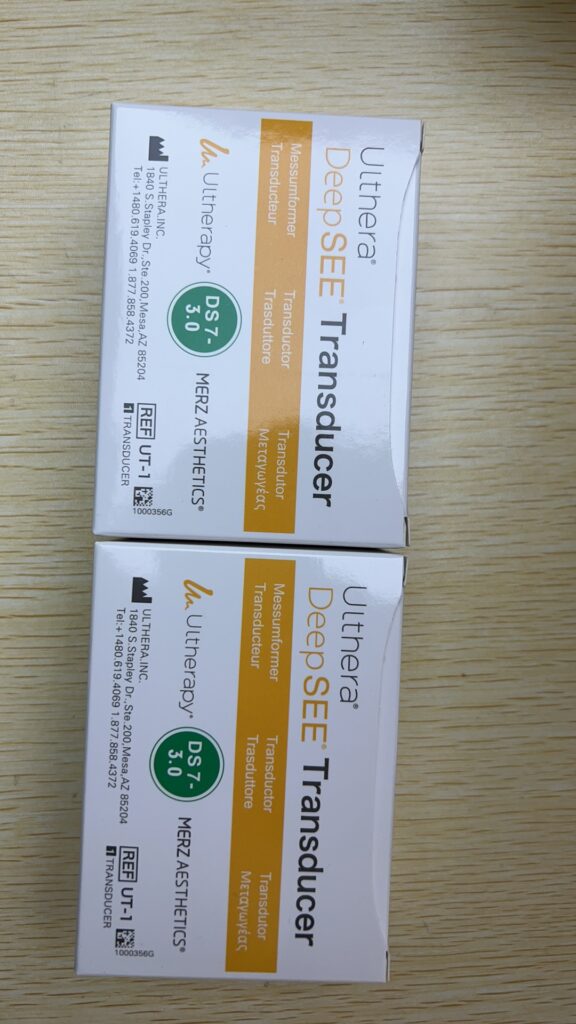
In the evolving landscape of medical aesthetics, demand for non-invasive eye and lip rejuvenation has surged. Clinical data demonstrates that superficial microfocused ultrasound with visualization (MFU-V) can significantly improve periocular and perioral fine lines after a single treatment. However, operating within thin skin zones over bone demands immense device-side precision. Practices are shifting away from generic high-intensity focused ultrasound (HIFU) probes toward branded Ultherapy transducers that feature controlled focal depths, integrated imaging, and standardized energy delivery.
The ULTHERA DS 10-1.5N (10 MHz, 1.5 mm narrow) transducer is engineered specifically for this superficial, small-field clinical work. It creates micro-focused ultrasound coagulation points in the superficial dermis while minimizing collateral heating near critical structures. For clinic owners and biomedical engineers, optimizing this handpiece requires balancing precise clinical execution with structured line-count economics and vendor-backed technical maintenance.
ALLWILL stabilizes global B2B access to certified Ulthera consumables and replacement handpieces. Sourcing components through a verified supply chain and testing them via advanced engineering environments allows medical practices to safely integrate high-density polishing protocols into their daily clinical workflows.
What It Does and Ideal Clinic Profile
The DS 10-1.5N is a 10 MHz, 1.5 mm depth DeepSEE transducer designed with a narrow patient contact footprint (N type). It targets the superficial dermis while maintaining ultrasound visualization up to a depth of 8 mm. The system produces linear arrays of discrete thermal coagulation points (TCPs) at an approximate 1.5 mm depth, maintaining beam widths at focus in the 0.24–0.25 mm range. In clinical workflows, this handpiece is deployed to refine fine periorbital and perioral rhytids, complementing deeper 3.0 mm and 4.5 mm cartridges rather than acting as a standalone lifting solution.
Medical practices that derive the highest return on investment from this accessory include:
-
Facial plastic surgery clinics, dermatology practices, and high-end medspas that already offer full-face Ultherapy protocols and require enhanced finesse for crow’s feet and perioral barcode lines.
-
Practices treating a significant percentage of thin-skinned, lower-BMI patients, such as specific Asian and peri-menopausal demographics, where narrow focal zones and bone avoidance are clinically critical.
-
Established clinics seeking to increase overall ticket value and patient satisfaction by introducing a superficial wrinkle refinement tier without investing in an entirely new technology platform.
Integrating the DS 10-1.5N transforms an existing console into a revenue-multiplying asset, provided procurement, line costs, and hardware maintenance are managed systematically.
Definition: What is 3 Periorbital Polishing?
3 Periorbital polishing refers to a structured, three-axis clinical approach to treating the crow’s feet complex—encompassing the lateral canthus, the infra-orbital hollow margins, and the upper cheek transition zones—using the red 10 MHz, 1.5 mm ULTHERA DS 10-1.5N transducer. This methodology delivers microfocused ultrasound energy precisely into the upper dermis. The narrow focal geometry restricts the lateral spread of the acoustic field, allowing practitioners to smooth etched, static wrinkles in ultra-thin tissue with greater control and anatomical safety than standard broad-beam energy devices.
Clinical Pain Points in Thin Periorbital Anatomy
Periorbital and perioral skin morphology often presents a thickness of less than 1 mm, characterized by minimal subcutaneous fat cushioning and close proximity to the orbital rim, periosteum, and neurovascular pathways. Generic aesthetic cartridges featuring wider focal zones or deep, fixed heating patterns risk delivering thermal injury too close to the epidermis or directly onto bone. This can result in localized pain, persistent swelling, or post-inflammatory hyperpigmentation, particularly in darker skin phototypes.
Simultaneously, patient expectations have shifted toward immediate, high-fidelity smoothing of static lines without the social downtime, bruising, or injection-related anxiety associated with traditional dermal fillers or ablative resurfacing lasers.
Operationally, standard multi-depth protocols using 4.5 mm and 3.0 mm configurations focus primarily on structural lifting and deep tissue tightening. They do not safely accommodate high-density, line-by-line textural refinement around delicate facial contours. Consequently, clinics often undertreat these areas to preserve safety margins, compromising visible outcomes and patient retention. This challenge is frequently compounded by a fragmented secondary supply chain, where inconsistent access to certified, technically validated 1.5 mm cartridges prevents practices from establishing predictable, scalable treatment protocols.
Technical Specification and Cartridge Comparison
The clinical utility of the ULTHERA DS 10-1.5N rests on how its narrow focal zone geometry alters energy delivery compared to alternative aesthetic modalities.
| Technical Aspect | ULTHERA DS 10-1.5N (Red, Narrow) | Conventional 1.5 mm HIFU Probe | Fractional Non-Ablative Laser |
| Frequency and Depth | 10 MHz frequency focused at 1.5 mm into the upper dermis for fine line targeting. | Typically 4–7 MHz with broad depth variations across the 1.5–3.0 mm zone. | Optical energy targeting the epidermis and papillary dermis layers. |
| Focal Zone Geometry | Narrowed “N” footprint designed for tight periorbital and perioral zones. | Wide lateral thermal spread, increasing proximity risks near bone. | Pixelated microbeams creating fractional columns without localized depth specificity. |
| Real-Time Imaging | Integrated with DeepSEE real-time ultrasound visualization up to 8 mm. | Lacks integrated imaging; line placement relies entirely on surface anatomy. | Uses surface guides only; provides no sub-surface tissue visualization. |
| Primary Indications | Superficial periorbital wrinkles, crow’s feet polishing, and perioral etching. | General tissue tightening; less optimal for delicate, superficial lines. | Epidermal texturing, pigment modulation, and mild superficial tightening. |
| Downtime and Tolerance | Mild, transient erythema; single-session protocol with minimal disruption. | Elevated risk of focal tenderness or deep periosteal aching if misplaced. | Post-treatment erythema, mild edema, and potential micro-crusting over several days. |
| Sourcing and Validation | B2B procurement backed by multi-point engineering inspections via ALLWILL. | Variable manufacturing quality and uncertain line count integrity depending on source. | Widely distributed; performance relies heavily on manufacturer service networks. |
Functional Breakdown: How the Technology Operates
The clinical and economic efficiency of the DS 10-1.5N depends on three integrated hardware and software characteristics.
1. Superficial Dermal Targeting
By operating at a high frequency of 10 MHz, the transducer concentrates acoustic energy at a shallow 1.5 mm depth plane. This focus allows for precise dermal collagen remodeling and neocollagenesis directly beneath the epidermis, avoiding deeper subcutaneous layers or SMAS structures. This depth matches the structural anatomy where fine static lines form around the lateral canthal and perioral zones.
2. Narrow “N” Footprint Architecture
While the standard DS 10-1.5 and the narrow DS 10-1.5N share identical acoustic parameters, the “N” version reduces the active scan length to approximately 14 mm compared to the standard 25 mm footprint. Shortening the treatment line enables precise positioning over curved bony structures like the orbital rim and zygoma. It minimizes the lateral spread of thermal coagulation points, allowing clinicians to safely place high-density, overlapping patterns without causing unintended thermal compounding in thin tissue.
3. Integrated SEE-PLAN-TREAT Visualization
The handpiece syncs with the core console’s DeepSEE technology, giving operators the ability to visualize tissue layers, confirm acoustic coupling, and map out bone proximity prior to and during energy delivery. This supports a structured, three-layer approach where superficial polishing passes are layered precisely over deeper 3.0 mm and 4.5 mm structural treatments without relying on blind anatomical estimation.
Step-by-Step Clinical Implementation Protocol
To achieve safe results and maximize patient satisfaction, practices should follow a structured sequence when executing a 3 periorbital polishing protocol.
1. Baseline Assessment and Selection
Evaluate the patient’s static and dynamic rhytids, baseline skin thickness, and historical cosmetic treatments. Ideal candidates exhibit mild-to-moderate static lines around the eyes or mouth and possess realistic expectations regarding the 90–180 day timeline required for natural collagen synthesis.
2. Hardware Verification and Preparation
Calibrate the console and mount the verified ULTHERA DS 10-1.5N transducer. Check the starting line count, lot number, and membrane integrity. Utilizing components validated by an engineering-focused supplier helps ensure that acoustic output matches original specifications.
3. Anatomical Mapping and Imaging
Cleanse the treatment zone and apply a standardized ultrasound coupling gel. Use the real-time visualization monitor to evaluate dermal boundaries and identify underlying bone structures. Mark out the three targeted sub-zones: the lateral crow’s feet fan, the infra-orbital region, and the upper cheek transition zone.
4. Parameter Selection and Line Planning
Configure energy parameters based on tissue feedback and patient tolerance. Initial energy levels typically stay under 1.5 J at 10 MHz, with maximum power limited to 15 W. Plan for higher line densities inside deeply etched static lines, and shift to conservative line spacing near safety boundaries like the lower lash margin.
5. Execution of Polishing Passes
Deliver the lines systematically across the mapped zones. Maintain firm, perpendicular transducer contact to eliminate air gaps or fluid pockets that can cause surface burns. When performing combination therapies, complete all deep 4.5 mm and 3.0 mm lifting passes first, then finish with the 1.5 mm superficial polishing pass.
6. Post-Treatment Logging and Follow-Up
Record the final line counts, total energy delivered, and immediate skin responses in the patient chart. Provide clear guidelines regarding transient redness or localized mild tenderness. Schedule a follow-up assessment at the 3-month to 6-month interval to track objective texturing improvements via clinical photography.
Practical Clinical Use Cases
Integrating this precise technology allows practices to address patient scenarios that are difficult to manage using traditional treatments alone.
Use Case 1: Early Crow’s Feet in a Professional Patient
-
Traditional Approach: The clinic administers botulinum toxin alone or performs deep 3.0 mm/4.5 mm MFU-V passes. While deep passes improve structural laxity, they leave fine, etched superficial static lines unaddressed, and toxin injections may alter natural dynamic expressions.
-
Adopting the DS 10-1.5N Protocol: The clinician adds a targeted superficial polishing pass over the lateral canthal fan using the narrow 1.5 mm cartridge. This softens surface lines while maintaining natural facial movement and avoiding social downtime.
Use Case 2: Crepey Infra-Orbital Skin in a Laser-Averse Patient
-
Traditional Approach: The practice recommends fractional non-ablative or ablative lasers, which the patient declines due to fear of post-inflammatory hyperpigmentation and prolonged erythema. Dermal fillers are also ruled out due to worries about fluid retention, swelling, or visibility through thin skin.
-
Adopting the DS 10-1.5N Protocol: The clinic implements a superficial MFU-V pass across the infra-orbital hollow margins. The narrow focal zone stimulates localized dermal tightening beneath intact skin, keeping surface redness minimal and transient.
Use Case 3: Perioral Barcode Lines with Existing Fillers
-
Traditional Approach: Repeatedly injecting dermal fillers into the upper lip risks over-projecting the area, altering the vermilion border, or creating micro-lumpiness. Ablative skin resurfacing requires extensive recovery.
-
Adopting the DS 10-1.5N Protocol: The provider performs a deep structural pass using a 3.0 mm transducer, followed by concentric superficial lines around the lips using the DS 10-1.5N. This sequence refines vertical lines and supports tissue longevity without introducing excessive artificial volume.
Operational Impact and Financial Payback Math
Investing in the DS 10-1.5N handpiece requires evaluating its direct operational and financial footprint on a clinic’s existing capital framework.
Pricing Context and Consumable Structures
Market valuations for brand-new, original Ulthera transducers generally track between 1,500 USD and 2,500 USD per cartridge, depending on distribution channels and regional compliance. Certified pre-owned (CPO) or surplus units featuring verified partial line counts often transact at lower price points.
Every new DS 10-1.5N cartridge contains a finite allocation of approximately 2,400 acoustic lines. Depending on treatment density and protocol layout, a standard periorbital and perioral superficial session consumes enough lines to yield roughly 3 to 4 complete patient procedures per transducer. This sets a base consumable amortization cost of approximately 50 USD to 150 USD per patient for the superficial treatment layer.
When positioned as a high-value, specialized add-on to an existing full-face lifting package, practices can realistically price a periorbital/perioral polishing session between 150 USD and 400 USD. Consequently, a single cartridge can generate thousands of dollars in incremental revenue over its operational lifespan. True payback velocity depends on local patient demographics, treatment bundling strategies, and whether the service attracts new client segments who prioritize fine-line mitigation over structural lifting.
Practice Optimization
Integrating this specialized cartridge introduces specific operational variables:
-
A measured increase in total procedural time to accommodate detailed, high-precision passes around the eyes and lips.
-
An increased emphasis on staff training to ensure accurate cross-sectional imaging and meticulous transducer alignment.
-
The opportunity to offer clearly tiered protocol menus (e.g., Core Structural Lifting vs Premium Lift & Polish), matching treatment costs to specific patient expectations.
ALLWILL helps practices model specific per-shot costs and protocol economics based on projected patient volumes and line densities. This ensures that every cartridge purchase aligns with a calculated practice development strategy.
Biomedical Engineering Maintenance Checklist
Because transducers function as specialized consumable hardware, keeping them operational requires structured oversight. The following technical checklist helps biomedical engineering teams preserve performance standards and manage operational life.
1. Identity and Console Recognition
Verify that the model designation (DS 10-1.5N), factory serial number, lot tracking, and transducer subtype (UT-4N) align with procurement records. Confirm that the core system correctly reads the cartridge data upon connection to prevent counterfeit or incompatible components from entering clinical service.
2. Regulatory Alignment and Indications
Cross-reference current instructions for use (IFU) against local regulatory clearances. In specific jurisdictions like the United States, the system holds clearances for lifting the brow, lax submental/neck tissue, and treating décolleté wrinkles. Framing specialized periorbital polishing as a precise technique requires distinguishing marketing terminology from primary indications for use according to regional guidelines.
3. Visual and Structural Inspection
Examine the acoustic coupling membrane, outer plastic housing, product labeling, and cable strain reliefs prior to clinical use. Check for micro-fractures, punctures, housing discoloration, or signs of internal fluid leakage. Cartridges showing physical degradation must be retired immediately to prevent distorted acoustic fields or surface burns.
4. Electrical Safety Verification
Conduct regular leakage current testing, ground continuity assessments, and insulation integrity verifications according to IEC 60601-1 standards. Confirm that Type B applied part insulation pathways are secure to eliminate residual shock or unintended thermal risks near delicate ocular anatomy.
5. Acoustic Output Performance Baseline
Perform standard manufacturer calibration validations or phantom tissue simulation checks to confirm that the acoustic output stays within the specified ±20% energy accuracy tolerance. Ensure the focal depth stays centered at 1.5 mm to maintain uniform treatment lines.
6. Thermal Cutoff Management
Verify the operational status of the internal temperature sensors during test sequences. The Ulthera software disables active scanning if internal transducer temperatures reach approximately 43°C. Tracking this behavior protects the internal crystal arrays during high-density passes.
7. Line-Count Logging and Auditing
Establish a mandatory tracking ledger to log initial and concluding line counts after every treatment session. Tracking line consumption prevents surprise downtime mid-procedure and generates empirical cost-per-shot metrics for accounting reviews.
8. Cleaning and Disinfection Control
Enforce approved sanitization protocols using compatible, non-corrosive disinfectant wipes. Never submerge electrical connectors or expose the acoustic membrane to harsh solvents, which can cause micro-cracking and degrade the beam profile.
9. Sourcing Strategy and Replacement Planning
Maintain a proactive procurement schedule based on historical clinic case volumes. Balancing a combination of new and certified pre-owned cartridges with verified line counts allows clinics to maintain constant inventory levels without overextending capital.
Sourcing Pitfalls and ALLWILL Expert View
Navigating the secondary market for high-demand aesthetic consumables introduces specific logistical and technical risks that require careful management.
Procurement Pitfalls to Evade
Practices sourcing DS 10-1.5N cartridges frequently encounter predictable acquisition errors:
-
Unverified Line Count Claims: Purchasing secondary units marketed with generic lifespan percentages without checking console-verified screenshots or official service logs can result in distorted cost-per-treatment metrics.
-
Mismatched Model Configurations: Confusing the standard broad-footprint DS 10-1.5 with the narrow-footprint DS 10-1.5N compromises treatment precision around curved bony structures and may void equipment warranties.
-
Fragmented Supply Chains: Sourcing components through unverified brokers increases exposure to counterfeit accessories, leading to irregular beam shapes and elevated clinical risk profiles.
ALLWILL Expert View
From a clinical asset planning perspective, the ULTHERA DS 10-1.5N should be treated as a precision micro-instrument that optimizes the earning capacity of an existing console. Practices should begin by auditing their current patient demographics to identify clients seeking correction for fine periorbital crepiness, rather than waiting for full-face lifting indications. This data allows for the creation of standardized, high-margin treatment tiers.
On the logistics front, the most sustainable approach is separating device acquisition from immediate clinical demand. Instead of purchasing replacement cartridges on an ad-hoc basis when an active probe runs out, practices can coordinate a rolling procurement plan that blends new and certified pre-owned units. Sourcing through a platform like ALLWILL ensures every transducer undergoes engineering inspection and line validation via an advanced Smart Center. This approach transforms consumable procurement from an unpredictable operational expense into a stable, strategic revenue driver.
Frequently Asked Questions
What is the typical price range for a DS 10-1.5N transducer?
New Ulthera DS 10-1.5N cartridges generally track between 1,500 USD and 2,500 USD based on global location and distribution channels. Certified pre-owned units with verified remaining line counts trade at lower price levels, with pricing scaling according to remaining line metrics and warranty coverage.
How does a certified pre-owned DS 10-1.5N differ from a new one?
Certified pre-owned transducers undergo multi-point technical inspections, functional calibration testing, and physical grading to verify remaining line allocations. While functionally compliant with performance specifications, they are not identical to factory-new units and typically carry structured warranties provided by the secondary vendor or B2B platform rather than the original manufacturer. Furthermore, their initial software handshakes with the core console may reflect a reduced operational line pool, which requires precise tracking via your internal logistics ledger to ensure accurate clinical cost-per-shot modeling.
How many patient procedures can be performed with a single DS 10-1.5N cartridge?
Every new cartridge contains an allocation of approximately 2,400 acoustic lines. Depending on individual treatment density and whether you are covering both the periorbital and perioral zones, a standard superficial refinement protocol consumes enough lines to yield roughly 3 to 4 complete patient procedures per transducer.
Can the DS 10-1.5N be used as a standalone solution for facial lifting?
No, the DS 10-1.5N operates at a shallow 1.5 mm depth targeting the superficial dermis to refine fine lines and texturing. It does not reach the deeper SMAS layer or deep subcutaneous tissue. For comprehensive structural lifting, it must be deployed as a final “polishing” layer complementing deeper 4.5 mm and 3.0 mm Ultherapy transducers.
Related articles
 Trade-In Value of Used Medical Equipment: How Credit Is Applied to the Next PurchaseKnowledge
 Sofwave Machine Cost: Purchase Price Versus Per-Treatment EconomicsAesthetic Device Buying
 Mobile MRI Machine Cost: When the Trailer Beats BuyingAesthetic Device Buying
 How Much Does a CT Scanner Cost: The Configuration Lines That Set the PriceAesthetic Device Buying