
Med Spa Startup Checklist: Equipment, Records and the Order to Buy In
Startups tend to build an equipment list from aspiration outward, which produces a room full of devices that are not yet paying for themselves. The order in which items are bought decides how quickly…
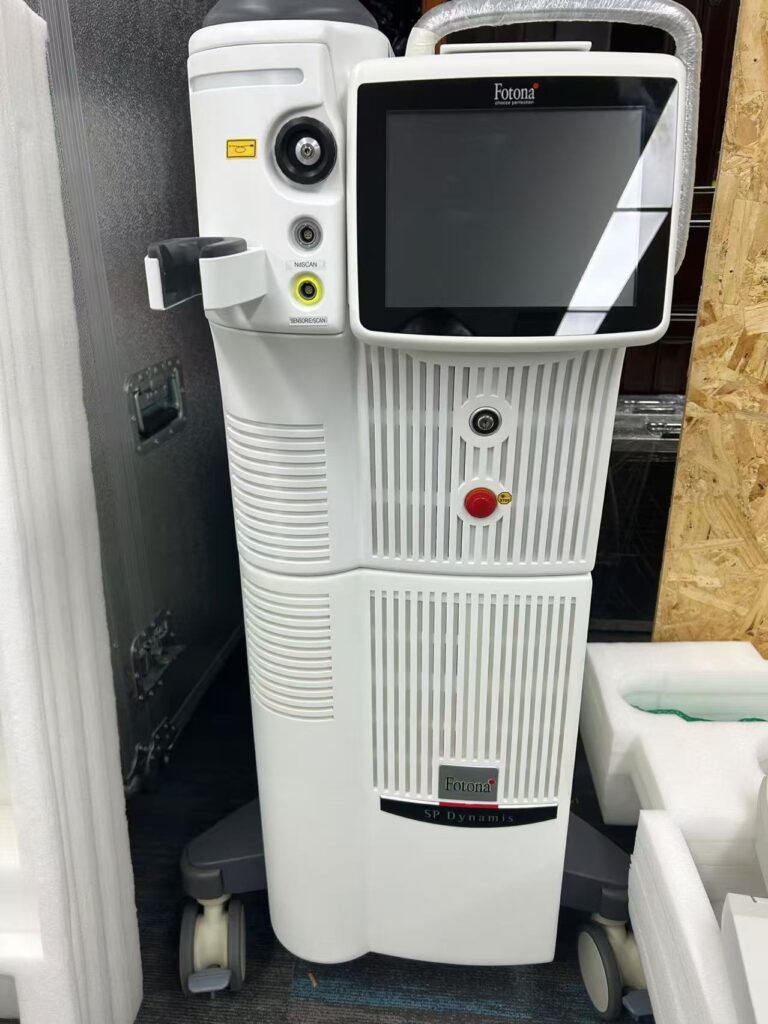
A medspa startup checklist should be ordered by revenue timing rather than by wish list. Buy the platform that produces revenue first, add support equipment before it becomes a bottleneck, decide new or pre-owned at each line, and keep the documentation that proves ownership, condition, and traceability from day one.
Order of Purchase: Revenue Timing First
The first rule is to buy in the order that produces revenue, not in the order that completes a catalog. A treatment platform that can be sold from the first week outranks an upgrade to the reception area, and a piece of support equipment that prevents downtime outranks a second platform that duplicates capability. Sequencing this way keeps startup capital working from the beginning instead of sitting idle in a treatment room.
Two filters do the ranking. The first is how soon an item generates billable treatments, which places the core platform above everything else. The second is how quickly the absence of an item blocks revenue, which is what moves support equipment up the list even though it produces nothing on its own. An item that satisfies neither test is a later purchase.
- Rank one: the platform that produces the highest billable volume from a case mix you can actually sell.
- Rank two: the consumables, eyewear, and accessories that platform requires in order to operate.
- Rank three: support equipment whose absence stops treatment or creates a safety problem.
- Rank four: software, records, and payment systems that let the practice document and bill.
- Rank five: additional platforms that broaden the menu rather than deepen capacity.
- Rank six: aesthetic upgrades to the site itself, funded from cash flow rather than startup capital.
The ranking is not static. A second platform moves up the list as soon as the first is running at capacity, and it moves down again if the local demand it was intended to serve does not materialize. Reviewing the order each quarter is what keeps the plan honest.
Core Treatment Platforms: What to Buy First
The first platform should be the one whose treatments the founding clinician can already deliver and for which demand exists in the local market. That usually points to a hair removal or skin treatment platform rather than a specialist device, because the treatments are repeatable, the consumable cost per session is predictable, and the learning curve is short enough to sell services while still learning the device.
| Category | What it delivers | Why it sits where it does |
|---|---|---|
| Hair reduction platform | Repeat-course treatments across a broad patient base | High volume, recurring schedule, short training curve |
| Skin resurfacing and fractional platform | Texture, tone, and scar work | Broadens the menu once the first platform is earning |
| Pigment and vascular platform | Discrete lesion and vascular work | Consultative and lower volume, higher value per session |
| Skin tightening platform | Laxity treatment on face and neck | Consumable-led, needs a clear treatment protocol |
| Body contouring platform | Non-invasive fat reduction | Applicator-led, longest payback of the group |
| Consumable-led services | Volume and skin quality work | Lowest capital requirement and no device to support |
The table is a sequence, not a shopping list. Buying two platforms from the middle of it before the first is at capacity spreads utilization across both and lengthens the payback of each, which is the most common equipment mistake in a first year of operation.
Support Equipment Buyers Forget
Support equipment separates a room that runs from a room that occasionally stops, and it is almost always under-budgeted in a first plan. None of it generates a treatment, and all of it protects the treatments that do.
- Laser plume evacuation and room ventilation sized to the treatments being offered.
- Protective eyewear in the wavelengths the platform emits, in sufficient quantity for staff and patients.
- Skin cooling and analgesia provision, which affects both comfort and the settings a clinician can use.
- A treatment bed and positioning equipment that allow the required access for each procedure.
- Handpiece, transducer, and consumable storage that protects optics and delivery components.
- Instrument reprocessing provision where reusable instruments are used.
- Power conditioning or protection, so a supply event does not become a repair.
- Spares of the items whose failure stops the schedule: eyewear, delivery components, and disposables.
Two of these are frequently deferred and rarely worth deferring. Eyewear has to match the wavelengths in use rather than the old platform’s specification, and adequate storage is what prevents the delivery-component damage that shows up during the first year of operation.
Pre-Owned Options at Each Line
Pre-owned is a legitimate route at most lines, but the case for it differs by item. The question at each line is whether the saving offsets the verification work and the support position, which depends on how easily the item can be tested and how long the buyer expects to hold it.
| Line | New considerations | Pre-owned considerations |
|---|---|---|
| Core treatment platform | Full support horizon and current specification | Support position, consumable availability, and probe or handpiece life |
| Second platform | Warranty from the first day of operation | Condition record and documented service history |
| Delivery components and applicators | Predictable lead times | Remaining life must be stated per item and priced accordingly |
| Support equipment | Simple warranty claims | Usually straightforward, since most items are testable on site |
| Furniture and room fit-out | Specification matched to the room | Low risk where condition can be inspected |
| Software and licenses | Support and updates included | Transferability is the deciding question, not price |

Two lines carry most of the risk. A pre-owned core platform whose consumables are already constrained carries a replacement cost inside the first year, which changes the effective purchase price. And pre-owned software is only transferable if the license terms allow the transfer, so that question should be asked of the supplier rather than inferred from the listing.
Documentation to Keep From Day One
Records serve three audiences: the practice, the accountant, and any future buyer of the asset. Starting the file at installation costs nothing; reconstructing it later is often impossible, particularly once staff have changed.
- Purchase documentation: invoice, terms, and the entity that acquired the asset.
- Asset register entry: model, serial number, room, and in-service date.
- Delivery and installation records, including any commissioning test results.
- Training certificates for every member of staff cleared to operate the platform.
- Service, maintenance, and calibration records, filed against the serial number.
- Consumable and delivery-component records, including remaining life where it is consumable.
- Warranty and service agreement documents, with renewal dates and notice periods.
- Disposal or trade-in documentation when a unit eventually leaves.
The consumable and component record is the one that most often gets missed, and it is the one that affects both running cost and resale value. Where a delivery component has a stated life, tracking it from the first treatment prevents the situation where a replacement is needed before the practice has budgeted for it.
Finance and Lease Routes for a Startup
Financing terms for a new practice are shaped by what a lender can see, which at the start is limited to the plan, the founders’ experience, and the equipment itself. That is why the equipment route and the funding route tend to be chosen together rather than one after the other.
| Route | What it commits | Fit at startup |
|---|---|---|
| Cash purchase | Capital outlay now, no recurring payment | Where reserves exist and the platform is the revenue driver |
| Equipment finance | A payment schedule across the term | Preserves working capital for the first months of operation |
| Lease | A term commitment with defined end-of-term options | Where the platform may be replaced or upgraded within the term |
| Rental | Access without ownership | Testing a service line before committing to it |
| Pre-owned purchase | Lower capital outlay at a lower specification point | Where the support horizon covers the intended holding period |
| Manufacturer or supplier terms | Contractual obligations and timing | Assessed on total cost across the term rather than on the payment |
The comparison that matters is total cost across the term rather than the periodic payment, because service, consumables, training, and any end-of-term obligation sit outside the headline figure. Startups that work through those numbers in advance, using the structures described under aesthetic device finance and leasing, usually reach a workable structure without renegotiating the opening position.
Staffing, Training and Certification Timing
Training is a lead time rather than an event, and it is the item most often compressed when an opening date is fixed. A platform cannot generate revenue until someone is competent to operate it, and competence normally requires formal training followed by supervised treatments before full pricing applies.
- Manufacturer or supplier training booked at the same time as the equipment order, not after delivery.
- Certification requirements confirmed for each treatment the practice intends to sell.
- Supervised practice sessions scheduled before the first paying patient, not after.
- At least two trained operators per platform, so a single absence does not stop the schedule.
- A written scope of practice, setting out who may deliver each treatment and under what oversight.
- Refresher training scheduled when firmware or delivery components change the treatment protocol.
Training expectations should be measured against recognized practice rather than left informal, and bodies such as AAMI publish equipment maintenance and practice guidance that clinical teams use when defining intervals and documentation. Independent safety information belongs in the same file, since a notice affecting a platform can change both its operating envelope and its resale position; alert reporting of the kind published by ECRI is the customary source.
Room, Power and Install Requirements
Installation requirements are fixed by the device specification and the building, and discovering a mismatch after delivery is expensive. Power supply, circuit capacity, protective earthing, cooling, and floor loading all need confirming against the platform documentation before the order is placed rather than on the day the unit arrives.
| Requirement | What to confirm before ordering |
|---|---|
| Electrical supply | Voltage, phase, and current capacity against the platform’s stated requirement |
| Circuit protection | Dedicated circuit, protective device rating, and earthing arrangement |
| Room environment | Temperature, humidity, and ventilation within the stated operating range |
| Floor and access | Loading, doorway and corridor clearances, and the route into the room |
| Utilities | Water, drainage, or compressed gas where the platform or process requires it |
| Electrical safety testing | Anchored to the IEC 60601 series in most clinical service programs |
| IT and network | Connectivity for software, updates, and any image or record transfer |
Electrical safety requirements are the ones to confirm with the equipment documentation rather than with a general assumption, and the reference most service functions work to is the IEC 60601 series. Device classification and clearance for the market the practice operates in should also be checked, with the FDA medical device portal and the electronic Code of Federal Regulations covering the United States and EUR-Lex the EU position including MDR 2017/745.

Before signing a purchase order or a finance agreement, verify:
- The support status of the specific model, confirmed from the manufacturer’s own material.
- The remaining life of any consumable or delivery component included in the offer.
- Whether the warranty transfers to your business and what it excludes.
- Installation requirements against your actual room, not against a typical installation.
- Training places and dates, booked rather than promised.
- The consumable cost per treatment, stated as a figure you can model.
- The total cost across the term, including service, freight, and end-of-term obligations.
- The records that will be handed over: service history, calibration, and software license terms.
A startup checklist is a sequence with dates attached. Working through pre-owned and refurbishment routes at each line, comparing specifications through aesthetic device buying, and modeling the funding under aesthetic device finance and leasing gives the list something to be measured against, and a specification can be submitted through a quotation request.
Startup Questions Founders Ask
Is owning a medspa profitable?
Profitability depends on the local market, the treatment mix, consumable cost per session, utilization, and how the practice is staffed, so no single figure applies to a new opening. The variables that move the outcome most are utilization and consumable cost, because both act on every treatment rather than once. A startup should model its own case mix rather than plan against someone else’s average.
What is the failure rate of medical spas?
There is no single authoritative failure rate, because business closure statistics are compiled from different sources with different definitions and different reporting windows. Some counts treat closure as failure, while others exclude relocations, ownership changes, and planned exits. For planning purposes the useful exercise is not the industry average but the practice’s own break-even utilization and how much of the schedule is committed.
What are the most profitable med spa services?
Profitability per service is driven by the ratio of price to consumable and labor cost, and by how repeatable the service is. Consumable-led services with short appointment times and recurring courses often contribute more per treatment-room hour than one-off, device-intensive treatments. Because pricing and cost structures differ by market, the ranking should be built from the practice’s own fee schedule rather than from published lists.
{
“@context”: “https://schema.org”,
“@type”: “Article”,
“headline”: “Med Spa Startup Checklist: Equipment, Records and the Order to Buy In”,
“description”: “A medspa startup checklist that sequences equipment by revenue timing: core treatment platforms first, support equipment, pre-owned options at each line, records, finance routes, and install requirements.”,
“inLanguage”: “en-US”,
“mainEntityOfPage”: {
“@type”: “WebPage”,
“@id”: “https://allwillgroup.com/pre-owned-and-refurbishment/med-spa-startup-checklist/”
},
“author”: {
“@type”: “Organization”,
“name”: “ALLWILL Group”,
“url”: “https://allwillgroup.com/”
},
“publisher”: {
“@type”: “Organization”,
“name”: “ALLWILL Group”,
“url”: “https://allwillgroup.com/”
},
“about”: [
“med spa startup checklist”,
“medspa startup equipment”,
“new clinic equipment list”,
“opening a medspa checklist”
]
}
{
“@context”: “https://schema.org”,
“@type”: “FAQPage”,
“mainEntity”: [
{
“@type”: “Question”,
“name”: “Is owning a medspa profitable?”,
“acceptedAnswer”: {
“@type”: “Answer”,
“text”: “Profitability depends on the local market, the treatment mix, consumable cost per session, utilization, and how the practice is staffed, so no single figure applies to a new opening. The variables that move the outcome most are utilization and consumable cost, because both act on every treatment rather than once. A startup should model its own case mix rather than plan against someone else’s average.”
}
},
{
“@type”: “Question”,
“name”: “What is the failure rate of medical spas?”,
“acceptedAnswer”: {
“@type”: “Answer”,
“text”: “There is no single authoritative failure rate, because business closure statistics are compiled from different sources with different definitions and different reporting windows. Some counts treat closure as failure, while others exclude relocations, ownership changes, and planned exits. For planning purposes the useful exercise is not the industry average but the practice’s own break-even utilization and how much of the schedule is committed.”
}
},
{
“@type”: “Question”,
“name”: “What are the most profitable med spa services?”,
“acceptedAnswer”: {
“@type”: “Answer”,
“text”: “Profitability per service is driven by the ratio of price to consumable and labor cost, and by how repeatable the service is. Consumable-led services with short appointment times and recurring courses often contribute more per treatment-room hour than one-off, device-intensive treatments. Because pricing and cost structures differ by market, the ranking should be built from the practice’s own fee schedule rather than from published lists.”
}
}
]
}
Related articles
Comparing Laser Equipment Warranties and Support Services: A Buyer’s FrameworkKnowledge Expensive Medical Hardware Refreshes: Planning the Cycle Before It Forces YouKnowledge
 Refurbished Cosmetic Laser Equipment: Categories, Grading and What Each Grade BuysKnowledgeHow Do I Know Refurbished Laser Equipment Is Reliable? Seven VerificationsKnowledge