
Linear vs Dot HIFU Modes for Jeisys LinearZi: How to Maximize Throughput and Minimize Signal Latency
For Jeisys ULTRAcel Zi / LinearZ and similar HIFU platforms, Linear Mode delivers bulk volumetric heating across a continuous line of tissue, dramatically shortening treatment passes compared with Dot Mode's focal coagulation points. In…
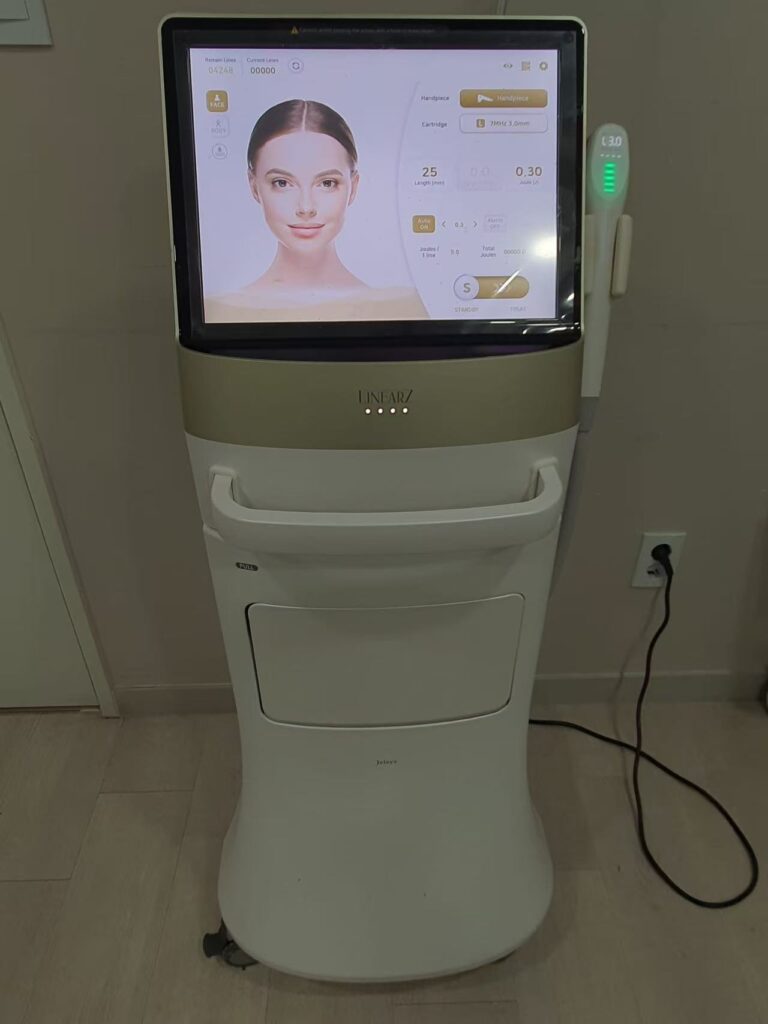
For Jeisys ULTRAcel Zi / LinearZ and similar HIFU platforms, Linear Mode delivers bulk volumetric heating across a continuous line of tissue, dramatically shortening treatment passes compared with Dot Mode’s focal coagulation points. In practice, clinics using Linear Mode for body contouring and fat reduction typically see 30–40% shorter treatment times per area and more predictable shot-to-shot energy delivery, which can support significantly higher daily patient throughput when staffing and scheduling are aligned. Dot Mode still matters for precision tightening and fibrous tissue remodeling, but Linear Mode is what enables more sessions per day with less mechanical signal latency across the cartridge line.
What Jeisys LinearZi HIFU Does and Who It’s For
Jeisys ULTRAcel Zi (often marketed as LinearZi / LINEARZ) is a third‑generation HIFU platform that combines Dot and Linear irradiation modes in a single cartridge, with adjustable depth increments typically in the 2–6 mm range for facial and body applications. Dot Mode generates discrete focal coagulation points at approximately 60–65 °C, targeting collagen shrinkage and fibrous tissue tightening in dermis and SMAS. Linear Mode generates a continuous line of energy at slightly lower peak temperatures around 58 °C, optimized for bulk fat disruption and contouring across a wider treatment zone.
This device profile fits multi‑indication aesthetic clinics, medspas, and dermatology practices that want both facial tightening and body contouring with one platform rather than separate focused and bulk heating systems. It’s particularly relevant for owners who are already running ultrasound or RF-based lifting devices and are now trying to compress chair time, increase daily patient volume, and standardize technician protocols without compromising safety or regulatory compliance.
Physics Deep-Dive: Linear vs Dot Mode, Thermal Relaxation, and Mechanical Latency
Dot Mode: Focal Thermal Coagulation
Dot Mode in Jeisys Zi cartridges concentrates ultrasound energy into millimeter-scale focal points separated by fixed gaps, creating microthermal coagulation zones. At each dot, tissue rapidly reaches approximately 60–65 °C, initiating collagen denaturation and coagulation while sparing much of the surrounding tissue due to thermal relaxation and spatial separation. This pattern is ideal for fine lifting of fibrous tissues such as SMAS and dermal collagen, and for contouring in small, structurally complex facial areas.
However, dot-based delivery requires a high number of shots to cover a larger body area, and there is an inherent mechanical latency between shots: the transducer moves, refocuses, and fires again. Each focal point has a relatively small thermal footprint, which limits volumetric heating per pass and makes throughput more sensitive to operator speed and handpiece positioning.
Linear Mode: Bulk Volumetric Heating and Reduced Latency
Linear Mode changes the physics by generating a continuous energy line with nearly no spacing between focal points, producing bulk heating across a wider strip of tissue at a temperature just above the lipolytic threshold (~58 °C). Instead of isolated coagulation islands, you get more uniform thermal deposition along the beam path, effectively increasing the treated volume per shot and reducing the number of mechanical repositioning events needed to cover an area.
Jeisys webinars on body contouring with LINEARZ report that Linear Mode at 4.5 mm depth with ~0.7 J per shot consistently reaches >58 °C in the target layer, sufficient to disrupt fat cells and surrounding septa over a larger zone. Because Linear Mode irradiates “rounds” of shots with a single press and higher shot density per minute, full-face treatment times can drop from 8–10 minutes in Dot Mode to roughly 3–5 minutes with Linear Mode, and typical body zones can be completed within 10–15 minutes.
This reduction in mechanical signal latency — the micro-delay between ultrasound pulses and handpiece movement — is what enables faster stacking of lines and more predictable energy coverage across each pass. From a physics standpoint, bulk heating plus shorter thermal relaxation intervals between adjacent linear segments leads to more continuous thermal fields, which is beneficial for volume reduction but must be carefully dosed to avoid overtreatment.
Thermal Relaxation Time and Acoustic Cavitation Consistency
In aesthetic HIFU, thermal relaxation time describes how quickly a heated tissue region loses heat to surrounding structures once the ultrasound pulse ends. Dot Mode relies on distinct peaks with enough interval for partial cooling between focal points, favoring micro-coagulation islands rather than a contiguous heated mass. Linear Mode intentionally overlaps the relaxation windows of neighboring segments, creating a more continuous thermal field along the line and increasing perceived treatment uniformity.
Acoustic cavitation — microbubble activity driven by ultrasound — is less prominent at HIFU intensities used for aesthetic tightening than in oncologic ablation, but linear delivery tends to produce more consistent mechanical effects along the beam due to stable amplitude and reduced repositioning variability. That consistency is a key reason why Linear Mode protocols can be standardized for body contouring, while Dot Mode protocols remain more customized for localized lifting.
Revenue and Operational Impact: How Linear Mode Shrinks Treatment Time by 30–40%
Jeisys data and clinic case reports indicate that Linear Mode can reduce per-area treatment times by roughly one-third compared with dot-only protocols, primarily through faster shot delivery and higher volumetric coverage. If a standard full-face dot protocol takes 8–10 minutes and equivalent linear protocols take 3–5 minutes, that’s a 37–62% reduction; body areas dropping from ~20 minutes to ~12–15 minutes follow a similar pattern.
For a mid-volume clinic running 6–8 HIFU patients per day, shifting appropriate indications (double chin, abdomen, thighs, flanks) to Linear Mode can free multiple hours of chair time, which can be redeployed to additional sessions or higher-value combination treatments. When scheduling, this translates into more compact appointment blocks and reduced overlap risk with other modalities, helping owners push toward a practical goal of doubling daily HIFU bookings as staff comfort and demand grow.
From a payback standpoint, many clinics charge HIFU contouring as a premium non‑invasive option, often bundled with RF or other tightening technologies. While actual ROI depends on local pricing and utilization, reducing treatment-time per session without increasing device downtime or consumable costs typically shortens the payback period of a Jeisys Zi platform, especially when purchased at a favorable price point as new or certified pre‑owned through solution-focused sourcing partners like ALLWILL.
Differentiated Advantage: Why Linear Mode Justifies a Higher-Ticket Asset
LinearZi’s dual-mode cartridges, faster irradiation, and depth adjustability provide a differentiated platform compared with earlier HIFU generations that offered only dot-type SMAS heating. Linear Mode effectively adds bulk fat reduction capabilities to the lifting toolkit, allowing clinics to treat a wider spectrum of face and body indications with one asset instead of separate focused and body contouring devices.
From an operational perspective, reduced mechanical latency and shorter treatment times lower the burden on staff, which can reduce fatigue and improve protocol adherence across busy days. The ability to pivot between Dot and Linear at multiple depths in a single session also supports more personalized treatment mapping, which is increasingly expected by patients who compare modalities like Ultraformer or other multi-depth HIFU devices.
For owners evaluating several HIFU platforms, the higher-ticket rationale for Jeisys Zi and comparable Linear systems often rests on three points: dual indication coverage (lifting and contouring), treatment-time efficiency, and the future-proof nature of software and cartridge upgrades. ALLWILL’s role is to help you quantify these against alternative devices and total lifecycle cost, including maintenance and eventual trade-in value, rather than pushing a single brand.
Practical BME Technical Maintenance Checklist for Linear/Dot HIFU Systems
For procurement and biomedical engineering teams, day‑to‑day uptime is just as critical as clinical performance. Use this practical checklist when assessing any Linear/Dot HIFU device (including Jeisys Zi):
| Checklist Item | What to Verify | Why It Matters |
|---|---|---|
| Transducer health and calibration | Documented recent calibration, test shots within specified energy variance; visual inspection for wear or delamination. | Ensures consistent energy delivery, reduces risk of hot spots or under-treatment. |
| Cartridge depth accuracy | Confirm labeled depths (e.g., 2 mm, 3 mm, 4.5 mm, 6 mm) against ultrasound or phantom testing. | Critical for avoiding off-target irradiation and ensuring intended layer engagement. |
| Linear vs Dot mode switching | Smooth, error-free switching on the same cartridge; no software lag or misfire logs. | Prevents treatment interruption, supports mixed-mode protocols in one session. |
| Shot counter and log integrity | Accurate shot counting per cartridge; retrievable log of sessions, energies, and modes. | Allows preventative replacement, supports quality assurance and medico-legal documentation. |
| Cooling and power systems | Stable power supply and any internal cooling performance within manufacturer specs. | Prevents thermal drift and unplanned shutdowns, especially in long body treatments. |
| Software updates and safety interlocks | Current software version; active interlocks for contact, motion, and temperature limits. | Maintains safety profile and regulatory compliance over device lifetime. |
| OEM or equivalent parts sourcing | Use of manufacturer-approved cartridges or fully documented equivalents. | Reduces risk of inconsistent energy delivery and protects warranty validity. |
| Service records and error codes | Full history of repairs, error code frequency, and resolutions. | Helps predict future downtime and informs CPO purchasing decisions. |
ALLWILL can help you map this checklist against any specific unit — new or certified pre-owned — by coordinating technical documentation, calibration records, and independent inspection reports before you commit to a purchase.
Compliance and Asset Protection: Regulatory and CPO Guardrails
HIFU platforms like Jeisys ULTRAcel Zi are typically cleared or certified for specific aesthetic indications, such as non‑invasive lifting or body contouring, in defined regions. Because regulatory status can differ by market and evolve over time, owners should verify the current FDA 510(k) clearance or CE marking claims directly with the manufacturer or registered distributor, and ensure that any imported unit matches the labeling and documentation of the region where it will be used.
For certified pre‑owned HIFU systems, asset protection hinges on transparent condition grading, documented refurbishment scope (including transducer testing), and a clear warranty or service coverage statement. Buyers should treat CPO devices as distinct from new units: cosmetic wear and historical use are acceptable when clinically relevant components are tested and documented, but you should never assume identical performance without verifying calibration, cartridge health, and service history in writing.
ALLWILL positions itself as a sourcing and solutions partner rather than a regulatory authority, which means the platform focuses on connecting clinics with vetted, compliant units, coordinating documentation, and aligning warranty terms with realistic usage patterns. Owners remain responsible for confirming that the device’s intended use, labeling, and regulatory claims match their local rules and professional standards; ALLWILL’s Smart Center and expert network can help you structure that due diligence efficiently.
Procurement Risks to Avoid and ALLWILL Expert View
Common procurement risks for Linear/Dot HIFU systems include acquiring units with undocumented transducer wear, incompatible regulatory labeling, or outdated software that lacks current safety interlocks. Underestimating maintenance and cartridge replacement costs can also lengthen payback periods, even if upfront pricing looks attractive, especially in high-throughput clinics that rely heavily on Linear Mode for body contouring.
Another risk is over-indexing on headline clinical claims while overlooking throughput constraints: a dot-only device may perform well on paper but create bottlenecks in busy schedules, forcing you to cap daily bookings to protect staff capacity. Owners should insist on transparent energy-output logs, calibration proof, and realistic shot-life data for cartridges before buying, particularly when considering CPO units that have been in service for several years.
ALLWILL Expert View
When clinic owners evaluate Linear vs Dot HIFU platforms, the most resilient ROI strategies treat throughput as a core clinical asset rather than just an operational detail. Bulk volumetric heating in Linear Mode is valuable not only because it reduces per-session time, but because it allows you to build predictable, repeatable treatment blocks that can be scheduled back-to-back without overtaxing staff. In practice, the clinics that see the strongest payback on Jeisys Zi or comparable systems are those that align appointment templates, marketing, and technician training around clear indication mapping: Dot Mode prioritized for focal lifting and fibrous remodeling, Linear Mode reserved for body and submental contouring where speed and uniformity matter most. From a procurement standpoint, this means two things: first, demand full visibility into cartridge shot-life, calibration data, and software version before purchase; second, model your utilization assumptions conservatively so that increased throughput from Linear Mode becomes upside rather than a requirement to hit your payback target. Solution-focused partners like ALLWILL can help by pairing device selection with realistic maintenance and training plans, turning a high-ticket HIFU platform into a stable, predictable revenue contributor instead of a scheduling wildcard.
Frequently Asked Questions
What is the typical price range for a Jeisys Zi or similar Linear HIFU system?
High-end dual-mode HIFU platforms generally sit in a mid‑to‑high five‑figure to low six‑figure range as new units, with certified pre‑owned units often discounted depending on age, condition, and warranty. Actual pricing varies widely by region and configuration, so it is best to request a quote from ALLWILL for up-to-date ranges.
How do new and certified pre-owned HIFU units differ in total cost?
New devices offer full-length OEM warranty and latest software, while CPO units can reduce upfront capital by a significant margin but may have shorter warranties and higher maintenance exposure over time. Total cost should factor in cartridges, service contracts, and potential trade-in value; a tailored quote from ALLWILL can clarify these differences.
What warranties and service support should I require?
Clinics typically seek at least one year of core system coverage and clear terms on transducer and cartridge replacement; extended service contracts may be appropriate for high-volume users. Ensure response times, loaner policies, and parts availability are documented so your throughput assumptions are protected.
How does regulatory compliance affect import or cross-border purchase of HIFU devices?
Importing HIFU equipment requires alignment between device labeling, regulatory clearance (e.g., FDA 510(k) or CE marking), and the destination country’s rules. Buyers should verify serial numbers, certificates, and authorized-use indications before purchase, especially for CPO units acquired through cross-border channels.
What kind of ROI and payback timeline can I expect from a Linear HIFU system?
Payback timelines depend on local pricing, utilization, and how effectively you integrate Linear Mode into short, repeatable treatment blocks. Many clinics aim for multi-year payback rather than rapid returns; using realistic booking forecasts and requesting a quote from ALLWILL that includes maintenance assumptions helps set achievable targets.
References
- HIFU for Improving Sagging Skin: A New Standard in Lifting and Tightening (Jeisys Webinar)
- New and Innovative Method for Successful Body Contouring (Jeisys LINEARZ Webinar)
- Linear HIFU Skin Lifting and Skin Sagging (Rosabelle Clinic)
- Understanding Linear HIFU vs. Dot HIFU: Key Differences and the Importance of Genuine Brands
- An Introduction to High Intensity Focused Ultrasound
- Evaluation of a Novel High-Intensity Focused Ultrasound Device
- High-Intensity Focused Ultrasound: Current Potential and Oncologic Applications
- 2.1. HIFU System (LinearZ; Jeisys Medical Inc.) – Bio-Protocol Resource
- Clinical Evaluation of Combination Treatment with RF and HIFU (Jeisys Webinar)
- Focal Point vs Bulk Heating in RF, HIFU, and Laser Skin Tightening: A Technical Comparison
Related articles
 Onda Pro Results: What Determines the Outcome in a Working ClinicKnowledge
 A Used Thermage FLX Console Earns Its Price with Verifiable Firmware, Handpiece, and Tip SupplyKnowledge
 How to Compare Quotes for the Same Used Aesthetic Device ModelKnowledge
 Used Medical Aesthetic Device Condition Grades: New, Like-New, Excellent, Working, and PartsKnowledge