
Risk Mitigation Guide: Sourcing Certified Pre-Owned Aesthetic Devices Without Hidden Fees
Sourcing certified pre-owned (CPO) medical aesthetic devices can be a safe, capital-efficient strategy when you combine rigorous supplier vetting, transparent documentation, and clearly defined warranty and recertification terms. The key is to avoid “as-is”…
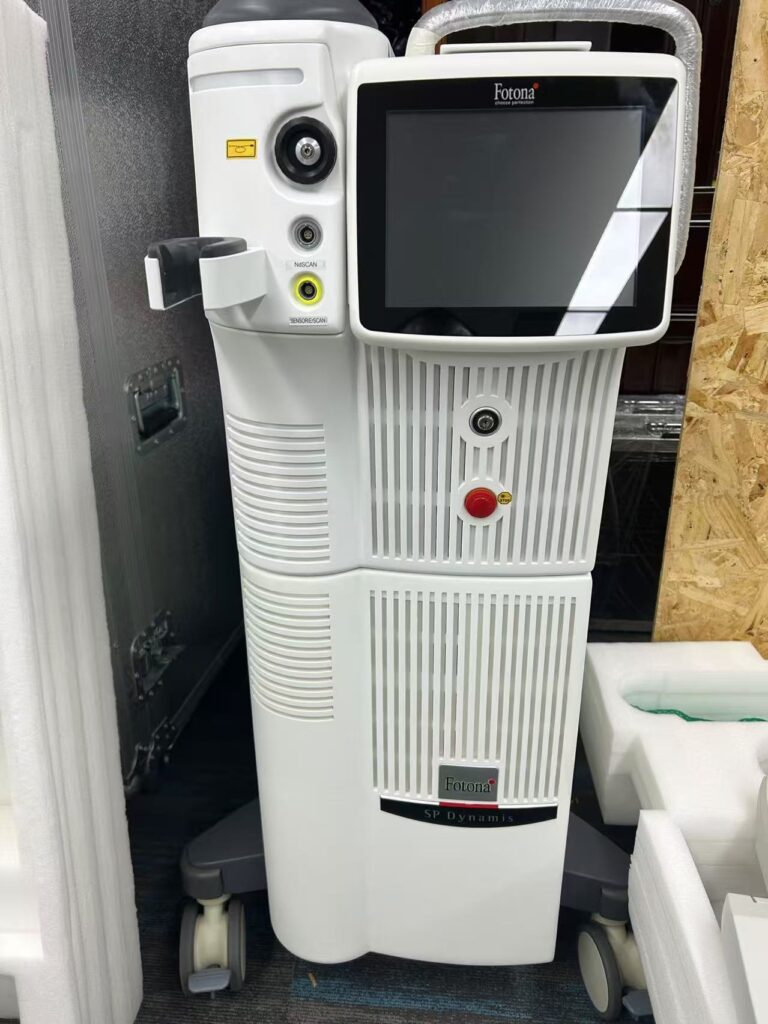
Sourcing certified pre-owned (CPO) medical aesthetic devices can be a safe, capital-efficient strategy when you combine rigorous supplier vetting, transparent documentation, and clearly defined warranty and recertification terms. The key is to avoid “as-is” or opaque listings and instead demand traceable service histories, validated refurbishment processes, and written confirmation of any OEM recertification or post-sale fees before you sign a purchase order. With the right partner, you can lower acquisition costs significantly without inheriting compliance gaps, downtime risk, or surprise charges.
What it does & ideal clinic profile
Certified pre-owned aesthetic devices include energy-based platforms such as laser hair removal systems, IPL/photorejuvenation units, RF and RF microneedling platforms, body-contouring systems, and combination workstations that have been professionally inspected, refurbished where required, and verified for performance and safety before resale. They are typically sourced from clinics, hospitals, or distributors, then processed by ISO 13485–aligned refurbishers or specialized secondary-market partners who test, recalibrate, and document the device’s condition.
CPO systems are especially relevant for:
– Established clinics and medspas expanding treatment menus without overextending capital budgets.
– New entrants who want a flagship technology but need to preserve cash for marketing, staffing, or leasehold improvements.
– Multi-site groups rationalizing fleets, standardizing platforms, or backfilling capacity while new equipment is on order.
ALLWILL often works with owners in these segments to match budget, case mix, and risk tolerance with specific CPO options instead of leading with a single “hero” device.
Topic-specific core analysis: logistics, sourcing, and supplier verification
Because this topic is fundamentally about sourcing and vendor verification, the critical risk isn’t just the device itself; it’s the entire chain of custody, documentation, and post-sale obligations that come with it. Many of the most expensive failures in the secondary market stem from missing regulatory paperwork, undocumented repairs, or OEM recertification obligations that only surface when you try to install or service the device.
Several logistics and sourcing realities matter:
– Regulatory documentation as a shipment gate: For laser and light-based systems in the United States, the seller should furnish original FDA 510(k) clearance documentation or clearly identify the device’s product code and clearance history; the same applies for CE-marked devices in Europe. Without this, your biomedical engineer or local distributor may refuse to install or service the unit.
– Cross-border trade and import controls: Moving devices between regions (for example, from an EU clinic to a U.S. medspa) introduces customs classification, local electrical standards, and possible re-registration or conformity assessment obligations. If you are importing second hand medical equipment into markets like the EU, local authorities may expect proof the refurbishment met applicable standards and that the device maintains its original conformity.
– OEM recertification and software activation: Many OEMs require a fee-based inspection, recertification, or software relicensing before they will provide service, support, or consumables for a secondary-market unit. In some cases, the device may boot with reduced functionality or locked handpieces until a manufacturer field service engineer visits.
All of these moving parts explain why clinic owners are wary of “used aesthetic devices wholesale” offerings that look underpriced but provide no clear path to regulatory, service, or software compliance. ALLWILL’s approach is to start with a structured supplier and device vetting process, then build a total-cost model that includes logistics, recertification, and realistic service assumptions, so there are no hidden surprises beyond the headline price.
Revenue and operational impact & payback math
CPO devices primarily impact your economics through reduced upfront capital expenditure, which can shorten payback periods and improve return on invested capital—provided you control downtime and unforeseen recertification or repair costs. For many aesthetic platforms, CPO acquisition savings in the range of 30–60 percent versus typical new list pricing are achievable, depending on brand, age, and configuration.
A simplified example:
– Assume a new multi-application laser platform lists at an estimated 200,000–300,000 USD, depending on configuration and region.
– Comparable certified pre-owned units may transact in the 90,000–180,000 USD range, based on age, shot counts, and included handpieces.
– If your clinic prices relevant treatments in the 150–450 USD per session range and runs 40–80 billable sessions per month, gross monthly revenue contribution may fall in the 6,000–36,000 USD range depending on mix and utilization.
Under these illustrative assumptions, a CPO unit might reach nominal payback in 6–18 months, whereas a new unit could take 12–30 months, particularly if financed or bundled with extended service. However, any downtime, unexpected recertification fees, or consumable costs can materially shift these timelines, which is why transparent, written total-cost-of-ownership estimates are more meaningful than headline discount percentages.
When ALLWILL prepares CPO quotes, the team typically includes scenario-based payback illustrations with ranges rather than single numbers, explicitly stating that actual results depend on your pricing, utilization, and local competitive dynamics.
Differentiated advantage and higher-ticket rationale
For many clinics, CPO devices are not simply cheaper alternatives; they are a way to access higher-tier technology than a new-budget cap would otherwise allow. Rather than choosing a new but lower-spec device, some owners deliberately select a certified pre-owned flagship platform—such as a multi-wavelength hair removal system or combined vascular/pigment workstation—from a leading OEM.
The strategic advantages can include:
– Broader treatment portfolio: Multi-application or “platform” systems acquired CPO often provide more modalities—hair removal, vascular, pigment, skin rejuvenation—than a new single-function device at the same capital cost.
– Device brand recognition: Well-known OEM platforms can support marketing narratives around established technology, which may help patient acquisition without promising clinical outcomes.
– Service ecosystem depth: Popular flagship platforms tend to have deeper third-party service and parts ecosystems, giving you more flexibility in service contracts after any OEM obligations or warranties expire.
Clinic owners sometimes compare CPO versions of platforms from brands like Alma, Candela, or Cynosure with newer but less established devices. In these cases, a higher-ticket CPO purchase can be rational if you can validate component integrity, software status, and the availability of compliant service support for your geography. ALLWILL supports this by coordinating with vetted refurbishers, engineers, and OEM or authorized partners to verify these factors before you commit.
Supplier Vetting Framework (practical decision aid)
Because sourcing risk is fundamentally a vendor problem, the most practical decision aid is a structured framework you can use to evaluate any supplier offering certified pre-owned aesthetic devices. The goal is to minimize surprises by forcing detailed, written answers to the most failure-prone parts of the transaction.
Supplier Vetting Framework for CPO Aesthetic Devices
Use this framework as a checklist during discussions and insist that responses and attached documents are provided in writing, not just verbally.
1. Corporate identity and quality system
– Request full legal entity details, years in operation, and evidence of ISO 13485 or equivalent quality system where applicable.
– Ask for references from clinics or hospitals that have purchased similar devices in the past 12–24 months.
2. Refurbishment process and technical validation
– Require a written refurbishment protocol describing inspection steps, parts replacement criteria, calibration, and burn-in testing.
– Ask for multi-point inspection reports (for example, 30–50 checkpoints), including laser output, cooling, optics, and safety interlocks.
3. Traceable device history
– Request a de-identified previous-owner summary, including device origin region, installation year, and service interval history where available.
– Verify serial numbers against OEM or national registries to confirm no outstanding liens, theft reports, or regulatory holds.
4. Regulatory and compliance documentation
– Ask for copies of original FDA 510(k) or EU CE documentation, or at minimum, product codes and model identifiers so your compliance officer can verify status.
– Confirm whether the refurbishment changes the regulatory status in your market and whether re-certification or re-registration is required.
5. OEM interaction, recertification, and software
– Clarify in writing whether OEM recertification is mandatory for your intended use, and if so, obtain estimated fees and required inspections.
– Confirm whether any software features, shot counters, or handpieces are locked and require OEM or distributor activation.
6. Warranty, service, and parts
– Seek warranties in the 6–12 month range at minimum, covering major components such as laser cavities, power supplies, and key handpieces.
– Clarify whether service will be delivered by OEM technicians, authorized partners, or independent biomedical engineers, and what response times you can expect.
7. Logistics, installation, and training
– Ensure the supplier handles packaging, international shipping, insurance, and customs documentation appropriate for medical equipment.
– Confirm who will install the device, perform safety checks, and provide user training or in-service sessions.
8. Financial terms and hidden costs
– Demand an itemized pro forma including device price, refurbishment charge (if separate), OEM recertification estimate, shipping, installation, and any software or license fees.
– Ask explicitly whether any future software updates, recertifications, or mandatory maintenance milestones will incur OEM fees and at what approximate ranges.
ALLWILL uses a similar internal framework when working with global suppliers and buyers, which helps standardize expectations and limit financial surprises related to second hand medical equipment. You can adapt this checklist for your own procurement processes and require any prospective supplier to address each point before you proceed to contract stage.
If you want a structured, supplier-ready version of this framework tailored to a specific platform or brand, you can request a quote from ALLWILL that includes a pre-filled vetting worksheet along with current CPO availability and condition summaries.
Compliance and asset protection
Sourcing pre-owned medical devices is not just a commercial transaction; it is a regulatory and asset-protection exercise that intersects with patient safety, data protection, and liability. Different jurisdictions treat refurbished devices differently, but most align on the principle that any refurbished device placed on the market must maintain its original safety, performance, and labeling requirements.
Key areas to manage:
– Regulatory status confirmation: Before purchase, your compliance officer or external consultant should verify the device’s regulatory status (for example, FDA 510(k) clearance or CE marking for the relevant indications) using manufacturer documentation and regulator databases. If you are in a region with additional oversight, such as national device registries or local conformity assessments, factor in their timelines and costs.
– Facility-level documentation: Maintain a complete file for each CPO device including purchase contracts, refurbishment reports, test certificates, regulatory documents, and installation/commissioning reports. This will support audits, insurance reviews, and any investigation following an adverse event.
– Cybersecurity and software governance: Network-connected devices and those storing patient data should undergo cybersecurity risk assessments, patching, and configuration reviews to comply with frameworks such as HIPAA and medical device cybersecurity guidance where relevant. When acquiring CPO systems, confirm that licenses are legitimate, software versions are supported, and default passwords or configurations are updated as part of commissioning.
ALLWILL typically encourages buyers to involve their biomedical engineering and compliance teams early, sometimes arranging tri-party calls with refurbishers or OEM partners to confirm that asset-protection measures are aligned with the clinic’s internal policies. This can avoid delays at installation and reduce the risk of a device being sidelined due to unresolved documentation questions.
Midway through your evaluation, once you have narrowed down target platforms, it can be helpful to request a quote from ALLWILL that includes a draft compliance and documentation checklist specific to your jurisdiction and device shortlist.
Procurement risks to avoid and ALLWILL Expert View
Even sophisticated buyers occasionally inherit costly problems when acquiring used aesthetic devices wholesale, particularly when pressured by time or unusually low prices. Most issues cluster around three themes: undocumented refurbishment, unclear ownership or lien status, and underestimated lifetime service and recertification costs.
Specific pitfalls include:
– “As-is” listings without inspection data: Devices sold without recent performance tests, safety checks, or calibration certificates may conceal laser output instability, cooling failures, or worn consumable components. Fixing these issues post-purchase can quickly erode any upfront savings.
– Ownership and lien complications: Some devices offered in secondary markets may still be under lease, subject to bank liens, or flagged in OEM records, creating legal or operational barriers when you attempt to register or service them.
– Underestimated recertification and service: OEM recertification visits, handpiece overhauls, or software relicensing can cost in the low- to mid-five-figure range over the first years of ownership, especially for multi-application platforms. If not modeled upfront, these expenditures can turn a seemingly “cheap” unit into the most expensive asset in your fleet.
ALLWILL Expert View: De-risking CPO acquisitions with structured validation
In practice, most CPO failures result not from the device’s age, but from weak documentation and misaligned expectations between buyer, refurbisher, and OEM. A practical way to de-risk acquisitions is to treat each device as a project with a defined validation phase, rather than as a simple purchase. During this phase, insist on independent multi-point testing, verify regulatory status in your own jurisdiction, and obtain written OEM or authorized-partner positions on recertification and service eligibility. Build a conservative total-cost model that includes at least one major component replacement and a recertification cycle, and only proceed if your payback math still works under those assumptions. Platforms like ALLWILL can coordinate these steps across suppliers, engineers, and OEM channels, but clinics should still retain final responsibility for validating that each asset fits their risk, compliance, and cash-flow parameters.
As you move from research into selection, it often makes sense to narrow your options to two or three specific devices and request a quote from ALLWILL that includes side-by-side condition reports, service histories, and total-cost-of-ownership ranges under different utilization assumptions.
Frequently Asked Questions
What price range should I expect for certified pre-owned aesthetic devices?
Price ranges vary by brand, age, and configuration, but many certified pre-owned aesthetic platforms transact at roughly 40–60 percent of typical new-list pricing. For high-end multi-application systems, this can translate into estimated ranges of 90,000–180,000 USD versus 200,000–300,000 USD new in some markets. For a precise, current-range estimate tailored to your region and case mix, request a quote from ALLWILL for the specific platform you are considering.
How does new vs refurbished impact warranty and service?
New devices usually ship with OEM warranties that may run 12–24 months and can be extended through service contracts, whereas refurbished or CPO devices often carry 6–12 month warranties from the refurbisher or reseller. The critical factor is who underwrites service (OEM, authorized partner, or independent engineer) and what response times and exclusions apply. Always obtain warranty terms in writing and ensure they align with your risk tolerance before committing.
What compliance steps are essential when importing a CPO device?
Essential steps include verifying that the device retains valid regulatory status for your jurisdiction (such as FDA clearance or CE marking), ensuring the refurbishment process complies with local rules, and preparing customs and device-registration documentation. Work with your compliance officer, customs broker, and, where applicable, biomedical engineering team to align on responsibilities and timelines. If you prefer a coordinated approach, you can request a quote from ALLWILL that includes indicative compliance and logistics support descriptions for your specific route.
How can I estimate ROI and payback for a CPO device?
To estimate ROI, model realistic treatment volumes, pricing, and utilization scenarios, then compare gross revenue to total ownership costs, including acquisition price, consumables, service, and recertification. Use ranges for key variables rather than single numbers to reflect uncertainty. Many clinics run base, conservative, and upside cases, and often ask a partner like ALLWILL to provide illustrative payback ranges within their quote so they can align capital decisions with actual patient demand expectations.
How do I protect against buying a “lemon” or counterfeit unit?
Protecting against problematic units requires a combination of supplier vetting, independent testing, and documentation review. Always choose vendors with documented refurbishment processes, insist on multi-point inspection reports, verify serial numbers with OEMs or registries, and avoid “as-is” purchases without recourse. Where possible, involve your biomedical engineer or a trusted third-party service provider to perform or review pre-purchase inspections.
References
- Regulatory landscape, risks, and solutions for refurbished medical devices
- Pre-Owned Medical Devices: Are They Safe?
- Certified Pre-Owned Medical Lasers & Equipment
- Top 5 Questions to Ask When Buying Refurbished
- What Documentation You Must Provide When You Sell Used Cosmetic Lasers
- Regulatory landscape, risks, and solutions for refurbished medical devices (Taylor & Francis)
- Medical Device Supply Chain Risk Management
- Supplier Risk Management for Medical Devices: Best Practices
- How to Source Reliable Pre-Owned Laparoscopic Surgery Equipment and Instruments without Risk?
- How to Source CT scanners (pre-owned market) Medical Device
Part of the Pre-Owned & Refurbishment guide.
Related articles
 Onda Pro Results: What Determines the Outcome in a Working ClinicKnowledge
 A Used Thermage FLX Console Earns Its Price with Verifiable Firmware, Handpiece, and Tip SupplyKnowledge
 How to Compare Quotes for the Same Used Aesthetic Device ModelKnowledge
 Used Medical Aesthetic Device Condition Grades: New, Like-New, Excellent, Working, and PartsKnowledge