
How Does Ultherapy Transducer Frequency Affect Clinical Outcomes?
Ultherapy transducer frequency governs how deeply and evenly microfocused ultrasound (MFU) energy reaches facial tissues, directly influencing lifting, safety, and patient satisfaction. Higher‑frequency probes deliver tighter, more superficial treatment, while lower‑frequency settings target deeper…
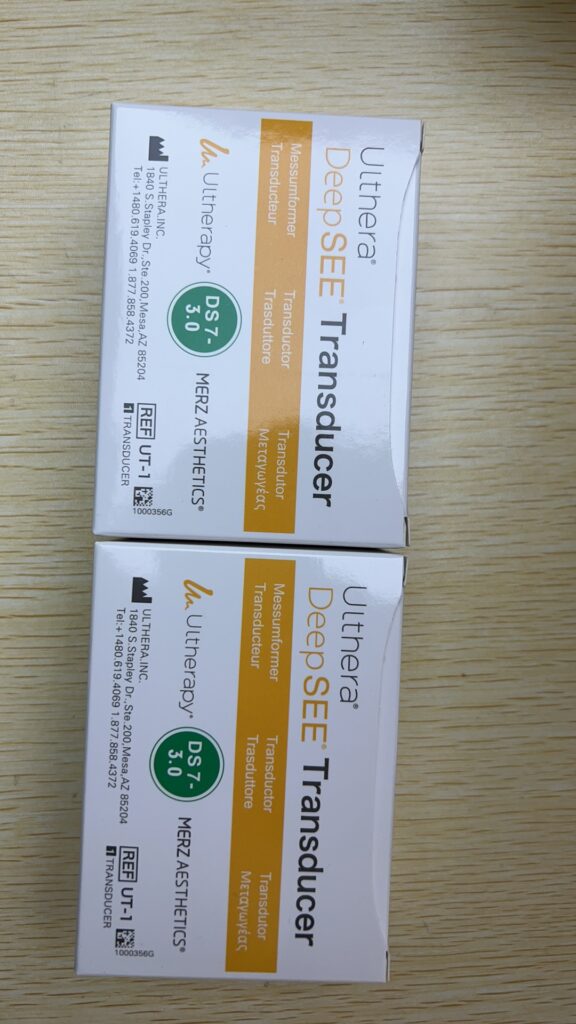
Ultherapy transducer frequency governs how deeply and evenly microfocused ultrasound (MFU) energy reaches facial tissues, directly influencing lifting, safety, and patient satisfaction. Higher‑frequency probes deliver tighter, more superficial treatment, while lower‑frequency settings target deeper layers such as the SMAS, enabling precise, predictable tightening without invasive surgery. By matching each transducer line to anatomic targets and using calibrated energy delivery, dermatologists and senior aesthetic practitioners can optimize clinical efficacy and reduce the risk of nerve‑related or fat‑related complications.
DS 7-3.0, DS 4-4.5, and DS 10-1.5 cartridges
How Does Microfocused Ultrasound (MFU) Create a Non‑Invasive Face Lift?
MFU tightly converges ultrasound energy into a small focal zone, heating specific depths without damaging the overlying skin. This controlled thermal coagulation stimulates collagen remodeling and retracts the fibrous septa in the SMAS and deep dermis, producing a gradual lifting effect that mimics the structural change of a surgical facelift. Because each ultrasound pulse is brief and localized, most patients report minimal downtime and no incisions, which underpins Ultherapy’s positioning as a “non‑invasive face lift.”
Clinically, MFU’s impact depends on accurate depth targeting, pulse‑to‑pulse spacing, and appropriate energy settings. When a practitioner uses the right transducer frequency and correct treatment plane, energy concentrates in the SMAS and subcutaneous compartment, triggering delayed but measurable tightening over weeks to months. This biologic response is why many dermatologists view MFU‑based devices not as simple skin‑tightening tools, but as architecturally‑driven rejuvenation platforms.
What Role Does Transducer Frequency Play in Treatment Depth?
Transducer frequency determines how deeply ultrasound energy penetrates and how tightly it is focused within the tissue. Higher‑frequency probes (shorter wavelengths) tend to deposit energy more superficially, making them ideal for fine‑line and dermal tightening, whereas lower‑frequency probes penetrate deeper and are better suited for lifting the SMAS and subcutaneous fat layers. For non‑invasive face lifts, a 1.5mm or 3.0mm transducer, often around 7.5–10.5 MHz, can target 4–4.5 mm below the skin to reach the SMAS, while deeper 4.5–6.0 mm transducers may address subcutaneous remodeling in the neck and jawline.
Choosing the wrong frequency can lead to either under‑treating the target layer or inadvertently overheating safer‑zone structures. Practitioners must therefore match each anatomical zone—periorbital, mid‑face, mandible, submental, neck—with the appropriate transducer line and calibrate energy to maintain a safe margin from nerves and vessels. This precision‑driven selection is what turns MFU into a predictable tightening modality instead of a variable cosmetic add‑on.
Which Ultherapy Transducers Target the SMAS Layer?
Several Ultherapy transducer lines are designed to reach the SMAS, the fibrous layer that surgeons elevate during traditional facelifts. The 4–4.5 mm DS (Deep SMAS) transducer is commonly used to deliver focused energy at depths that correspond to the SMAS in the mid‑face, jawline, and neck, where lifting and contouring effects are most visible. Deeper 6.0 mm transducers may be reserved for submental and neck regions where SMAS and subcutaneous fat interplay more strongly.
These SMAS‑targeting lines differ from 1.5 mm and some 3.0 mm transducers, which are often used for dermal tightening and fine‑line improvement closer to the skin surface. By layering treatments—using higher‑frequency, shallower probes for delicate zones and lower‑frequency, deeper probes for SMAS‑driven lift—dermatologists can create a composite tightening effect that looks natural and avoids the “mask‑like” or over‑tightened appearance patients sometimes fear.
Example Ultherapy transducer depth and indication table
This kind of framework helps explain how each line contributes to a structured, non‑surgical lifting strategy.
How Can Precision Depth Control Improve Clinical Efficacy?
Precision depth control ensures that each ultrasound pulse consistently hits the intended tissue layer, which is critical for uniform collagen remodeling and visible lifting. If energy scatters or lands inconsistent with the planned depth, some areas receive more heat than others, leading to uneven tightening, localized “ledge” effects, or areas that fail to improve. By contrast, calibrated transducers that maintain a stable focal zone from pulse to pulse help create smooth, predictable results across the treated field.
Depth control also reduces the need for “stacking” or over‑treatment to compensate for missed zones. When practitioners can rely on the device’s depth targeting, they can treat each line more conservatively, spreading pulses evenly rather than aggressively clustering them in one area. This approach not only improves aesthetic outcomes but also lowers the risk of local overheating, fibrosis, or contour irregularities that can harm a clinician’s reputation and lead to patient complaints.
Why Do Dermatologists Prioritize Even Energy Delivery?
Even energy delivery prevents “hot spots” that can cause tissue necrosis, scarring, or contour deformities, as well as “cold spots” that leave areas under‑treated and lead to patient dissatisfaction. Ultherapy‑associated cases of fat atrophy, lipoatrophy, and focal nerve‑related symptoms often follow protocols where energy density was uneven or where anatomical safety zones were inadvertently heated. By spacing pulses according to manufacturer guidelines and using real‑time imaging and anatomical landmarks, dermatologists can maintain both safety and symmetry.
Even energy also matters for overall patient perception of results. If some zones tighten strongly while others lag, patients may feel that the treatment was “partial” or “botched,” even if the device is technically functioning correctly. Consistent, gentle treatment across the face, combined with clear pre‑treatment planning and post‑treatment education, helps dermatologists build trust and protect their clinical reputation.
When Should Practitioners Be Most Concerned About Nerve Damage?
Practitioners should be especially cautious in regions rich in peripheral nerves, such as the marginal mandibular nerve near the jawline, the infraorbital nerve in the cheek, and the zygomaticofacial and temporal branches around the eyes. Over‑heating or inappropriate energy dosing in these areas can lead to focal numbness, tingling, or temporary motor weakness, and in rare cases, more prolonged or permanent neurologic sequelae. High‑risk patients may include those with thin soft‑tissue layers, prior surgery, or significant volume loss where the nerve‑to‑skin distance is reduced.
To mitigate risk, dermatologists should avoid overlapping treatment in tight anatomical corridors, respect manufacturer‑defined safety distances from nerves, and adjust energy downward in thin or sensitive zones. Real‑time ultrasound guidance, careful palpation, and a clear understanding of facial anatomy help ensure that MFU remains a low‑risk modality rather than a source of avoidable nerve‑related litigation. Many practitioners also prefer conservative protocols on the first session, with refinements at later visits if results are suboptimal.
How Can Fat Necrosis and Volume Loss Be Avoided?
Fat necrosis and volume loss occur when excessive thermal energy is delivered to the subcutaneous fat compartment, particularly in regions with limited tissue reserve such as the temples, mid‑face, and sub‑orbital area. Over‑treatment, repeated passes with high energy, or stacking in the same spot can lead to local ischemia, apoptosis of adipocytes, and subsequent atrophy that patients describe as “hollowing” or “skeletal” features. These outcomes are rare but can be devastating to both patient and practitioner, often leading to long‑term complaints and aesthetic revision procedures.
To avoid these complications, clinicians should respect the device’s recommended energy levels and pulse spacing, avoid aggressive treatment in thin facial zones, and account for pre‑existing fat loss in aging or weight‑reduced patients. Using lower‑energy settings and spreading treatment over more finely spaced lines rather than concentrating heat in one area reduces the risk of localized fat damage. When patients present with previous volume‑reducing procedures (e.g., previous fat‑reduction treatments or significant weight loss), practitioners should consider combining MFU‑based lifting with cautious volume‑restorative techniques to maintain balanced proportions.
What Safety Measures Protect Against Faulty or Inconsistent Transducers?
Using calibrated, well‑maintained transducers and regularly checking for signs of wear or calibration drift is essential for safe, predictable MFU delivery. Cracked lenses, misalignment, or inconsistent focal patterns can scatter energy and create focal over‑heating, increasing the risk of skin damage, nerve irritation, and fat necrosis. Many practitioners therefore follow a strict maintenance schedule, with routine inspection, cleaning, and calibration through authorized service channels.
Practitioners can also monitor device‑specific indicators such as treatment‑head error logs, acoustic power output, and impedance feedback during procedures. Choosing a device partner that provides transparent documentation, traceable calibration records, and access to service and repair facilities—such as through a dedicated Smart Center—helps ensure that transducers remain in optimal working condition. This level of oversight reduces the chance that a “silent” hardware fault contributes to an adverse event and supports a defensible clinical record in the event of legal scrutiny.
How Can Evidence‑Based Protocols Enhance Ultherapy Results?
Evidence‑based protocols draw on clinical trials, systematic reviews, and real‑world outcome data to define safe energy levels, pulse counts, and anatomical treatment zones. These protocols help dermatologists move beyond “cookbook” patterns into a tailored approach that accounts for age, tissue thickness, prior procedures, and patient expectations. By aligning their own protocols with published MFU‑specific studies, clinicians can achieve more consistent, measurable tightening while minimizing avoidable complications.
Published research indicates that MFU‑based systems, when used within manufacturer guidelines, are associated with transient erythema, edema, and mild pain in the majority of patients, with only rare serious events such as nerve‑related symptoms or fat atrophy. Awareness of these data points helps clinicians set realistic expectations, select appropriate candidates, and document informed consent comprehensively. This evidence‑driven framework is what differentiates high‑reputation practices from those that rely on anecdotal or experimental approaches.
Why Is Depth Targeting Key to Predictable Lifting?
Depth targeting is central to predictable lifting because it ensures that energy is delivered to the structural layers that support the face, such as the SMAS and deep dermis, rather than only to the superficial dermis. When the SMAS is adequately heated, patients experience a more durable, “surgical‑like” lift, whereas purely superficial treatment may only improve skin texture and fine wrinkles. By choosing the right transducer line for each anatomical zone and avoiding overshooting or undershooting the target, dermatologists can create a cohesive lifting effect that aligns with patient expectations.
Depth targeting also reduces the need for “more passes” or “higher energy” to compensate for inconsistent results. A well‑planned depth‑based protocol—with clear mapping of which lines reach 4–4.5 mm for SMAS lifting and which remain shallower for dermal tightening—helps prevent over‑treatment, patient discomfort, and the risk of contour irregularities. This disciplined approach protects the clinician’s reputation and reinforces the perception that Ultherapy is a precise, medically grounded modality rather than an arbitrary cosmetic gadget.
How Can Transducer Choice Support Legal Risk Management?
Thoughtful transducer selection and careful documentation of depth, energy, and treatment patterns can significantly reduce legal risk in the event of complications. When a patient develops nerve‑related symptoms or volume loss, regulators and legal teams scrutinize whether the practitioner followed manufacturer guidelines, used appropriate transducer lines, and respected anatomical safety zones. Detailed records—device settings, transducer type, pulse count, and anatomical mapping—help demonstrate that treatment was within recommended parameters.
Practitioners who standardize their protocols, receive regular manufacturer‑aligned training, and maintain service records for their equipment are better positioned to defend their clinical decisions. Partnering with a device‑service partner that provides transparent documentation, calibration records, and educational support—such as through a comprehensive Smart Center—further strengthens this risk‑management posture. ALLWILL’s approach to biomedical service, inspection, and educational support helps dermatologists keep their Ultherapy‑related equipment and transducers aligned with the latest standards, reducing both clinical and legal exposure.
How Can Dermatologists Use MFU to Build a Strong Reputation?
Dermatologists build a strong reputation by combining sound anatomical knowledge, evidence‑based protocols, and transparent communication with patients. When MFU‑based lifting follows depth‑targeted, conservative protocols, outcomes tend to be predictable and patient‑reported satisfaction rates are high. Clear pre‑treatment education, realistic expectations, and a structured follow‑up schedule further reinforce trust and reduce the likelihood of disputes or legal claims.
Consistency in technique, device maintenance, and record‑keeping also signal professionalism to both patients and peers. When transducers are calibrated, energy levels are documented, and treatment‑session notes are detailed, the practice projects a culture of safety and precision. ALLWILL’s emphasis on innovation, trust, and efficiency—through its Smart Center, service infrastructure, and educational resources—supports dermatologists in maintaining high‑quality MFU‑based face‑lift programs that enhance, rather than endanger, their clinical reputation.
ALLWILL Expert Views
“Our work with dermatologists and senior aesthetic practitioners has shown that the most confident Ultherapy‑based face‑lift results come from practitioners who treat microfocused ultrasound not as a simple “energy” tool, but as a depth‑targeted surgical‑level modality,” says an ALLWILL product specialist. “When clinicians pair calibrated transducers, manufacturer‑aligned protocols, and disciplined maintenance through a trusted B2B partner, they can achieve predictable SMAS‑targeted lifting while minimizing the risk of nerve‑related or fat‑related complications. At ALLWILL, we focus on giving practitioners the tools, training, and service infrastructure to operate with both creativity and caution, so Ultherapy becomes a reputation‑building service instead of a liability risk.”
Key Takeaways and Actionable Advice
-
Match transducer frequency and line choice to the target depth: use 4–4.5 mm DS probes for SMAS‑targeted lifting and shallower lines for dermal tightening.
-
Respect anatomical safety zones around the marginal mandibular, infraorbital, and temporal nerves, and adjust energy downward in thin or previously treated areas.
-
Maintain strict calibration and maintenance schedules for transducers and devices, ideally through a centralized service partner with transparent documentation.
-
Follow evidence‑based protocols, document energy settings, anatomical mapping, and pulse counts, and set realistic patient expectations before each session.
-
Combine conservative MFU‑based lifting with judicious volume‑support strategies in patients with pre‑existing fat loss to avoid contour irregularities.
By embedding these principles, dermatologists and senior aesthetic practitioners can harness the full clinical potential of Ultherapy‑based face lifts, deliver consistent lifting outcomes, and protect both patient safety and their professional reputation.
FAQ
How do I choose the right Ultherapy transducer for each facial zone?
Select higher‑frequency, shallower lines (such as 1.5 mm or 3.0 mm DS) for delicate dermal zones and lower‑frequency, deeper lines (4–4.5 mm or 6.0 mm DS) for SMAS and subcutaneous tightening in the jawline and neck. Always match depth to anatomy and patient thickness.
What should I watch for to minimize nerve‑related complications?
Avoid over‑treating high‑risk nerve zones, respect manufacturer‑recommended safety margins, and use lower energy in thin or previously operated areas. If a patient reports numbness or motor changes, document findings and consider a conservative follow‑up plan.
How can I reduce the risk of fat necrosis with Ultherapy?
Avoid stacking high‑energy passes in the same spot, especially in thin facial zones. Use moderate energy, spread pulses across more lines, and account for pre‑existing volume loss; consider combining tightening with gentle volume‑support strategies when appropriate.
How often should Ultherapy transducers be checked or serviced?
Follow the manufacturer’s recommended calibration and inspection schedule; many dermatologists prefer quarterly checks combined with routine service through a centralized biomedical partner, especially in high‑volume practices.
Does ALLWILL support Ultherapy‑specific device and transducer maintenance?
Yes. ALLWILL offers inspection, calibration, and refurbishment through its Smart Center, helping dermatologists maintain optimal Ultherapy‑related energy delivery, depth control, and device safety.
Related articles
 Trade-In Value of Used Medical Equipment: How Credit Is Applied to the Next PurchaseKnowledge
 Sofwave Machine Cost: Purchase Price Versus Per-Treatment EconomicsAesthetic Device Buying
 Mobile MRI Machine Cost: When the Trailer Beats BuyingAesthetic Device Buying
 How Much Does a CT Scanner Cost: The Configuration Lines That Set the PriceAesthetic Device Buying