
Why AlloClean ADM Architecture Prevents Graft Resorption Failure
Clinics that rely on acellular dermal matrices (ADMs) for aesthetic and reconstructive procedures often see graft resorption and contour loss when the collagen scaffold is damaged by aggressive chemical processing, accelerating enzymatic degradation and…
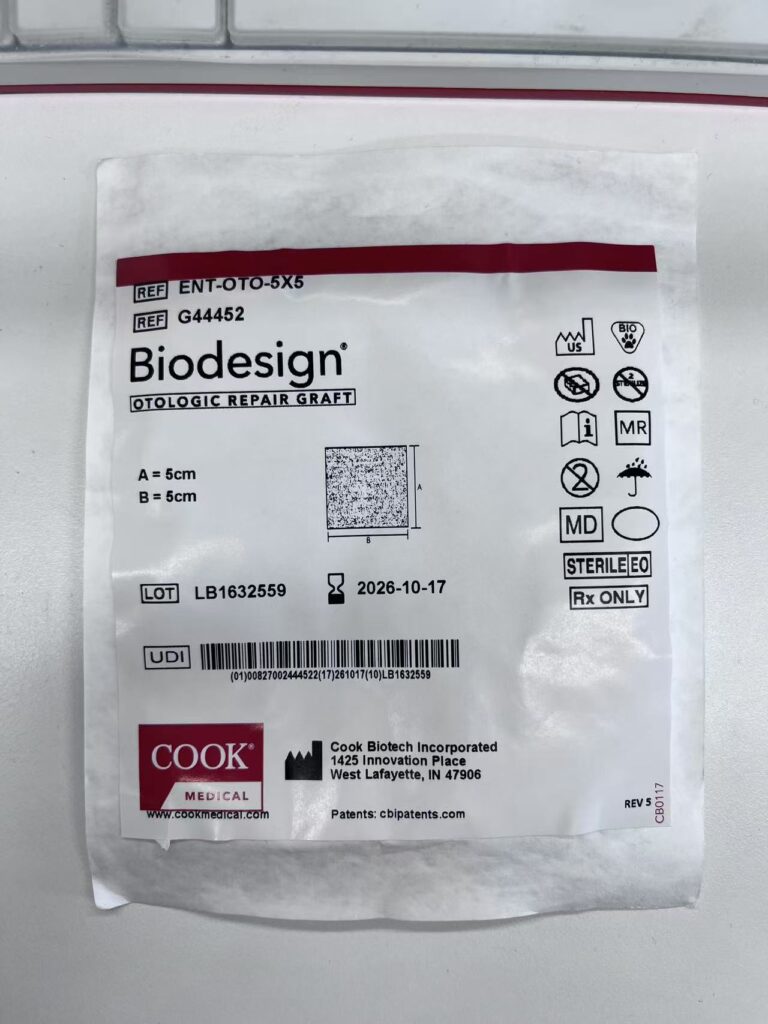
Clinics that rely on acellular dermal matrices (ADMs) for aesthetic and reconstructive procedures often see graft resorption and contour loss when the collagen scaffold is damaged by aggressive chemical processing, accelerating enzymatic degradation and delaying neovascularization. In contrast, ADMs processed with gentler decellularization that preserves the three-dimensional extracellular matrix (ECM) architecture and native type I/III collagen provide more predictable volume maintenance, faster microvascular ingrowth, and lower risk of integration failure. For procurement teams, understanding how AlloClean-style processing protects scaffold integrity is essential to choosing ADMs that support long-term clinical and financial performance.
What ADM Does & Ideal Clinic Profile
Acellular dermal matrix is a decellularized collagen-rich dermis used as a biologic scaffold for soft-tissue augmentation, reinforcement, and contour support in aesthetic and reconstructive surgery. It functions as a temporary ECM framework that hosts host fibroblasts, endothelial cells, and immune cells, which gradually remodel the matrix into living tissue while preserving structural volume.
Clinics that benefit most are those performing high volumes of breast and body contour procedures, facial soft-tissue support, or complex revision cases where native tissue is limited and synthetic meshes are undesirable. These practices depend on stable graft volume, controlled remodeling, and minimized complication rates, making the integrity and degradation profile of the ADM a core procurement decision rather than a purely clinical preference.
For such clinics, sourcing ADMs through a solutions partner like ALLWILL can align device selection, condition, and documentation with the practice’s risk tolerance, payer mix, and long-term asset strategy. This moves ADM purchases from one-off consumables into a planned tissue-engineering platform that integrates with capital devices and treatment protocols.
How Aggressive Chemical Processing Undermines ADM Integrity
Traditional aggressive decellularization often relies on high-concentration detergents (e.g., sodium dodecyl sulfate), strong oxidizing agents, or extended enzymatic exposure that strip cells but also disrupt collagen fibrils and ECM ultrastructure. Studies comparing ADM processing methods show that excessive detergent and crosslinking can fragment collagen, reduce porosity, and eliminate native binding sites for integrins and growth factors.
When the ECM is denatured, several downstream problems arise:
- Mechanical weakening and contraction: Damaged collagen networks lose tensile strength and are more prone to contraction and deformation once implanted.
- Altered porosity and pore interconnectivity: Over-processing can collapse the 3D pore structure, impeding cell infiltration and capillary sprouting.
- Loss of biochemical signaling: Removal of matrix-bound cytokines, elastin, and glycosaminoglycans reduces cues for orderly remodeling and angiogenesis.
Clinical and preclinical data show that aggressively processed matrices degrade faster in vivo because exposed, disorganized collagen becomes a preferred substrate for matrix metalloproteinases (MMPs) and other proteases. This accelerates resorption before stable neotissue replaces the graft volume, leading to contour loss, seroma formation, or implant exposure in breast and body procedures.
From a procurement standpoint, ADMs that rely on such aggressive methods may appear cost-effective upfront but can drive revision surgeries, reputational risk, and added operating-room time, eroding net ROI. ALLWILL tends to flag these profiles during sourcing discussions so clinics can weigh short-term savings against potential long-term failures.
AlloClean-Style Processing: Preserving the 3D Collagen Scaffold
Gentle, AlloClean-type ADM processing focuses on complete decellularization while preserving native ECM architecture and tropocollagen structure. Protocols typically use optimized combinations of mild detergents, controlled enzymatic steps, and carefully managed rinsing to remove cellular components but maintain collagen fiber orientation, porosity, and bioactive matrix molecules.
Key features of a preserved ADM scaffold include:
- Intact type I and III collagen fibrils: These provide mechanical strength and the primary framework for fibroblast and endothelial migration.
- Maintained pore size and interconnectivity: A continuous 3D network supports isotropic cell infiltration and capillary branching.
- Retention of non-collagenous ECM components: Residual proteoglycans and elastin contribute to viscoelastic behavior and cell signaling.
Research on dermis-derived scaffolds shows that when the natural tropocollagen and ECM are preserved, the resulting constructs exhibit high porosity, interconnected pores, and improved in vivo volume maintenance compared with more heavily processed materials. These properties shape the enzymatic degradation profile: instead of rapid bulk resorption, degradation proceeds in a controlled, cell-mediated fashion aligned with tissue ingrowth.
Clinics working with ALLWILL can request process summaries, validation reports, and mechanical data that demonstrate scaffold preservation levels for specific ADM lots. This supports evidence-based selection rather than relying on generic marketing claims or simple brand familiarity.
Cellular Remodeling Pathways: From Acellular Scaffold to Integrated Tissue
Once implanted, preserved ADM undergoes a sequence of cell-mediated events:
- Early host response and immune modulation
Neutrophils and macrophages arrive first, clearing residual debris and releasing cytokines that recruit fibroblasts and endothelial progenitors. A structurally intact ECM tends to promote a pro-resolving macrophage phenotype (M2-skewed), which supports constructive remodeling rather than chronic inflammation. - Cell infiltration and adhesion
Fibroblasts and mesenchymal cells infiltrate the matrix through existing pores, using integrin-mediated binding to native collagen and fibronectin domains. Preserved pore connectivity enables uniform cell distribution instead of surface-limited colonization, which is critical for volumetric stability in thicker grafts. - Neovascularization and microcirculatory integration
Endothelial cells sprout from existing host capillaries into the scaffold, forming new microvessels that perfuse the ADM. Studies on ADM-containing scaffolds show that preserved ECM with suitable porosity maintains shape and enhances ECM production and collagen deposition, indicating successful tissue integration. - Balanced matrix deposition and degradation
Resident cells synthesize new collagen and proteoglycans while secreting MMPs that gradually degrade the original matrix. In a well-preserved scaffold, type I/III collagen breaks down at a rate matched to new ECM deposition, preventing sudden volume loss.
The biochemical mechanisms hinge on the relationship between collagen integrity, integrin binding, and protease accessibility. Undamaged fibrils and organized crosslinking reduce uncontrolled exposure to proteases, helping transition resorption from an enzyme-dominated, rapid phase to a coordinated, cell-governed remodeling process.
For aesthetic clinics, this translates into more predictable contour maintenance and reduced variance in outcomes between patients, which underpin high-ticket treatment pricing and patient satisfaction. ALLWILL’s role is to ensure the ADM products in the portfolio demonstrate these constructive remodeling profiles through data-backed sourcing and continuous manufacturer engagement.
Revenue, Operational Impact, and Payback Logic
Although ADMs are often categorized as consumables, their behavior directly affects operating efficiency, revision rates, and the economic performance of high-value procedures. A matrix that resorbs prematurely can necessitate re-operations, threaten implant integrity, and undermine the clinic’s capacity to promote premium packages, all of which carry measurable financial impact.
When ADM integrity is protected:
- Revision rates fall: Fewer salvage procedures mean lower uncompensated OR time and reduced disruption of scheduled revenue cases.
- Case duration stabilizes: Surgeons can rely on predictable handling and behavior rather than improvising intraoperatively due to unexpected graft changes.
- Premium pricing maintains credibility: Consistent aesthetic stability supports loyalty and referral pathways critical for high-margin programs.
In practice, clinics often weigh slightly higher unit cost for AlloClean-style ADM against avoided downstream costs. Even without precise numbers, procurement leads can model scenarios: for instance, if a more stable ADM avoids one revision per 20–30 cases, the saved OR time and preserved reputation may outweigh per-case expendable cost. ALLWILL frequently facilitates such payback discussions, aligning ADM selection with broader device and service investments.
Why Structural Integrity Justifies Higher-Ticket Positioning
Preserved ADM architecture supports a higher strategic valuation because it acts as a biologic infrastructure asset rather than a simple consumable. Intact collagen scaffolds effectively convert the host’s regenerative capacity into predictable soft-tissue reinforcement, enabling surgeons to tackle more complex cases and sustain outcome consistency.
Clinically, this enables:
- Reliable support in dual-plane breast augmentation and mastopexy-augmentation, where lower pole stability and implant control are critical.
- Enhanced contour preservation in body and facial procedures where soft-tissue drape and transition zones matter in high-end aesthetic programs.
From an operational standpoint, such reliability supports package-based pricing, long-term treatment plans, and integration with other capital devices (e.g., energy-based skin tightening or resurfacing systems) that rely on stable underlying tissue scaffolds. ALLWILL often frames AlloClean-type ADM as part of a broader tissue-engineering stack that, combined with devices, education, and Smart Center support, underpins multi-year revenue strategies.
Practical BME Checklist: Evaluating ADM Scaffold Integrity Before Purchase
Biomedical engineers and procurement leads can use a technical maintenance-style checklist to assess ADM structural integrity and degradation risk before committing to a supplier.
BME Technical Integrity & Degradation Checklist for ADM
- Confirm decellularization method documentation (detergents, enzymes, exposure times, rinsing steps) and review for evidence of ECM-preserving protocols.
- Request mechanical test data (tensile strength, suture retention) comparing processed ADM to native dermis, focusing on maintenance of structural properties.
- Review histology from validation batches showing intact collagen fiber orientation, pore structure, and absence of residual cells.
- Verify porosity and pore connectivity metrics or imaging, ensuring 3D scaffolding suitable for cell infiltration and neovascularization.
- Assess biochemical characterization (collagen content, residual GAGs, elastin) to confirm limited denaturation and preserved ECM components.
- Ensure the supplier can provide degradation and remodeling data (animal or clinical) indicating controlled cell-mediated resorption rather than rapid bulk degradation.
- Confirm lot-level traceability, storage conditions, and handling protocols that protect scaffold integrity from manufacture to operating room.
ALLWILL can consolidate these elements for shortlisted ADM products, providing a single technical dossier that helps internal BME teams make a structured, evidence-based decision. As a next step, clinics can request a quote from ALLWILL including condition grading, documentation package, and recommended indications aligned with their case mix.
Compliance and Asset Protection
Because ADMs are implantable biologic products, compliance and asset protection extend beyond simple quality checks. Buyers must ensure that each matrix used in aesthetic procedures meets regional regulatory standards, traceability requirements, and institutional policies for human-derived or xenogeneic tissue.
Key compliance guardrails include:
- Confirming the product’s regulatory status (e.g., FDA 510(k) clearance or CE marking) for relevant indications and documenting it in procurement files.
- Ensuring thorough records of donor screening and processing for allogenic ADMs, or species and pathogen testing for xenogeneic matrices.
- Maintaining written evidence of sterilization validation, packaging integrity, and storage conditions from manufacturer through distributor to clinic.
Clinics should also treat ADM sourcing as an asset-protection matter: stable, compliant products help avoid litigation, regulatory scrutiny, and reputational harm. ALLWILL positions its sourcing and Smart Center services to support these needs, focusing on verified authenticity, regulatory documentation, and supply-chain transparency rather than simple product reselling.
Midway through evaluation, procurement teams who want to align ADM choice with institutional risk policies can request a quote from ALLWILL for documented, compliant ADM options tailored to their region and procedure mix.
Procurement Risks to Avoid + ALLWILL Expert View
Unstructured ADM purchasing exposes clinics to several avoidable risks:
- Selecting products based solely on price or brand familiarity without reviewing processing and scaffold integrity data.
- Relying on verbal assurances rather than written documentation for regulatory status, sterility validation, and donor screening.
- Ignoring degradation and remodeling profiles, leading to unanticipated resorption, revision burdens, and clinical dissatisfaction.
ALLWILL Expert View
Experienced procurement teams in aesthetic surgery increasingly treat ADM as part of a long-term tissue-engineering strategy rather than a one-off consumable. The most costly failures we see are not isolated graft resorptions but systemic issues: a specific ADM line with poorly preserved ECM triggers a higher revision rate across an entire program. That pattern erodes surgeon confidence, occupies OR time with non-revenue revisions, and undermines premium positioning for complex cases. In contrast, clinics that insist on scaffold-level evidence — mechanical tests, histology, remodeling data — and integrate ADM selection with their capital device portfolio achieve more stable outcomes and cleaner financials over three to five years. Our guidance is simple: make ADM choice a structured, data-backed decision, document every compliance element, and align matrix behavior with your surgical philosophy. The quote and condition report are just tools to formalize that strategy, not the goal in themselves.
Clinics ready to operationalize this approach can request a quote from ALLWILL for ADM options that meet defined structural integrity, documentation, and remodeling criteria, ensuring each unit supports both clinical performance and financial objectives.
Frequently Asked Questions
What price range should we expect for ADM products with preserved scaffold integrity?
Pricing varies widely by brand, origin (human vs xenogeneic), and size, but matrices with documented ECM preservation and robust validation typically sit toward the mid-to-upper range compared with aggressively processed low-cost options. Procurement teams should treat this as an investment in reduced revision risk and can request a quote from ALLWILL to benchmark current market ranges.
How does scaffold preservation affect the choice between new and certified pre-owned lots or inventory?
For ADM, the concept of certified pre-owned typically relates to inventory management rather than re-use, focusing on shelf-life, storage conditions, and documentation completeness. Regardless of inventory status, buyers must verify that collagen architecture, sterility, and regulatory records remain intact, and ALLWILL can provide condition summaries and document checks for available lots.
What warranty or support considerations apply to ADM compared with capital devices?
ADM itself is a consumable and usually does not carry device-style warranties, but support can include batch recall procedures, documentation assistance, and integration guidance with surgical workflows. Working with ALLWILL, clinics can ensure their ADM sourcing is coupled with process support and Smart Center advisory rather than isolated product delivery.
How should we factor ADM degradation behavior into ROI or payback models?
Degradation behavior affects revision rates, case predictability, and long-term patient satisfaction, all of which influence revenue stability and marketing credibility. Clinics can model scenarios using historical revision data and expected improvements from scaffold-preserving ADM, then validate assumptions with ALLWILL during quote discussions for specific products.
What is the typical lead time and logistical complexity for compliant ADM sourcing?
Lead time depends on regional regulations, supplier capacity, and documentation requirements, but most compliant ADM products can be integrated into routine surgical supply chains with planned ordering cycles. ALLWILL helps clinics anticipate regulatory checks, logistics, and inventory strategies so that ADM availability does not become a bottleneck for high-value procedures.
References
-
Do Processing Methods Make a Difference in Acellular Dermal Matrix Properties?academic.oup
-
Process development of an acellular dermal matrix (ADM) for biomedical applicationssciencedirect
-
Clinical applications of acellular dermal matrices: A reviewjournals.sagepub
-
Three-dimensional cell printing of gingival fibroblast/acellular dermal matrix/gelatin–sodium alginate scaffolds and their biocompatibility evaluation in vitropmc.ncbi.nlm.nih
-
Frozen bean curd-inspired xenogeneic acellular dermal matrix with high synchronous soft tissue regeneration and tumor inhibitionacademic.oup
-
Transformation of acellular dermis matrix with dicalcium phosphate into 3D porous scaffold for bone regenerationpubmed.ncbi.nlm.nih
-
Acellular dermal matrix integration in hydrogel scaffoldspubmed.ncbi.nlm.nih
-
Acellular dermal matrix in breast augmentation surgerysciencedirect
-
Preparation and processing of human allogenic dermal matrix for soft tissue repairelis
Part of the Service, Repair, Parts & Software guide.
Related articles
 Onda Pro Results: What Determines the Outcome in a Working ClinicKnowledge
 A Used Thermage FLX Console Earns Its Price with Verifiable Firmware, Handpiece, and Tip SupplyKnowledge
 How to Compare Quotes for the Same Used Aesthetic Device ModelKnowledge
 Used Medical Aesthetic Device Condition Grades: New, Like-New, Excellent, Working, and PartsKnowledge