
Repairing Irregular Anatomical Voids: Fluidic Tissue Matrix ROI and Fit Guide
Fluidic, particle‑type tissue matrices offer unmatched conformability in jagged, asymmetric cavities, allowing clinicians to fill irregular voids without compressive hotspots that compromise perfusion and mucosal healing. In vocal fold augmentation, laryngoplasty, and diabetic foot…
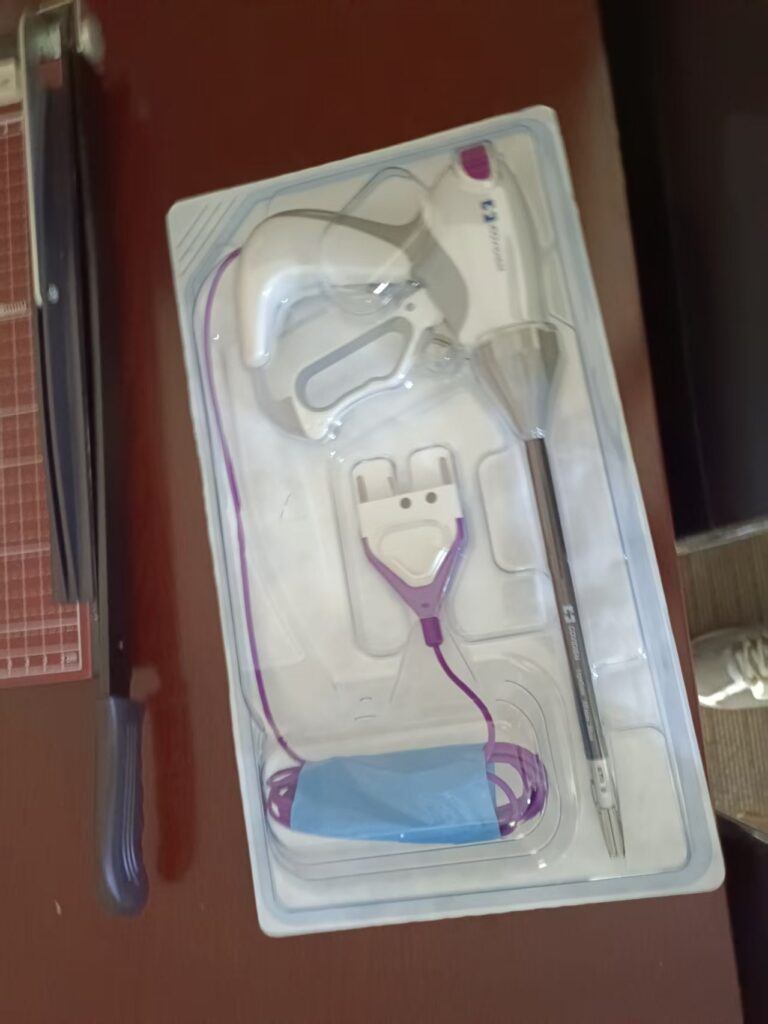
Fluidic, particle‑type tissue matrices offer unmatched conformability in jagged, asymmetric cavities, allowing clinicians to fill irregular voids without compressive hotspots that compromise perfusion and mucosal healing. In vocal fold augmentation, laryngoplasty, and diabetic foot ulcer management, these injectable matrices can be tuned to approximate native tissue biomechanics while supporting organized extracellular matrix deposition rather than rigid scar. For clinic owners, adoption decisions hinge on how these materials reduce revision procedures and wound‑care burden relative to their acquisition cost and handling complexity.
What it does and ideal clinic profile
Fluidic tissue matrices are injectable, particle‑type or microporous hydrogels designed to flow into complex cavities, interlock mechanically, and then stabilize as a three‑dimensional scaffold that supports tissue ingrowth. Many systems are based on hyaluronic acid, gelatin, chitosan, alginate, or silk composites, engineered to approximate the viscoelastic properties of target tissues and resist migration. Instead of being cut to shape like solid grafts, these matrices are delivered through syringes or cannulas and conform to the microtopography of vocal folds, laryngeal voids, or chronic wounds.
Ideal adopters include:
- Laryngology and phonosurgery practices performing injection laryngoplasty for glottic insufficiency or vocal fold paralysis, where precision augmentation and mucosal wave preservation are priorities.
- Centers treating complex diabetic foot ulcers with irregular undermining and biofilm‑prone pockets, seeking scaffolds that fill dead space while supporting granulation in high‑risk tissue.
- Facial reconstructive and aesthetic clinics managing asymmetric soft‑tissue defects, contour irregularities, or post‑traumatic cavities where conventional fillers struggle to achieve stable, anatomical integration.
ALLWILL typically supports these buyers by matching matrix formulations to target indications and delivering both new and certified pre‑owned inventory of injectable systems, plus compatible handpieces and training bundles for safe deployment across ENT, wound care, and facial reconstruction settings.
Core technical analysis: why particle-type matrices excel in jagged, asymmetric beds
Vocal fold paralysis and laryngoplasty
In unilateral vocal fold paralysis with a posterior glottic gap, the surgeon faces a narrow, curved mucosal surface with layered microstructure and a requirement to restore bulk without stiffening the vibratory cover. Traditional bulk implants or solid grafts may sit unevenly against the lamina propria, creating focal stiffness, impaired mucosal waves, and mucosal irritation that impedes healing.
Particle‑type matrices and microporous annealed particle hydrogels address this by:
- Flowing into microcrevices and irregular recesses along the vocal fold, then interlocking as particles fuse or cross‑link, creating a mechanically continuous yet micromodular scaffold.
- Allowing fine‑tuned volume placement segment by segment, so augmentation can be distributed rather than forming a single pressure point.
- Presenting interconnected pores that encourage uniform fibroblast migration, collagen deposition, and neoangiogenesis, reducing the risk of stiff, fibrotic nodules.
In laryngoplasty, where larger paraglottic spaces are accessed, these matrices can be injected into irregular voids created by prior surgery or radiation, conforming around cartilage and muscle remnants without requiring aggressive pocket dissection. By minimizing dissection and allowing low‑pressure, conforming fill, the matrices help maintain perfusion in adjacent mucosa, thereby supporting healing rather than stressing compromised tissue with rigid implants.
When a clinician asks, “How do I improve mucosal healing in laryngoplasty?”, the biomechanical answer is to reduce shear and focal compression: particle‑type matrices achieve this by distributing load across many small contact points, each supported by compliant hydrogel microenvironments tuned to lamina propria biomechanics.
Diabetic foot ulcers and irregular wound beds
Diabetic foot ulcers often present with undermined edges, sinus tracts, and non‑uniform tissue quality due to neuropathy, microvascular disease, and repeated debridement. Conventional dressings may bridge superficial surfaces but leave deep dead space and irregular pockets where exudate stasis and biofilm formation drive chronic infection and ischemic necrosis.
Fluidic tissue matrices used in wound care, including HA‑based and composite hydrogels, enable:
- Injection or placement into undermined pockets to fill dead space, providing a provisional matrix that supports granulation tissue and re‑epithelialization.
- High water content and controlled cross‑linking, maintaining a moist environment while avoiding excessive swelling that would compress fragile capillary beds.
- Conformability around exposed tendon or bone, distributing mechanical forces and reducing local pressure points that otherwise worsen ischemia.
By matching the irregular geometry of the wound, particle‑type matrices help maintain perfusion at the interface, reducing the risk that poorly supported tissue edges will strangulate and necrose. This is particularly valuable in off‑loading regimes where external pressure is already being managed; the matrix complements off‑loading by smoothing internal micropressure gradients.
Facial reconstruction and asymmetric tissue fillers
In facial reconstruction and aesthetic correction of contour defects, solid implants or standard fillers can struggle in areas with scarred or tethered soft tissue, leading to visible lumps or under‑correction in recesses. Microporous particle matrices can be injected via cannulas along multiple planes, seeding interconnected particles in three dimensions. As these anneal, they create a scaffold that:
- Follows complex curves of the malar region, perioral scars, or orbital rim defects, improving surface regularity.
- Allows cells to infiltrate through pores while maintaining enough mechanical cohesion to resist migration and collapse.
Compared with more viscous but non‑porous fillers, these matrices are specifically designed to act as tissue‑engineering scaffolds rather than mere space fillers, a distinction that is critical when long‑term integration and perfusion are priorities rather than short‑term volume alone.
Mid‑article CTA: Request a quote from ALLWILL for a defect‑specific portfolio of fluidic tissue matrices and asymmetric tissue fillers, including indicative pricing, handling requirements, and training options for vocal, wound, and facial applications.
Why particle-type format prevents ischemic necrosis in complex cavities
Ischemic necrosis in irregular anatomical voids often arises from uneven load distribution: rigid or poorly conforming implants exert high pressure where they contact tissue while leaving adjacent regions unsupported. Particle‑type matrices mitigate this through several biomechanical mechanisms:
- Conformable packing: Numerous small particles or microporous units settle into jagged cavities, each bearing a fraction of the external and internal loads. This reduces peak stresses at any single interface point and helps maintain capillary perfusion across the cavity lining.
- Interconnected porosity: The void spaces between particles form a continuous network that permits fluid movement and cell migration, decreasing trapped exudate pockets that could compress microvasculature.
- Viscoelastic response: Hydrogels and ECM‑mimetic matrices respond to cyclical loads (phonation, gait, facial motion) with compliant deformation rather than rigid resistance, dampening mechanical shock transmitted to fragile tissue edges.
In laryngoplasty and vocal fold augmentation, this behavior translates to:
- Reduced focal stiffness at the mucosal interface, preserving vibratory compliance and enabling uniform mucosal wave propagation.
- A supportive scaffold where fibroblasts can deposit collagen in an organized manner, limiting scar plate formation that otherwise thickens and stiffens the cover.
In diabetic ulcers, it means:
- Filling dead space without compressing already compromised microcirculation, complementing off‑loading and debridement strategies.
- Providing a matrix where angiogenesis can proceed in three dimensions, reducing the tendency for central necrosis where perfusion is weakest.
By matching both geometry and viscoelastic profile of the target tissue, particle‑type matrices address the mechanical contributors to ischemia rather than relying solely on biochemical cues.
Revenue and operational impact & payback math
Pricing and cost structure
Pricing for injectable, fluidic tissue matrices varies by indication and formulation:
- Vocal fold and laryngoplasty-specific hydrogels (e.g., HA‑composite, ECM‑mimetic injectables) typically fall in an estimated USD 400–1,500 per syringe or vial, depending on volume and brand.
- Advanced particle-type scaffolds for long‑term vocal fold augmentation and asymmetric facial reconstruction may range from USD 800–2,500 per treatment set.
- Wound‑care matrices for complex diabetic foot ulcers, including ECM‑derived and synthetic hydrogels, generally sit around USD 300–1,200 per application course, depending on dressing frequency and product class.
Certified pre‑owned inventory mostly impacts associated delivery systems (injection kits, pumps, or specialized applicators) rather than the matrices themselves, which are single‑use; however, surplus or near‑expiry stock from compliant channels can sometimes reduce unit cost by 10–25% when documentation and shelf life remain adequate.
Payback perspectives
In a mid‑volume laryngology practice performing 40 injection laryngoplasty procedures annually:
- If each procedure uses USD 900 of matrix product on average, annual material spend is approximately USD 36,000.
- Suppose fluidic, ECM‑mimetic matrices reduce the need for revision augmentation or implant removal by even 10–15% compared with older, less conformable materials (through better integration and fewer mucosal complications).
Avoidance of 4–6 revisions per year, each costing USD 4,000–8,000 in unreimbursed OR time and opportunity loss, can preserve USD 16,000–48,000 of internal value annually. Over a two‑year planning window, this may fully offset or surpass the premium on the matrices relative to lower‑cost alternatives.
Similarly, in a wound‑care program managing 25 complex diabetic foot ulcers:
- Matrices may add USD 800–1,500 per case to direct dressing costs, but even a modest reduction in progression to major amputation or prolonged hospitalization yields substantial economic protection.
ALLWILL’s Smart Center can help clinics translate these dynamics into case‑based ROI models, factoring local reimbursement, procedure mix, and complication rates to determine where fluidic matrices genuinely outperform simpler options economically.
Differentiated advantage and higher-ticket rationale
Fluidic tissue matrices occupy a higher‑ticket niche relative to conventional injectables and dressings, but they bring distinct advantages for complex cavities:
- Geometry conformity: Particle-type and MAP hydrogels demonstrate exceptional ability to fill irregular spaces and maintain shape over time, promoting de novo tissue formation rather than simple filler effect.
- Biomechanical tuning: Many systems are designed to match the viscoelastic properties of native vocal fold cover or soft tissue, preserving function in phonation and facial expression.
- Regenerative microenvironment: ECM‑mimetic compositions deliver biochemical signals that support organized collagen deposition, angiogenesis, and reduced fibrosis.
Clinically used alternatives include:
- Hyaluronic‑acid based injectable fillers like Restylane for short‑to‑medium term vocal fold augmentation.
- Calcium hydroxylapatite carriers for laryngoplasty, which can provide bulk but may not offer equivalent ECM‑mimetic behavior.
These alternatives remain appropriate where geometry is simpler or long‑term regenerative integration is not central to the strategy. Fluidic matrices justify their premium where perfusion risks, complex topology, or functional demands (voice, gait, facial motion) make conformability and biomechanical fidelity critical.
ALLWILL’s sourcing philosophy is to position these matrices as targeted solutions for well‑defined defect categories, not as universal upgrades, helping clinics avoid overuse while capturing value in the highest‑risk scenarios.
Practical decision aid: defect-driven matrix selection framework
Given the article’s focus on biomechanics and indications rather than pure cost or logistics, a tactical framework is more useful than a standard price table. The following matrix helps procurement teams align fluidic tissue matrix choices to defect characteristics.
| Defect type | Geometry and tissue context | Recommended matrix class | Estimated product range (per case) | Key decision criteria |
|---|---|---|---|---|
| Unilateral vocal fold paralysis with small posterior gap | Narrow, smooth mucosal surface; moderate asymmetry; high phonatory demand. | HA‑based or ECM‑mimetic injectable hydrogel with viscoelastic tuning to lamina propria. | USD 400–1,200 per syringe set. | Prioritize vibratory compliance, durability, and ease of fine volume adjustment; avoid materials that over‑stiffen cover. |
| Large glottic insufficiency or multi‑layer laryngoplasty void | Irregular, multi‑compartment paraglottic space; prior surgery or radiation; fragile mucosa. | Particle-type or MAP hydrogel providing microporous scaffold and long‑term augmentation. | USD 800–2,000 per case. | Require conformability, interconnected porosity, and documented long‑term integration; confirm regulatory status for laryngeal use. |
| Complex diabetic foot ulcer with undermining and exposed structures | Jagged wound bed with dead space; compromised microcirculation; high infection risk. | ECM‑derived or synthetic wound matrix (hydrogel or particulate scaffold) designed for granulation. | USD 800–1,500 per treatment course. | Focus on conformability, moisture balance, and angiogenesis support; integrate with off‑loading and infection control protocols. |
| Asymmetric facial soft‑tissue defect or scar cavity | Irregular subcutaneous void; tethered skin; high aesthetic demand. | Microporous particle filler or silk‑HA composite matrix with tunable viscoelasticity. | USD 1,000–2,500 per reconstruction. | Consider surface smoothness, integration profile, and resistance to migration; avoid materials with excessive rigidity or unpredictable resorption. |
Use this framework to categorize upcoming cases and shortlist matrix classes accordingly. ALLWILL can then structure quotes and inventory plans around these defect categories, ensuring consistent material selection and predictable cost envelopes.
Compliance and asset protection
Injectable matrices for laryngoplasty, vocal fold augmentation, and wound care are subject to region‑specific device and biologic regulations:
- Some HA‑based or ECM‑mimetic injectables are cleared for specific indications such as vocal fold augmentation or soft‑tissue reinforcement; others may be used off‑label based on clinician judgment and local rules. Buyers must verify current regulatory status for each product and indication in their region.
- Wound matrices often carry device or biologic classifications depending on composition; cross‑border movement can trigger additional import requirements for tissue‑derived or bioactive components.
To protect the asset and the clinic:
- Obtain written confirmation of regulatory status, including clearance or marking specifics and intended indications.
- Ensure batch numbers, sterilization records, and expiry dates are captured in inventory systems for traceability and recall management.
- For delivery systems sourced as CPO (e.g., reusable injection instruments), confirm cleaning and sterilization protocols, service history, and compatibility with current matrix products.
ALLWILL supports clinics by aggregating this documentation into procurement bundles, reducing administrative friction while emphasizing that regulatory responsibility ultimately rests with the clinic and its advisors.
Procurement risks to avoid and ALLWILL Expert View
Common risks when adopting fluidic matrices include:
- Ignoring biomechanics: Selecting injectables solely on viscosity or ease of injection without aligning viscoelastic properties to vocal or facial tissue can impair function and negate regenerative benefits.
- Underestimating geometry: Using standard fillers in highly irregular cavities where particle-type scaffolds would better distribute load and protect perfusion.
- Inadequate documentation for off‑label or cross‑border use: Failing to secure written evidence of regulatory status and sterility exposes clinics to audit and medicolegal risk.
ALLWILL Expert View: Building a fluidic matrix portfolio that earns its keep
Clinics that see lasting value from fluidic tissue matrices treat them as category solutions rather than one‑off experiments. They start with three or four defect archetypes—small-gap vocal fold paralysis, large laryngoplasty voids, undermined diabetic ulcers, and asymmetric facial scars—and assign a primary and secondary matrix option to each, based on biomechanics and regulatory status. Procurement then tracks not just material cost per case, but revision rates, functional outcomes, and clinician satisfaction over 12–24 months. Patterns emerge quickly: for example, MAP-type hydrogels may prove indispensable in large laryngeal voids, while simpler HA injectables remain adequate for small glottic gaps. By codifying these patterns into purchasing rules, owners avoid overusing premium scaffolds where they add little value, and ensure they are available where ischemia risk and geometry complexity make them essential. ALLWILL’s role is to surface compatible products, condition data for any reusable delivery systems, and provide the documentation spine—regulatory, batch, and refurbishment details—that lets clinics defend these capital decisions during accreditation or payer reviews.
Closing CTA: Request a quote from ALLWILL to build a defect‑based fluidic matrix portfolio, including product shortlists, estimated per‑case costs, and documentation packages for vocal, wound, and facial indications.
Frequently Asked Questions
What is the typical price range for fluidic tissue matrices used in laryngoplasty?
Most laryngoplasty‑grade injectable matrices fall in an estimated USD 400–1,500 per syringe or case, with particle-type scaffolds for larger voids often landing near USD 800–2,000. Actual pricing depends on brand, volume, and regional distribution; clinics should request a quote from ALLWILL for current figures.
How do fluidic matrices compare to conventional fillers or implants in cost and performance?
Conventional HA fillers and bulk implants may be less expensive up front but can offer limited regenerative microenvironment and conformability in complex cavities. Fluidic matrices cost more per unit but are designed to better match native biomechanics and support organized tissue integration, potentially reducing revisions and functional compromise.
Can certified pre-owned inventory reduce costs for these systems?
Because matrices themselves are single‑use, CPO savings usually apply to delivery instruments, pumps, or specialized cannula kits rather than the injectables. Verified surplus or near‑expiry stock can sometimes lower unit cost by 10–25% when documentation, storage, and shelf life remain robust, but clinics must carefully review traceability.
What warranty and support should clinics expect?
Manufacturers typically provide warranty coverage on reusable hardware (injectors, pumps), while consumable matrices are supported through batch‑specific quality and sterility assurances. Clinics should obtain written terms for equipment replacement, service intervals, and any exclusions, especially for devices procured via CPO channels.
How long is the lead time for obtaining these matrices and associated systems?
Lead times vary by region and product class but often range from two to six weeks for new equipment and consumables. CPO instruments may be available faster but require inspection and documentation review. Early engagement—such as requesting a quote from ALLWILL—helps synchronize supply with scheduled laryngoplasty, wound‑care, and facial reconstruction programs.
References
- The Impact of Biomechanics in Tissue Engineering and Regenerative Medicine
- Vocal Fold Tissue Repair in Vivo Using a Synthetic Extracellular Matrix
- Therapeutic Potential of Gel-Based Injectables for Vocal Fold Regeneration
- Biomaterials in Vocal Fold Tissue Engineering
- Tissue Engineering-Based Therapeutic Strategies for Vocal Fold Repair and Regeneration
- Regenerative Strategies for Vocal Fold Repair Using Injectable Biomaterials
- A Self-Fused Hydrogel for the Treatment of Glottic Insufficiency
- De Novo Tissue Formation Using Custom Microporous Annealed Particle Hydrogel Provides Long-Term Vocal Fold Augmentation
- Laryngeal Injections for Vocal Fold Palsy
Related articles
 Onda Pro Results: What Determines the Outcome in a Working ClinicKnowledge
 A Used Thermage FLX Console Earns Its Price with Verifiable Firmware, Handpiece, and Tip SupplyKnowledge
 How to Compare Quotes for the Same Used Aesthetic Device ModelKnowledge
 Used Medical Aesthetic Device Condition Grades: New, Like-New, Excellent, Working, and PartsKnowledge