
L&CBio MegaFill Micronized ADM: Flow Stability and Volumetric Integrity Price Guide
For clinics evaluating L&CBio MegaFill micronized acellular dermal matrix (ADM), the key commercial question is whether its paste-type, high-uniformity particles justify the investment versus manually diced tissue fragments in terms of volumetric stability, migration…
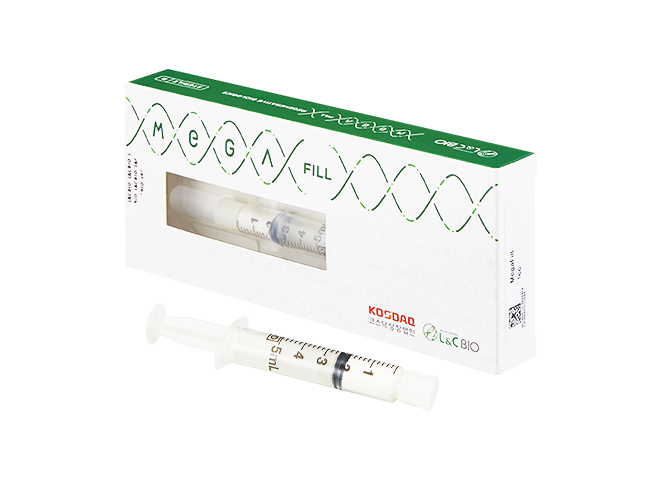
For clinics evaluating L&CBio MegaFill micronized acellular dermal matrix (ADM), the key commercial question is whether its paste-type, high-uniformity particles justify the investment versus manually diced tissue fragments in terms of volumetric stability, migration risk, and overall procedure economics. Paste-type micronized ADM engineered for predictable rheology tends to maintain shape and resist tracking into healthy tissue more reliably than irregular fragments, supporting premium pricing and fewer corrective injections. For mid-to-late funnel buyers, understanding these particle-level mechanics, expected price ranges, and ROI logic is essential before requesting a quote from ALLWILL.
What MegaFill Does and Ideal Clinic Profile
MegaFill is a paste-type micronized acellular dermal matrix designed as an injectable tissue scaffold for soft-tissue augmentation and contour reinforcement. It consists of finely pulverized ADM particles suspended in a carrier, delivered through cannulas or needles for minimally invasive volume restoration.
Clinics that benefit most are aesthetic and reconstructive practices performing high volumes of facial contouring, peri-implant soft-tissue support, scar revision, or small-volume body augmentation where traditional sheets or large grafts are impractical. These teams require a flowable matrix that can be placed precisely yet solidify into a stable scaffold, minimizing risk of material migration or contour irregularities under dynamic facial or body movement.
For such settings, MegaFill operates not just as a biologic filler but as a long-term scaffold that host cells can colonize and remodel, forming durable neotissue while maintaining initial injection geometry. ALLWILL’s sourcing and solution support can help align MegaFill’s use with existing device-based protocols (e.g., RF tightening, lasers) to build multi-modality aesthetic programs.
Particle Architecture vs. Manually Diced Tissue: Technical Core Analysis
Traditional injectable grafting often relies on manually diced dermal or fat fragments produced in the OR. These fragments typically show wide size variation, irregular shapes, and sharp edges, which affect packing behavior, flow through cannulas, and local tissue response. Non-uniform particles can clump, obstruct smooth injection, and create heterogeneous density zones after placement that are prone to micro-migration and uneven resorption.
By contrast, MegaFill-style micronized ADM is processed to produce more uniform particle size distributions and a paste-like consistency. In an animal model evaluating paste-type micronized ADM, particles averaged around hundreds of micrometers, with relatively narrow deviation compared with crude fragmentation, contributing to consistent packing and integration. Insights from powder technology show that micron-scale particles with controlled size distributions pack more predictably, with stable bulk density and coordination number, which translates into a more coherent implant mass once injected.
This architectural precision affects several critical dimensions:
- Injection behavior: Uniform particles and a continuous carrier phase enable smoother shear-thinning flow through cannulas, minimizing clogging and jetting.
- Post-injection packing: Predictable packing fractions reduce voids and low-density pockets that encourage tracking or micro-channels in surrounding tissues.
- Interface regularity: Rounded, micron-scale particles distribute stress more evenly than jagged fragments, supporting homogeneous mechanical coupling with host tissue.
When procurement teams compare MegaFill with manual fragment approaches, the discussion should center less on absolute material cost and more on particle-level uniformity, packing behavior, and the downstream impact on volumetric stability and complication rates.
Rheology, Flow Stability, and Volumetric Collapse Risk
Injectable scaffold performance is governed by viscoelastic and rheological parameters such as viscosity, storage modulus \(G’\), loss modulus \(G”\), yield stress, and shear-thinning behavior. Ideal injectable matrices exhibit a low enough viscosity under shear to be delivered easily, then recover higher modulus and structural integrity at rest to resist migration and deformation.
MegaFill’s paste-type formulation and micronized particles enable several advantageous rheological behaviors:
- Shear-thinning injectability: Under injection shear rates, the matrix behaves more fluid-like, facilitating controlled placement and minimizing injection force.
- Post-shear structural recovery: Once shear is removed in tissue, viscoelastic properties shift toward solid-like behavior, allowing the particles to form a stable, packed scaffold.
- Yield stress sufficient to resist creep: A finite yield stress helps the matrix resist slow flow and tracking along tissue planes under low, chronic mechanical loads.
Studies on injectable hydrogels and composite scaffolds show that well-tuned rheology supports localized retention, in situ gelation, and resistance to flow-induced erosion or dissolution. When combined with particle uniformity, these features reduce the risk of volumetric collapse, where material disperses or resorbs faster than tissue can remodel and support the volume.
In contrast, manually diced tissue fragments suspended in fluid often display less predictable rheology: large, irregular pieces can settle or separate, resulting in variable local viscosity and inconsistent mechanical behavior across the injected zone. This can encourage material to track along lower-resistance planes or disperse under movement, undermining contour precision and necessitating repeat interventions.
From a purchasing standpoint, rheological characterization—whether provided by the manufacturer or validated via independent data—is a core differentiator for MegaFill-type matrices. ALLWILL can help clinics interpret such rheology metrics and correlate them with actual injection workflows and outcome expectations.
Revenue and Operational Impact: Payback Logic
While MegaFill is not a capital device, its impact on clinical operations and revenue can be substantial in high-volume aesthetic practices. Reliable flow stability and volumetric maintenance influence procedure efficiency, patient satisfaction, and the need for corrections or touch-ups, all of which affect net profitability.
Key economic levers include:
- Reduced re-injection and revision rates: More stable scaffold behavior can decrease the frequency of corrective sessions, freeing clinician time for new revenue-generating procedures.
- Predictable product utilization: Consistent rheology and particle performance allow clinicians to standardize injected volumes, improving inventory planning and cost control.
- Support for premium service tiers: Confidence in volumetric integrity supports higher pricing and bundled programs that include adjunct device-based treatments.
Estimated price ranges for paste-type micronized ADM such as MegaFill vary by market and volume but typically sit above commodity fillers and closer to other biologic scaffolds, reflecting processing complexity and documentation requirements. Procurement teams should model ROI using scenario analysis—for example, comparing a modest per-unit cost premium against expected reductions in corrective visits and non-revenue chair time.
ALLWILL’s Smart Center can assist in structuring these models and integrating MegaFill usage with device investments, helping clinics decide if the rheological and architectural advantages warrant inclusion in premium treatment pathways. When the analysis supports the case, the next logical step is to request a quote from ALLWILL for current MegaFill pricing, packaging options, and recommended usage volumes aligned with case mix.
Differentiated Advantage and Higher-Ticket Rationale
MegaFill’s higher-ticket positioning is driven by its engineering as an injectable scaffold rather than a simple filler or fragmented graft. The combination of micronized ADM particles, paste-type formulation, and tuned viscoelastic behavior aims to offer structural benefits not achievable with manually diced tissue.
Differentiating features include:
- Scaffold-level integration: Micronized ADM provides collagen-rich surfaces for cell attachment and neovascularization, potentially supporting long-term tissue remodeling.
- Controlled particle distribution: Uniform particle size and flow enable reproducible three-dimensional deposition, supporting consistent contours across sessions and operators.
- Alignments with device-based protocols: As a regenerative scaffold, MegaFill can be paired with energy-based devices that stimulate collagen or perfusion, creating synergistic treatment stacks.
Compared with alternative injectable bioscaffolds or hydrogels, clinics weighing MegaFill may also consider other ADM-based or synthetic matrices that emphasize rheology and integration, selecting among them based on regulatory status, documentation, and cost. ALLWILL’s neutral, solution-focused positioning helps clinics compare such options on structural and operational grounds rather than pure brand preference.
Mid-article, clinics that see alignment between MegaFill’s profile and their aesthetic portfolio can request a quote from ALLWILL to validate pricing assumptions, confirm availability, and obtain condition or batch documentation for planned roll-out.
Practical B2B Decision Aid: New vs. CPO Cost and Payback Table
Because the working title centers on flow stability and architecture rather than explicit pricing or logistics, this article’s tactical decision aid focuses on cost and ROI—where clinics actually decide whether MegaFill belongs in their premium pipeline. The table below presents illustrative ranges and payback logic for new vs. certified pre-owned (CPO) inventory arrangements around MegaFill usage (e.g., bundled procurement with associated devices or multi-pack scaffold purchases). Figures are generalized and must be locally verified.
| Scenario | Acquisition mode | Estimated unit or bundle cost range (relative) | Typical usage profile | Illustrative payback considerations |
|---|---|---|---|---|
| A | New MegaFill units purchased as stand-alone consumables | Moderate to high range compared with commodity fillers and manual grafting materials. | High-volume facial and small body augmentations; frequent integration into regenerative protocols. | Payback driven by reduced corrective visits and ability to position regenerative packages at premium price points. ROI sensitive to case volume and local pricing strategy. |
| B | New MegaFill combined with new or CPO energy-based devices in a bundled program | Higher total investment, but scaffold cost integrated into service stack. | Clinics building signature protocols combining injectable scaffolds with RF, ultrasound, or laser treatments. | Payback evaluated across the entire stack; MegaFill’s stability supports perceived quality of the program, influencing package uptake and retention. |
| C | CPO inventory management for MegaFill (e.g., negotiated pricing, multi-pack purchasing, documentation-focused sourcing) | Slightly lower effective cost per unit through strategic purchasing, not product reuse. | Established clinics optimizing margins while maintaining scaffold quality and documentation. | Payback linked to margin expansion and assured compliance; dependent on maintaining full regulatory and quality documentation for each batch. |
This framework underscores that MegaFill’s economic value is less about absolute unit price and more about how its flow stability and volumetric reliability support procedure efficiency and premium offerings. ALLWILL can translate these generalized profiles into specific quotes, conditions, and procurement structures tailored to each clinic’s volume and service mix.
Compliance and Asset Protection
MegaFill, as an injectable biologic scaffold derived from acellular dermal matrix, sits squarely within regulatory and institutional oversight for tissue products. Clinics must ensure that each unit used in aesthetic or reconstructive procedures conforms to regional regulatory statuses (e.g., appropriate registrations, clearances, or approvals) and internal policies on human or xenogeneic tissue handling.
Critical compliance steps include:
- Verifying the product’s regulatory status for intended uses (such as documentation of clearances or registrations) and retaining this information in procurement records.
- Confirming that donor screening, decellularization, sterilization, and packaging validations are documented and traceable.
- Ensuring adherence to recommended storage conditions and shelf-life parameters to preserve rheological and structural properties.
Asset protection also encompasses the legal and reputational risks of off-label or undocumented use. Clinics should obtain written confirmation from suppliers for authenticity, documentation, and batch traceability rather than relying on verbal assurances. ALLWILL’s role is to facilitate verified, compliant sourcing and documentation pathways; it does not act as the regulatory authority but supports clinics in meeting their obligations.
Procurement Risks to Avoid + ALLWILL Expert View
Common procurement pitfalls around injectable ADM scaffolds include:
- Focusing on per-unit price without reviewing particle architecture, rheology data, and volumetric stability evidence.
- Purchasing from channels that cannot provide complete regulatory and processing documentation, exposing clinics to compliance and liability risks.
- Underestimating operational costs associated with corrective treatments and dissatisfied patients when flow stability and integration are inconsistent.
ALLWILL Expert View
For injectable scaffolds like MegaFill, the procurement conversation is often dominated by material cost, but in practice the most impactful variable is volumetric predictability over time. High-uniformity micronized ADM with validated rheology doesn’t just inject more smoothly; it allows clinics to design treatments with a high degree of confidence in how volume will behave under motion and metabolism. That predictability drives scheduling efficiency, reduces “fix-it” appointments, and supports differentiated, premium-tier offerings. We advise clinics to treat rheology reports, particle-size distributions, and documentation packages as core selection criteria, not appendices. When those elements are aligned with your service strategy and risk profile, price negotiation becomes a structured step rather than a gamble. Requesting a quote, along with a condition and documentation summary, should close the loop between engineering data, compliance safeguards, and commercial performance.
Clinics ready to formalize this approach can request a quote from ALLWILL for MegaFill, including current pricing, region-specific regulatory documentation, and suggested integration pathways with existing devices and protocols.
Frequently Asked Questions
What is the typical price range for MegaFill compared with standard fillers or manually prepared grafts?
MegaFill, as a processed micronized ADM scaffold, generally occupies a mid-to-high price tier relative to commodity fillers and OR-prepared fragments, reflecting its engineering and documentation requirements. Actual prices vary by region and purchasing structure, so clinics should request a quote from ALLWILL to obtain current figures aligned with their volume.
Can MegaFill be sourced under certified pre-owned or discounted inventory arrangements?
For injectable ADM products, CPO strategies relate to negotiated inventory management rather than reuse, focusing on batch documentation, shelf-life, and storage integrity. Clinics should verify that any discounted or large-volume purchasing still includes complete regulatory and quality records for each lot.
What kind of warranty or support applies to MegaFill as a biologic scaffold?
Injectable ADM matrices typically do not carry classic device warranties, but reputable suppliers provide support around documentation, handling, and incident or recall management. Working through ALLWILL, clinics can align MegaFill procurement with broader support structures, including Smart Center advisory and sourcing transparency.
How does MegaFill impact ROI and payback compared with lower-cost injectable options?
MegaFill’s economic value lies in its potential to reduce corrective sessions and support premium, regenerative treatment tiers through flow stability and scaffold integration. ROI depends on case volume, pricing, and local market positioning, and clinics can model scenarios then validate assumptions during quote discussions with ALLWILL.
What lead times and logistics should we expect for compliant MegaFill sourcing?
Lead times depend on regional regulatory requirements, supplier inventory, and clinic-level documentation processes, but injectable ADM scaffolds can usually be integrated into routine procurement cycles with appropriate planning. ALLWILL can help forecast availability windows and structure orders so that MegaFill does not become a bottleneck in high-volume aesthetic programs.
References
-
Evaluation of Paste-Type Micronized Acellular Dermal Matrix for Soft Tissue Augmentation: Volumetric and Histological Assessment in a Mouse Models-space.snu.ac
-
Rheological properties of injectable biomaterialssciencedirect
-
Recent Advances in Injectable Hydrogels for Biomedical and Aesthetic Applications: Focus on Rheological Characteristicspubmed.ncbi.nlm.nih
-
Packings of micron-sized spherical particles – Insights from bulk density determination, X-ray microtomography and discrete element simulationssciencedirect
-
A rheological study of biodegradable injectable PEGMC/HA composite scaffoldspubs.rsc
-
Flow induced stability of pluronic hydrogels: Injectable and unencapsulated nucleus pulposus replacementsciencedirect
-
Rheological behaviour of different composite materials for additive manufacturing of 3D bone scaffoldssciencedirect
-
Preparation and processing of human allogenic dermal matrix for soft tissue repairelis
Related articles
 Onda Pro Results: What Determines the Outcome in a Working ClinicKnowledge
 A Used Thermage FLX Console Earns Its Price with Verifiable Firmware, Handpiece, and Tip SupplyKnowledge
 How to Compare Quotes for the Same Used Aesthetic Device ModelKnowledge
 Used Medical Aesthetic Device Condition Grades: New, Like-New, Excellent, Working, and PartsKnowledge