
ULTHERA DS 7-3.0 Transducer Safety: Handling Incomplete Skin Contact & Energy Rebounds
When the ULTHERA DS 7-3.0 transducer is not fully flush with the skin, the system can display imaging artifacts, trigger system messages, and increase the risk of superficial heating or uneven coagulation lines. Clinics…
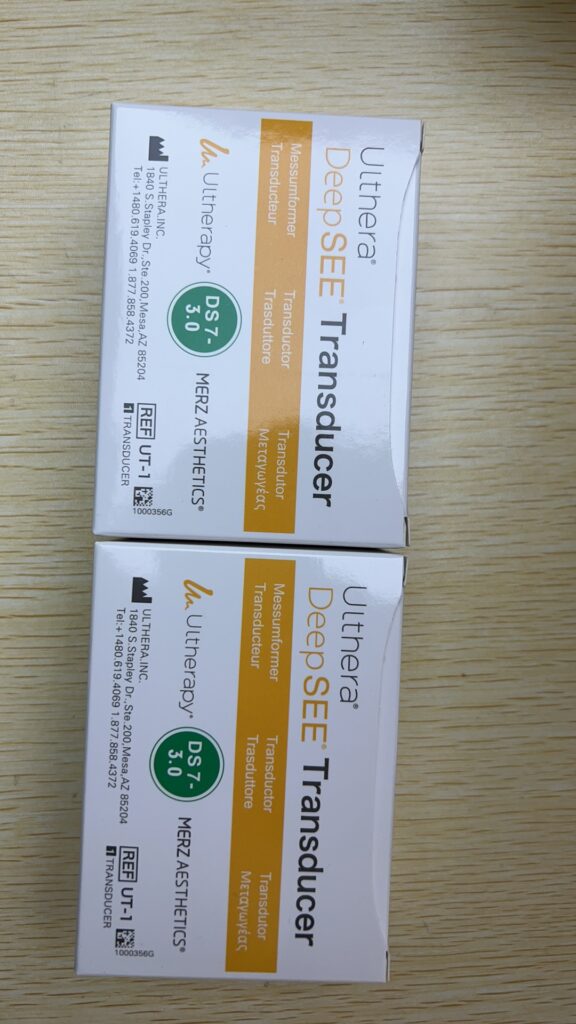
When the ULTHERA DS 7-3.0 transducer is not fully flush with the skin, the system can display imaging artifacts, trigger system messages, and increase the risk of superficial heating or uneven coagulation lines. Clinics should respond by stopping treatment immediately, re-establishing full gel coupling, re-aligning the transducer using DeepSEE imaging to confirm contact, and only then resuming therapy. A structured maintenance and calibration routine further reduces contact-related alerts and ultrasound energy scatter risk over the device lifecycle.
What this transducer does & who it’s for
- The ULTHERA DS 7-3.0 is a 7 MHz DeepSEE image/treat transducer that delivers micro-focused ultrasound energy at a nominal depth of 3.0 mm, with imaging capability from the skin surface to 8 mm.
- It is typically used for non-invasive dermatologic aesthetic indications such as lifting brow, submental and neck tissue, and improving lines and wrinkles of the décolleté when used with the Ulthera System. Indications are defined by the manufacturer and regulatory clearances.
- Ideal users are aesthetic clinics, medspas, and dermatology practices that already operate an Ulthera System and need predictable, image-guided energy delivery for mid-dermal and superficial SMAS-adjacent layers.
- For high-utilization sites, the DS 7-3.0 is often paired with other depths (DS 4–4.5, DS 10–1.5) to build tiered lifting protocols within the same platform, making transducer condition and contact calibration central to safe operations.
Mid-funnel buyers at this stage are often comparing new versus certified pre-owned (CPO) handpieces and consumable cartridges, and need assurance that energy delivery, imaging, and system alerts will behave reliably in daily practice. ALLWILL is positioned to help match device condition and budget to those clinical and operational requirements through vetted sourcing and Smart Center support.
Technical core: preventing energy scattering & managing contact alerts
Because your working title focuses on “energy rebounds” and “transducer surface contact calibration,” this section emphasizes hardware physics, ultrasound coupling, and system behavior rather than pricing.
- The Ulthera System integrates B-mode imaging with therapy, using the same transducer to visualize tissue and deliver acoustic energy as discrete thermal coagulation points (TCPs) along a treatment line up to 25 mm in length.
- For the DS 7-3.0, ultrasound energy is focused at a 3.0 mm treat depth; beam width at focus is roughly 0.27–0.29 mm, so partial loss of coupling or tilting can shift where energy is deposited and distort the linear array of TCPs.
- The manufacturer specifically notes that incorrect technique (tilting the transducer, gel pockets, incorrect spacing) can result in burns and potential scarring, which in practice are often linked to non-uniform contact and uncontrolled energy scattering near the interface.
How incomplete dermal contact disturbs vector lines
- When the transducer membrane is not fully flush, the ultrasound path at the gel–skin interface becomes irregular, producing imaging artifacts, inconsistent focal depth, or “gaps” in the target layer on DeepSEE visualization.
- Gel pockets, insufficient gel, or trapped air bubbles create acoustic impedance discontinuities that can reflect or refract ultrasound energy, leading to shallower heating than intended or localized hotspots near the surface.
- The Ulthera System is designed to limit imaging output (ALARA principle) and has fixed maximum output indices below specified MI and TI values; however, therapy pulses still produce significant localized heating at focus, so inconsistent coupling can amplify superficial energy deposition at non-target depths.
System alerts and behavior related to contact
- The manufacturer emphasizes that imaging must be used to “ensure proper coupling of the transducer to the skin” before delivering treatment lines; loss of clear tissue visualization or visible “drop out” should be treated as a warning to stop.
- Unusual or inconsistent system behavior is a trigger to discontinue use and contact technical support, which in practical clinic workflows includes repeated unexpected system messages, erratic imaging, or temperature cut-outs.
- If internal transducer temperature exceeds a threshold (automatic disable around 43°C), scanning is disabled; repeated overheating may reflect excessive friction at poorly coupled areas or prolonged scanning without adequate glide and cooling intervals.
At this point in the buyer journey, a clinic owner should be assessing whether their team and workflows can reliably maintain high-quality coupling and respond appropriately to Ulthera System alerts. A vendor such as ALLWILL can supplement manufacturer training with device-condition guidance, transducer selection strategy, and practical walkthroughs based on the clinic’s typical treatment volumes.
Revenue and uptime impact of proper contact handling
- Inconsistent contact increases both the risk of adverse events (burns, nerve irritation) and the likelihood of suboptimal patient experiences, which can diminish perceived value and repeat bookings, even if the device itself is functioning within spec.
- From a utilization standpoint, repeated system alerts and unplanned transducer downtime (due to membrane damage, overheating, or fluid leaks) create lost treatment slots and emergency rescheduling, directly eroding revenue.
- Conversely, well-implemented contact and calibration protocols reduce re-treatments, post-care escalations, and staff hesitation, allowing a clinic to safely run more sessions per week at consistent pricing, which improves payback on the Ulthera platform and its consumable transducers over time.
Practical payback lens (illustrative, not guaranteed)
- If incomplete contact and related errors cause even one additional unsellable or refunded session per week, the cumulative annual revenue loss can be significant relative to the capital invested in the Ulthera System and DS 7-3.0 transducers.
- By contrast, a calibrated, low-alert workflow that minimizes energy scattering issues will usually translate into higher usable line counts per cartridge and fewer premature transducer replacements, which matters for both new and CPO units.
- Many ALLWILL clients treat transducer handling and contact calibration as a key lever in their ROI model, as it influences both patient satisfaction and the practical life of each purchased cartridge. Request a quote from ALLWILL for current DS 7-3.0 availability and support options aligned to your utilization targets.
Why clinics pay more attention to this transducer’s physics
- The DS 7-3.0 sits in a “workhorse” position in many lift-and-tighten protocols, intersecting dermal and superficial fibromuscular tissue while offering real-time imaging to avoid bone, thyroid, large vessels, and other sensitive structures.
- Its combination of 3.0 mm depth and 7 MHz frequency means that even small deviations in contact angle or pressure can shift energy away from the intended collagen-dense layer, potentially affecting perceived tightening without necessarily breaching safety limits.
- Because the same handpiece and control unit support multiple transducer types, clinics that maintain rigorous positioning and contact standards with DS 7-3.0 often see smoother onboarding when adding additional cartridges (for 1.5 mm or 4.5 mm depths) to their service mix.
Differentiation vs other lifting devices
- Compared with non-imaging HIFU systems or some radiofrequency-based tightening platforms, Ulthera’s DeepSEE imaging allows the operator to directly confirm coupling and depth before each line, which is especially useful when the skin surface is irregular or scarred.
- For buyers, that means a higher emphasis on correctly interpreting the ultrasound image and acting on system messages, rather than simply relying on fixed treatment templates. Proper supplier support and training content become differentiators in practice.
- When considering alternatives such as other ultrasound-based tightening devices, many clinics ultimately choose Ulthera because of this integrated imaging and its track record; however, they still depend on robust vendor support to protect uptime and manage consumables intelligently.
BME technical maintenance checklist (Ulthera DS 7-3.0 & contact reliability)
Because this article is routed to the “technical specs / engineering / side effects” path, your practical decision aid is a biomedical engineering–oriented maintenance checklist instead of a financial comparison table. Use this table internally with your clinical engineering or device-supervision team.
Ulthera DS 7-3.0 Technical Maintenance & Contact-Calibration Checklist
| Checkpoint category | What to verify in clinic operations | Recommended frequency | Why it matters for contact & scattering |
|---|---|---|---|
| Transducer membrane & housing | Inspect DS 7-3.0 membrane for cracks, punctures, discoloration, or fluid leakage; confirm housing is intact with no impact damage. | Before each treatment day; after any drop | Physical damage can change the acoustic field or allow fluid ingress, increasing risk of uneven energy deposition or erratic system alerts. |
| Connector hygiene | Ensure handpiece and transducer electrical contacts are clean, dry, and free of gel residue; never use once immersed. | Weekly plus after any spill | Moisture or gel at connectors can trigger system errors and unstable performance, impacting both imaging and therapy accuracy. |
| Ultrasound gel management | Use recommended ultrasound gel; avoid air bubbles, gel pockets, or dry areas on skin; replace gel if it becomes aerated. | Every patient, every treatment region | Air or uneven gel layers at the interface cause reflections and refraction, distorting the beam path and increasing hotspot risk. |
| Imaging-based contact verification | On each region, use SEE mode to confirm continuous tissue visualization along the planned line, checking for dropouts or shadowing before treating. | Every line, every pass | The IFU emphasizes imaging to ensure proper coupling and depth; skipping this step is a common root cause of energy misplacement. |
| Temperature & duty cycle | Monitor for transducer warming; respect recommended scanning and treatment durations, allowing cool-down if the system disables scanning at high internal temperatures. | Each session | Excessive continuous operation with poor contact can increase surface heating and trigger automatic cut-outs, slowing throughput. |
| System messages & alerts logging | Maintain a simple log of unusual system messages, unexpected stops, or repeated error codes, and escalate persistent issues to technical service. | Ongoing; review monthly | Early pattern recognition prevents small contact issues from becoming membrane failures or larger uptime disruptions. |
| Regulatory & labeling checks | Verify transducer expiration date, type labeling (DS 7-3.0 vs 7-3.0N), and that each unit is appropriate for its intended indication and region. | On receipt; quarterly inventory | Using expired or incorrect transducers may affect performance and compliance, and complicate incident investigations if an adverse event occurs. |
| Handpiece ergonomics & cable strain | Confirm cable strain relief is intact and that staff use neutral wrist positions; avoid tight loops or pinch points. | Quarterly; after relocation | Cable strain or awkward grip can encourage tilting or overpressure, degrading contact and increasing operator fatigue and error risk. |
For many buyers, knowing that a structured technical checklist already exists is the difference between seeing a DS 7-3.0 purchase as a “black box” versus a manageable, high-uptime asset. Request a quote from ALLWILL if you want transducer sourcing bundled with a tailored BME inspection and maintenance outline for your specific site configuration.
Compliance, safety, and asset protection
- The Ulthera System has been cleared as a non-invasive dermatologic aesthetic device with specific indications for lifting and wrinkle improvement; however, buyers remain responsible for verifying current regulatory status (e.g., FDA 510(k), CE marking) for their region and intended indications.
- The IFU lists extensive potential side effects, including erythema, edema, welting, bruising, nerve effects, and the possibility of burns or scarring if incorrect technique is used, particularly when tilting the transducer or allowing gel pockets.
- As a capital asset, your Ulthera platform also needs electrical, electromagnetic, and environmental safeguards: proper grounding, dry indoor installation, minimum ventilation clearances, and awareness of electromagnetic interference (EMI) sources that could degrade imaging.
Protecting certified pre-owned (CPO) Ulthera assets
- For CPO systems and transducers, documentation should include proof of authenticity, traceable serial numbers, service history, and evidence that any refurbishment respected original equipment manufacturer (OEM) operating specifications.
- Buyers should always request written confirmation of remaining transducer line counts or refurbishment scope, plus warranty and support terms; no used cartridge should be treated as identical to a new one without explicit disclosure.
- ALLWILL typically encourages clinics to store IFUs, service reports, and regulatory documentation centrally so that any incident related to contact or energy scattering can be investigated quickly without ambiguity, protecting both patients and the clinic brand.
Procurement risks to avoid + ALLWILL Expert View
- Risk 1: Purchasing off-channel DS 7-3.0 transducers with unclear storage history or questionable expiration dates, which may have compromised membrane integrity or gel compatibility.
- Risk 2: Underestimating the operational importance of imaging-based contact checks, leading to training gaps where staff treat purely by template rather than real-time visualization.
- Risk 3: Failing to log system alerts and minor contact-related issues, causing delayed recognition of emerging handpiece or transducer problems that eventually result in extended downtime.
ALLWILL Expert View: Building a resilient Ulthera contact protocol
For most clinics, the single biggest differentiator in Ulthera performance is not the model generation but how much discipline is applied to imaging and contact verification in daily operations. A DS 7-3.0 transducer with strong remaining line count can still perform poorly if operators treat imaging as optional rather than mandatory, or if biomedical checks on the membrane, connectors, and cable strain are sporadic.
Procurement teams evaluating new versus certified pre-owned units should therefore ask as many questions about training, IFU compliance, and maintenance workflows as about price. In our experience, clinics that standardize a short, repeatable pre-treatment checklist—confirming gel application, image clarity, and skin contact across every line—see fewer adverse events, more predictable treatment times, and fewer emergency cancellations due to device issues. When you request a quote from ALLWILL, it is often helpful to share your expected monthly treatment volume and staffing pattern; this allows the sourcing and Smart Center teams to recommend not just specific transducers, but also inspection intervals and training resources that align with your real-world utilization.
To convert this into an actionable purchase plan, consider your current incident history, average weekly Ulthera usage, and appetite for CPO units. Then request a quote from ALLWILL for a package that may include DS 7-3.0 transducers, technical inspection support, and pragmatic training pointers tailored to your team.
Frequently Asked Questions
What is the typical price range for a DS 7-3.0 transducer?
Pricing varies by market, expiration date, and whether the unit is new or certified pre-owned, but it is generally positioned as a premium ultrasound consumable relative to non-imaging cartridges. CPO or surplus inventory can sometimes offer meaningful savings for clinics that are comfortable with shorter remaining shelf life or line counts. Request a quote from ALLWILL for live pricing and current stock.
How should my staff respond if the Ulthera System behaves oddly during treatment?
If you see unexpected messages, inconsistent imaging, or any unusual behavior, stop treatment immediately, lift the transducer, and press the relevant controls to halt therapy as described in the IFU. Do not continue until you verify proper contact and rule out cable, membrane, or gel issues; persistent behavior warrants contacting technical service.
Does incomplete transducer contact increase the risk of burns or nerve injury?
The IFU notes that incorrect techniques—including tilting and gel pockets—can contribute to burns and potential scarring, and transient nerve effects have been reported in clinical and post-market use. While the system’s acoustic outputs are controlled, inconsistent coupling can alter local heating patterns, so strict adherence to imaging-based contact checks is essential.
Are certified pre-owned transducers as safe as new ones?
They can be safe when sourced through channels that verify authenticity, proper storage, line counts, expiration dates, and integrity of the membrane and housing according to manufacturer guidelines. Buyers should always obtain documentation in writing and confirm that any refurbishment or testing process is clearly described. Request a quote from ALLWILL if you need a CPO option with structured inspection and warranty support.
How can I reduce Ulthera downtime due to contact or transducer issues?
Implement a standardized pre-session checklist (membrane inspection, clean connectors, fresh gel, image-based contact verification), and maintain a simple log of system alerts and unusual behavior. Pair this with scheduled technical inspections, particularly for high-throughput clinics, and ensure staff are familiar with emergency stop procedures and temperature cut-outs.
References
- Ulthera System – Instructions for Use (DeepSEE Technology for Ultherapy)
- Ulthera System Instructions for Use – International Physician Resources
- Ultherapy PRIME / Ulthera System – IFU (Australia)
- Ulthera DeepSEE DS 7-3.0 – User Manual Listing
- Ulthera DS 7-3.0 Transducer: Technology, Uses, and Clinical Applications – ALLWILL Knowledge
- Guidelines for the Safe Use of Ultrasound: Part I – Health Canada
- Ulthera DS 7-3.0 Ultherapy Transducer Supply Chain Optimized – ALLWILL Market Release
- Ultherapy Transducer – Green DS 7-3.0 Product Page
- Ulthera DeepSEE Transducer DS 7-3.0 – Product Listing
Related articles
 How to Compare Quotes for the Same Used Aesthetic Device ModelKnowledge
 Used Medical Aesthetic Device Condition Grades: New, Like-New, Excellent, Working, and PartsKnowledge
 Eufoton Endolift Lasemar 1500 L: Reading Prices and Building the Right QuoteKnowledgeEndolift Lasemar Used-Unit Checks: Fiber Kits, LightScan, and Distributor EvidenceKnowledge