
Why MFD 38 µm and NA 0.5 Matter in 2 µm Fiber Amplifiers
For clinics investing in 2 µm thulium fiber laser platforms, the NKT Photonics DC‑250/50‑PM‑Tm double‑clad fiber's 38 µm mode field diameter (MFD) and ≥0.5 numerical aperture (NA) are central to high‑peak‑power scaling because they…
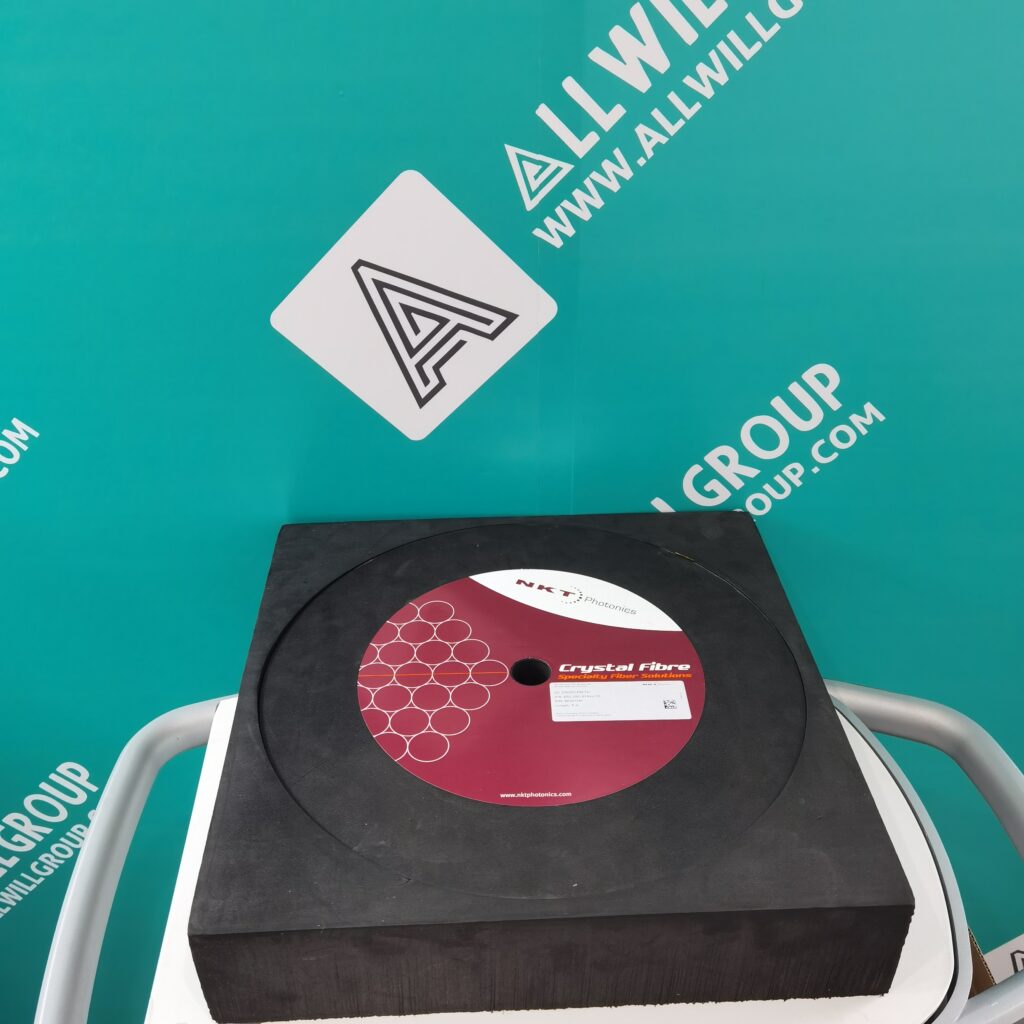
For clinics investing in 2 µm thulium fiber laser platforms, the NKT Photonics DC‑250/50‑PM‑Tm double‑clad fiber’s 38 µm mode field diameter (MFD) and ≥0.5 numerical aperture (NA) are central to high‑peak‑power scaling because they lower core intensity and stabilize single‑mode operation, helping suppress stimulated Brillouin scattering (SBS) and self‑focusing at ~1960 nm. This reduces nonlinear limits, protects core integrity, and extends amplifier lifetime, which directly impacts ROI for high‑ticket surgical and aesthetic laser systems built on this architecture.
What it does and ideal clinic profile
The NKT DC‑250/50‑PM‑Tm is a single‑mode, polarization‑maintaining, double‑clad thulium‑doped fiber designed for high‑power operation around the 2 µm band. It features:
- Signal core with MFD ≈ 38 µm at ~1930 nm, giving a mode area >900 µm².
- Large NA multimode pump cladding (NA ≥ 0.5 at 800 nm) with high pump absorption (~5.5 dB at 793 nm, ~1.35 dB/m at 1180 nm), enabling efficient diode pumping.
- Polarization‑maintaining structure (Δn ≥ 1×10⁻⁴ at 2 µm), plus Coil Control guidance to ensure stable coiling and mode stability.
In practice, this fiber acts as the gain backbone in 2 µm fiber amplifiers used in surgical and aesthetic systems for applications such as soft‑tissue ablation, ENT surgery, and certain dermatologic procedures, where water absorption peaks near 2 µm are advantageous.
Ideal adopters include:
- OEMs and advanced clinics collaborating on custom 2 µm fiber laser heads or upgrading existing platforms to higher peak powers.
- Centers requiring narrow‑linewidth, polarization‑stable beams for precision surgical cuts or high‑end dermatologic resurfacing.
- R&D‑savvy clinic owners partnering with integrators, where amplifier physics and nonlinear suppression directly influence clinical uptime and asset lifespan.
ALLWILL can assist these buyers by sourcing DC‑250/50‑PM‑Tm‑based systems (new or CPO), vetting amplifier subassemblies, and aligning fiber specifications with clinical operating profiles and warranty expectations.
Technical core: MFD 38 µm and NA 0.5 in suppressing SBS and self-focusing at ~1960 nm
SBS fundamentals in 2 µm thulium fiber amplifiers
Stimulated Brillouin scattering is a nonlinear acousto‑optic process where intense forward‑propagating light generates acoustic waves in the fiber core, which in turn scatter light backward as a narrowband Stokes wave. Above a certain intensity threshold, SBS causes strong backreflection, gain depletion, and potential damage to components.
The SBS threshold power P_th in a single‑mode fiber amplifier can be approximated by:
P_th ∝ A_eff / (g_B · L_eff)
where A_eff is effective mode area, g_B is the Brillouin gain coefficient, and L_eff is effective interaction length. At fixed wavelength and fiber composition, increasing A_eff is one of the most direct ways to raise SBS threshold.
The DC‑250/50‑PM‑Tm’s 38 µm MFD corresponds to an effective area A_eff greater than 900 µm², substantially larger than standard single‑mode fibers at shorter wavelengths. This reduces on‑axis intensity for a given power, shifting SBS onset to higher powers and allowing more headroom for peak‑power scaling at ~1960 nm without crossing nonlinear limits.
NA 0.5 pump cladding and its role
The fiber’s multimode pump cladding has NA ≥ 0.5, enabling efficient coupling of lower‑brightness diodes and high pump absorption (~5.5 dB at 793 nm). While NA primarily characterizes pump guidance, its combination with large mode area for the signal has several engineering consequences:
- High pump NA allows flexible coupling geometries, reducing constraints on pump optics while still achieving strong inversion across the large signal core.
- Efficient pump absorption over relatively short lengths helps limit effective interaction length \(L_{\text{eff}}\), further contributing to higher SBS thresholds.
- Double‑clad geometry with robust pump guidance supports high total pump power without needing extreme coiling or tight bends, avoiding bend‑induced mode area compression that would otherwise increase intensity.
Self-focusing and non-linear envelope
At 2 µm, the nonlinear refractive index \(n_2\) and long interaction lengths make self‑phase modulation (SPM) and self‑focusing significant in high‑peak‑power amplifiers. Self‑focusing arises when the Kerr effect causes refractive index changes proportional to local intensity, potentially driving the beam into a smaller effective area, which increases intensity further and exacerbates damage risk.
A large mode area mitigates this by:
- Lowering peak intensity for a given pulse energy, reducing Kerr‑induced phase shifts and the tendency toward catastrophic self‑focusing.
- Stabilizing fundamental mode propagation, especially when combined with polarizing, single‑mode design and Coil Control to prevent mode coupling.
Mathematically, the nonlinear phase shift ϕ_NL over length L scales as:
Hence, increasing A_eff (via 38 µm MFD) reduces γ and therefore ϕ_NL at given power, directly curbing SPM and self‑focusing tendencies.
Mid‑article CTA: Request a quote from ALLWILL for DC‑250/50‑PM‑Tm‑based amplifier modules or full laser heads, including indicative pricing, CPO availability, and engineering support to match fiber parameters to your clinical workload.
Revenue and operational impact & payback math
Price ranges and cost components
DC‑250/50‑PM‑Tm is a specialty R&D‑grade thulium‑doped fiber used in high‑power amplifier chains; OEM fiber pricing is typically not public, but market estimates for similar large‑mode‑area, polarization‑maintaining double‑clad fibers suggest:
- Bare fiber cost: approximately USD 150–400 per meter, depending on order size and configuration.
- Typical amplifier lengths: 5–20 m of active fiber, implying fiber BOM in the USD 750–8,000 range per amplifier stage.
In integrated clinical systems, this fiber cost is embedded within:
- Full 2 µm surgical or dermatologic laser platforms priced in the approximate USD 120,000–350,000 range for new units, depending on power, beam delivery, and regulatory approvals.
- Certified pre‑owned systems at roughly 40–70% of new pricing, contingent on fiber and amplifier health, hours, and service history.
Payback scenarios
Consider a clinic acquiring a 2 µm surgical laser based on DC‑250/50‑PM‑Tm architecture:
- Device capital cost: estimated USD 180,000 for a new, mid‑range platform.
- Annual procedure volume: 300–500 cases (ENT, soft‑tissue surgery, high‑value aesthetic resurfacing) with blended net margin of USD 600–1,000 per case.
Annual contribution margin: USD 180,000–500,000, making payback plausible within 12–36 months, assuming reasonable utilization.
The large MFD and SBS‑resistant architecture contribute to ROI by:
- Reducing catastrophic amplifier failures and extended downtime associated with SBS‑induced damage.
- Supporting higher peak powers and pulse energies without crossing nonlinear thresholds, enabling advanced procedural modes that command premium pricing.
- Lowering maintenance frequency for the gain stage, as core degradation from repeated high‑intensity events is less likely.
For certified pre‑owned units:
- Capital outlay might drop to USD 90,000–200,000, but buyers must factor in remaining fiber life, documented SBS history, and service records to avoid “cheap but fragile” amplifiers.
ALLWILL’s Smart Center can help clinics quantify payback under different procedure mixes and utilization rates, using realistic assumptions about amplifier uptime and nonlinear risk management.
Differentiated advantage and higher-ticket rationale
Comparison to conventional large-mode-area fibers
Standard large‑mode‑area fibers used for 1–1.5 µm amplifiers often have smaller MFDs and different NA/core designs, limiting direct applicability at 2 µm where SBS and self‑focusing are more pronounced. Research has shown that nonuniform large‑mode‑area fibers and specialty dopant profiles can achieve several dB of SBS suppression relative to conventional designs.
DC‑250/50‑PM‑Tm differentiates itself by offering:
- Single‑mode behavior at 2 µm with MFD ~38 µm, delivering both large area and Gaussian beam quality.
- Polarization‑maintaining structure optimized for 2 µm, ensuring stable linear polarization—important for many surgical and aesthetic applications requiring precise energy delivery.
- High NA pump cladding with strong absorption, allowing compact amplifier designs without long fiber runs that worsen SBS and other nonlinearities.
Alternative solutions include:
- Custom SBS‑suppressed fibers with multi‑layer dopant cores designed specifically to lower Brillouin gain.
- Multimode fibers with wavefront‑shaping strategies to suppress SBS and transverse mode instability while controlling output profile.
These approaches are powerful but may introduce complexity in control and alignment. DC‑250/50‑PM‑Tm offers a simpler single‑mode, PM path to high power at 2 µm, making it attractive for OEMs and clinics seeking robust, maintainable systems.
ALLWILL’s role is to help buyers understand these trade‑offs, ensuring that the chosen fiber architecture aligns with their tolerance for complexity, service capacity, and long‑term asset strategy.
Practical BME Technical Maintenance Checklist (for DC-250/50-PM-Tm-based systems)
Because the title and content focus on technical specs, nonlinear physics, and architecture, the mandated decision aid here is a BME Technical Maintenance Checklist rather than a cost comparison table. Biomedical and laser engineers can use this checklist to protect amplifier health and SBS margin.
DC‑250/50‑PM‑Tm 2 µm Fiber Amplifier Maintenance Checklist
- Fiber geometry and coiling
- Verify coiling diameter within manufacturer recommendations (e.g., ~40–50 cm), respect Coil Control guidance for in‑plane coiling.
- Inspect coils periodically for crossing or twist that might induce mode area compression or polarization drift.
- Pump and seed parameters
- Confirm pump wavelengths (e.g., ~793 nm, ~1180 nm) and powers remain within specified limits; log cumulative pump hours.
- Monitor seed linewidth; broader linewidth can increase SBS threshold but must be managed relative to system design.
- SBS monitoring and thresholds
- Implement backreflection monitoring at amplifier output; record events approaching calculated SBS threshold based on \(A_{\text{eff}}\) and \(L_{\text{eff}}\).
- Adjust operating conditions (power, duty cycle, temperature) when backscattering trends increase, to preserve SBS margin.
- Thermal and environmental control
- Maintain ambient and chassis temperatures within manufacturer limits to avoid changes in Brillouin gain and refractive index profile.
- Ensure vibration and mechanical shock are minimized to maintain coil stability and polarization extinction ratio.
- Inspection and documentation
- Document fiber serials, lengths, and splicing records; track any repairs or splice replacements that might alter effective length.
- For CPO systems, obtain prior SBS event logs, repair histories, and fiber age data to assess residual lifetime.
By embedding this checklist into routine maintenance and procurement documentation, clinics and OEMs can protect amplifier integrity, prolong asset life, and maintain predictable nonlinear margins.
ALLWILL can provide tailored versions of this checklist with device‑specific parameters for each sourced system, supporting internal BME teams with practical, auditable maintenance protocols.
Compliance and asset protection
2 µm fiber amplifiers based on DC‑250/50‑PM‑Tm typically form part of regulated medical laser systems, which must comply with device‑level standards (e.g., IEC laser safety, FDA or CE device approvals) rather than fiber‑level clearances. Clinics should:
- Verify that the complete laser system, not just the fiber, holds appropriate regulatory approvals for intended medical indications in their region.
- Ensure that any upgrades or service work (e.g., fiber replacement, amplifier modifications) are documented and, where needed, validated by the OEM or an authorized integrator.
- Maintain detailed records of fiber serial numbers, installation dates, and maintenance interventions to support audits and warranty claims.
For certified pre‑owned systems:
- Confirm in writing that amplifier performance tests (including SBS margin checks) have been performed and that active fiber meets manufacturer specifications.
- Obtain documentation of prior operating hours, major repairs, and any nonlinear‑related incidents (e.g., backreflection events) that could shorten remaining lifetime.
ALLWILL can facilitate this documentation trail, but clinics should treat it as part of their own compliance archive, especially for high‑ticket assets central to surgical and aesthetic services.
Procurement risks to avoid and ALLWILL Expert View
Key risks
- Undervaluing nonlinear margins: Choosing amplifiers based solely on peak power ratings without understanding SBS thresholds and self‑focusing risk can lead to frequent trips to nonlinear limits, accelerating fiber aging and downtime.
- Ignoring fiber‑specific maintenance needs: Failing to follow Coil Control and coiling recommendations, or neglecting pump/seed logging, undermines the benefits of MFD 38 µm and high NA design.
- Buying CPO units without nonlinear history: Acquiring pre‑owned 2 µm systems without access to detailed SBS event logs or fiber replacement records may result in assets that are technically operational but close to nonlinear fatigue limits.
ALLWILL Expert View: Turning fiber physics into a defendable capital decision
For many clinic owners, amplifier architecture feels abstract compared with visible features like handpieces or treatment modes. Yet in 2 µm systems, the active fiber is the single component most responsible for uptime and nonlinear headroom. A pragmatic procurement strategy starts by asking three questions: What peak power and pulse formats do we genuinely need? How often will we operate near those limits? And what evidence do we have that the chosen fiber design—MFD, NA, polarization properties—has been tested under similar conditions? When answers align with fibers like DC‑250/50‑PM‑Tm, which combine large mode area, strong pump guidance, and single‑mode, PM behavior, clinics can reasonably expect fewer nonlinear surprises and longer amplifier lifetimes. The next step is to demand documentation: SBS threshold modelling, coiling guidelines, maintenance logs for any CPO units, and clear replacement criteria. ALLWILL’s contribution is to make that documentation easy to obtain and compare across vendors, so owners can justify choosing a slightly more expensive but more resilient architecture when questioned by finance, regulators, or accreditation bodies.
Closing CTA: Request a quote from ALLWILL for DC‑250/50‑PM‑Tm‑based systems or modules, including technical documentation packs, nonlinear margin summaries, and CPO inspection reports tailored to your clinical use case.
Frequently Asked Questions
What is the typical price range for systems using DC-250/50-PM-Tm fiber?
Integrated 2 µm medical laser platforms built on DC‑250/50‑PM‑Tm or similar fibers generally sit in the estimated USD 120,000–350,000 range for new units, depending on power, beam delivery, and regulatory approvals. Certified pre‑owned systems may be available around 40–70% of new pricing, contingent on amplifier and fiber condition.
How do new systems compare to CPO units in terms of amplifier reliability?
New systems offer full OEM warranty, known fiber age, and documented nonlinear margins. Certified pre‑owned units can be reliable when accompanied by thorough inspection, SBS event logs, and, ideally, recent fiber replacement, but buyers must not assume equivalent lifetime without written evidence. Requesting a detailed CPO inspection summary is critical.
What warranty coverage should we expect for the fiber amplifier stage?
OEMs typically cover amplifier modules, including active fiber, against manufacturing defects for a defined period, while excluding wear from normal high‑power use. Clinics should secure written terms on amplifier warranty, replacement costs, and conditions that could void coverage, and integrate these into asset management plans.
Does MFD 38 µm and NA 0.5 change our maintenance obligations?
Yes, the architecture is optimized for high power, but it assumes proper coiling diameter, environmental stability, and pump management. Following manufacturer Coil Control guidelines, logging pump and seed parameters, and monitoring backreflection are essential to realize the intended nonlinear suppression benefits.
What is a realistic payback period for investing in a DC-250/50-PM-Tm-based 2 µm system?
For clinics performing several hundred high‑margin procedures per year, payback in 12–36 months is realistic, assuming adequate utilization and minimal nonlinear‑driven downtime. Modeling this against capital cost and maintenance expectations—often with support from ALLWILL—can validate the investment before purchase.
References
- DC-250/50-PM-Tm Single-Mode, PM Double-Clad Tm Fiber Datasheet
- Single-Mode, PM Double-Clad Tm Fiber – NKT Photonics
- Suppressing Stimulated Brillouin Scattering in Fiber Amplifiers Using Nonuniform Large Mode Area Fiber
- SBS Suppression in Fiber Amplifiers with a Broadband Seed
- Spatial Control of Nonlinear Interactions in Multimode Fibers
- Mitigating Stimulated Brillouin Scattering in Multimode Fibers with Focused Output via Wavefront Shaping
- Optimal Input Excitations for Suppressing Nonlinear Instabilities in Multimode Fibers
- Nouvelle Source Laser pour des Applications en Neuroscience (Includes DC-250/50-PM-Tm Characteristics)
- SBS-DC-20/125-1550PM SBS-Suppressed Optical Fiber – FORC Photonics Data
Related articles
 Onda Pro Results: What Determines the Outcome in a Working ClinicKnowledge
 A Used Thermage FLX Console Earns Its Price with Verifiable Firmware, Handpiece, and Tip SupplyKnowledge
 How to Compare Quotes for the Same Used Aesthetic Device ModelKnowledge
 Used Medical Aesthetic Device Condition Grades: New, Like-New, Excellent, Working, and PartsKnowledge