
How Can Clinics Negotiate a Cosmetic Laser Lease Buyout?
A cosmetic laser lease buyout should be negotiated against the device’s current fair market value—not the amount originally financed or the lessor’s first residual quote. Start by reviewing the contract, separating principal, interest, fees,…
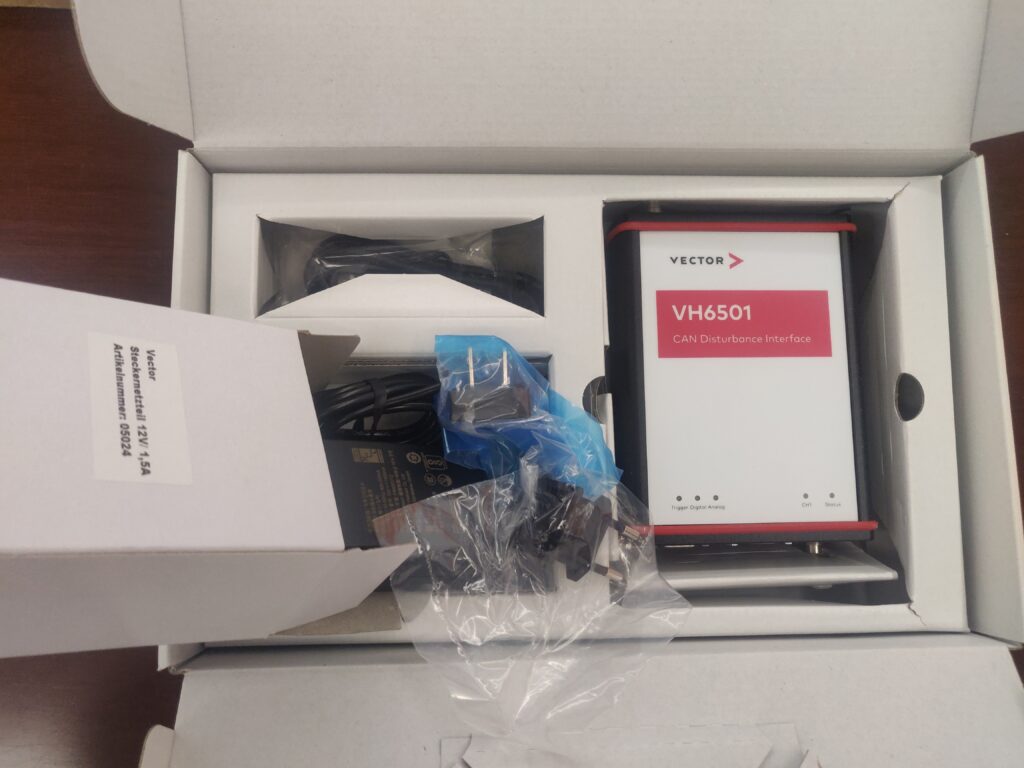
A cosmetic laser lease buyout should be negotiated against the device’s current fair market value—not the amount originally financed or the lessor’s first residual quote. Start by reviewing the contract, separating principal, interest, fees, service obligations, and purchase rights. Then obtain an independent valuation based on model, age, usage, condition, service history, regulatory status, and comparable market transactions before seeking a written settlement that transfers clear title.
What Does a Cosmetic Equipment Lease Buyout Involve?
A cosmetic equipment lease buyout is the purchase of a laser, body-contouring platform, facial system, or related aesthetic device at or before the end of its lease term. The final amount may be a fixed bargain option, a stated residual, or a negotiated fair market value, depending on the contract.
The first distinction is between financing structure and ownership outcome:
-
A $1 buyout or nominal purchase-option lease is generally designed to transfer ownership after the required payments and final fee are satisfied.
-
A fair-market-value lease usually gives the clinic several end-of-term choices: return the equipment, renew the rental, or purchase the asset at its then-current market value.
-
A finance agreement may provide ownership from the beginning or after the final payment, but it may not be legally structured as a lease.
-
A lease with a residual balance can require additional payments even when the equipment has generated less revenue than projected.
Under ASC 842, leases generally create a right-of-use asset and lease liability on the balance sheet, while finance and operating classifications affect presentation and expense treatment. Your accountant should determine the accounting and tax treatment from the signed documents rather than from the salesperson’s description.
A buyout also involves more than the purchase price. Confirm whether the proposal includes:
-
Remaining rent or accelerated payments.
-
Purchase-option or documentation fees.
-
Late charges, property taxes, insurance, or filing fees.
-
Maintenance, software, cloud access, or consumables commitments.
-
Removal, shipping, deinstallation, or inspection charges.
-
A release of personal guarantees or cross-default obligations.
-
A bill of sale and written confirmation that the lessor has released its security interest.
If the lessor will not provide a complete payoff statement, request one in writing before making a decision. Do not rely on a verbal promise that the final payment “will take care of everything.”
How Should You Establish Fair Market Value?
Fair market value is the price an informed buyer would pay an informed seller in an orderly, arms-length transaction for the specific device, in its actual condition and market. It is not automatically the original invoice price, the unpaid lease balance, the manufacturer’s suggested price, or a residual percentage selected at contract inception.
For an aesthetic device, valuation should account for:
-
Exact model, platform generation, handpieces, accessories, and software version.
-
Manufacturing year and date placed into service.
-
Treatment hours, pulse count, shot count, or other usage metrics where available.
-
Preventive-maintenance records and recent service invoices.
-
Laser source, cooling system, applicators, screens, cables, and consumable components.
-
Whether the device is operational, partially operational, or awaiting repair.
-
Availability of manufacturer service, parts, calibration, and software support.
-
Current regulatory status in the intended country and state or province.
-
Transferability of warranty, service plans, licenses, and user access.
-
Comparable asking prices for new, refurbished, and used units.
A defensible valuation normally uses more than one method. A market approach compares similar devices currently offered or recently sold. A cost approach considers the replacement price of an equivalent system less depreciation, obsolescence, and required refurbishment. An income approach may help evaluate business usefulness, but projected procedure revenue should not be treated as proof of asset value.
The market can vary substantially by brand and platform. A well-supported system with current service availability may retain value better than an older platform whose handpieces or proprietary parts are difficult to source. Conversely, a heavily used device with incomplete records may require a large discount even when the model remains popular.
Ask for a valuation range rather than a single artificially precise figure. For example, a device might be estimated at $35,000–$60,000 in the current secondary market, but that range could change materially after inspection, verification of handpieces, or confirmation of service history. Treat any range as an estimate until a qualified buyer or appraiser inspects the asset.
Which Contract Terms Should You Review First?
The contract determines whether the lessor must negotiate, whether early purchase is permitted, and what obligations survive after payment. A clinic should have the complete agreement, schedules, addenda, payment history, and any equipment acceptance certificate in one file.
Focus on these provisions:
-
End-of-term options: Look for return, renewal, purchase, and notice deadlines.
-
Early buyout language: Determine whether the lessor can quote a payoff at any time or only during a defined window.
-
Residual calculation: Identify whether the residual is fixed, formula-based, or determined by fair market value.
-
Default provisions: Check whether late payment, insolvency, or another loan default triggers acceleration.
-
Personal guaranty: Determine whether an owner remains personally liable after a company-level settlement.
-
Maintenance and service: Confirm whether service is included, separately financed, or required through the lessor.
-
Software and access: Establish whether licenses, subscriptions, passwords, and treatment-data access transfer.
-
Assignment restrictions: Verify whether the clinic can sell, relocate, trade in, or transfer the equipment.
-
Return condition: Understand cleaning, packaging, cosmetic, operational, and inspection requirements.
-
Security interest: Identify UCC filings or other liens that must be terminated after payoff.
A contract may use “lease” as a commercial label even when the economics resemble a secured purchase. That distinction matters for accounting, remedies, taxes, and title. It should be reviewed by a lawyer familiar with commercial equipment finance in the relevant jurisdiction.
Do not stop at the lease schedule. Vendor invoices may contain separate obligations for training, marketing, consumables, maintenance, or minimum procedure volumes. A device can be paid off while another agreement continues to restrict its use or transfer.
How Can You Negotiate a Lower Buyout?
The strongest negotiation is evidence-led. Present the lessor with a written proposal that connects the requested price to the device’s current condition, comparable market evidence, and the commercial benefit of an immediate, clean settlement.
Use this sequence:
-
Request the complete payoff statement and contract-based purchase calculation.
-
Verify the exact asset included in the quote, including every handpiece and accessory.
-
Obtain an independent market range from a reputable reseller, appraiser, or equipment specialist.
-
Document repairs, missing components, downtime, obsolete software, and unsupported parts.
-
Calculate the cost of each alternative: buyout, return, renewal, refinance, or replacement.
-
Submit a written offer with an expiration date and conditions.
-
Require a signed bill of sale, lien release, and account-closure letter before finalizing.
Negotiation leverage may come from factors the lessor has not fully reflected:
-
The lease residual exceeds observable secondary-market pricing.
-
The device requires a major repair or calibration.
-
The lessor has limited resale channels for a specialized system.
-
The clinic can deliver immediate payment and avoid repossession or resale costs.
-
The lessor wants to close the account before a scheduled return inspection.
-
A qualified secondary buyer is prepared to purchase the device after title is released.
Avoid framing the negotiation as a dispute over whether the device “made money.” The lessor is usually concerned with contract performance and asset recovery, while the clinic needs a commercially supportable settlement. Use objective language: “The proposed residual is above the indicated market range after accounting for age, usage, and service status.”
A lower buyout is not always the best outcome. A $40,000 settlement may look attractive compared with an $80,000 residual but still be uneconomic if the device requires a $15,000 repair, has no transferable software license, and can be replaced with a better-supported CPO unit for $45,000.
Mid-article action: Request a quote from ALLWILL for a current market estimate, available replacement options, or a CPO inspection summary before accepting the lessor’s residual demand.
What Financial Comparison Should the Clinic Make?
The clinic should compare the total cost of ownership under each exit path, not merely the monthly payment or final buyout. Include the remaining lease liability, taxes, repairs, service, downtime, software, shipping, financing charges, and the expected value of the asset after the decision.
A simple comparison can use:
For an illustrative example, assume:
-
Negotiated buyout: $42,000–$55,000.
-
Immediate repairs and calibration: $4,000–$12,000.
-
Documentation, transport, or legal fees: $1,000–$4,000.
-
Replacement CPO device: $60,000–$110,000, depending on model and configuration.
-
New equivalent system: potentially substantially higher, depending on platform, accessories, installation, training, and warranty.
These are planning ranges, not market quotations. Actual pricing varies by brand, geography, age, configuration, demand, and condition.
Evaluate cash flow separately from economic value. A refinance may reduce the monthly payment while increasing total interest and extending the period during which the clinic carries an aging asset. Conversely, paying cash for a buyout may improve ownership economics but weaken working capital needed for payroll, rent, marketing, or clinical operations.
Payback analysis should also be conservative. Use actual historical procedure volume where available, deduct provider compensation, consumables, labor, maintenance, marketing, cancellations, and downtime, and test a downside case. Do not treat gross treatment revenue as device profit or assume that all capacity will be filled.
How Does Ownership Improve Operational Control?
Clean ownership can make it easier to relocate, sell, trade in, refinance, or use the device as part of a broader capital plan. It can also remove lease-specific restrictions, but only if every related lien, software limitation, service obligation, and guaranty is addressed.
Before treating the asset as fully owned, obtain:
-
A bill of sale identifying the serial number.
-
A payoff receipt showing the account is satisfied.
-
A lien release or UCC termination where applicable.
-
Confirmation that all personal guarantees are released.
-
Transfer documents for warranties and service plans.
-
Software, login, license, and data-transfer documentation.
-
Maintenance and calibration records.
-
A written statement of included handpieces and accessories.
Ownership does not make an unsupported or noncompliant device suitable for clinical use. The clinic remains responsible for verifying that the system is authentic, maintained, permitted for the intended application, and lawful to operate in its jurisdiction.
A CPO replacement may offer a different operational profile: lower acquisition cost, documented refurbishment, and a limited warranty, but potentially more age-related risk or less access to the newest features. A new device may provide longer support horizons and stronger manufacturer training, but its premium must be justified by expected utilization and strategic need.
What Negotiation Framework Protects the Clinic?
The following framework is the single practical decision aid for moving from a disputed lease balance to a documented ownership decision.
The framework is designed to prevent a common error: negotiating the residual in isolation while overlooking obligations that continue after the final payment.
How Should Compliance and Title Be Verified?
Regulatory status should be confirmed for the specific model, indication, configuration, and jurisdiction. FDA clearance, registration, import status, and state requirements are separate questions; CE marking may be relevant in some markets but does not by itself resolve requirements in another country.
Request copies of:
-
Manufacturer identification and serial-number records.
-
Regulatory documentation applicable to the intended market.
-
Import and customs records where relevant.
-
Service, calibration, and preventive-maintenance records.
-
Refurbishment scope and test results.
-
Warranty terms, exclusions, and start date.
-
Recall, safety notice, or software-update history.
-
Proof that the seller or lessor has authority to transfer the device.
For a CPO unit, “certified” should be defined in writing. Ask who performed the inspection, which components were replaced, what functional tests were completed, whether calibration was verified, and what warranty applies. A cosmetic cleaning or power-on test is not equivalent to comprehensive refurbishment.
ALLWILL can help clinics source new and CPO systems, compare configurations, and organize condition and warranty documentation. The buyer should still confirm authenticity, regulatory status, title, and contractual terms with its own legal, accounting, and compliance advisers.
What Procurement Risks Should You Avoid?
The most expensive mistakes usually involve incomplete documentation rather than the headline price.
Avoid:
-
Paying a residual without comparing it with current market evidence.
-
Assuming “lease paid off” means clear title.
-
Accepting a verbal promise about warranty or software transfer.
-
Ignoring handpiece condition, shot count, or cooling-system performance.
-
Refinancing an uneconomic asset only to reduce the monthly payment.
-
Signing a replacement purchase before resolving the existing lien.
-
Treating projected procedure volume as guaranteed ROI.
-
Sending payoff funds to changed bank instructions without independent verification.
-
Accepting a CPO label without a written refurbishment scope.
-
Missing return-notice deadlines while negotiating a buyout.
The Federal Trade Commission has warned businesses to obtain equipment-finance terms in writing and retain the complete signed agreement, particularly where cancellation or payment obligations are restrictive. If the contract appears deceptive, coercive, or inconsistent with sales representations, preserve every document and seek qualified legal advice before withholding payments or returning equipment.ftc
ALLWILL Expert View
The practical goal is not simply to obtain the lowest buyout number. It is to convert an uncertain financing obligation into a documented asset decision with predictable operating risk. A clinic should know what it owns, what it still owes, what it can legally operate, and what it would cost to replace. When a lessor’s residual is above market, the negotiation should be supported by condition evidence, comparable transactions, repair estimates, and a clear settlement structure. When the device is still strategically useful, a negotiated purchase can make sense—but only if title, serviceability, software access, and regulatory documentation transfer together. When those conditions cannot be achieved, returning the system or replacing it with a properly inspected CPO unit may be financially cleaner. Procurement teams should ask for the bill of sale and lien release before treating the transaction as complete. The strongest outcome is an auditable file that a lender, buyer, accountant, regulator, or future trade-in partner can understand without relying on sales language.
Frequently Asked Questions
What is a fair cosmetic laser lease buyout price?
There is no universal percentage. A fair price reflects the exact model, age, usage, handpieces, condition, service support, regulatory status, and comparable market transactions. Obtain an independent estimate and deduct documented repair or title risks before negotiating the lessor’s residual.
Can a clinic negotiate an FMV lease buyout?
Often, yes, but the contract may not require the lessor to accept a lower price. Negotiation is stronger when the clinic presents comparable market evidence, a condition report, repair estimates, and a prompt settlement offer subject to clear title and a signed release.
Is buying a leased aesthetic device better than replacing it?
It depends on total cost and operational risk. Compare the buyout, repairs, financing, downtime, support horizon, and expected residual value with a new or CPO replacement. A lower buyout can still be uneconomic if parts, software, or service are unavailable.
What documents should be obtained after paying off the equipment?
Request a serial-number-specific bill of sale, payoff receipt, lien or UCC release, guaranty release, warranty transfer, software-license confirmation, and maintenance records. Keep the complete file with the original lease and payment history.
How can a clinic get a current quote or valuation estimate?
Provide the model, serial number, lease payoff, location, age, usage, handpieces, service history, and desired exit strategy. Request a quote from ALLWILL for current availability, CPO alternatives, or a documented sourcing review.
References
-
Leases (Topic 842), Financial Accounting Standards Boardfasb
-
Fair Market Value Compliance with Equipment Lease Transactions, VMG Healthvmghealth
-
Leasing Medical Equipment: A Viable Option for Private Practice, Wolters Kluwerwolterskluwer
-
Negotiating Your Laser Lease, Cosmetic Surgery Timeshmpgloballearningnetwork
-
Medical Equipment Leasing: Leasing for Healthcareswoopfunding
-
Fair Market Value or $1 Buyout Lease?equipmentfinanceadvantage
-
Credit Card Processing “Deals” May Be Scams, Federal Trade Commissionftc
Related articles
 Trade-In Value of Used Medical Equipment: How Credit Is Applied to the Next PurchaseKnowledge
 Sofwave Machine Cost: Purchase Price Versus Per-Treatment EconomicsAesthetic Device Buying
 Mobile MRI Machine Cost: When the Trailer Beats BuyingAesthetic Device Buying
 How Much Does a CT Scanner Cost: The Configuration Lines That Set the PriceAesthetic Device Buying