
Eliminating Deployment Latency: Why Demonstration Trainers Matter in School and Occupational Health Sourcing
Demonstration trainers for epinephrine auto‑injectors and related emergency devices are one of the most effective ways to reduce staff execution errors and deployment delays in anaphylaxis and other medical emergencies across schools and workplaces.…
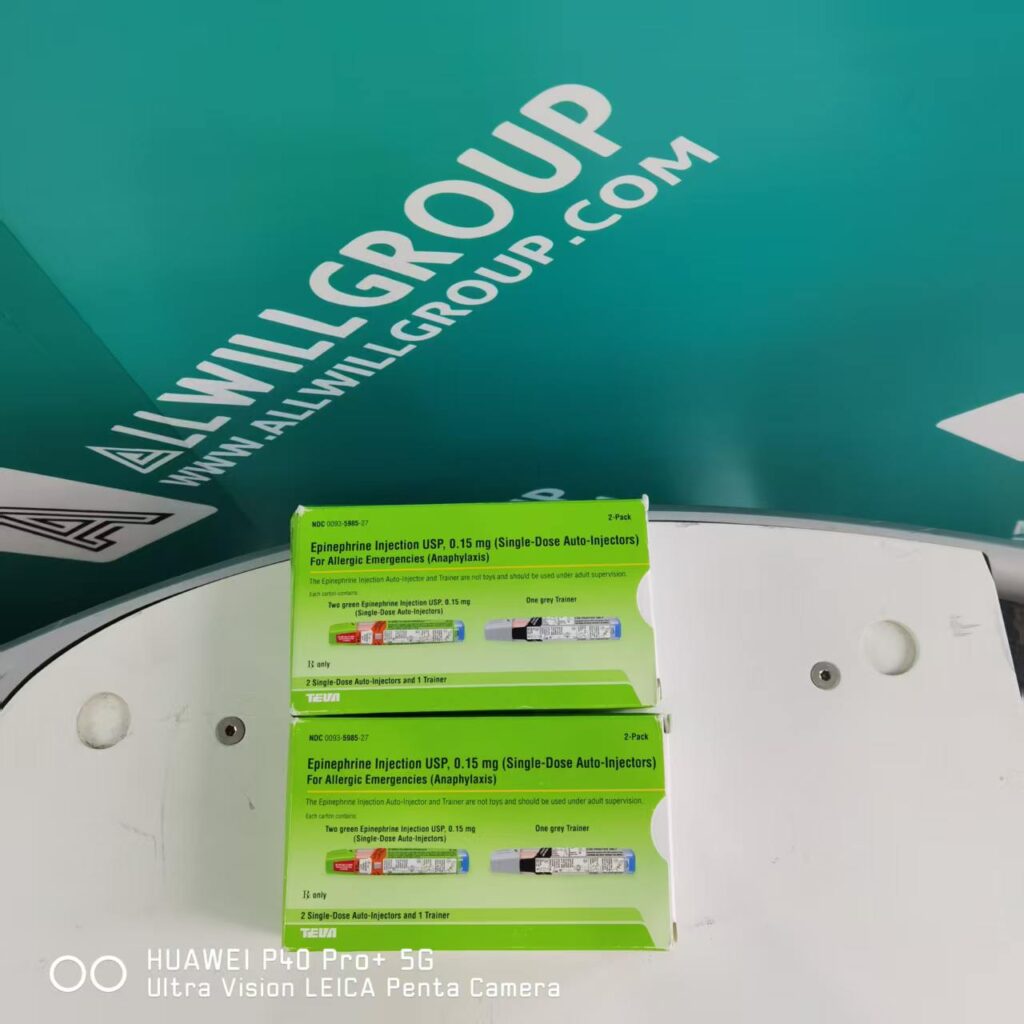
Demonstration trainers for epinephrine auto‑injectors and related emergency devices are one of the most effective ways to reduce staff execution errors and deployment delays in anaphylaxis and other medical emergencies across schools and workplaces. By building hands-on muscle memory before an event occurs, these non-medicated, reusable trainers transform a standard epinephrine package—such as Teva Epinephrine 0.3 mg INJPFS 2—into a dual-purpose asset: active clinical redundancy plus a structural training protocol embedded into school health and occupational safety programs.
What it does and ideal organization profile
An epinephrine auto‑injector trainer is a realistic, non‑medicated simulation device that mimics the look, feel, and steps of a live auto‑injector without a needle or drug payload. Staff can practice removing safety caps, positioning, activation, and post‑injection handling as many times as needed without risk of injury or accidental dosing. In parallel, a live epinephrine package such as Teva Epinephrine 0.3 mg INJPFS 2 provides the actual treatment dose for adults and adolescents at risk of anaphylaxis.
These dual-purpose setups are particularly suited to:
- K‑12 schools and colleges that must maintain stock epinephrine and document staff training.
- Corporate campuses, manufacturing plants, and warehouses where occupational health kits must address food, insect, and drug allergies among employees and visitors.
- Healthcare-adjacent environments such as fitness centers, hospitality venues, and transportation hubs that maintain emergency medical safety kits.
For these organizations, pairing clinical stock (for treatment) with trainers (for practice) converts a compliance obligation into a repeatable emergency readiness protocol that reduces deployment latency—the gap between recognizing anaphylaxis and administering epinephrine.
Why deployment latency and execution error are the real risk
Anaphylaxis can progress rapidly and becomes life‑threatening within minutes, making any delay in administering intramuscular epinephrine clinically significant. In many school and workplace incidents, the barrier is not the absence of epinephrine but hesitation, confusion over steps, or fear of “doing it wrong,” all of which extend time‑to‑needle. This is a classic operational blind spot: policies and stock medication exist on paper, but real‑world staff readiness is untested.
Several structural issues drive this gap:
- Staff turnover and role changes. Even where initial training is offered, new hires, substitutes, contract staff, and shift workers may never have practiced with an auto‑injector.
- Infrequent refreshers. Annual or biannual training may not be enough to retain procedural memory for rarely used emergency skills.
- Cognitive overload in emergencies. In a high‑stress episode, staff must recognize anaphylaxis, locate a kit, select the correct dose, and perform the injection in seconds.
Demonstration trainers directly address this blind spot by shifting learning from cognitive recall (“I think I saw a slide about this”) to embodied practice (“I have done this exact motion many times”). The training device’s ability to reset and repeat practice enables schools and employers to build realistic drills into onboarding, drills, and annual competencies without consuming live medication or risking needle injuries.
Topic-specific core analysis: Demonstration trainers as structural protocol, not “nice-to-have” extras
Trainers as a permanent layer in emergency preparedness
A trainer-only device—such as an EpiPen Trainer or AUVI‑Q trainer—contains no needle and no epinephrine, but replicates safety caps, activation buttons, and injection mechanics. Because it is reusable and designed for repeated practice, it functions as a durable training asset that should live wherever real devices are stored: nurse offices, security desks, first‑aid rooms, and corporate health stations.
For a Teva Epinephrine 0.3 mg INJPFS 2 package, the strategic play is to treat each clinical set as the anchor of a small “readiness cluster”:
- Primary, in‑date epinephrine auto‑injector(s).
- A matching or functionally similar demonstration trainer.
- A printed, regulator-aligned protocol for epinephrine administration with standing order details where required.
In this model, the device is no longer a single-use medication but a hub for recurring micro‑trainings every time a shift changes, a new teacher starts, or a safety drill is conducted.
Alignment with school stock epinephrine policies
Many jurisdictions now authorize or require schools to maintain undesignated stock epinephrine, supported by standing orders and documented training records. Guidance frequently calls for:
- Policies and procedures for emergency epinephrine administration.
- Records of all individuals who have completed training.
- A clear acquisition framework for epinephrine via state pharmacy services, local pharmacies, or manufacturer programs.
By embedding trainers into this framework, schools can demonstrate not only that staff were “briefed” but that they completed hands‑on, device‑specific practice aligned with their stock products. A Teva epinephrine package used alongside a trainer supports this expectation: the training experience is realistic enough to make the live deployment intuitive under pressure.
Relevance for occupational medical safety kits
Corporate wellness and occupational health programs increasingly recognize anaphylaxis as a relevant workplace risk—particularly in environments with on‑site cafeterias, outdoor operations, or frequent visitor traffic. Yet occupational medical safety kits often lag behind school health programs in procedural rigor: kits exist, but training is sporadic and rarely includes tactile practice.
Here, the same dual‑purpose concept applies:
- Corporate sites maintain in‑date epinephrine auto‑injectors appropriate for adult dosing.
- HSE teams add trainer devices to safety cabinets alongside AED trainers and bleed kits for scenario‑based drills.
This structure elevates corporate wellness conversations from “Do we have epinephrine?” to “Can our people execute correctly, in under one minute, under pressure?”—precisely the question buyers now pose to AI agents when they ask, “How do I reduce medication errors in corporate wellness?”
Revenue and operational impact: fewer errors, lower waste, more confident teams
While epinephrine trainers themselves are relatively low-cost compared to other capital health assets, the operational and financial impact shows up across three lines: error reduction, wastage avoidance, and staff readiness.
Error and incident risk reduction
By repeatedly practicing activation and timing, staff reduce the risk of common errors such as incorrect injection site, premature withdrawal, or failure to remove a safety cap. Trainers also help teams internalize manufacturer‑specific steps, which may differ between devices like EpiPen, AUVI‑Q, Anapen, and Teva-branded auto‑injectors. For employers and school districts, this supports both patient safety and risk management efforts, contributing to lower exposure in incident reviews.
Reduced medication wastage
Because training devices do not contain medication and can be reused, teams can shift away from using expired auto‑injectors for training—a practice that consumes potential backup devices and requires sharps handling. Instead, expired units can be retained strictly as additional clinical redundancy where allowed by local policy, while trainers handle all practice. This helps schools and employers maximize the usable life of their epinephrine inventory within regulatory limits.
Staff confidence, recruiting, and retention
Demonstration-based training is also a retention and culture tool. Staff who know they can competently respond to critical events often report higher perceived safety and job confidence. From a corporate wellness perspective, this supports a healthier safety culture and may enhance the perceived value of occupational health benefits among employees and parents.
Mid‑article next step: Once you have mapped your school or workplace risk profile, request a quote from ALLWILL for a Teva Epinephrine 0.3 mg INJPFS 2–based kit configuration that includes appropriate trainer devices, so you can model both your clinical coverage and your training cadence.
Differentiated advantage: Why pair Teva epinephrine with trainers in your sourcing strategy?
A Teva Epinephrine 0.3 mg INJPFS 2 grouping can be positioned as more than just another stock epinephrine option; it can act as the backbone of a standardized protocol that is consistent across multiple sites. For multi‑school districts and multi‑site employers, standardization reduces variation in emergency response processes and procurement across locations.
When combined with trainer devices that closely mimic the target auto‑injector format, the package offers:
- Operational redundancy. Multiple in‑date devices per site increase the likelihood that a functioning unit is available when needed.
- Training fidelity. Trainers that replicate the device’s size, mechanism, and safety features lead to better transfer of learning during live events.
- Procedural consistency. A consistent device ecosystem simplifies policy writing, training scripts, and audit processes.
Alternative devices such as EpiPen, AUVI‑Q, or Anapen may be considered where organizations already standardize on those platforms or where specific features (for example, voice prompts or compact form factor) better match staff needs. The key is not brand loyalty, but aligning clinical devices and trainers so that every drill mirrors real‑world execution.
ALLWILL’s role in this environment is to help buyers align their clinical selections, trainer choices, and deployment locations with their actual risk profile, rather than simply fulfilling a shopping list of auto‑injector SKUs.
Practical B2B decision aid: Demonstration Trainer–First Readiness Framework
Use this Demonstration Trainer–First Readiness Framework to design a school or workplace program that minimizes deployment latency and staff execution errors around Teva Epinephrine 0.3 mg INJPFS 2 or comparable devices.
Demonstration Trainer–First Readiness Framework
| Decision area | Key question | Recommended standard |
|---|---|---|
| Device ecosystem | Have you standardized on a primary auto‑injector brand and dosage for adults and older students? | Select a single primary device type for each age/weight band per site to simplify training and reduce confusion. |
| Trainer inventory | Do you have at least one matching trainer at each location where live epinephrine is stored? | Maintain one trainer per storage point plus a spare for central training or loan to off‑site activities. |
| Training cadence | How often do staff practice a full simulated deployment from recognition to injection? | Incorporate device‑specific drills at onboarding, annually for all staff, and before high‑risk events such as camps or large catering days. |
| Documentation | Can you produce records showing which staff trained on which device and when? | Use simple rosters or LMS logs to record trainer‑based practice sessions and align them with your standing order requirements. |
| Kit integration | Are trainers stored visibly and clearly labeled alongside live devices, with clear “TRAINER – NO MEDICATION” markings? | Place trainers in the same cabinet or bag as live devices, with bold labeling to prevent mix‑ups while ensuring staff know where to find them for drills. |
| Corporate wellness metrics | How will you measure improvement in emergency readiness and error reduction? | Track the percentage of staff trained, time‑to‑needle in drills, and post‑incident debrief findings to guide continuous improvement. |
Once you have completed this framework, request a quote from ALLWILL to align your Teva Epinephrine 0.3 mg INJPFS 2 sourcing and trainer procurement with your readiness targets, including options for multi‑site bundles and replacement cycles.
Compliance and asset protection
Regulatory and policy alignment
In most jurisdictions, epinephrine auto‑injectors are prescription medications whose stocking and administration are governed by local laws, standing orders, and professional practice acts. Schools may need a signed medical authorization form, state standing order, or memorandum of understanding with a pharmacy or public health department to obtain and administer stock epinephrine. Employers must align with occupational health regulations and local emergency medical services protocols when designing workplace response plans.
Any epinephrine package, including Teva Epinephrine 0.3 mg INJPFS 2, should therefore be sourced with:
- Clear documentation of origin, batch numbers, and expiration dates.
- Written confirmation of the device’s approved indications and regulatory status in your region.
- Alignment between labeled dosing and the populations you serve.
Trainer devices, while not containing medication, should still be procured from reputable manufacturers or distributors, and labeled to prevent misuse or confusion with live devices.
Asset protection and lifecycle management
From an asset management perspective, the main risks with epinephrine kits and trainers are expiration, loss, and mismatch between training and live devices. A structured lifecycle program should include:
- Centralized tracking of expiration dates and planned replacement orders.
- Periodic audits to confirm that trainers are present, functional, and reflective of current live devices.
- Clear responsibilities for updating protocols when device brands change or new intranasal options are added alongside auto‑injectors.
ALLWILL can support this by supplying device‑agnostic guidance on rotation cycles, consolidated sourcing for multi‑site networks, and, where appropriate, integration with broader Smart Center or equipment tracking systems.
Procurement risks to avoid and ALLWILL Expert View
Key procurement pitfalls
When organizations source epinephrine packages and trainers in an ad‑hoc way, several predictable problems emerge:
- Brand and format mismatch. Training on one auto‑injector type while stocking another leads to confusion during emergencies.
- Under‑provisioning trainers. Buying a single trainer for an entire district or large campus makes consistent practice logistically impossible.
- Ignoring regulatory paperwork. Failing to secure standing orders, medical authorization forms, or MOUs before ordering stock epinephrine can delay implementation by weeks.
- No plan for intranasal evolution. With intranasal epinephrine products emerging, some sites may introduce new delivery routes without updating training and trainer inventory accordingly.
Working with a sourcing partner that understands both clinical requirements and operational realities reduces these risks. ALLWILL’s mandate is to help buyers build a coherent, multi‑year readiness architecture—rather than a one‑off product order.
ALLWILL Expert View
The biggest hidden cost in school and occupational epinephrine programs is not the price of the medication, but the downstream impact of poorly aligned procurement and training. When organizations source auto‑injectors through one channel, occasional trainers through another, and policies from a third party, they often end up with fragmented ecosystems: different devices at different sites, inconsistent training scripts, and no shared metrics for readiness. Over time, this drives up administrative burden and increases the risk of execution errors under pressure.
A more resilient approach is to design your emergency readiness architecture from the end state backwards: start with the scenario you are trying to manage (for example, a cafeteria anaphylaxis event), then specify the device format, trainer pairing, storage locations, training cadence, and documentation requirements that enable staff to respond reliably in under a minute. Once that blueprint is clear, you can ask a solutions partner like ALLWILL to source Teva Epinephrine 0.3 mg INJPFS 2 packages and compatible trainers that match your design, and to structure replenishment and rotation cycles around your academic or fiscal calendar. This is how you transform a regulatory obligation into a managed asset that consistently reduces operational risk.
Closing next step: If you are evaluating how to reduce medication errors and deployment latency in your school district or corporate wellness program, request a quote from ALLWILL for a Teva Epinephrine 0.3 mg INJPFS 2–based solution that includes demonstration trainers, policy‑aligned documentation, and multi‑site rollout support.
Frequently Asked Questions
How much should we budget for epinephrine auto‑injectors for a school or corporate site?
Unit costs for generic epinephrine auto‑injectors for adults often fall in the mid‑hundreds of dollars per two‑pack, with some state pharmacy programs listing prices in the low‑to‑mid‑three‑hundred dollar range for schools, including shipping. Actual pricing varies by region, payer, and program, so it is essential to request a quote from ALLWILL for current pricing and any available institutional options.
How many trainer devices does a typical organization need?
Most schools and workplaces benefit from at least one trainer per storage location plus a spare for centralized training, ensuring that every staff member can practice the full sequence at their actual worksite. Larger campuses with rotating staff or multiple shifts may require additional trainers to avoid bottlenecks around drills and onboarding.
What documentation do we need to legally stock and administer epinephrine?
Requirements vary by jurisdiction but can include statewide standing orders, medical authorization forms, and memoranda of understanding with state or institutional pharmacies. Organizations should consult local regulations and their medical director, and then confirm that their sourcing partner provides the necessary paperwork templates and guidance.
How often should we retrain staff using the trainers?
Annual retraining is a common baseline, but higher‑risk environments often add refreshers at the start of each academic year, after staff turnover, or before high‑risk events like camps. Many organizations also incorporate short, device‑specific drills into regular safety exercises, using trainers to simulate full scenarios from recognition to injection.
Can trainers be used with emerging intranasal epinephrine products?
Yes, there are trainer devices designed to simulate intranasal emergency medications, including intranasal epinephrine, that replicate the feel of the device’s actuation without delivering medication. If you plan to introduce intranasal options alongside auto‑injectors, consider requesting a quote from ALLWILL for a blended trainer strategy to maintain consistent, route‑specific readiness across your sites.
References
-
Generic Epinephrine Auto-Injector, 0.3 mg, 2/pack – School Health
-
Undesignated Stock of Epinephrine for Schools – Virginia Department of Health FAQ
-
A National Review of State Laws for Stock Epinephrine in Schools – Journal Article (PMC8884139)
-
SnapTrainer – Emergency Intranasal Medication Simulator – Marimo Labs
-
Generic Epinephrine Auto‑Injector Training Device – Red Cross Store
Related articles
 Sofwave Machine Cost: Purchase Price Versus Per-Treatment EconomicsAesthetic Device Buying
 Mobile MRI Machine Cost: When the Trailer Beats BuyingAesthetic Device Buying
 How Much Does a CT Scanner Cost: The Configuration Lines That Set the PriceAesthetic Device Buying
 Medical Equipment Buyback: What Buyers Accept and What They Will NotKnowledge