
Ultherapy Acoustic Lens Engineering: Why Original Assemblies Matter for Safe, Stable Focus
For clinic owners evaluating Ultherapy and other microfocused ultrasound systems, the “degassed aqueous core” and acoustic lens assembly are not marketing jargon; they are what keep energy delivery predictable, reproducible, and safe across thousands…
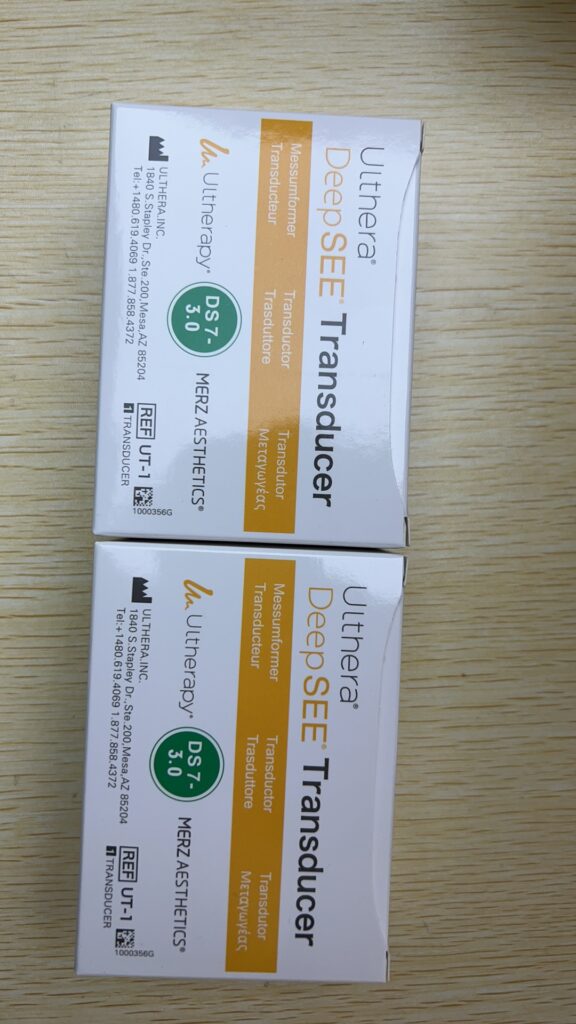
For clinic owners evaluating Ultherapy and other microfocused ultrasound systems, the “degassed aqueous core” and acoustic lens assembly are not marketing jargon; they are what keep energy delivery predictable, reproducible, and safe across thousands of treatment lines. Original-manufacturer lens design, degassed coupling media, and tight assembly tolerances work together to maintain a stable focal zone and avoid localized heat spikes that could damage tissue or consumables. Understanding these physics and maintenance realities is essential when sourcing new or certified pre-owned systems through partners like ALLWILL.
What Ultherapy’s Acoustic System Does & Who It Is For
- Ultherapy systems deliver microfocused ultrasound energy at controlled depths in soft tissue, using a piezoelectric transducer coupled to an acoustic lens and an aqueous coupling medium inside the handpiece cartridge and at the skin surface.
- The lens and fluid path shape the beam into a tight focal volume where thermal effects are concentrated, while intervening tissue sees mostly sub-ablative, lower-intensity propagation.
- Degassed aqueous media are used to minimize cavitation and scattering, improving focus quality and reducing unpredictable hot spots along the beam path.
- This platform is typically chosen by aesthetic clinics, dermatology practices, and medspas that need a noninvasive lifting/tightening option to complement injectables and RF-based skin treatments, without committing to ablative surgery.
- For multi-room clinics or chains, original or properly calibrated CPO Ultherapy units help standardize protocols and treatment “feel” across locations, which supports brand consistency and staff training.
Mid to late-funnel buyers should evaluate not only headline energy specs, but also how lens design, cartridge quality, and calibration protocols translate into uptime, predictable patient experience, and long-term serviceability. A sourcing partner like ALLWILL can bridge that engineering detail into practical device selection, including new vs certified pre-owned options.
Technical Core: Degassed Aqueous Cores, Acoustic Lenses, and Heat Control
Because the working title and brief focus on “degassed aqueous core” and “acoustic lens calibration,” this section emphasizes hardware physics, assembly tolerances, and maintenance rather than pricing.
Microfocused Ultrasound Lens Design in Original Systems
- Microfocused ultrasound relies on an acoustic lens (solid or liquid-based) to convert relatively broad transducer output into a narrow, well-defined focal zone at a set depth below the skin surface.
- Lens geometry (curvature, aperture, and thickness) and material acoustic impedance are engineered to minimize aberrations and side lobes, which could otherwise generate secondary foci and unwanted heating.
- In systems like Ultherapy, lens and aperture design are matched to specific operating frequencies and target depths (for example, “4.5 mm,” “3.0 mm” cartridges), allowing consistent geometrical focus in soft tissue with varying patient anatomy.
- Original manufacturers validate these configurations using numerical models and bench testing, ensuring that the delivered thermal dose stays within the intended focal region for standard coupling conditions and transducer aging profiles.
The Role of a Degassed Aqueous Core
- The “degassed aqueous core” refers to the use of carefully degassed water-based fluids inside the cartridge or lens assembly, as well as in the external coupling gel, to avoid microbubbles that would scatter or absorb ultrasound energy.
- Dissolved gas in liquids can form microbubbles under ultrasound, particularly at higher intensities, which leads to cavitation, local pressure spikes, and unpredictable thermal hotspots; degassing significantly reduces this phenomenon.
- Degassed media also stabilize acoustic transmission efficiency between the transducer, lens, and patient, which improves shot-to-shot energy consistency and helps maintain the manufacturer’s validated energy delivery envelope over the life of the cartridge.
- In practical terms, clinics benefit from smoother line-to-line performance, less risk of unexpected patient discomfort, and reduced wear on internal components exposed to cyclic mechanical and thermal stresses.
Why Original Tolerances Matter for Avoiding Localized Heat Spikes
- Original Ultherapy assemblies are manufactured with tight tolerances on lens shape, alignment, transducer-to-lens coupling, and internal fluid path; small deviations can shift focal depth, broaden the focal spot, or introduce secondary lobes.
- Misalignment of the acoustic lens relative to the transducer face can cause regions of constructive interference closer to the skin, manifesting as localized, unintended heating or inconsistent thermal lesion patterns.
- Consistency in material properties (acoustic velocity, attenuation, impedance) across batches is critical; lower-grade substitutes or non-OEM repairs may change these parameters enough to create subtle but clinically meaningful drift in focus behavior.
- Original calibration procedures link electrical drive, imaging guidance, and mechanical alignment checks, so the system’s assumed focus location matches the physical focus that has been validated in pre-clinical testing.
For clinic owners, the key takeaway is that “it powers on and fires” is not enough; the invisible stack of optical, mechanical, and acoustic tolerances is what keeps treatments consistent and predictable. When sourcing CPO devices or replacement parts through ALLWILL, asking specifically about lens and cartridge provenance and calibration is part of risk management, not over-caution.
Revenue, Uptime, and Operational Impact
Even though the technical focus dominates, the business case still revolves around revenue stability, uptime, and service planning.
- Treatment-based revenue from Ultherapy-type systems depends on consistent, reproducible patient experience; variation from lens or cartridge issues can lead to retrains, refunds, or reputational risk that erodes ROI.
- Stable acoustic focus and reliable cartridges reduce the incidence of incomplete or aborted treatments due to error messages, overheating, or inconsistent energy delivery.
- Original hardware and properly certified pre-owned units with documented service history tend to require fewer unplanned interventions; scheduled maintenance and cartridge replacements can be forecast more accurately, which smooths cash flow.
- Microfocused ultrasound devices are often used as anchor treatments in annual or bundled packages; protecting focus integrity and uptime ensures those packages remain deliverable without frequent substitution or schedule disruption.
From a procurement standpoint, a clinic might accept slightly higher upfront cost if it reduces the probability of unscheduled downtime or inconsistent results across hundreds of high-ticket procedures. ALLWILL can help model those trade-offs by combining device technical vetting with practical usage assumptions (rooms, monthly patient volume, planned indications).
Mid-article step: If you are evaluating a new or certified pre-owned Ultherapy system and want to understand likely maintenance rhythm and uptime under your specific patient volume, request a quote from ALLWILL for a configuration and service-plan summary tailored to your clinic.
Differentiated Advantages and Higher-Ticket Rationale
Why do original systems with well-controlled aqueous cores and lens assemblies often justify a premium compared with less rigorously engineered alternatives?
- Original Ultherapy systems pair therapeutic ultrasound with real-time imaging, which helps operators visualize tissue layers and align treatment lines closer to the intended SMAS or dermal targets, assuming proper calibration.
- The combination of imaging, validated focus geometry, and controlled acoustic output parameters (mechanical index, thermal index) makes it easier to maintain treatment consistency across staff and locations, which supports higher-ticket positioning.
- Compared to some HIFU platforms whose focus tuning is less tightly integrated, Ultherapy’s manufacturing and calibration standards offer a more predictable energy path for a given cartridge type and nominal depth.
- Clinics that integrate Ultherapy alongside RF microneedling or fractional laser platforms may find that its mechanic (deep, focused ultrasound) complements rather than overlaps other energy layers, allowing more flexible treatment planning and package design.
Alternative microfocused ultrasound or HIFU devices can still be viable options, especially where budgets or specific regional approvals shape the decision. A sourcing partner like ALLWILL can cross-compare platforms from a maintenance and uptime standpoint, not just list price, ensuring that the chosen system matches the clinic’s operational sophistication and risk tolerance.
Biomedical Engineer Technical Maintenance Checklist
Because the routing is technical/engineering-focused, the key practical aid is a BME-oriented maintenance checklist that clinic owners can hand directly to in-house or third-party engineers. This is not a substitute for manufacturer IFUs or service manuals, but a structure to guide routine oversight and procurement conversations.
BME Technical Maintenance Checklist for Microfocused Ultrasound Systems (Including Ultherapy)
| Maintenance Area | What to Check | Recommended Interval | Notes for New Units | Notes for CPO Units |
|---|---|---|---|---|
| Transducer output consistency | Verify output using manufacturer-approved test tools or service mode; confirm that delivered energy matches expected values within specification tolerances. | At installation, annually, and after any major service | Confirm factory acceptance test records and initial calibration certificates. | Request pre-shipment test report and calibration data; repeat on receipt to establish new baseline. |
| Acoustic lens integrity | Inspect lens surfaces (where accessible) for cracks, cloudiness, delamination, or discoloration; review internal QC logs where provided. | At each preventive maintenance visit; visually before high-volume treatment days | Expect minimal cosmetic wear; any non-trivial damage should trigger warranty assessment. | Pay special attention to any signs of prior repairs or non-OEM materials; document with photos. |
| Degassed aqueous media handling | Confirm that internal fluids and external coupling gels meet manufacturer specs; ensure proper storage and replacement intervals to maintain low gas content. | Monthly inventory review; with each new fluid/gel batch | Confirm supply chain for OEM-recommended gels/fluids and adherence to IFU. | Verify compatibility of third-party gels/fluids with system; confirm no foaming or bubble formation under test firing. |
| Cartridge and handpiece alignment | Check that each cartridge locks securely, with no play; run test lines in phantom or manufacturer test mode to verify focus pattern and imaging alignment. | On new cartridge batches; after drops or suspected impact | Ensure staff are trained on correct cartridge insertion/removal procedures to reduce mechanical wear. | Inspect connectors and housings for wear; consider shorter replacement intervals for heavily used handpieces. |
| Imaging-to-therapy registration | Validate that on-screen depth markers correspond to actual focus depths in phantom testing, within manufacturer tolerance. | At installation, annually, and after software or hardware updates | Review installation QA report; keep it accessible for auditors or insurers. | Make this a mandatory step after any major repair or board replacement. |
| Cooling and thermal management | Inspect cooling pathways, filters, and fans; monitor internal temperature logs if available; confirm that thermal alarms have not been disabled or bypassed. | Every 6–12 months, depending on usage and environment | Maintain room environmental conditions within manufacturer’s specifications (temperature, humidity, dust). | Confirm that any replaced fans or filters meet or exceed OEM specs; avoid ad-hoc substitutions. |
| Firmware and software version control | Record and verify current software/firmware; check against manufacturer advisories for safety-related updates. | At each service visit and before integrating into new workflows | Coordinate with authorized service providers to schedule updates without disrupting clinical operations. | Ensure that any prior modifications are documented; avoid running unsupported or unofficial firmware. |
| Safety interlocks and emergency stops | Test all interlocks, emergency stop functions, and key switches to verify that they interrupt energy delivery as designed. | At installation and every 6–12 months | Include checks in routine safety drills and staff refreshers. | Make interlock testing part of acceptance testing upon device arrival. |
| Documentation and traceability | Maintain logs of service, parts replacement, calibration, and incident reports; ensure serial numbers on transducers and cartridges match documentation. | Ongoing; audit annually | Use a centralized asset management system for warranty tracking and inspection readiness. | Require full history from seller; log gaps or unknown periods as higher-risk factors in internal assessments. |
Clinic owners can use this checklist during technical discussions with ALLWILL or other vendors, as it quickly surfaces whether a unit has been maintained with an engineering mindset or only to basic operational standards.
Compliance and Asset Protection
With microfocused ultrasound and HIFU devices, regulatory, safety, and asset-protection issues are tightly coupled to the integrity of the acoustic path.
- In markets such as the United States and the European Union, devices like Ultherapy may be cleared or certified for specific indications and operating parameters; using non-OEM components or unofficial repairs can jeopardize that status.
- Regulatory clearance often assumes that key assemblies (including transducer, lens, and internal coupling fluids) match the configuration tested by the manufacturer and regulators; substantial deviations may require revalidation or could fall outside labeling.
- From an asset-protection perspective, insurers and risk managers increasingly ask whether devices are maintained according to manufacturer specifications, with traceable documentation of calibration and part sourcing.
- Certified pre-owned units should come with clear documentation: original model and serials, prior ownership when available, refurbishment scope, component-level replacements, and proof that key acoustic assemblies meet or approximate original specifications.
ALLWILL’s role is to help clinics navigate these issues by matching them with properly documented units, arranging independent inspections where needed, and ensuring that calibration and maintenance expectations are realistic for the buyer’s geography and regulatory environment. Buyers should still confirm final compliance and insurer expectations in writing.
Procurement Risks to Avoid and ALLWILL Expert View
Procurement Risks to Avoid
- Assuming that any “compatible” cartridge or third-party fluid will behave equivalently to OEM components; even small acoustic property differences can alter focus and thermal behavior in ways that are not immediately obvious.
- Purchasing microfocused ultrasound systems without a verifiable service and calibration history, particularly regarding transducer output checks and imaging-to-therapy alignment tests.
- Over-relying on cosmetic condition in photos as a proxy for internal assembly quality; a device can look clean externally yet have drifted calibration or non-original internal components.
- Underestimating the importance of environmental factors (power quality, cooling, dust) for long-term acoustic stability, which can lead to premature component wear and more frequent repairs.
- Engaging non-specialist repair services that substitute generic parts or bypass safety interlocks to keep a machine running, at the cost of predictable ultrasound behavior and regulatory conformity.
ALLWILL Expert View: Protecting Your Acoustic Pathway Investment
In practice, the most expensive failures with Ultherapy and similar microfocused ultrasound systems rarely come from a catastrophic breakdown; they come from slow, invisible drift in the acoustic pathway that erodes consistency long before the device “fails.” Over time, minor deviations in transducer output, lens alignment, or internal fluid quality can add up to a noticeable gap between what the system interface suggests and what the tissue actually receives. The clinic might only see this as “some patients feel it more” or “results seem softer this year” rather than a clear-cut fault. That is why ALLWILL treats acoustic-path integrity as a first-class asset. When evaluating new and certified pre-owned units, we look for documented calibration, OEM-consistent components, and realistic maintenance plans that fit the clinic’s environment and utilization. The goal is not just to install a device that passes a power-on test, but to support a decade of predictable performance under real clinical workloads. Clinic owners who factor this into procurement tend to experience fewer patient complaints, more stable package pricing, and a smoother path when auditors or insurers review their equipment portfolios.
When you narrow your shortlist to one or two systems, request a quote from ALLWILL that includes not only pricing but also a summarized calibration and maintenance pathway so you can compare total risk exposure, not just upfront cost.
Frequently Asked Questions
What is the typical price range for an Ultherapy system, and what drives that range?
Ultherapy system pricing depends on model generation, software options, and whether the unit is new or certified pre-owned, as well as regional market conditions and bundled service agreements. New units often command a premium for full factory warranty and the latest software, while CPO pricing varies with hours of use and refurbishment scope. Request a quote from ALLWILL for current indicative ranges and what is realistically available in your region.
How should I evaluate new vs certified pre-owned for microfocused ultrasound?
New systems offer the strongest alignment with current manufacturer specifications and a full factory warranty, which simplifies compliance and financing conversations. Certified pre-owned units can reduce capital expenditure but require deeper scrutiny of acoustic-path integrity, calibration history, and remaining service life of transducers and cartridges. Working with ALLWILL can ensure that these factors are transparently documented before purchase.
What kind of warranty or service coverage should I expect?
Warranty terms vary by manufacturer and region but often include a base period covering parts and labor for core components, with options for extended coverage or service contracts. For CPO units, warranties are typically shorter and may be limited to specific components or a capped repair value. Always request written warranty details and ask ALLWILL or your vendor to map service coverage to your expected utilization.
How do regulatory and import requirements affect sourcing an Ultherapy system?
Importing or relocating microfocused ultrasound devices must align with local regulations, including device registration, radiation and electrical safety standards, and sometimes language-specific documentation requirements. Regulatory clearance for one region does not guarantee automatic acceptance in another. Before committing to a cross-border purchase, ask ALLWILL or a local regulatory consultant to confirm eligibility, documentation, and any additional testing you may need.
What payback period is realistic for an Ultherapy investment?
Payback depends on treatment pricing, patient volume, marketing effectiveness, and how well the device is integrated into broader treatment plans. Many clinics model scenarios assuming several treatments per week at region-appropriate pricing, but actual performance can be higher or lower. It is prudent to build conservative projections and then work with ALLWILL to align device configuration and maintenance planning with your utilization targets.
References
- 1004125IFU Rev J: Ulthera System Instructions for Use
- Device and method for high intensity focused ultrasound ablation with acoustic lens (US20080194965A1)
- Design of acoustic lenses for ultrasound focusing applications – Doctoral Thesis, Universitat Politècnica de València
- Optimised polymer trapped-air lenses for ultrasound focusing in water exploiting Fabry–Pérot resonance – Ultrasonics
- Electrowetting-driven liquid lens for ultrasound: Enabling controllable focal length and flexible beam steering – Ultrasonics
- Imaging in a Liquid through a Solid-State Acoustic Lens with Aberration Correction – Bulletin of the Brazilian Society of Mechanical Sciences and Engineering
- Acoustic lens for capacitive micromachined ultrasonic transducers – Journal of Micromechanics and Microengineering (PDF)
- Isogeometric shape optimization for nonlinear acoustics – arXiv preprint 1712.05228
Related articles
 How to Compare Quotes for the Same Used Aesthetic Device ModelKnowledge
 Used Medical Aesthetic Device Condition Grades: New, Like-New, Excellent, Working, and PartsKnowledge
 Eufoton Endolift Lasemar 1500 L: Reading Prices and Building the Right QuoteKnowledgeEndolift Lasemar Used-Unit Checks: Fiber Kits, LightScan, and Distributor EvidenceKnowledge