
Ulthera DS 7-3.0 Price & ROI: Immediate Dermal Contraction Explained
The Ulthera DS 7-3.0 transducer is designed to deposit focused ultrasound energy at approximately 3.0 mm into the dermis and superficial subcutis, where rapid collagen denaturation and early fiber contraction can contribute to the…
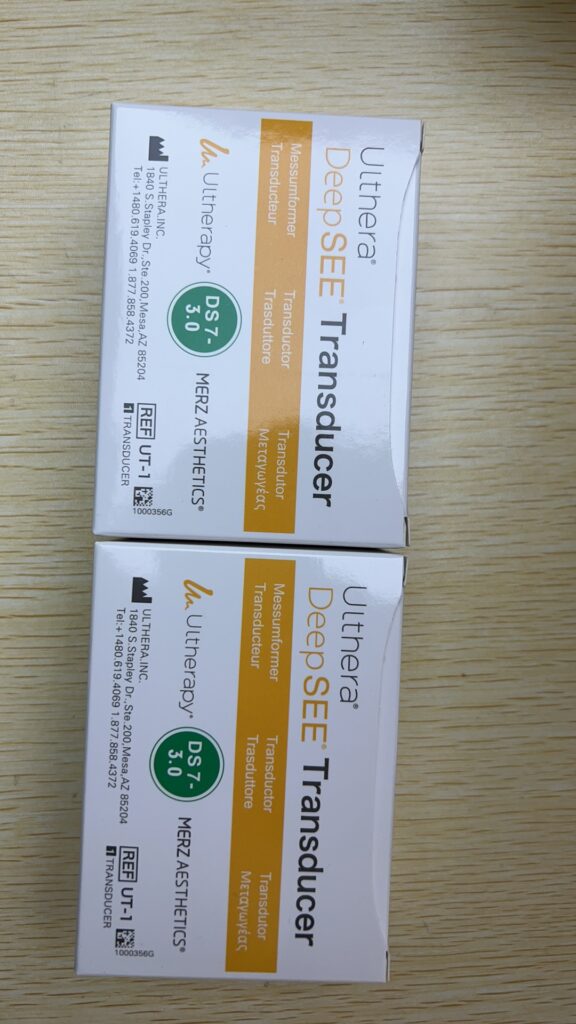
The Ulthera DS 7-3.0 transducer is designed to deposit focused ultrasound energy at approximately 3.0 mm into the dermis and superficial subcutis, where rapid collagen denaturation and early fiber contraction can contribute to the “immediate tightening” patients often perceive after treatment. For clinic owners, this transducer supports both short-term visible changes (via collagen contraction and edema) and longer-term neocollagenesis, making it a core workhorse for non‑invasive lifting portfolios and a key driver of utilization-based ROI. Buyers weighing new versus certified pre‑owned systems should factor DS 7‑3.0 transducer costs, replacement intervals, and patient‑perceived immediate response into their revenue models rather than focusing on console price alone.
What the Ulthera DS 7-3.0 does & ideal clinic profile
- The Ulthera DS 7‑3.0 is a microfocused ultrasound (MFU) transducer used with the Ulthera System to deliver lines of thermal coagulation points at a target depth around 3.0 mm, generally corresponding to the deep dermis and upper subcutis in many treatment zones.
- At this level, energy is intended to create thermal injury zones in collagen‑rich structures, stimulating a wound‑healing cascade that can lead to gradual tightening and lifting over several months, according to clinical literature on MFU and Ultherapy.
- Typical applications (per manufacturer indications and local regulatory status) include treatment of the lower face, submental area, and other superficial soft tissues where skin quality and mild-to-moderate laxity are the primary concerns.
- The DS 7‑3.0 is especially relevant for:
- Aesthetic clinics and medspas positioning Ultherapy or MFU as a flagship non‑invasive tightening procedure.
- Dermatology practices seeking a device-level approach to texture and laxity in patients who may not yet be surgical candidates.
- Multi‑site groups aiming to standardize protocols and energy lines across locations.
- ALLWILL commonly works with such operators to map DS 7‑3.0 utilization assumptions (lines per patient, treatment mix by area) into projected cartridge consumption and to ensure that both new and certified pre‑owned devices are configured with the appropriate transducer sets from day one.
Technical core: “Immediate linear contraction” at 3.0 mm
Given this title and brief, the content routing here focuses on the physics and tissue response rather than headline pricing, so the core analysis centers on how the DS 7‑3.0 achieves immediate contraction and what that means clinically.
- MFU transducers like DS 7‑3.0 focus acoustic energy into discrete focal zones, elevating local tissue temperature rapidly (often to 60–70 °C) in micro‑regions while sparing the epidermis.
- At approximately 3.0 mm depth, these focal zones intersect dermal collagen bundles and septal structures; rapid heating leads to:
- Collagen triple helix denaturation.
- Shrinkage of collagen fibers as hydrogen bonds break and re‑form, creating immediate mechanical contraction.
- Formation of thermally induced “microcoagulation zones” that later serve as scaffolds for new collagen deposition.
- This rapid denaturation and contraction are often described as “immediate tightening” in manufacturer white papers and clinical reviews. It is important to note:
- Part of what patients see immediately can also be due to transient edema and tissue turgor changes rather than true long‑term lift.
- The more durable effect is associated with neocollagenesis and remodeling over weeks to months.
- The term “linear” reflects how MFU systems deposit rows of focal zones as the transducer is drawn along the skin, generating patterned arrays of coagulation points aligned with the handpiece pass.
- In ex vivo and clinical imaging studies, MFU has been shown to create consistent, layered thermal injury zones at defined depths, with DS 7‑3.0 targeting a more superficial layer than deeper 4–4.5 mm transducers that aim at SMAS-level structures.
- From an engineering standpoint, maintaining predictable focal depth and temperature is dependent on:
- Transducer element integrity and coupling.
- Proper ultrasound gel application.
- Device calibration and adherence to manufacturer protocols.
- These variables matter when clinics evaluate certified pre‑owned devices or high‑usage transducers; ALLWILL’s CPO workflows place significant emphasis on verifying output and focal characteristics, not just shot counts.
Revenue, utilization, and payback: why the “instant effect” matters commercially
While clinical outcomes are the primary consideration, the immediate subjective tightening some patients perceive with DS 7‑3.0 has implications for patient satisfaction, rebooking, and revenue generation.
- Visible or tactile changes immediately after treatment can improve perceived value, especially for first‑time energy‑device patients who might otherwise be skeptical of delayed results.
- However, clinics should set expectations carefully:
- Literature on Ultherapy and MFU consistently describes the main lifting effect as delayed, with improvements over 3–6 months as collagen remodels.
- Immediate changes may soften as edema resolves, so marketing should avoid over‑emphasizing “instant lift” and focus instead on both early and long‑term phases as supported by manufacturer materials.
- From a financial standpoint, DS 7‑3.0 contributes to:
- Average revenue per treatment: often positioned as a premium procedure relative to lower‑intensity tightening technologies.
- Utilization of the Ulthera console: transducer‑driven revenue is what ultimately pays back the capital investment.
- Cross‑selling: patients satisfied with initial improvement and the treatment experience are more likely to explore adjunctive procedures.
- When modeling payback:
- Clinics can estimate a range of treatment fees per session, expected monthly case volume, and cartridge shot consumption.
- Even conservative utilization assumptions often show that consumable‑driven modalities like Ultherapy require consistent, protocol‑driven use of the DS 7‑3.0 and related transducers to achieve a reasonable payback horizon.
- ALLWILL often supports buyers by building scenario‑based ROI models that reflect realistic utilization ranges and consumable pricing, including the cost of replacement DS 7‑3.0 transducers over a multi‑year period.
Mid‑article next step: If you are currently forecasting MFU revenue or trying to compare Ulthera with other tightening platforms, request a quote from ALLWILL that includes device options, DS 7‑3.0 transducer pricing, and a utilization‑based payback model tailored to your clinic’s volume.
Differentiated advantage of DS 7-3.0 in a multi‑device portfolio
Clinic owners rarely evaluate Ulthera in isolation; they often compare it with other energy‑based tightening technologies such as monopolar radiofrequency or other MFU platforms.
- Depth control and imaging:
- Ulthera systems are known for integrated ultrasound visualization, allowing practitioners to see layers and align energy at the desired depth, which is particularly relevant around 3.0 mm where anatomical variation can be significant.
- DS 7‑3.0’s depth complements deeper transducers (e.g., 4–4.5 mm) and more superficial options, enabling layered treatment strategies guided by imaging.
- Thermal profile:
- MFU-generated microcoagulation zones tend to be sharply demarcated, with focal thermal damage and relatively spared adjacent tissue.
- This pattern differs from diffuse heating with some radiofrequency devices, which may have other applications but less discrete focal coagulation.
- Clinical literature:
- Systematic reviews of MFU in dermatology and aesthetics report improvements in skin laxity and wrinkles, with recognized roles for Ultherapy in non‑invasive lifting when used according to labeled indications.
- DS 7‑3.0 often appears as one of the standard transducers used in these protocols, especially for mid‑dermal targets.
- Workflow and positioning:
- Being able to explain the “immediate tightening” as a thermally driven, depth‑specific response can help clinicians frame the procedure in a more science‑anchored way during consultations.
- For multi‑site networks, standardizing DS 7‑3.0 line patterns and protocols can support more consistent patient experiences across locations.
- Alternative or complementary devices:
- Some clinics combine Ultherapy with radiofrequency microneedling or other RF devices in staged protocols, leveraging different depth and tissue interactions; histological studies show distinct but sometimes overlapping thermal patterns between MFU and RF.
- The business choice is less about “either/or” and more about where DS 7‑3.0 fits within a broader tightening and contouring pathway for different patient profiles.
- ALLWILL’s role is often to map these portfolio decisions, helping procurement leaders quantify how an Ulthera platform equipped with DS 7‑3.0 may complement existing RF or laser assets rather than duplicate them.
Practical decision aid: MFU transducer selection framework (Ulthera focus)
Because this working title is about technical and clinical response rather than cost, the most useful decision aid is a tactical framework to align transducer choice, clinical goals, and operational planning.
Ulthera MFU transducer selection and planning framework
Use this as a high‑level planning tool; always cross‑check with current manufacturer IFU and regional regulatory status.
| Decision Dimension | DS 7-3.0 Role | Key Questions for the Clinic |
|---|---|---|
| Target tissue depth | Focuses around 3.0 mm, typically deep dermis/upper subcutis. | In your core patient population, where is most clinically relevant laxity: superficial dermis, deep dermis, SMAS, or mixed? |
| Primary indication | Often used for skin quality and laxity in lower face, jawline, and other areas where mid‑dermal support is a priority, per labeled uses. | Are you primarily addressing mild-to-moderate laxity and texture, or heavier tissue descent requiring deeper focus as well? |
| “Immediate” effect profile | Provides rapid collagen denaturation/contraction and edema‑related changes that can contribute to early tightening perception. | How will your team frame early vs long‑term changes with patients, and what training is in place for consistent counseling? |
| Integration with other transducers | Often combined with 4–4.5 mm and sometimes more superficial tips to create multi‑layer thermal zones. | Do you plan to offer single‑layer or multi‑layer protocols, and what is your strategy for stocking the necessary transducer set? |
| Revenue per treatment | Typically used in higher‑ticket lifting protocols; revenue per shot depends on your fee schedule and protocol line count. | What fee structure and line patterns will you adopt, and how many DS 7‑3.0 lines per patient do you project on average? |
| Console & cartridge sourcing | Requires authentic DS 7‑3.0 transducers with verified output and documented shot history. | Will you source new or CPO units, and have you verified that all included DS 7‑3.0 transducers are genuine and tested? |
| Staff capability & training | Imaging‑guided alignment and understanding depth‑response are essential. | Do your practitioners have experience with ultrasound‑guided MFU, or will you need vendor or third‑party training support? |
- ALLWILL routinely builds on this framework during device selection calls, so procurement teams can see exactly how DS 7‑3.0 and companion transducers would be deployed in their real‑world protocols, and what that implies for stocking, training, and consumable budgeting.
Compliance, documentation, and asset protection for Ulthera and DS 7-3.0
Technical understanding of immediate collagen contraction must be paired with strong compliance practices when acquiring and operating Ulthera systems.
- Regulatory status:
- Ultherapy has received FDA 510(k) clearance for certain lifting indications in the United States; however, indications, labeling, and approvals vary by country.
- Buyers should verify current regulatory status, approved indications, and any local guidance for their specific region directly with regulators or the manufacturer.
- Instructions for use and protocols:
- The Ulthera System Instructions for Use detail recommended transducer configurations, energy levels, and treatment patterns; adherence is key to aligning practice with the evidence base.
- Clinics should maintain accessible copies of IFU documents and ensure protocols are updated when revisions occur.
- Device and transducer traceability:
- Serial numbers, shot counts, and service records for DS 7‑3.0 transducers should be traceable for each unit and location; this supports internal quality management and external audits.
- Avoiding unauthorized modifications or gray‑market transducers is essential; aside from safety concerns, such use may complicate regulatory compliance and manufacturer support.
- Asset protection and servicing:
- Regular maintenance and calibration by authorized or well‑qualified technicians help ensure that focal depth and energy delivery remain within specification.
- CPO buyers should expect a clear refurbishment scope and documentation: testing of each DS 7‑3.0 transducer, console software status, and any parts replaced.
- ALLWILL’s CPO workflows emphasize:
- Matching each device to its documentation, including IFU, service logs, and transducer reports.
- Providing clinics with clarity on warranty terms and the boundaries of support, especially as they relate to consumables and modifications, so procurement decisions are made on a transparent basis.
Procurement risks to avoid + ALLWILL Expert View
Key procurement pitfalls around DS 7-3.0
- Acquiring Ulthera systems with incomplete or non‑matching transducer sets, leading to suboptimal protocol implementation and the need for unplanned additional purchases.
- Underestimating the importance of imaging, depth control, and correct DS 7‑3.0 deployment, and thus underinvesting in staff training and onboarding.
- Focusing negotiation solely on console price while failing to model DS 7‑3.0 and other transducer costs over a realistic utilization horizon.
- Accepting uncertified pre‑owned units without documented transducer testing, output verification, or a clear refurbishment report.
- Over‑relying on “instant tightening” as a marketing promise instead of framing DS 7‑3.0 as part of a longer‑term collagen remodeling process grounded in published data.
ALLWILL Expert View: Buying Ulthera for the physics, not just the brand name
When procurement teams evaluate Ulthera, discussions frequently revolve around brand recognition and headline pricing. Yet, the device’s clinical and economic value is more tightly linked to what happens at the focal point: precise MFU energy deposition at specific depths such as 3.0 mm, where collagen contraction and subsequent remodeling occur. Understanding that the perceived “immediate tightening” stems from thermally driven collagen changes and short‑term edema, while more durable lift develops over months, helps clinics set realistic expectations and design protocols that align with the literature.
From an asset‑management perspective, the DS 7‑3.0 transducer is not a generic accessory but a depth‑specific tool whose performance depends on output integrity, imaging, and evidence‑based line patterns. The best results—in both patient satisfaction and ROI—tend to come from clinics that invest in authentic transducers, staff training on imaging and depth targeting, and robust documentation of utilization and maintenance. When ALLWILL supports an Ulthera acquisition, we encourage decision‑makers to request not just a quote, but also a transducer and protocol mapping exercise showing how DS 7‑3.0 will be used day‑to‑day and what that means for payback timelines.
Closing next step: If you are assessing whether Ulthera with DS 7‑3.0 fits your patient mix and capital plan, request a quote from ALLWILL that includes console options, certified pre‑owned versus new scenarios, and a structured plan for DS 7‑3.0 transducer sourcing, documentation, and staff training.
Frequently Asked Questions
What is the typical price range for an Ulthera system with DS 7-3.0?
- Market prices vary significantly by region, generation, and configuration, but Ulthera consoles with standard transducer sets typically occupy a higher capital range relative to many entry‑level tightening devices, often in the multi‑tens‑of‑thousands bracket. Additional DS 7‑3.0 transducers add to total cost. Request a quote from ALLWILL for current model‑specific and CPO pricing.
How does a certified pre-owned Ulthera compare with a new unit in terms of DS 7-3.0 performance?
- A carefully refurbished, well‑documented CPO Ulthera system can deliver comparable transducer performance when console and DS 7‑3.0 outputs are thoroughly tested and components replaced as needed. However, buyers must verify refurbishment scope, warranty, and transducer integrity; a used unit is not inherently equivalent to new and should be evaluated case by case.
Is the “instant tightening” from DS 7-3.0 permanent?
- Immediate post‑treatment changes can be influenced by collagen contraction and transient edema, so they may partially regress as swelling subsides. Longer‑term tightening and lifting described in MFU literature are associated with neocollagenesis and remodeling over months. Clinics should avoid promising permanent or guaranteed results and instead reference published timelines and ranges.
What should I check before importing or transferring an Ulthera system?
- Confirm the device’s regulatory status and indications in your jurisdiction, verify serial numbers and authentic DS 7‑3.0 transducers with the manufacturer or a trusted intermediary, and obtain complete documentation and service history. Clarify warranty, local support options, and any conditions that would affect coverage. Request a quote from ALLWILL if you need structured support on these due‑diligence steps.
References
- A Systematic Review of the Efficacy of Microfocused Ultrasound for Skin Laxity and Lift
- Ultherapy Mechanism of Action White Paper
- Iranian Journal of Medical Physics – High-Intensity Focused Ultrasound Applications in Dermatology
- Ulthera System Instructions for Use
- Comparative Histometric Analysis of the Effects of High Intensity Focused Ultrasound and Radiofrequency on Skin
- Interactive Thermal Tissue Reactions of Intense Focused Ultrasound and Radiofrequency on Cadaveric Skin
- High-Intensity Focused Ultrasound in Dermatology
- A Systematic Review of the Clinical Efficacy of Micro-Focused Ultrasound
- Scientific Evidence of Ultherapy Results: Complete Clinical Guide
- Combating Substandard and Counterfeit Medical Devices – ECRI
- Counterfeiting – Public Health – European Commission
Related articles
 How to Compare Quotes for the Same Used Aesthetic Device ModelKnowledge
 Used Medical Aesthetic Device Condition Grades: New, Like-New, Excellent, Working, and PartsKnowledge
 Eufoton Endolift Lasemar 1500 L: Reading Prices and Building the Right QuoteKnowledgeEndolift Lasemar Used-Unit Checks: Fiber Kits, LightScan, and Distributor EvidenceKnowledge