
13Degassed Water Architecture: What Keeps Genuine Ulthera Transducers Acoustically Pure
Ulthera transducers rely on precisely engineered, bubble‑free acoustic chambers filled with highly degassed, deionized water to keep imaging sharp and energy delivery consistent, line after line of treatment. When this internal cooling water is…
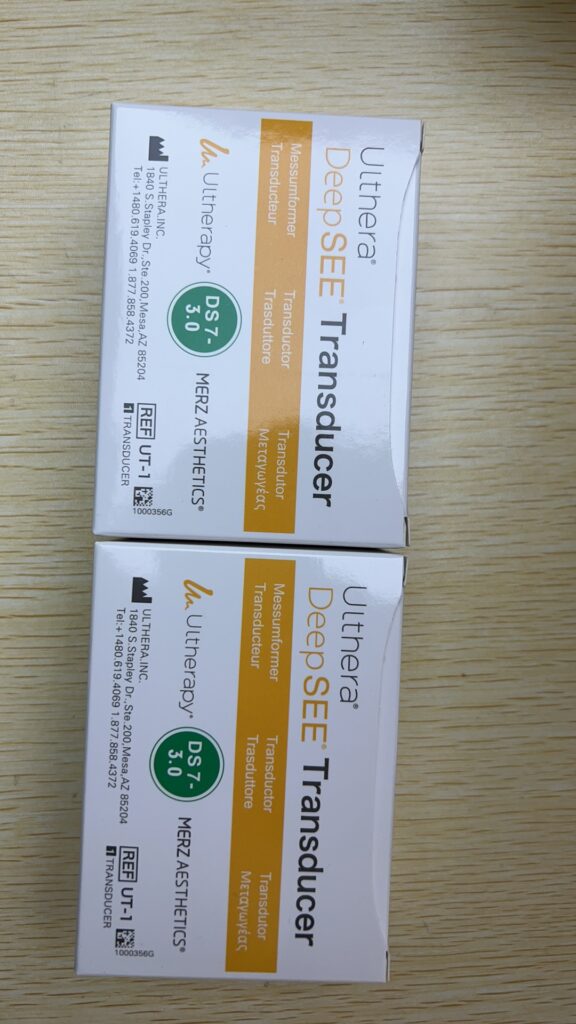
Ulthera transducers rely on precisely engineered, bubble‑free acoustic chambers filled with highly degassed, deionized water to keep imaging sharp and energy delivery consistent, line after line of treatment. When this internal cooling water is properly prepared, sealed, and monitored, clinics see fewer cartridge failures, more predictable ultrasound focus, and lower lifetime ownership costs across both new and certified pre‑owned (CPO) systems. For buyers evaluating genuine Ulthera cartridges or HIFU handpieces, understanding how degassed‑water architecture is built and protected is a critical part of any B2B sourcing or refurbishment decision.
What It Does & Ideal Clinic Profile
The Ulthera System integrates high‑frequency ultrasound imaging (DeepSEE) with focused ultrasound therapy, using interchangeable transducers to visualize up to 8 mm below the skin and deliver discrete thermal coagulation points at depths typically between 1.5 mm and 4.5 mm. These image/treat cartridges contain an internal water‑filled acoustic chamber that couples the piezoelectric elements to the membrane, ensuring that the beam remains tightly focused while the transducer stays thermally stable during repeated lines of treatment. Clinics offering non‑invasive lifting of the brow, submental tissue and neck, and improvement of lines on the décolleté are the primary users, often running Ulthera as a premium flagship procedure for patients not ready for surgery.
The ideal buyer for genuine Ulthera transducers is a clinic that already understands ultrasound‑guided energy devices and needs strong uptime, predictable image quality, and manufacturer‑aligned safety performance. This includes dermatology practices, medspas, and aesthetic clinics with mid‑to‑high patient volumes, where each cartridge’s shot count and acoustic purity have direct impact on ROI and patient scheduling. For these operators, degassed‑water architecture is not an abstract engineering detail; it is a hidden determinant of whether refurbished or replacement cartridges will behave like the OEM units they trust.
Technical Core: Degassed Water & Bubble‑Free Chambers
Inside a genuine Ulthera transducer, the “water bubble” the market often refers to is actually a sealed, deionized water chamber that couples acoustic energy from the piezoelectric stack to the front membrane. Merz documentation identifies deionized water as the primary substance, selected for its low conductivity and stability, but clinical performance depends on that water being thoroughly degassed before sealing to prevent cavitation and microbubbles under high‑frequency ultrasound load.
When ultrasound passes through water containing dissolved gas, negative pressure phases can nucleate bubbles, causing scattering, unpredictable attenuation, and local changes in acoustic focus. In a therapeutic transducer designed to produce sharply defined thermal coagulation points (TCPs), gas bubbles can disrupt beam geometry, reduce treatment precision, and accelerate membrane wear, especially at higher treatment frequencies like 7 MHz and 10 MHz used in Ulthera probes. OEM‑grade degassing uses vacuum or sparging systems to pull dissolved gases out of water before filling, followed by tight control of temperature, fill volume, and sealing pressure so no air is entrained along the membrane surface or in the piezo stack cavity.
To maintain acoustic purity over the transducer’s life, the internal chamber must stay hermetically sealed and structurally stable under repeated thermal cycling. When membranes, housings, or seals are damaged, leakage or partial depressurization can allow air ingress, creating visible bubbles and acoustic discontinuities that can be seen on imaging and felt as “hot spots” or inconsistent energy delivery. This is why genuine Ulthera transducers are treated as non‑user‑serviceable parts; once the water chamber is compromised, only factory‑grade refurbishment with proper degassing and re‑validation can restore original beam behavior.
Revenue / Operational Impact & Payback Math
For most clinics, degassed‑water architecture shows up economically as the difference between predictable, high‑quality shots and a cascade of downtime and rework caused by unstable cartridges. A typical Ulthera transducer is specified to deliver thousands of lines of treatment at precise depths and energies, with the system’s therapy module controlling energy (<3 J per TCP at 4–7 MHz, <1.5 J at 10 MHz) and shot spacing. When internal water integrity is maintained, these cartridges can complete their expected shot life without artifacts, keeping per‑treatment consumable cost within the clinic’s planned margins.
Illustratively, a clinic performing 20–40 Ulthera procedures per month may budget cartridge usage so that each transducer supports a defined number of full‑face or neck protocols before replacement or refurbishment. If acoustic purity is compromised and imaging becomes noisy or energy distribution inconsistent, practitioners may discard cartridges prematurely or repeat treatment lines, effectively doubling consumable cost for the same revenue. In CPO scenarios, improper water refilling or non‑degassed substitutes often lead to higher failure rates, added maintenance calls, and scheduling disruption — costs that quickly exceed the apparent savings of low‑grade refurbishment.
From an ROI perspective, clinics should see genuine or properly refurbished Ulthera transducers as precision assets rather than generic ultrasound “heads.” A 5–10% reduction in unplanned cartridge failures over a year can translate into dozens of preserved patient slots and thousands of dollars in avoided re‑treatment time, even before counting technician call‑out and shipment costs. Request a quote from ALLWILL for current pricing and availability on genuine and certified pre‑owned Ulthera transducers with documented water‑chamber integrity and shot‑count certification to map this clearly to your own procedure volumes.
Differentiated Advantage & Higher‑Ticket Rationale
The Ulthera System’s differentiation lies in its combination of real‑time, high‑frequency imaging with controlled thermal therapy, all in a compact handpiece/transducer architecture that is tightly defined at the physics level. The imaging mode uses B‑mode scanning with a fixed transmit focal depth and defined frequency range (12–25 MHz), allowing practitioners to visualize dermal and subdermal targets and confirm coupling before each line of treatment. When the internal water chamber is acoustically pure, this image remains crisp, and the transition from “SEE” to “TREAT” maintains alignment between what the clinician sees and where energy is actually delivered.
In a market that also includes HIFU cartridges and alternative systems such as other focused ultrasound platforms, Ulthera’s engineered tolerances for acoustic output parameters (mechanical index, thermal index, and ISPTA) are carefully measured and kept within conservative limits. This engineering discipline, tied tightly to water‑chamber design, is why OEM and properly certified CPO cartridges carry a higher price than generic or “refilled” heads with unknown internal architecture. For clinics positioning Ulthera as a premium, brand‑trust procedure, paying for acoustically pure cartridges supports both clinical confidence and long‑term asset value.
For buyers using platforms like ALLWILL to source new and CPO equipment, the key advantage is access to vendors and refurbishers who respect this underlying physics rather than treating cartridges as simple plastics to be refilled. ALLWILL’s role as a solutions partner means transducers can be matched not only on compatibility and price, but on documented internal water integrity, test reports, and expected service life aligned with your projected case volume.
Practical BME Technical Maintenance Checklist (Degassed‑Water Transducers)
Because the working title focuses on technical architecture and acoustic purity, the most useful decision aid is a technical maintenance checklist that biomedical engineers and clinic owners can apply when evaluating Ulthera and HIFU cartridges.
BME Maintenance Checklist for Degassed‑Water Ultrasound Transducers
| Checkpoint | What to Verify | Why It Matters |
|---|---|---|
| Visual water bubble integrity | Inspect the transducer window and housing for visible bubbles, cloudiness, or stratification in the internal water zone. | Visible bubbles suggest air ingress or incomplete degassing, which can scatter the beam and degrade imaging and energy focus. |
| Membrane and housing condition | Confirm no cracks, discoloration, warping, or punctures on the membrane and surrounding housing. | Structural defects change acoustic impedance and may allow leaks or pressure loss in the water chamber. |
| OEM markings & traceability | Check labels for transducer type (e.g., DS 7–3.0, DS 4–4.5), lot numbers, and expiration dates; verify serials against manufacturer or trusted distributor records. | Authentic OEM markings help ensure original internal architecture and allow tracking of performance or safety notices. |
| Temperature behavior during use | Monitor transducer temperature and system messages; confirm that any “over‑temperature” cutoffs behave as specified. | Stable internal water and correct cooling limit membrane surface temperature and prevent image drift or shutdowns. |
| Shot count / usage tracking | Review shot logs or line counters; reconcile with your clinic’s protocol volume and vendor documentation. | Matching expected shot life to actual usage highlights early failures that may correlate with water‑chamber issues or refurbishment quality. |
| Acoustic output & image quality | Perform test scans on a phantom to verify image clarity and target focusing before clinical use. | Phantom imaging reveals scattering or beam distortion caused by bubbles or membrane changes, before they affect patients. |
| Refurbishment documentation (CPO) | For CPO units, request written detail on steps taken: degassing method, water type, seal replacement, and post‑refurbishment acoustic testing. | Transparent refurbishment protocols signal whether the supplier treated the water chamber as a precision acoustic component rather than simple fluid refill. |
| Regulatory and safety alignment | Confirm that refurbished transducers remain within system’s specified acoustic outputs and comply with applicable standards (e.g., AIUM/NEMA measurement practices). | Staying within tested output ranges supports safety and avoids unverified modifications to the original design intent. |
Using a checklist like this before purchase or re‑deployment helps clinics standardize their internal QA and make more informed decisions on new vs CPO cartridges. Request a quote from ALLWILL to pair this checklist with an inspection summary or condition report on specific Ulthera transducers you are considering.
Compliance & Asset‑Protection Guardrails
The Ulthera System is cleared as a non‑invasive dermatological aesthetic treatment for lifting the brow, submental tissue and neck, and improving lines and wrinkles on the décolleté. However, that clearance and the underlying safety testing are tied to specific hardware configurations, including transducer types, acoustic outputs, and safety controls such as output limits, emergency stop, and thermal cutoffs. Any refurbishment that alters the internal water chamber, membrane, or acoustic stack must respect these parameters, and clinics should confirm in writing that CPO transducers have not been modified outside manufacturer‑aligned tolerances.
Regulatory authorities and guidance documents — including FDA diagnostic ultrasound standards and AIUM/NEMA acoustic output measurement practices — emphasize conservative limits on mechanical and thermal indices and accurate measurement of real‑world field distributions. Clinics should treat this as a reminder that every change to a transducer’s internal architecture, especially the water chamber, can influence exposure and must be validated with real acoustic testing rather than assumed safe. When sourcing through ALLWILL or other platforms, insist on documentation of regulatory status for your region, alignment with OEM measurement standards, and clear disclosures when devices or transducers are certified pre‑owned rather than new.
As an asset‑protection practice, keep Ulthera System manuals readily accessible and train staff on device warnings, especially regarding transducer damage, cable care, and coupling gel management. Many transducer failures begin with membrane or connector contamination, which can indirectly compromise the water chamber and shorten usable life. ALLWILL can help by matching you with technical support and Smart Center services that align your maintenance protocols with manufacturer guidance, reducing the risk that mishandling rather than manufacturing quality drives cartridge downtime.
Procurement Risks to Avoid + ALLWILL Expert View
One of the highest‑impact procurement risks in the Ulthera and HIFU space is buying “refilled” cartridges where the internal water chamber has been opened and refilled without proper degassing, sealing, and acoustic re‑validation. These transducers may look cosmetically clean but can harbor microbubbles or mixed fluids that alter beam behavior and undermine the very imaging precision clinics rely on. Another risk is sourcing from vendors who cannot provide traceability for transducer type, lot number, and prior usage, leaving clinics exposed to unknown shot counts and undisclosed damage.
Clinics should avoid any supplier who treats transducers as disposable plastics and cannot explain their refurbishment protocol in technical terms. Asking specific questions about water preparation (degassing method, water quality), sealing processes, and testing against phantom tissue helps distinguish serious refurbishers from opportunistic resellers. When working with ALLWILL, you can route these questions through a centralized procurement contact who collects documentation and aligns it with your clinic’s safety, regulatory, and ROI requirements.
ALLWILL Expert View
Clinics often underestimate how much physics lives inside a single ultrasound transducer. Degassed water architecture, membrane integrity, and acoustic calibration are invisible to the naked eye but directly shape how the Ulthera System behaves at the bedside — whether the focus is crisp, whether energy lands where imaging says it will, and whether cartridges reach their expected shot life without surprises. In our experience, the most sustainable ROI comes from treating transducers as precision assets rather than consumables: define a clear policy for new versus certified pre‑owned units, insist on refurbishment transparency, and tie every purchase to documented acoustic testing and water‑chamber integrity. ALLWILL’s role is to broker that level of detail — matching clinics with vetted OEM or CPO inventory, aligning purchase decisions with maintenance and compliance support, and making sure that every high‑ticket transducer you acquire is not just compatible, but acoustically trustworthy over the life you expect it to serve. If you are weighing multiple options, request a quote from ALLWILL that includes both pricing and an inspection summary so you can compare not only cost, but the underlying engineering confidence you are buying.
Request a quote from ALLWILL to review specific Ulthera transducer options (new and CPO), including documented refurbishment steps, water‑chamber integrity reports, and projected service life matched to your treatment volume.
Frequently Asked Questions
What is the typical price range for genuine Ulthera transducers?
Pricing for genuine Ulthera transducers varies by type (e.g., DS 4–4.5 vs DS 10–1.5), region, and whether the unit is new or certified pre‑owned; buyers generally encounter a broad range rather than a single fixed price. CPO cartridges with documented refurbishment and water‑chamber integrity usually sit below new OEM pricing but above generic refills. Request a quote from ALLWILL for current transducer pricing aligned with your configuration and market.
How do new and certified pre‑owned Ulthera transducers differ?
New transducers come directly from the manufacturer with full factory validation, while certified pre‑owned units have undergone inspection, possible component replacement, and acoustic testing to return them to a defined performance level. Key differences include warranty length, documented prior usage, and the scope of refurbishment, especially around the internal water chamber and membrane. Buyers should always verify condition grading and test reports in writing.
What should I confirm about warranty and support when buying transducers?
Clinics should confirm warranty duration, coverage (including transducer failure and internal water‑chamber defects), and available technical support for troubleshooting or replacement. For CPO units, ask whether refurbishment is backed by a repair or replacement commitment and whether acoustic performance is guaranteed within defined limits. Request a quote from ALLWILL that includes warranty terms and support options alongside pricing.
Are there special import or compliance considerations for Ulthera transducers?
Ulthera Systems and transducers are subject to medical device regulations, and clinics must ensure that both the base system and any replacement cartridges comply with local requirements and are correctly registered where applicable. When sourcing cross‑border, confirm device classification, documentation, and customs clearance responsibilities with your supplier or platform. ALLWILL can assist by coordinating compliance documents and aligning shipments with your regulatory environment.
How can I estimate ROI and payback on transducer purchases?
ROI depends on your treatment pricing, patient volume, and how efficiently you use each transducer’s available shot count without premature failures or re‑treatments. A simple approach is to estimate total revenue generated per cartridge over its validated life and compare this to acquisition cost plus any refurbishment or maintenance spend. For tailored payback scenarios, request a quote from ALLWILL with condition reports and projected shot life to plug into your own financial model.
References
- Ulthera® System – Instructions for Use
- Ulthera® System Safety Data Sheet (SDS)
- An Open Access Chamber Designed for the Acoustic Characterisation of Transducers
- Preparation system for degassed water from a low-intensity focused ultrasound device (Chinese patent abstract)
- Acoustic Output Measurement Standard for Diagnostic Ultrasound Equipment (AIUM/NEMA summary)
- Information for Manufacturers Seeking Marketing Clearance of Diagnostic Ultrasound Systems and Transducers (FDA guidance)
- MERZ NORTH AMERICA, INC. – THE ULTHERA SYSTEM (MAUDE database entry)
- Collapse pressure measurement of single hollow glass microsphere using ultrasound acoustic pressure
Related articles
Ultherapy Transducers: What the Probe Record Changes About the PriceBrand and Model Buying Guides Candela GentleMax Pro: Demand, Verification and Cost Before You CommitBrand and Model Buying Guides
 Alma VH1160 Vector Handpiece Code: What the Part Number Tells a BuyerBrand and Model Buying Guides
 DEKA Onda Pro: Investment Case, Verification and Pre-Owned RealityBrand and Model Buying Guides