
Endymed Pro 3DEEP: What Clinic Owners Must Know Before Buying
The Endymed Pro 3DEEP is an FDA-cleared, multi-application RF microneedling and fractional resurfacing platform used for non-surgical skin tightening, acne scar revision, and body contouring. New units typically list between $45,000–$75,000 depending on configuration…
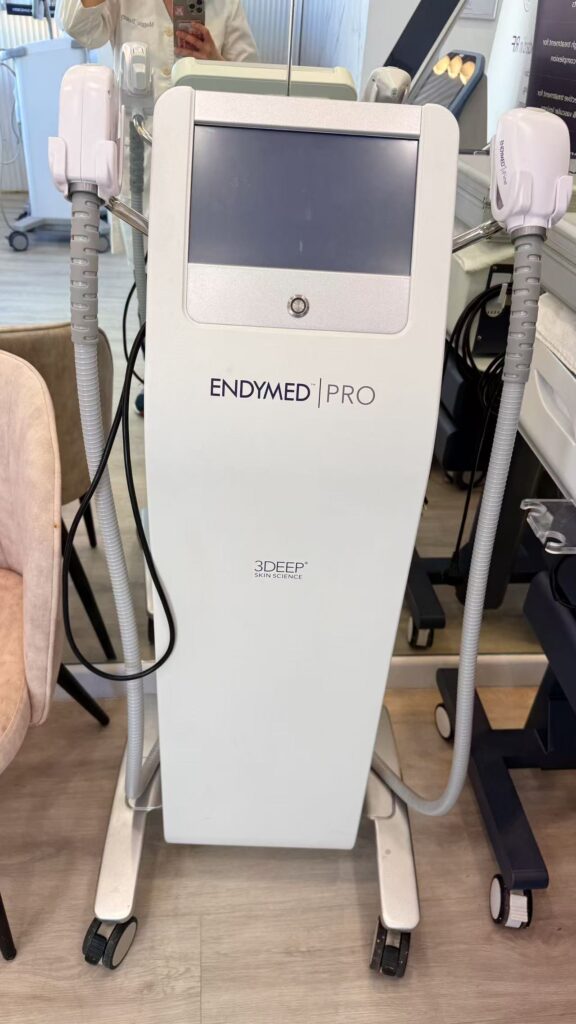
The Endymed Pro 3DEEP is an FDA-cleared, multi-application RF microneedling and fractional resurfacing platform used for non-surgical skin tightening, acne scar revision, and body contouring. New units typically list between $45,000–$75,000 depending on configuration and region, while certified pre-owned (CPO) systems in verified condition commonly trade in the $18,000–$35,000 range. Payback for most clinics occurs within 6–14 months when pricing treatments at $800–$1,500 per session and running 10–20 procedures monthly.
What is the Endymed Pro 3DEEP and which treatments does it support?
The Endymed Pro 3DEEP is an all-in-one RF platform combining fractional microneedling (Intensif), fractional skin resurfacing (FSR), and non-ablative deep heating (Deep) for face and body indications. It is FDA-cleared for improving facial acne scars, wrinkles, and abdominal scars in patients 22+, and is used off-label for pores, stretch marks, and mild skin laxity.
The system’s core is EndyMed’s proprietary 3DEEP multi-source, phase-controlled RF technology, which delivers energy in a controlled, phased sequence across multiple electrodes. This creates uniform dermal heating to approximately 52–55°C while minimizing epidermal temperature rise — a key factor in patient comfort and safety.
Clinically, the platform supports:
- RF Microneedling (Intensif handpiece): Adjustable needle depth from 0.5–5.0 mm in 0.1 mm increments; pulse duration 50–200 ms; energy 0–25 W (±20%). Indications include acne scars, deep wrinkles, enlarged pores, and textural irregularities.
- Fractional Skin Resurfacing (FSR handpiece): Non-ablative fractional RF for superficial resurfacing, fine lines, and mild dyschromia. Often combined with microneedling in a “3DEEP Trio” protocol.
- Deep RF handpiece: Non-invasive deep dermal heating for body contouring, skin tightening on abdomen, thighs, arms, and buttocks. Penetration up to 9 mm depending on technique and settings.
The device is positioned as a physician-grade tool with granular control over depth, energy, and pulse width, enabling customization across Fitzpatrick skin types when protocols are followed.
How do hardware physics and calibration affect uptime and safety?
RF microneedling safety hinges on real-time impedance monitoring and a tightly calibrated feedback loop between the handpiece, controller, and tissue. Impedance — the tissue’s resistance to current flow — varies by hydration, thickness, and temperature. If the system cannot read and react to impedance changes within milliseconds, energy delivery becomes unpredictable, increasing burn and arcing risk.
On the Endymed Pro, the dynamic impedance feedback loop is designed to adjust power output in under 10 ms when functioning to factory spec. This rapid response prevents localized overheating as needles penetrate and tissue resistance shifts. Clinical engineers emphasize that calibration drift — common in older or poorly maintained secondary-market units — can introduce latency or sensor error, effectively “blinding” the device to real tissue conditions.
Key hardware factors that influence reliability:
- Impedance sensor accuracy: Factory calibration ensures the sensor reads tissue resistance within a narrow tolerance. Out-of-calibration sensors may under- or overestimate impedance, leading to excessive energy or premature cutoffs.
- Controller-board firmware and timing: The PLC and RF power module must synchronize pulse timing and phase control precisely. Firmware mismatches or degraded components can create microsecond-level delays that compound into unsafe energy profiles.
- Handpiece integrity: Intensif tips contain micro-needle arrays and RF pathways that degrade with cycles. Bent pins, oxidized contacts, or micro-fractures in the insulator can cause arcing or uneven energy distribution.
- Preventive maintenance (PM) cadence: Regular electrical safety testing, calibration verification, and handpiece cycle tracking are essential. Typical PM intervals are 6–12 months depending on usage intensity and local regulations.
For clinic owners, this means condition grading and documentation matter more than brand name when buying used. A CPO unit with a full refurbishment report, calibration certificate, and PM history is often a safer long-term asset than a “patient-ready” unit with no service records.
Why does total cost of ownership matter more than sticker price?
The purchase price of an Endymed Pro is only one component of total cost of ownership (TCO). Clinics that ignore consumables, financing, maintenance, and downtime often underestimate the true cost by 20–40% over a 3–5 year horizon.
Major TCO drivers include:
- Device acquisition cost: New vs CPO vs used “as-is.” New units carry full OEM warranty but higher upfront cost. CPO units from reputable refurbishers offer mid-range pricing with limited warranty and documented service history. Untested used units may be cheapest initially but carry the highest risk of early failure and unplanned expense.
- Financing and lease terms: Equipment finance agreements (EFAs), $1 buyout leases, and deferred-payment options are common in aesthetics. Monthly payments for a $50,000 device typically range from $800–$1,500 depending on term, interest, and buyout structure.
- Consumables and disposables: Intensif treatment tips are single-use or limited-reuse depending on local regulation and manufacturer guidance. Pricing per tip commonly falls in the $80–$150 range, with volume discounts for larger practices. FSR and Deep handpieces may have lower per-treatment consumable costs but still require periodic replacement parts.
- Maintenance and calibration: Annual service contracts or per-visit calibration can run $1,500–$4,000 depending on provider and scope. Unexpected repairs (controller board, handpiece replacement) can add $3,000–$10,000+ if not covered by warranty.
- Downtime cost: Every day the device is out of service represents lost revenue. A clinic running 15 RF microneedling treatments per week at $1,000 average could lose $6,000+ monthly during extended downtime.
Smart buyers model TCO explicitly: acquisition + financing + consumables + service – residual value over their intended hold period. This often reveals that a slightly higher-priced CPO unit with warranty and documented service is more economical than a bargain “as-is” unit with unknown history.
How does the Endymed Pro compare clinically to other RF microneedling platforms?
Buyers frequently compare the Endymed Pro 3DEEP to systems like Morpheus8, Profhilo-based protocols, and other RF microneedling devices. The differences lie in needle design, energy delivery, depth control, and treatment versatility rather than any single “best” technology.
| Feature | Endymed Pro 3DEEP (Intensif) | Morpheus8 (InMode) | Typical Generic RF Microneedling |
|---|---|---|---|
| Needle type | Non-insulated gold-plated needles | Insulated needles | Varies (often non-insulated) |
| Energy delivery | RF along entire needle length | RF primarily at needle tip | RF along needle or tip-dependent |
| Depth range | 0.5–5.0 mm, adjustable in 0.1 mm steps | Typically up to 4–8 mm depending on handpiece | Often 0.5–3.5 mm |
| Applications | Acne scars, wrinkles, pores, body tightening | Deep tightening, contouring, scars | Primarily facial rejuvenation |
| Platform flexibility | Multi-handpiece (Intensif, FSR, Deep) | Multiple handpieces but often separate platforms | Often single-function |
| Comfort features | 3DEEP phased RF, controlled dermal heating | Fractional bipolar RF, variable pulse | Variable, often less controlled |
Non-insulated needles (Endymed) deliver energy along the full tract, favoring comprehensive dermal remodeling and superficial-to-mid dermis treatment — advantageous for pores, texture, and rosacea-related concerns. Insulated needles (Morpheus8) concentrate energy at the tip, favoring deeper, more focal heating with less epidermal impact — useful for deep laxity and contouring.
Clinics that prioritize versatility across face and body may value the Endymed Pro’s multi-handpiece architecture and ability to run combined protocols (e.g., microneedling + FSR + Deep in one session). Practices focused primarily on deep subdermal tightening or body contouring may lean toward platforms optimized for those indications.
Which ROI and procurement framework should guide a high-ticket device decision?
For a capital purchase in the $20,000–$75,000 range, clinics benefit from a structured decision framework that balances clinical fit, financials, compliance, and supplier risk. The following BME Technical & Procurement Decision Matrix is designed for clinic owners, operators, and biomedical engineers evaluating an Endymed Pro or similar RF microneedling platform.
BME Technical & Procurement Decision Matrix
Use this as a checklist and scoring tool. Rate each item 1–5 (1 = poor/unknown, 5 = excellent/fully documented).
1. Clinical Fit & Indications
- Does the device’s cleared indications match your target patient profile (acne scars, wrinkles, body tightening)?
- Can your providers be trained to use adjustable depth and energy safely across skin types?
- Is there evidence of demand in your market for RF microneedling at your planned price point?
2. Hardware Condition & Uptime Risk
- Is there a full refurbishment report with calibration certificate and PM history?
- Are handpiece cycle counts known and within recommended limits?
- Has electrical safety testing (leakage, ground resistance) been performed within the last 12 months?
3. Total Cost of Ownership (3–5 Year Model)
- Have you modeled acquisition + financing + consumables + service – residual value?
- Are consumable costs per treatment realistic for your projected volume?
- Is there a clear service plan and estimated annual maintenance budget?
4. Compliance & Regulatory Status
- Is the device’s FDA 510(k) or CE status current and applicable to your region and intended use?
- Does the seller provide documentation of regulatory compliance and import eligibility (if cross-border)?
- Are software versions supported and upgradable to current standards?
5. Supplier Trust & Asset Protection
- Does the supplier offer transparent condition grading (new, CPO, refurbished, used) with clear definitions?
- Is there a written warranty covering parts, labor, and handpiece functionality? For how long?
- Can the supplier provide references, inspection reports, and post-sale support (training, troubleshooting)?
Score each section and look for patterns: a high clinical fit score with low hardware or supplier scores signals elevated risk. ALLWILL’s approach is to align clinics with vetted, compliance-aware suppliers and CPO units that include calibration logs, PM records, and clear warranty terms — reducing the likelihood of costly surprises post-purchase.
ALLWILL Expert View
From a procurement and asset-protection standpoint, the single biggest mistake we see clinic owners make is optimizing for lowest upfront price while ignoring calibration history and service documentation. On RF microneedling platforms like the Endymed Pro, a unit that has been properly refurbished, calibrated, and electrically tested — even at a 10–15% premium — almost always delivers lower total cost of ownership over 3–5 years. The hidden costs of unplanned downtime, emergency repairs, and compromised patient safety far outweigh the initial savings. When sourcing through ALLWILL, we insist on seeing full refurbishment reports, calibration certificates, and PM histories before matching a clinic with a CPO unit. Our role isn’t to push inventory; it’s to ensure the device you buy becomes a revenue-generating asset, not a liability.
What compliance and asset-protection steps protect clinics post-purchase?
Once a device is acquired, ongoing compliance and asset protection are critical to maintaining safety, regulatory standing, and resale value. This is especially true for energy-based devices with moving parts, high-voltage components, and disposable handpieces.
Key post-purchase practices include:
- Preventive maintenance schedule: Adhere to manufacturer-recommended PM intervals (typically 6–12 months). Document all service, calibration, and electrical safety tests in a central equipment log.
- Handpiece cycle tracking: Record the number of pulses or treatments per Intensif tip and other handpieces. Replace tips at or before the recommended cycle limit to avoid performance degradation and safety risks.
- Staff training and protocol standardization: Ensure all operators are trained on device settings, impedance monitoring cues, and emergency shutoff procedures. Standardized protocols reduce variability and adverse event risk.
- Regulatory documentation: Maintain copies of FDA 510(k) summaries, CE certificates (if applicable), and import documentation. Update these records if software or hardware upgrades change the device’s regulatory status.
- Incident logging and risk management: Log any adverse events, near-misses, or device malfunctions. Use this data to refine protocols and, if necessary, engage the supplier or service provider for root-cause analysis.
For clinics considering future upgrades or trade-ins, well-documented maintenance and compliance records significantly enhance resale or trade-in value. ALLWILL’s two-way equipment trade-in program, for example, factors in condition grading, service history, and regulatory documentation when evaluating a device for credit toward a new or CPO system.
Which procurement risks should clinic owners actively avoid?
Several recurring pitfalls can turn a promising device purchase into a costly, compliance-heavy headache. Awareness and due diligence are the best defenses.
Common risks include:
- Buying “as-is” with no service history: Units sold without calibration logs, PM records, or electrical safety tests carry a high risk of latent defects. These often surface as intermittent faults, sensor errors, or handpiece failures within months.
- Ignoring regional regulatory requirements: A device cleared in one jurisdiction may not be compliant in another. Importing without verifying FDA, CE, or local health authority requirements can lead to customs delays, fines, or inability to use the device legally.
- Overlooking consumable and handpiece costs: Some platforms appear affordable upfront but have expensive or short-life disposables. Failing to factor these into TCO can erode margins quickly.
- Relying on verbal warranties or vague promises: Always secure written warranty terms covering parts, labor, handpiece functionality, and response times. Verbal assurances are difficult to enforce and often exclude critical components.
- Underestimating training and protocol development: Even experienced providers need device-specific training to leverage advanced features like adjustable depth, impedance monitoring, and multi-handpiece protocols. Skipping this step increases adverse event risk and underutilization.
For clinics seeking a lower-risk path to acquiring an Endymed Pro or similar platform, engaging a compliance-aware sourcing partner can mitigate many of these risks. ALLWILL’s model emphasizes vetted suppliers, transparent condition reports, and post-sale support to ensure clinics receive devices that are not only functional but also compliant and economically viable over the long term.
If you’re evaluating an Endymed Pro 3DEEP and want current pricing, availability, and condition reports on certified pre-owned units, request a quote from ALLWILL. Their team can provide detailed refurbishment documentation, warranty terms, and financing options tailored to your clinic’s cash flow and growth plans.
Frequently Asked Questions
What is the typical price range for a new vs certified pre-owned Endymed Pro 3DEEP?
New Endymed Pro systems typically list between $45,000–$75,000 depending on configuration and region. Certified pre-owned (CPO) units in verified condition with documented refurbishment and calibration history commonly trade in the $18,000–$35,000 range. The wide variation depends on included handpieces, tip inventory, age, and warranty coverage.
Is the Endymed Pro 3DEEP safe for all skin types (including darker skin tones)?
Yes, when used with correct protocols. The 3DEEP multi-source phase-controlled RF technology provides controlled dermal heating with minimal epidermal temperature rise, which reduces the risk of hyperpigmentation or burns in Fitzpatrick skin types IV–VI. However, proper training on adjustable depth and energy settings is essential, and a patch test is recommended for higher-risk patients.
How much do the consumables (Intensif tips) cost per treatment, and how many uses do they last?
Intensif single-use or limited-use tips typically cost between $80–$150 per tip, depending on volume discounts. While manufacturer guidance generally recommends single-use to ensure sterility and optimal RF performance, some clinics in certain regions may use limited-reuse protocols. For accurate per-treatment consumable cost modeling, you should factor in 1–2 tips per full-face procedure, plus occasional replacement costs for FSR and Deep handpiece components.
How does the Endymed Pro 3DEEP compare to Morpheus8 in terms of clinical outcomes and patient comfort?
The main difference lies in needle design: Endymed uses non-insulated gold-plated needles that deliver RF energy along the entire needle tract, favoring comprehensive superficial-to-mid dermal remodeling (better for pores, texture, and rosacea). Morpheus8 uses insulated needles that concentrate energy at the tip for deeper focal heating (better for deep laxity and contouring). For comfort, Endymed’s 3DEEP phased RF technology provides more controlled dermal heating with less epidermal discomfort, but actual patient experience depends on settings, technique, and topical anesthesia.
What are the most common hidden costs when buying a used Endymed Pro on the secondary market?
The most common hidden costs include: (a) calibration drift requiring immediate re-calibration ($1,500–$4,000), (b) degraded handpiece components or connectors that need replacement ($3,000–$10,000+), (c) missing or outdated firmware that affects performance and safety, (d) lack of service history leading to unplanned downtime (potentially $6,000+ per month in lost revenue), and (e) non-transferable or expired warranties that leave you exposed to full repair costs.
What is the typical useful lifespan of an Endymed Pro 3DEEP platform with proper maintenance?
With regular preventive maintenance (every 6–12 months), calibration verification, and proper handpiece cycle tracking, the main console and controller board typically remain clinically viable for 7–10+ years. Handpieces and consumable tips are shorter-lived (tips are single-use or limited-use; FSR and Deep handpieces may need replacement every 2–5 years depending on usage). Well-documented service records also significantly enhance resale or trade-in value when you eventually upgrade.
Related articles
 Onda Pro Results: What Determines the Outcome in a Working ClinicKnowledge
 A Used Thermage FLX Console Earns Its Price with Verifiable Firmware, Handpiece, and Tip SupplyKnowledge
 How to Compare Quotes for the Same Used Aesthetic Device ModelKnowledge
 Used Medical Aesthetic Device Condition Grades: New, Like-New, Excellent, Working, and PartsKnowledge