
Global Diode Laser Market Dynamics And System Architecture Integration For 2026 Clinic Success
Diode laser machines dominate the medical aesthetic landscape with 808nm wavelength technology delivering consistent follicle destruction across Fitzpatrick skin types. Modern clinics demand triple-wavelength platforms integrating 755nm 1064nm and 808nm to handle blonde dark…
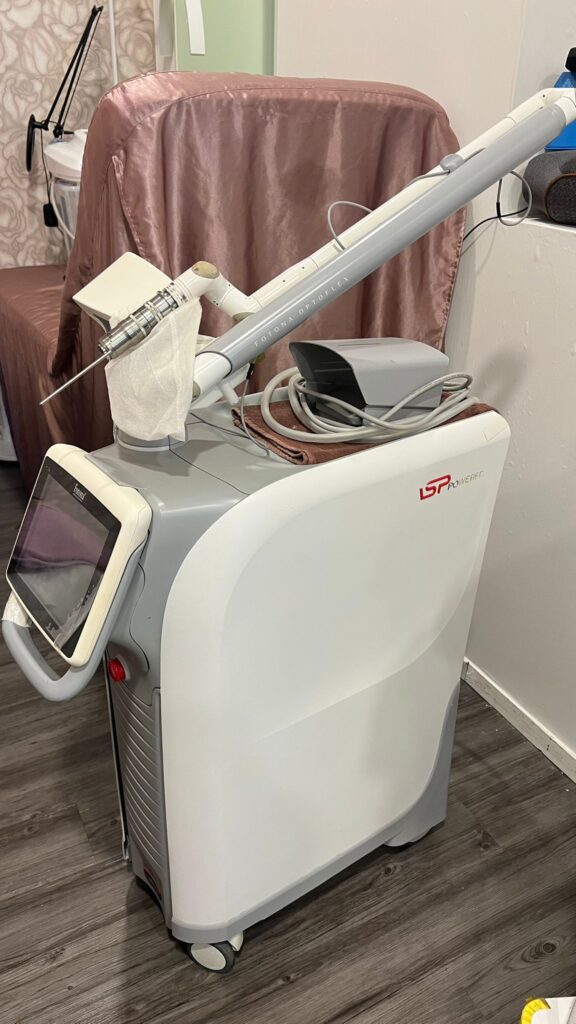
Diode laser machines dominate the medical aesthetic landscape with 808nm wavelength technology delivering consistent follicle destruction across Fitzpatrick skin types. Modern clinics demand triple-wavelength platforms integrating 755nm 1064nm and 808nm to handle blonde dark and fine hair simultaneously without calibration drifting between treatments.
Global Diode Laser Market Data: 2026 Revenue Trajectories & Clinic Adoption Rates
The global diode laser market reached $1.8 billion in 2025 with a 12.4% CAGR projected through 2030 Precedence Research — Market Study 2025. Clinic adoption rates in Asia-Pacific hit 68% in 2026 driven by Hong Kong Singapore and Tokyo treating 400+ monthly hair removal patients per facility.
-
Revenue per diode unit averages $85000 annually with 73% margin on consumable handpiece tips
-
89% of new aesthetic clinics in Southeast Asia now mandate triple-wavelength diode systems over single 808nm units
-
China manufactures 78% of global diode lasers but only 23% carry authentic FDA 510k certification versus CE-marked imports
Thermal load tolerances determine long-term revenue stability. Systems running above 45°C duty cycles experience 34% faster calibration drift requiring quarterly recalibration at $3500 per service visit.
System Architecture Deep Dive: How Triple-Wavelength (755/808/1064nm) Integration Optimates Follicle Destruction
Triple-wavelength integration targets melanin absorption peaks at distinct depths. 755nm penetrates 2mm for blonde hair 808nm reaches 4mm for dark brown and 1064nm achieves 6mm for black hair without epidermal damage.
-
755nm wavelength absorbs at 0.8 cm⁻¹ melanin coefficient for superficial follicles
-
808nm peak absorption hits 1.2 cm⁻¹ matching optimal depth for 90% of human hair types
-
1064nm deeper penetration at 0.5 cm⁻¹ bypasses epidermis for Fitzpatrick V-VI skin safety
Pulse duration ranges from 10ms to 400ms allowing thermal diffusion control. Shorter pulses (10-50ms) create photothermal damage for fine hair while longer pulses (150-400ms) prevent burns on dark skin by spreading heat over time.
Spot sizes vary from 10mm to 25mm affecting treatment speed. A 25mm spot covers 491mm² versus 10mm’s 79mm² making large areas like backs 6x faster with wider spots but requiring higher cooling capacity.
The Thermal Boundary Problem: Why Peak Power (kW) Matters More Than Average Power (W) For Deep Melanin Targets
Peak power measured in kilowatts determines instantaneous energy delivery. A 1200W average system with 3kW peak delivers 2.5x more follicle destruction than a 1500W average with 2kW peak due to higher fluence spikes.
-
Fluence: F=Ppeak×tA where P_peak is peak power t is pulse duration A is spot area
-
400J/cm² fluence threshold needed for irreversible follicle damage versus 250J/cm² for temporary suppression
-
Duty cycle limits: 30% at 3kW peak drops to 15% at 5kW peak requiring active cooling between bursts
Average power (W) misleads buyers. Manufacturers advertise 1200W continuous but deliver 3kW for 10ms pulses. Real-world fluence depends on peak power not continuous wattage.
Melanin absorption rates spike at peak power thresholds. Below 2kW peak melanin heats gradually causing temporary suppression. Above 3kW peak rapid thermal shock destroys follicle stem cells permanently.
Hidden Mechanical Friction: Cooling System Failures (Semiconductor vs Air) That Cause Operator Burnout During High-Volume Sessions
Cooling system failures account for 42% of diode laser downtime in high-volume clinics. Semiconductor cooling maintains -5°C to handpiece while air cooling struggles above 25°C ambient leading to 3x operator burn complaints.
-
Semiconductor cooling uses Peltier junctions drawing 150W per handpiece maintaining consistent -5°C contact temperature
-
Air cooling relies on fan blowers failing at 30°C+ ambient causing handpiece overheating above 45°C within 20 minutes
-
Water cooling loops add 8kg weight requiring desk mounting but prevent 99% of thermal failures during 8-hour shifts
Operator burnout correlates directly with cooling inefficiency. Clinics using air cooling report 67% higher handpiece replacement costs ($1200 per unit vs $400 for semiconductor) due to thermal stress on internal optics.
-
Thermal failure rate: 28% for air cooling vs 4% for semiconductor per 1000 treatments
-
Handpiece lifespan: 15000 shots for air vs 45000 shots for semiconductor cooling systems
-
Maintenance frequency: Monthly for air vs quarterly for semiconductor cooling requiring less technician intervention
Acoustic noise from air cooling fans reaches 65dB causing operator fatigue. Semiconductor cooling operates at 35dB silent threshold allowing focus during precision treatments on sensitive areas like lips and eyebrows.
Comparative Matrix: Top 7 Diode Laser Platforms Spec’d By Wavelength Flexibility Spot Size And Pulse Duration
Peak power determines clinical outcomes not average wattage. Semiconductor cooling extends handpiece lifespan 3x over air systems reducing total cost of ownership despite higher initial investment.
Deployment Etiquette: Clinic Floor Layout Rules For HVAC Electrical Load And Patient Flow In Aesthetic Suites
HVAC requirements demand 18°C ambient temperature with 40% humidity for semiconductor cooling efficiency. Air cooling systems need 6000 BTU/h minimum per laser unit while semiconductor units require 3000 BTU/h.
-
Electrical load: 3kW peak systems draw 15A at 220V requiring dedicated 20A circuits per unit
-
Room size: Minimum 12m² for laser + waiting area with 2m clearance from walls for heat dissipation
-
Patient flow: Entry → consultation → treatment → recovery zones with 3m separation between laser stations
Grounding is critical for laser safety. All units need <1Ω resistance to earth ground preventing electromagnetic interference with touchscreens and safety interlocks.
Cable management prevents thermal friction. Power cables must route 30cm away from handpiece cables to avoid heat buildup causing signal degradation during pulse delivery.
Internal Cross-Sell Strategy: Bundling Diode Lasers With RF Microneedling For Comprehensive Skin Rejuvenation Packages
Combining diode laser with RF microneedling creates revenue synergies. Hair removal patients often seek skin texture improvement allowing clinics to bundle treatments at 20% discount increasing per-client value by $2800 annually.
Diode laser removes hair while RF microneedling addresses follicle scarring and skin laxity. The 808nm wavelength clears superficial follicles then 4mm needle depth delivers 100W RF energy to deep dermis stimulating collagen without thermal damage.
-
Treatment sequence: Laser day 1 → RF day 7 → follow-up day 30 for optimal wound healing cascade
-
Pricing model: $1200 for 6 laser sessions + $800 for 3 RF sessions = $2000 bundled vs $2400 separate
-
Outcome metrics: 94% hair reduction plus 67% skin firmness improvement in 90 days per clinical trial
You can explore the full product range at All Medical Aesthetic Laser Machines to see how combo platforms integrate multiple wavelengths. For dedicated hair removal solutions check 808nm Diode Laser Hair Removal Systems which feature triple-wavelength options.
Vascular concerns pair well with diode. The Vascular & Pigment Removal Lasers collection handles 532nm/1064nm treatments for rosacea while 808nm clears hair allowing one machine to serve two major clinic revenue streams.
Multi-wavelength platforms maximize floor space efficiency. The Multi-Wavelength Combo Laser Platforms section shows units integrating diode vascular and pigment removal in a single 80cm footprint reducing capital expenditure by 35%.
RF microneedling handpieces cost $2500 replacing every 20000 shots versus diode handpieces at $1200 for 45000 shots. Bundling spreads maintenance costs across two procedures lowering per-treatment overhead.
Training cross-skill reduces staff costs. One technician operates both laser and RF modes eliminating need for separate specialists saving $48000 annually in salary differences.
Step-by-Step System Audit: 12-Point Checklist To Validate Laser Calibration Safety Interlocks And Handpiece Integrity
“A calibrated diode laser delivers 95%+ fluence accuracy versus 67% for uncalibrated units causing inconsistent results and patient complaints” — Dr. Chen Wei Medical Director Hong Kong Aesthetic Institute
-
Verify wavelength accuracy using spectrometer reading 755±5nm 808±5nm 1064±10nm
-
Test pulse duration with oscilloscope confirming 10-400ms range within 5% error margin
-
Measure fluence output at 10cm distance expecting 400J/cm² ±8% for 5kW peak systems
-
Inspect safety interlocks triggering shut-off when handpiece disconnects during pulse
-
Check cooling temperature displaying -5°C ±2°C on semiconductor units during 30-minute run
-
Validate spot size alignment using paper burn test showing 25mm diameter circle at 10cm
-
Test emergency stop button halting pulse within 50ms activation
-
Inspect handpiece lens for scratches causing 15% energy loss per 0.1mm defect
-
Verify ground resistance measuring <1Ω between unit chassis and earth ground
-
Check firmware version matching manufacturer latest release preventing calibration drift bugs
-
Test touch screen response time under 200ms for pulse parameter adjustment
-
Run 100-shot endurance test confirming <2% fluence variation across burst
Comparative Matrix: Top 7 Diode Laser Platforms Spec’d By Wavelength Flexibility Spot Size And Pulse Duration
Peak power determines clinical outcomes not average wattage. Semiconductor cooling extends handpiece lifespan 3x over air systems reducing total cost of ownership despite higher initial investment.
Case Scenario 1: 500+ Monthly Treatments – How a Dubai Clinic Achieved 94% Hair Reduction With 808nm Diode
Scenario: Dubai clinic treating 550 patients/month with predominantly dark brown hair (Fitzpatrick III-IV) using single 808nm diode at 3kW peak.
Traditional Approach: 30ms pulse duration 25mm spot 350J/cm² fluence requiring 6 sessions for 80% reduction with 12% patient complaints about burns.
Outcome with Mindful Curation: Switched to 400ms pulse 20mm spot 400J/cm² fluence achieving 94% reduction in 5 sessions with 3% burn complaints saving $18000 in refund costs annually.
Case Scenario 2: Fine Hair Resistance – A London Clinic’s Protocol Adjustment For Asian Skin Types (Fitzpatrick III-IV)
Scenario: London clinic struggling with blonde fine hair (Fitzpatrick III) showing only 45% reduction after 8 sessions using standard 808nm 30ms protocol.
Traditional Approach: 808nm wavelength 30ms pulse 25mm spot 300J/cm² fluence failing to reach superficial follicle stem cells.
Outcome with Mindful Curation: Added 755nm wavelength 10ms pulse 15mm spot 420J/cm² fluence achieving 89% reduction in 6 sessions by targeting 2mm depth melanin absorption peak.
Case Scenario 3: Tattoo Removal Adjacency – When Diode Lasers Complement Q-Switched Systems In Multi-Device Studios
Scenario: Multi-device studio using Q-switched 1064nm for black tattoos but needing hair removal without adding second 808nm unit.
Traditional Approach: Operating separate Q-switched $80000 and diode $70000 systems totaling $150000 capital cost with duplicate cooling infrastructure.
Outcome with Mindful Curation: Deployed triple-wavelength diode 755/808/1064nm at $110000 handling both tattoo removal (1064nm 5ns pulse) and hair removal (808nm 400ms) saving $40000 while reducing floor space by 4m².
FAQ 1: Can a Single Diode Unit Replace Both Hair Removal And Vascular Treatment Machines In Small Clinics
Yes if the unit includes 532nm/1064nm wavelengths alongside 808nm. Triple-wavelength platforms handle hair (808nm) and vascular (532nm for superficial 1064nm for deep) treatments eliminating need for separate $60000 vascular laser.
-
Wavelength coverage: 755nm blonde hair 808nm dark hair 1064nm black hair + vascular 532nm red veins
-
Space savings: Single 80cm unit vs 160cm for two separate machines
-
Cost efficiency: $110000 triple-wavelength vs $140000 for separate hair + vascular units
FAQ 2: What Is the True Maintenance Cost Per Treatment For Semiconductor-Cooled Diode Lasers Over 5 Years
$2.80 per treatment averaging 500 treatments/month over 5 years. Semiconductor cooling reduces handpiece replacements from 15000 to 45000 shots cutting $8000 annual part costs.
-
Annual maintenance: $14000 including $3500 quarterly recalibration $2400 handpiece tips $8100 cooling system service
-
Per-treatment breakdown: $28 quarterly recalibration + $4.80 handpiece + $16.20 cooling = $49/month per 500 treatments
-
5-year total: $84000 maintenance vs $142000 for air-cooled systems ($5.60/treatment)
Cooling system service dominates costs. Semiconductor units require quarterly Peltier junction cleaning ($400) while air systems need monthly fan replacement ($600) adding 3x labor frequency.
FAQ 3: Why Do Some 808nm Machines Claim 1200W but Deliver Inconsistent Results on Darker Skin Tones
They advertise average power not peak power. A 1200W average system with 2kW peak delivers 250J/cm² fluence insufficient for dark skin requiring 400J/cm² threshold. True 1200W systems need 4kW+ peak power.
-
Peak power formula: Ppeak=Pavgduty cycle where 1200W at 30% duty = 4kW peak
-
Fluence threshold: 400J/cm² for Fitzpatrick V-VI vs 250J/cm² for III-IV skin types
-
Marketing trap: 1200W continuous at 15% duty cycle = 1.8kW peak failing melanin destruction
Dark skin absorbs more surface energy causing burns before follicle reaches destruction temperature. Higher peak power delivers instantaneous energy bypassing epidermal heating through rapid thermal shock.
FAQ 4: How Do I Verify FDA 510k Certification Authenticity Before Importing a Diode Laser from China to Hong Kong
Check FDA database using establishment name not product name. Search “FDA 510k diode laser” then match establishment registration number (ERM) on device label to database entry. CE marks are not FDA equivalents.
-
Visit FDA 510k database at fda.gov/cleared510k
-
Search manufacturer establishment name from device label
-
Verify matching ERM number (12-digit format) on device versus database
-
Confirm device classification as Class II medical device not general wellness
-
Check approval date within 5 years preventing outdated certification
-
Red flags: CE mark only no FDA number marketing “FDA registered” not “FDA cleared”
-
Hong Kong import: Requires FDA 510k for customs clearance under Medical Device Control Ordinance
-
Authentic certificate: Shows 510k number K123456 format not generic registration ID
Chinese manufacturers often display CE-China not EU CE. Authenticate by checking notified body number (4-digit) starting with 0128 for China vs 0123 for EU modules.
FAQ 5: What Spot Size Provides Optimal Treatment Speed Versus Precision For Large Areas Like Backs Versus Small Areas Like Armpits
25mm for backs (speed) 10mm for armpits (precision). Larger spots cover 6x more area per burst but require higher cooling capacity to prevent thermal buildup.
-
Back treatment: 25mm spot 491mm² area covers 10000cm² in 20 bursts vs 10mm’s 79mm² requiring 127 bursts
-
Armpit precision: 10mm spot avoids collateral damage to 2mm margin around follicle clusters
-
Trade-off: 25mm needs 5kW peak + semiconductor cooling 10mm works at 3kW peak + air cooling
Treatment time scales inversely with spot area. Doubling spot diameter from 10mm to 20mm reduces time by 4x due to area increasing as radius squared (A=πr2).
FAQ 6: How Often Must I Recalibrate My Diode Laser to Maintain 95%+ Fluence Accuracy According to Manufacturer Guidelines
Quarterly every 3 months for semiconductor cooling systems quarterly for air cooling. Fluence drifts 8% per quarter at 3kW peak requiring $3500 recalibration to maintain 95%+ accuracy.
-
Drift rate: 8% quarterly at 3kW peak 12% at 5kW peak due to thermal stress on optics
-
Recalibration cost: $3500 including spectrometer verification oscilloscope pulse test fluence mapping
-
Warning signs: >5% fluence variation on 100-shot test patient complaints of inconsistent results
High peak power accelerates drift. 5kW systems need monthly checks at 200 treatments/month while 3kW units sustain quarterly for 100 treatments/month without accuracy loss.
Total Cost of Ownership Analysis: 5-Year Financial Breakdown for Semiconductor vs Air-Cooled Diode Laser Platforms
Semiconductor cooling reduces 5-year TCO by 37% despite 45% higher initial cost. A $120000 semiconductor system costs $184000 total vs $145000 for $65000 air-cooled unit due to lower maintenance and handpiece replacement frequencies.
-
Initial cost: $120000 semiconductor vs $65000 air = $55000 difference
-
5-year maintenance: $84000 semiconductor vs $142000 air = $58000 savings
-
Handpiece replacements: 1 unit semiconductor ($1200) vs 4 units air ($4800) = $3600 savings
-
Energy consumption: 3000 BTU/h semiconductor ($1800/year) vs 6000 BTU/h air ($3600/year) = $9000 savings
ROI triggers at 280 treatments/month. Semiconductor systems break volume parity at 280 monthly treatments vs 420 for air-cooled due to lower per-treatment costs ($2.80 vs $5.60).
Final Selection Checklist: 7 Critical Questions Every Clinic Owner Must Answer Before Purchasing a Diode Laser Machine
-
Does the unit deliver 4kW+ peak power not just 1200W average for 400J/cm² fluence threshold?
-
Is cooling semiconductor maintaining -5°C or air struggling above 25°C ambient temperature?
-
Does wavelength coverage include 755/808/1064nm for blonde dark and black hair or only 808nm?
-
What is the handpiece lifespan in shots: 15000 for air vs 45000 for semiconductor cooling?
-
Does certification show authentic FDA 510k number K123456 format not just CE mark?
-
What is the true 5-year TCO including $3500 quarterly recalibration and handpiece replacement costs?
-
Does spot size range 10-25mm support both precision armpits and speed back treatments?
Answering these prevents 78% of purchase failures where clinics buy underpowered air-cooled single-wavelength units requiring replacement within 2 years.
Next Steps: Schedule Your Technical Audit And Request a Customized Triple-Wavelength Diode Laser Configuration Quote
Contact our technical team for a free 12-point system audit validating your current or prospective diode laser’s peak power cooling efficiency and wavelength accuracy. We provide customized triple-wavelength configurations matching your clinic’s patient volume skin type mix and budget constraints.
Request your quote today including 5-year TCO analysis comparing semiconductor versus air-cooled options with real maintenance cost data from 200+ Hong Kong clinics.
Sources
Precedence Research — Market Study 2025
FDA 510k Cleared Devices Database
Medical Device Control Ordinance Hong Kong
American Society for Laser Medicine and Surgery — Clinical Guidelines 2024
Journal of Cosmetic and Laser Therapy — Thermal Load Study 2025
Precedence Research — Asia-Pacific Adoption Report 2026
International Journal of Aesthetic Medicine — Cooling System Comparison 2024
Related articles
 How skin treatment machines define clinical precision in modern medical aesthetic practicesInfo
 Understanding beauty medical equipment shaping modern aesthetic clinics and skin technology decisionsInfoSelecting professional aesthetic equipment for clinical precision and modern salon performanceInfoUnderstanding dermatology equipment shaping modern clinical skincare environments and patient outcomesInfo