
B. Braun 4892098 Nerve Stimulator in Modern Regional Anesthesia and Pain Management
Modern regional anesthesia has shifted from a niche technique to a central pillar of perioperative care, and the B. Braun 4892098 Stimuplex HNS 12 nerve stimulator now sits at the intersection of precision nerve…
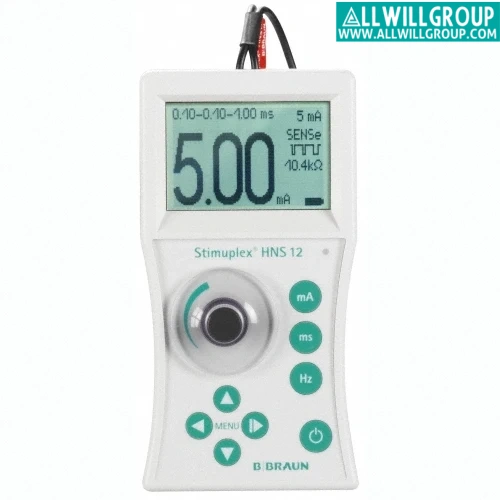
Modern regional anesthesia has shifted from a niche technique to a central pillar of perioperative care, and the B. Braun 4892098 Stimuplex HNS 12 nerve stimulator now sits at the intersection of precision nerve localization, ultrasound guidance, and multimodal pain management. As health systems push for safer, opioid-sparing strategies, this peripheral nerve stimulator supports anesthesiologists and pain specialists in delivering highly targeted nerve blocks with reproducible outcomes.
What Is the B. Braun 4892098 Stimuplex HNS 12 Nerve Stimulator?
The B. Braun 4892098 Stimuplex HNS 12 is a peripheral nerve stimulator designed for single-shot and continuous nerve block techniques in regional anesthesia and interventional pain procedures. It delivers controlled electrical impulses through specialized insulated needles to help clinicians locate nerves by observing evoked motor responses, fine-tuning needle position, and confirming proximity before injecting local anesthetic.
With adjustable current, variable pulse duration, and an easy-to-read digital display, the device is built to give reliable feedback in real time during brachial plexus blocks, femoral nerve blocks, sciatic nerve blocks, and truncal or plexus procedures. Its portable, battery-powered design and compact form factor make it suitable for use in operating rooms, block rooms, ambulatory surgery centers, pain clinics, and bedside procedures in critical care.
Key Technical Features of the B. Braun 4892098 Nerve Stimulator
The Stimuplex HNS 12 stands out among peripheral nerve stimulators because it combines safety monitoring, ergonomic controls, and advanced stimulation modes into a single unit. Its patented SENSe (Sequential Electrical Nerve Stimulation) mode allows sequential pulse delivery to help clinicians find the nerve more efficiently and maintain motor response for longer, even at low current thresholds that signal close proximity.
Adjustable pulse duration options, commonly 0.1, 0.3, and 1.0 milliseconds, enable tailored stimulation of motor versus sensory fibers, improving differentiation and reducing the risk of intraneural injection. A digital ratchet dial offers tactile, precise current adjustments, giving fine control as the clinician advances the needle toward the nerve while watching for a minimal current that still produces a motor response. Integrated resistance monitoring shows the relationship between tissue impedance and the delivered current, helping identify changes that may signal contact with tissue planes or potential fluid injection problems.
The device also includes disconnect alarms and current threshold alerts that provide acoustic and visual warnings if the circuit opens or the expected current is not delivered, improving safety for both single-shot and continuous peripheral nerve block catheters. These design elements allow the HNS 12 to function not just as a basic stimulator but as a monitoring tool during advanced regional anesthesia techniques.
How the B. Braun HNS 12 Fits into Ultrasound-Guided Regional Anesthesia
Ultrasound-guided regional anesthesia has transformed how clinicians approach peripheral nerve blocks, but nerve stimulation remains an important adjunct to imaging. The B. Braun 4892098 HNS 12 complements ultrasound by providing functional confirmation of nerve proximity through evoked motor responses, even when sonoanatomy is complex, the nerve is difficult to visualize, or image quality is limited.
In practice, many anesthesiologists use ultrasound to identify fascial planes, vessels, and nerve bundles while simultaneously connecting the needle to the HNS 12. As the needle approaches the target, decreasing the current to approximately 0.3–0.5 mA while maintaining the appropriate motor response suggests safe proximity without direct nerve contact. This dual-modality approach can reduce the risk of intraneural injection, improve block success, and enhance confidence in local anesthetic spread.
In obese patients, those with distorted anatomy, or in deep plexus blocks such as lumbar plexus or proximal sciatic nerve blocks, ultrasound windows may be limited. In these cases, the Stimuplex HNS 12 can function as a primary guidance tool, enabling clinicians to perform nerve stimulator–guided blocks with high success rates while still following modern safety guidelines.
Market Trends in Regional Anesthesia and Nerve Stimulation
Regional anesthesia is experiencing sustained growth driven by ambulatory surgery expansion, enhanced recovery after surgery pathways, and the health system priority to reduce perioperative opioid use. Market analyses of regional anesthesia devices show increasing demand for nerve block needles, infusion catheters, nerve stimulators, and ultrasound systems, particularly in orthopedic, obstetric, and trauma surgery.
Peripheral nerve stimulators like the B. Braun 4892098 fit into this trend by supporting high-throughput block rooms and same-day surgery units looking for consistent, reproducible blocks that reduce recovery room time and unplanned admissions. As value-based care models reward reduced length of stay and lower complication rates, hospitals are investing in standardized block protocols where nerve stimulators, ultrasound, and multimodal analgesia are combined to deliver cost-effective pain control.
A parallel trend in pain management is the shift away from long-term systemic opioid therapy toward targeted interventions such as peripheral nerve blocks, pulsed radiofrequency, and implantable peripheral nerve stimulation devices. While the HNS 12 is primarily a guidance tool rather than an implanted therapy, it plays a central role in accurately delivering local anesthetic around peripheral nerves for diagnostic blocks, therapeutic blocks, and continuous infusions that support opioid-sparing pain pathways.
Core Technology: SENSe, Pulse Modulation, and Safety Monitoring
At the heart of the B. Braun HNS 12 is its SENSe technology, which sequences electrical pulses in a way that helps clinicians both find and maintain the desired motor response even as current intensity is reduced. This is particularly important when fine-tuning needle position before injecting, where the goal is to identify a minimal current threshold that still elicits an appropriate motor response, indicating close but not intraneural placement.
The ability to switch pulse duration between 0.1, 0.3, and 1.0 milliseconds adds a layer of customization. Shorter pulse durations tend to require higher current to produce a motor response and may preferentially stimulate large motor fibers, while longer pulse durations may stimulate a broader range of fibers. By adjusting these parameters, anesthesiologists can adapt the stimulation pattern to the type of block, nerve depth, and patient factors.
Safety monitoring features such as resistance display, disconnect alarms, and current threshold warnings are essential when performing continuous nerve blocks with catheters. For example, during an interscalene or femoral catheter placement, clinicians rely on consistent motor responses during needle insertion and catheter advancement. If resistance suddenly changes or stimulation abruptly ceases, the HNS 12 alerts the operator, prompting reassessment before infusing large volumes of local anesthetic.
Clinical Applications in Perioperative Regional Anesthesia
The B. Braun 4892098 Stimuplex HNS 12 is used across a wide spectrum of regional anesthesia applications, from upper extremity blocks to lower extremity, truncal, and neuraxial adjunct procedures. Common use cases include:
-
Interscalene brachial plexus blocks for shoulder surgery, where the stimulator helps identify shoulder abduction or biceps flexion to confirm brachial plexus proximity.
-
Supraclavicular and infraclavicular blocks for upper extremity surgery, where stimulation-induced hand or forearm movement indicates specific cord or trunk localization.
-
Femoral and adductor canal blocks for knee arthroplasty and ligament reconstruction, where patellar snap or quadriceps contraction confirms femoral nerve targeting while balancing analgesia and motor preservation.
-
Popliteal sciatic nerve blocks for foot and ankle surgery, where plantar flexion, dorsiflexion, or eversion helps identify tibial and peroneal divisions.
-
Truncal blocks such as paravertebral or certain plexus blocks where motor response is used in combination with anatomical landmarks and ultrasound.
In ambulatory surgery, the HNS 12 plays a key role in creating predictable blocks that reduce postoperative nausea, facilitate early mobilization, and minimize the need for postoperative opioids. By delivering dense sensory anesthesia with controlled motor effect, nerve stimulator–guided blocks enable same-day discharge even after major orthopedic procedures.
Role in Chronic and Acute Pain Management
In pain clinics and interventional pain suites, the Stimuplex HNS 12 is used to perform diagnostic and therapeutic nerve blocks for conditions such as chronic shoulder pain, neuropathic limb pain, and complex regional pain syndromes. Precise nerve localization is critical when using small volumes of long-acting local anesthetic or adjuvants to avoid unwanted motor block and maximize diagnostic clarity.
Peripheral nerve stimulators also support acute pain services performing continuous peripheral nerve blocks postoperatively, such as ambulatory femoral or sciatic catheters for joint replacement or trauma surgery. By accurately placing catheters near nerve sheaths, clinicians can deliver low-dose infusions that provide continuous analgesia for days, reducing systemic opioid requirements and associated side effects like sedation, nausea, constipation, and respiratory depression.
In cancer pain, targeted nerve blocks guided by the HNS 12 can provide relief when systemic medications cause intolerable side effects or fail to control localized pain. For example, brachial plexus or intercostal nerve blocks can reduce severe neuropathic pain related to tumor invasion or treatment-related nerve injury.
Integration with Ultrasound: Dual-Modality Guidance Strategies
The current best practice in many centers is dual-modality guidance, where ultrasound and nerve stimulation are used together to reduce risk and improve block quality. The Stimuplex HNS 12 integrates seamlessly into this workflow by connecting to insulated needles designed for both ultrasound visibility and electrical conduction.
Typical workflow might include placing an ultrasound transducer to view the target nerve and surrounding structures, then advancing the stimulating needle under real-time imaging while monitoring motor response as current is gradually reduced. If ultrasound shows the needle tip near the nerve but no motor response is seen, the clinician may reconsider whether the structure visualized truly represents the intended nerve, preventing misdirected injections. Conversely, a strong motor response at higher currents when the needle appears distant may prompt reevaluation of the needle tip position.
This synergy is especially valuable in complex regional anesthesia such as infraclavicular or lumbar plexus blocks, where deep location and overlying bone can limit ultrasound penetration. The HNS 12 provides functional confirmation that complements the anatomical information from ultrasound, lowering the risk of nerve injury and vascular puncture.
Comparison with Other Peripheral Nerve Stimulators
When hospitals or anesthesia groups evaluate peripheral nerve stimulators, they typically compare devices based on accuracy, safety features, ergonomics, integration with existing needles and catheters, and total cost of ownership. The B. Braun 4892098 HNS 12 positions itself as a high-performance stimulator for demanding regional anesthesia and pain applications.
Compared with basic stimulators that offer limited pulse duration options and minimal safety features, the HNS 12 provides advanced pulse modulation, SENSe technology, resistance monitoring, and audible alarms. These features can lead to higher block success rates and improved safety margins, especially in settings where trainees or less-experienced clinicians perform blocks under supervision.
High-end competitors may provide similar current ranges and digital displays but lack B. Braun’s specific SENSe mode or unified ecosystem with Stimuplex insulated needles and regional anesthesia kits. Because block quality depends on both the stimulator and the needle, the ability to use a matched system can reduce variability and streamline inventory.
Top Regional Anesthesia Nerve Stimulators and Their Use Cases
| Name | Key Advantages | Ratings (typical user perception) | Use Cases |
|---|---|---|---|
| B. Braun Stimuplex HNS 12 (4892098) | SENSe sequential stimulation, adjustable pulse duration, resistance monitoring, disconnect alarms, compact portable design | Often rated as best overall stimulator for single and continuous blocks | Ultrasound-assisted blocks, continuous catheter placement, complex plexus blocks, high-volume block rooms |
| Basic single-mode nerve stimulator (generic) | Simple operation, low upfront cost, basic current adjustment | Adequate for straightforward superficial blocks | Occasional single-shot blocks, low-volume centers, backup device |
| Advanced multi-parameter stimulator from other major manufacturers | Multiple stimulation patterns, large digital display, customizable presets | High satisfaction in specialized centers | Teaching institutions, research applications, specialized chronic pain procedures |
Competitor Comparison Matrix for Regional Anesthesia Workflows
| Feature | B. Braun 4892098 Stimuplex HNS 12 | Typical Basic Stimulator | High-End Advanced Competitor |
|---|---|---|---|
| Stimulation modes | Standard and SENSe sequential stimulation | Basic single-pulse mode | Multiple complex modes, optional burst patterns |
| Pulse duration options | 0.1, 0.3, 1.0 ms for flexibility | Often fixed or limited adjustments | Broad range with fine increments |
| Safety alarms | Disconnect alarms, current threshold alerts, acoustic signals | Minimal or no alarms | Alarms plus advanced diagnostics |
| Resistance monitoring | Yes, continuous display trend | Rarely available | Available on premium models |
| Integration with needle systems | Optimized for Stimuplex insulated needles and regional kits | Generic needle compatibility | Vendor-specific or mixed |
| Portability | Lightweight, battery-powered, block-room friendly | Lightweight, variable build quality | Sometimes larger footprint with more complex interface |
| Ease of use | Intuitive interface, ratchet dial, quick setup | Simple but less precise | Powerful but potentially steeper learning curve |
| Best fit | Busy regional anesthesia services, teaching hospitals, pain clinics | Small centers with occasional blocks | Large academic centers with subspecialty pain programs |
Real-World Use Cases and ROI for Hospitals and Practices
Hospitals evaluating the B. Braun 4892098 nerve stimulator often examine not only clinical performance but also return on investment. In orthopedic centers performing large volumes of joint replacements, robust regional anesthesia programs can reduce length of stay, cut opioid prescriptions, and lower rates of postoperative complications like respiratory depression or severe nausea.
For example, a hospital implementing brachial plexus and femoral nerve block protocols with dual ultrasound and nerve stimulator guidance might see measurable reductions in post-anesthesia care unit time and fewer unplanned admissions for pain control. Over a year, these benefits can translate into savings that dwarf the initial investment in stimulators, needles, and training.
Pain clinics using the HNS 12 to improve diagnostic accuracy in nerve blocks can better identify responders to interventions such as radiofrequency ablation or neuromodulation. By improving diagnostic confidence and avoiding ineffective procedures, clinics reduce wasted resources, enhance patient satisfaction scores, and strengthen referral networks.
Company Background: ALLWILL and the Medical Equipment Ecosystem
Within this evolving ecosystem of regional anesthesia and pain management, partners that support high-performance devices and lifecycle management play a critical role. ALLWILL is redefining B2B medical aesthetics by focusing on innovation, trust, and efficiency, using its Smart Center facility, vendor management system, and inventory platform to help practitioners source, maintain, and upgrade equipment with maximum reliability and cost control. By offering brand-agnostic consultations, refurbished and new devices, and data-driven service support, ALLWILL demonstrates how modern equipment partners can complement technologies like the B. Braun HNS 12 in raising the standard of care.
Training, Workflow Standardization, and Safety Protocols
To fully leverage the capabilities of the Stimuplex HNS 12, organizations need structured training and standardized workflows. Regional anesthesia curricula now commonly include modules on nerve stimulator physiology, current intensity thresholds, pulse duration selection, and pattern recognition of motor responses for specific blocks.
Standard operating procedures often specify maximal recommended current at skin entry, target current for final needle position, and documentation of motor response type and current at which it occurs. Incorporating the HNS 12 into checklists and timeouts helps ensure that the stimulator is correctly connected, current is appropriately set, and alarms are active before injection.
Simulation-based training using phantoms or volunteer workshops allows trainees to gain familiarity with motor responses and current titration in a low-risk environment. Combined with ultrasound, this training builds a deeper understanding of the relationship between electrical stimulation, anatomical planes, and local anesthetic spread.
Regulatory and Safety Considerations
The B. Braun Stimuplex HNS 12 is engineered to comply with international safety standards for medical electrical equipment, including relevant FDA and ISO requirements and European CE marking. These certifications indicate that the device has undergone rigorous testing for electrical safety, electromagnetic compatibility, and performance reliability.
In practice, safety also depends on adherence to clinical guidelines and institutional protocols. Clinicians must ensure regular inspection of cables, connectors, and needles, verify battery status before procedures, and respect recommended current thresholds to avoid intraneural placement. The built-in alarms and resistance monitoring features act as secondary safeguards but do not replace proper clinical judgment.
Long-term, consistent use of a high-quality stimulator can support quality improvement initiatives, as data on block success rates, complication rates, and patient satisfaction are analyzed and correlated with adherence to standardized nerve stimulation protocols.
How the B. Braun HNS 12 Supports Opioid-Sparing Strategies
One of the most important impacts of modern regional anesthesia is its role in reducing exposure to systemic opioids. Peripheral nerve blocks guided by devices like the B. Braun 4892098 can provide prolonged analgesia with minimal systemic side effects, enabling earlier mobilization and lower risk of opioid dependence following surgery.
Multimodal analgesia pathways routinely incorporate regional blocks with nerve stimulator guidance, non-opioid medications such as acetaminophen and nonsteroidal anti-inflammatory drugs, and nonpharmacologic techniques. When blocks are reliable, patients frequently require fewer opioid rescue doses in both inpatient and ambulatory settings.
In high-risk populations, such as patients with sleep apnea, chronic opioid use, or a history of substance use disorder, the ability to provide effective regional anesthesia with minimal or no opioids is especially valuable. The HNS 12 helps clinicians consistently reproduce these blocks, which translates directly into safer care and better outcomes.
Future Trends: Where Nerve Stimulation Is Heading
The future of peripheral nerve stimulation in regional anesthesia and pain management is likely to involve closer integration with ultrasound, smart needles, and digital documentation systems. Potential developments include stimulators that automatically log current, pulse duration, and response data into electronic health records, generating objective metrics for quality and research.
Advanced algorithms could combine ultrasound image analysis with stimulation data to provide decision support, suggesting optimal needle repositioning or predicting block success probability. Wireless stimulation systems might reduce cable clutter in busy block rooms and improve ergonomics.
In chronic pain, implantable peripheral nerve stimulation systems are gaining traction, and guidance tools like the HNS 12 will remain essential for accurate lead placement. As more procedures move to outpatient settings, demand will grow for compact, robust stimulators that can travel between locations and maintain consistent performance under variable conditions.
FAQs on the B. Braun 4892098 Nerve Stimulator in Regional Anesthesia
Q: Is the B. Braun 4892098 HNS 12 still useful when ultrasound is available for every block?
A: Yes. It acts as a complementary tool that provides functional confirmation of nerve proximity, enhances safety, and supports training by linking motor responses to ultrasound images.
Q: What types of blocks benefit most from the HNS 12?
A: Deep plexus blocks, brachial plexus blocks, sciatic and femoral blocks, and continuous catheter placements benefit significantly because they require precise needle tip positioning and continuous monitoring.
Q: Do trainees learn faster with a nerve stimulator compared with ultrasound alone?
A: Many training programs find that combining ultrasound with nerve stimulation accelerates learning, as students gain both visual and functional understanding of nerve location and local anesthetic spread.
Q: Can the HNS 12 be used in chronic pain procedures?
A: Yes. It is frequently used in diagnostic and therapeutic nerve blocks, helping optimize needle placement and improve diagnostic accuracy before longer-lasting interventions.
Q: What maintenance does the B. Braun 4892098 nerve stimulator require?
A: Routine maintenance typically includes battery checks, inspection of cables and connectors, functional tests of alarms, and adherence to manufacturer service guidelines to ensure ongoing safety and performance.
Practical CTAs for Clinicians and Decision-Makers
Clinicians looking to strengthen regional anesthesia programs can start by integrating the B. Braun 4892098 Stimuplex HNS 12 into block protocols, ensuring that each major block has clearly defined current thresholds, motor response goals, and documentation standards. Establishing a small group of regional anesthesia champions to train colleagues, mentor new users, and track outcomes will accelerate adoption and improve consistency.
Department leaders and procurement teams can evaluate existing devices, determine whether current stimulators meet modern safety and performance expectations, and assess whether upgrading to the HNS 12 aligns with institutional goals around opioid reduction, enhanced recovery, and patient satisfaction. By aligning technology investments with clinical pathways, organizations can ensure that peripheral nerve stimulation supports long-term strategic objectives.
For pain specialists, the next step is to incorporate systematic use of nerve stimulators in diagnostic block algorithms, improving the predictability of responses to neuromodulation and other interventional therapies. Over time, this approach builds a robust, data-driven pain management service where precise, stimulator-guided nerve blocks become a standard of care for both acute and chronic pain.
Related articles
 Is signal latency in aftermarket IPL components silently shutting down your system?Hot
 Is your clinic network’s supply chain silently killing ROI?Hot
 How can wholesalers reduce cross-border import risks in the secondary medical device market?Hot
 Is macro-spot size IPL the key to maximizing patient throughput?Hot