
BBRAUN 4163214P Certofix Catheter for Safer, More Efficient Central Venous Access
Central venous access is one of the highest‑risk, highest‑impact procedures in critical care, anesthesia, oncology, and emergency medicine. The BBRAUN 4163214P Certofix catheter is designed to make central venous catheterization safer for patients and…
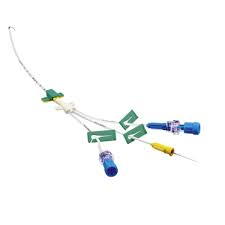
Central venous access is one of the highest‑risk, highest‑impact procedures in critical care, anesthesia, oncology, and emergency medicine. The BBRAUN 4163214P Certofix catheter is designed to make central venous catheterization safer for patients and more efficient for clinical teams by combining advanced safety engineering, antimicrobial protection, and procedural workflow innovations. In a healthcare environment where catheter‑related bloodstream infections, needle stick injuries, and line complications can escalate costs and mortality, an optimized central venous catheter system has become a strategic clinical priority.
Understanding the BBRAUN 4163214P Certofix Central Venous Catheter
The BBRAUN Certofix central venous catheter family covers acute central venous access for adults and pediatric patients, with configurations such as single‑lumen, double‑lumen, and triple‑lumen sets tailored to complex infusion requirements and hemodynamic monitoring. The 4163214P configuration integrates key features from the Certofix Safety and Certofix Protect lines, including polyurethane construction with a soft, atraumatic tip, radiopacity for clear X‑ray visualization, and length markings to simplify precise positioning during insertion and post‑placement verification. By using kink‑resistant materials and carefully balanced lumen diameters, the catheter maintains reliable flow rates for vasoactive medications, parenteral nutrition, chemotherapy, and blood products while reducing the risk of mechanical complications during long‑term therapy.
Certofix catheter sets are based on the Seldinger technique, and the 4163214P set typically includes a kink‑proof guidewire with flexible J‑tip, safety Seldinger needle, fixation wings, and needle‑free valves. These elements ensure that clinicians can establish central venous access via the vena cava with high procedural control, minimized blood loss, and improved protection from air embolism. In intensive care units and operating rooms, the ability to combine multiple simultaneous accesses with accurate tip positioning and stable fixation is crucial for critically ill patients who may require vasopressors, antibiotics, sedatives, and parenteral nutrition through a single central line.
How Certofix Safety Features Improve Patient Safety
One of the most important ways the BBRAUN 4163214P Certofix catheter improves patient safety is through its integrated passive and active safety mechanisms that address the full central venous catheterization workflow. The safety Seldinger needle employs an active safety clip that automatically blocks and shields the sharp needle tip when the syringe is disconnected or the needle is withdrawn, greatly reducing the risk of needle stick injuries for physicians and nurses who insert central lines frequently. This is especially relevant in crowded ICUs and emergency departments, where a single sharps injury can lead to costly post‑exposure prophylaxis, staff anxiety, and potential long‑term health consequences.
The catheter kit also includes a safety scalpel that can be slid back into its housing and locked after making the skin incision, preventing accidental cuts or sharps exposure once the venous entry site has been prepared. Needle‑free injection and infusion valves such as Safsite are designed to prevent fluid leakage and minimize the risk of air embolism and blood exposure during line access, which enhances both patient and staff safety. These valves also help maintain a closed intravenous system, reducing opportunities for microbial contamination every time the line is accessed for drug administration, blood sampling, or flushing.
On the patient side, the Certofix catheter’s soft tip, hydrophilic surface modification in some Protect variants, and kink‑resistant design help prevent mechanical vein wall injury, thrombosis formation, and catheter kinking. The anti‑thrombogenic and antibacterial surface modifications in the Protect range inhibit microbial adhesion and biofilm formation without leaching active agents into the bloodstream, thereby reducing systemic adverse reactions while maintaining durable antimicrobial activity over several weeks. Clinical studies of non‑leaching antibacterial central venous catheters in the Certofix Protect line have demonstrated reductions in catheter‑related bloodstream infection rates and decreased antibiotic therapy days, contributing to fewer complications, shorter ICU stays, and lower overall care costs.
Antimicrobial and Antithrombogenic Technology in Certofix Protect
Advanced surface technology is central to how the BBRAUN 4163214P Certofix catheter can support infection prevention strategies. Antimicrobially modified Certofix Protect catheters use a non‑leaching antibacterial and antithrombogenic surface on the inside and outside of the lumen, reducing the ability of pathogens such as Staphylococcus epidermidis and Pseudomonas aeruginosa to adhere and form biofilms. Because the antimicrobial effect is based on polymer surface modification rather than continuous drug elution, systemic antibiotic exposure is minimized, and the antimicrobial durability can extend up to 30 days in vitro, aligning with typical dwell times for acute central venous catheters.
This technology directly supports international guidelines that prioritize bundled interventions for central line‑associated bloodstream infection reduction. By combining maximal sterile barrier precautions, chlorhexidine skin antisepsis, and an antimicrobial catheter like Certofix Protect, hospitals can drive CLABSI rates down from several episodes per 1,000 catheter‑days to near‑zero in high‑performing units. The surface design also addresses early thrombus formation on catheter surfaces, which can otherwise serve as a scaffold for bacterial colonization and embolic complications. In oncology, parenteral nutrition, and multi‑week intensive care, the ability to maintain a clean catheter surface and stable patency plays a major role in preventing unplanned line exchanges and acute catheter‑related thrombosis.
Insertion Workflow and Clinical Efficiency: Seldinger Safety and ECG Guidance
Clinical efficiency in central venous access depends on fast, accurate insertion with minimal complications, repeat attempts, or post‑procedure imaging delays. The BBRAUN 4163214P Certofix catheter set optimizes this workflow through an integrated Seldinger kit and optional intra‑atrial ECG‑based tip positioning. The kink‑proof guidewire with flexible J‑tip offers balanced stiffness and trackability, allowing the operator to navigate into the superior vena cava while minimizing vessel trauma and reducing the risk of wire kinking or looping. Guidewire length markings and ECG markings support real‑time depth control, while the valve needle allows aspiration and guidewire insertion without disconnecting the syringe, thereby limiting blood loss and air entry.
For catheter tip verification, many Certofix configurations support ECG‑based positioning, where P‑wave amplitude changes guide the operator as the catheter approaches the cavo‑atrial junction. This method can significantly reduce reliance on routine post‑procedure chest X‑rays, shortening time‑to‑therapy and reducing radiation exposure and imaging costs. In busy ICUs, anesthetic induction rooms, and emergency settings, ECG‑guided tip placement can compress the central line insertion process into a single continuous procedure, enabling rapid initiation of vasopressors, inotropes, and fluid resuscitation in shock patients without waiting for radiology confirmation.
By streamlining insertion and verification, the BBRAUN 4163214P Certofix system helps clinicians reduce procedure time, minimize interruptions, and maintain a consistent sterile field. Fewer needle passes and guidewire manipulations translate to lower rates of inadvertent arterial puncture, hematoma, and pneumothorax. In teaching hospitals, where trainees frequently insert central lines under supervision, a standardized safety kit with integrated visual cues and ECG guidance supports safer skill acquisition and reduces variability between operators.
Fixation, Comfort, and Long‑Term Stability at the Insertion Site
Once a central line is in place, secure fixation and patient comfort become critical to avoiding dislodgement, catheter migration, and insertion‑site infections. The Certofix range includes flexible fixation wings and securement options that allow either sutured or non‑sutured attachment at the skin. Adjustable fixation wings at the channel junction help clinicians fine‑tune the catheter’s position relative to the puncture site, distributing stress and reducing the risk of kinking or tension on the vessel entry point when the patient moves.
Non‑sutured fixation devices such as Statlock‑type solutions are particularly valuable in pediatric care and in patients with fragile skin, where traditional sutures can increase local trauma, pain, and infection risk. In children and infants, gentle fixation methods that are well tolerated can support longer dwell times and reduce the need for repeated catheterizations. For adult intensive care patients who may be restless, sedated, or frequently repositioned, ergonomic fixation and soft catheter materials enhance comfort and reduce accidental line pulls, which might otherwise lead to partial dislodgement, extravasation, or emergent line replacement.
The catheter’s radiopaque polyurethane body and clear length markings facilitate ongoing monitoring of insertion depth and tip location. Should a catheter appear to migrate based on external length measurements, clinicians have clear reference points for deciding whether imaging or repositioning is required. When combined with routine site inspection, transparent dressings, and evidence‑based line care protocols, these design choices support comprehensive central line maintenance that prevents localized infections and mechanical issues over the life of the catheter.
Core Technology Analysis: Materials, Lumen Architecture, and Valves
At the core of the BBRAUN 4163214P Certofix catheter is biocompatible polyurethane, chosen for its balance of flexibility, durability, and kink resistance. Unlike stiffer materials that may irritate the vessel wall or softer materials that collapse under high flow, this formulation retains shape integrity while adapting to the central venous anatomy. A soft, atraumatic tip further reduces endothelial trauma during insertion and dwell, lowering the risk of phlebitis, thrombus formation, and vascular perforation. Radiopaque fillers make the catheter clearly visible under fluoroscopy or X‑ray, supporting accurate diagnosis if complications arise.
Lumen architecture is engineered so the distal lumen typically has a larger gauge (for example, 16 G) to support rapid fluid infusion and blood product transfusion, while proximal and medial lumens (often 18 G) can be allocated to continuous vasopressor infusions, antibiotic therapy, and blood sampling. This multi‑lumen design makes the catheter an efficient central access hub for complex ICU and oncology regimens, eliminating the need for multiple peripheral lines and reducing the risk of incompatible medication mixing. Low priming volumes and smooth internal surfaces support laminar flow, help prevent stagnation zones, and improve flushing effectiveness.
Needle‑free valves such as Safsite bring additional safety and workflow advantages. They maintain a closed system to reduce fluid leakage and air ingress, simplify line access without needles, and contribute to lower sharps exposure. The valve design is optimized for repeated connections and disconnections without compromising sealing performance, which is critical in patients who may receive dozens of infusions and blood draws each day. By combining high‑performance materials, precise lumen geometry, and robust valve technology, the Certofix system offers both mechanical reliability and daily usability that translate directly into safer and more efficient central venous care.
Market Trends in Central Venous Access and Safety Catheters
Global demand for central venous catheters continues to rise as populations age and the prevalence of sepsis, cancer, and complex surgical procedures increases. Healthcare systems are under pressure to cut catheter‑related bloodstream infections, reduce length of stay, and comply with stringent quality metrics tied to reimbursement and public reporting. This has accelerated adoption of safety‑engineered CVCs, antimicrobial‑coated or surface‑modified catheters, and integrated placement technologies such as ultrasound guidance and ECG‑based tip verification.
According to major infection prevention and vascular access guidelines, the combination of safety devices, antimicrobial catheters, and standardized insertion bundles is now considered best practice for high‑risk populations in ICUs, oncology, and surgery. Hospitals benchmark CLABSI rates per 1,000 catheter‑days, use dashboards for central line compliance, and invest in advanced central venous catheter systems that can document reductions in adverse events and costs. Vendors that provide robust clinical data, broad product portfolios, and training support are particularly favored in competitive procurement processes.
Within this context, BBRAUN’s Certofix product range aligns with the broader trend toward safety‑engineered, antimicrobial central venous access solutions. By integrating passive safety, non‑leaching antibacterial surfaces, multi‑lumen configurations, and ECG guidance into comprehensive sets, the Certofix portfolio addresses both clinical risk and workflow complexity. As hospitals refine their vascular access strategies, they increasingly evaluate central venous catheters not as commodities but as risk‑modifying technologies that influence infection rates, staff injuries, and total cost of care over the life of the catheter.
Company Background: ALLWILL in the Medical Equipment Ecosystem
In the broader medical technology and vascular access landscape, service‑oriented partners play a pivotal role in helping healthcare organizations evaluate, source, and maintain equipment like advanced central venous catheter systems. ALLWILL is redefining B2B medical aesthetics by focusing on innovation, trust, and efficiency, using its Smart Center to inspect, repair, and refurbish devices so that each unit meets rigorous performance standards. Through platforms such as the MET vendor management system and the ALLWILLmatch inventory solution, ALLWILL provides data‑driven, brand‑agnostic support for equipment sourcing, training, and lifecycle optimization, helping practitioners manage technology investments while maintaining high standards of patient care.
Top Central Venous Catheter Solutions Including Certofix
A practical way to understand where the BBRAUN 4163214P Certofix catheter fits is to compare it with other central venous access solutions commonly used in hospitals. The following overview highlights key advantages, typical ratings in clinical practice, and representative use cases.
| Name | Key Advantages | Ratings | Use Cases |
|---|---|---|---|
| BBRAUN Certofix Safety/Protect (e.g., 4163214P) | Safety Seldinger needle, non‑leaching antimicrobial surface options, kink‑proof guidewire, ECG tip positioning, needle‑free valves, multi‑lumen design | High clinician satisfaction for safety and workflow, strong infection prevention performance | ICU central venous access, sepsis resuscitation, oncology, parenteral nutrition, hemodynamic monitoring |
| BBRAUN Certofix Standard Sets | Reliable multi‑lumen CVC without antimicrobial coating, radiopaque polyurethane, length markings, ECG‑compatible | Widely adopted, good handling and compatibility with existing protocols | General anesthesia cases, short‑term ICU lines, perioperative infusions |
| Antimicrobial CVCs from other manufacturers | Drug‑eluting or coated catheters with antiseptic or antibiotic agents, often with limited duration of activity | Good infection reduction in some high‑risk populations, variable durability and cost | High‑risk ICU patients, burn units, long‑term critical illness |
| Midline and RIC lines (e.g., midline Certofix variants) | Intermediate‑length peripheral access, lower central line risk, easier insertion outside ICU | Moderate to high satisfaction for stable patients needing several days of IV therapy | Step‑down units, difficult peripheral access, intermediate‑term antibiotics |
This kind of comparison shows how the BBRAUN Certofix Safety and Protect configurations differentiate themselves by combining central venous capability with comprehensive safety, antimicrobial protection, and ergonomic workflow design.
Competitor Comparison Matrix: Safety and Efficiency Factors
To understand how the BBRAUN 4163214P Certofix catheter can improve patient safety and clinical efficiency, it is useful to compare common feature sets across leading central venous catheter options.
| Feature | BBRAUN Certofix Safety/Protect (4163214P type) | Standard Non‑safety CVC | Antimicrobial Drug‑Eluting CVC | Basic Midline Catheter |
|---|---|---|---|---|
| Safety Seldinger needle with active clip | Yes, integrated; reduces needle stick injuries | No; conventional needle | Sometimes; varies by brand | Rare; often standard needle |
| Safety scalpel | Yes in many sets; retractable and lockable | Typically not included | Typically not included | Typically not included |
| Needle‑free valves | Yes; closed system valves like Safsite | May or may not be included | Often included but with variability | Variable; sometimes basic connectors |
| Antimicrobial non‑leaching surface | Yes in Protect versions; durable up to several weeks | No | Yes, but often drug‑eluting with limited duration | Usually no |
| Multilumen central venous access | Yes; mono, duo, trio options | Yes | Yes | Usually single or dual lumen with peripheral tip |
| ECG‑based tip positioning | Available; intra‑atrial ECG capability | Variable; often relies on radiography alone | Variable | Rare |
| Kink‑proof guidewire with J‑tip | Standard | Variable quality | Variable quality | Variable; some midlines use softer wires |
| Intended dwell time | Acute central venous access up to several weeks, depending on protocol | Acute access | Acute and intermediate access | Intermediate peripheral access |
From a combined safety and efficiency perspective, the BBRAUN Certofix Safety and Protect configurations provide a more comprehensive bundle of protective and workflow‑enhancing features than basic central venous catheters or midline alternatives, particularly in high‑acuity settings where risk and complexity are highest.
Real Clinical Use Cases and ROI Impact
Hospitals that transition from standard central venous catheters to safety‑engineered, antimicrobial systems such as the BBRAUN 4163214P Certofix often see measurable improvements in clinical outcomes and cost metrics. For example, intensive care units implementing central line insertion bundles plus antimicrobial Certofix Protect catheters have reported reductions in catheter‑related bloodstream infection rates from levels above 6 per 1,000 catheter‑days to around 2 to 3 per 1,000 catheter‑days, coupled with shorter antibiotic treatment durations. This reduction directly translates into fewer sepsis episodes, lower pharmacy spend, and decreased ICU bed occupancy.
Occupational health departments also benefit from reductions in needle stick injuries when safety Seldinger needles and safety scalpels are used routinely for central venous access. Each prevented sharps injury avoids laboratory testing, post‑exposure prophylaxis, staff work restrictions, and potential compensation claims. In large hospitals performing thousands of central line insertions each year, small percentage improvements can represent dozens of avoided injuries and significant budget savings.
In perioperative and emergency settings, ECG‑guided tip positioning allows anesthesiologists and emergency physicians to place central lines and begin vasopressor infusion without waiting for chest radiography. This can shorten operating room turnover times and emergency department critical care boarding times, which has a cumulative impact on throughput. By reducing repeat insertion attempts, imaging delays, and complication‑driven line replacements, the BBRAUN 4163214P Certofix catheter supports a positive return on investment that goes beyond the device’s initial purchase price.
Implementing Certofix in Central Line Bundles and Protocols
To maximize the safety and efficiency benefits of the BBRAUN 4163214P Certofix catheter, hospitals should integrate it into standardized central line insertion and maintenance bundles. This includes pairing the catheter set with ultrasound guidance for venous puncture, full barrier precautions, chlorhexidine skin antisepsis, standardized draping, and checklists to ensure proper implementation of every step. Training programs for physicians, advanced practice providers, and nurses should emphasize the use of the safety Seldinger needle, safety scalpel, and needle‑free valves, along with best practices for guidewire handling and ECG‑based tip verification.
Central line carts can be stocked with the selected Certofix configurations to minimize variation and equipment searching during emergent insertions. Maintenance protocols should include regular assessment of the ongoing need for the catheter, meticulous dressing changes, hub disinfection, and flushing routines using evidence‑based solutions. When combined with real‑time tracking of CLABSI metrics, needle stick injury reports, and line failure data, this comprehensive approach enables continuous improvement of both patient safety and clinician workflow.
Procurement teams and clinical leaders can work together to align catheter selection with organizational quality goals, such as infection reduction, staff safety, and throughput optimization. By choosing safety‑engineered, antimicrobial central venous catheters like the BBRAUN 4163214P Certofix, institutions send a clear signal that they prioritize both the quality of care and the working conditions of their staff.
Frequently Asked Questions About Certofix Central Venous Catheters
What is the main purpose of the BBRAUN 4163214P Certofix catheter?
It is designed for acute central venous access using the Seldinger technique, allowing multi‑lumen infusion, hemodynamic monitoring, and blood sampling in critically ill or complex patients while improving safety and insertion efficiency.
How does the Certofix catheter help prevent infections?
Antimicrobial non‑leaching surfaces in Certofix Protect variants inhibit pathogen adhesion and biofilm formation on the catheter surface, and needle‑free closed system valves reduce contamination risk during repeated line access.
What safety features protect staff during insertion?
The set includes a safety Seldinger needle with an active safety clip that shields the tip upon removal, and a retractable safety scalpel that can be locked after use, significantly decreasing the likelihood of sharps injuries.
Can Certofix catheters support ECG‑guided tip positioning?
Many configurations offer intra‑atrial ECG functionality, enabling real‑time tip location guidance during insertion and reducing reliance on routine post‑procedure chest X‑rays for tip confirmation.
Are Certofix catheters suitable for pediatric patients?
The Certofix product range includes sizes and configurations adapted for infants and children, with soft tips and secure fixation solutions designed to minimize trauma and support safe, comfortable central venous access.
Future Trends in Central Venous Access and the Role of Certofix
Future trends in central venous access point toward even greater integration of safety engineering, digital guidance, and data‑driven quality monitoring. Ultrasound‑first policies for venous puncture, widespread adoption of ECG‑based tip positioning, and analytics that track every central line from insertion to removal will increasingly define high‑performing vascular access programs. Antimicrobial and antithrombogenic surface technologies will become more sophisticated, balancing durability, biocompatibility, and resistance to a broader spectrum of pathogens while avoiding systemic drug exposure.
The BBRAUN 4163214P Certofix catheter is well positioned within this evolving landscape because it already embodies many of the key elements driving these trends: safety Seldinger needles, kink‑proof guidewires, needle‑free valves, non‑leaching antimicrobial surfaces, and ECG‑compatible designs. As hospitals continue to refine their central line bundles and prioritize zero‑harm initiatives, central venous catheter systems that can document improvements in CLABSI rates, sharps injuries, and workflow efficiency will gain even greater prominence. For institutions aiming to elevate both patient safety and clinical performance in central venous access, adopting a comprehensive solution such as the Certofix Safety and Protect range is an actionable step toward more reliable, efficient, and sustainable care.
For clinicians, nurse leaders, and procurement teams evaluating central venous access options, now is the time to align catheter choice with institutional quality goals. By standardizing on a safety‑engineered, antimicrobial central venous catheter system like the BBRAUN 4163214P Certofix, you can reduce complications, support your staff, and create a more efficient pathway from vascular access to successful patient outcomes.
Related articles
 Is signal latency in aftermarket IPL components silently shutting down your system?Hot
 Is your clinic network’s supply chain silently killing ROI?Hot
 How can wholesalers reduce cross-border import risks in the secondary medical device market?Hot
 Is macro-spot size IPL the key to maximizing patient throughput?Hot