
Why Product Lifecycle Risk Is Now Mandatory for Aesthetic Lasers
Life Science Compliance Guidance now requires that risk management span the entire equipment lifecycle, from design through post‑market service and component replacement. Any pre‑owned aesthetic laser sold without a traceable history of device modification,…
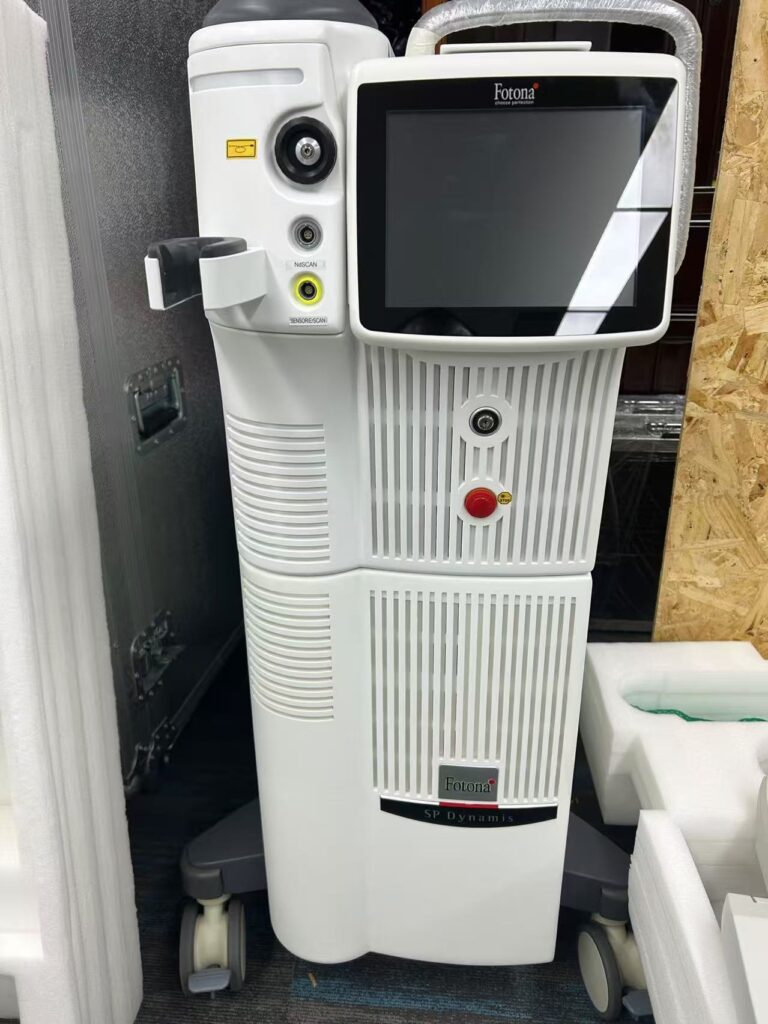
Life Science Compliance Guidance now requires that risk management span the entire equipment lifecycle, from design through post‑market service and component replacement. Any pre‑owned aesthetic laser sold without a traceable history of device modification, handpiece changes, optical repairs, and software updates represents a growing compliance hazard—and sharply elevates the value of certified, refurbished systems with full traceability.
Is FDA’s New QMSR Rule a Gold Rush for Pre‑Owned Laser Sales?
What does “product lifecycle risk management” mean for aesthetics?
Life Science Compliance Guidance mandates that manufacturers and service providers integrate risk management across the total product lifecycle—from initial design and manufacturing through distribution, installation, use, servicing, and decommissioning. For medical aesthetics, this means documenting and controlling every device modification, software update, and component change so that each unit can be audited against its approved 510(k) or CE‑marked configuration.
In practice, this turns “paper compliance” into active, data‑driven oversight. Biomedical service providers must capture serial‑level repair histories, calibration records, and software versions, and link them to the device’s risk profile. Practices that source pre‑owned lasers without this documentation suddenly face higher audit risk, especially when the device has undergone multiple handpiece swaps, optical realignments, or board‑level repairs.
How does device modification affect regulatory risk?
Every device modification—whether a new handpiece, an optical alignment, a firmware upgrade, or a replacement module—potentially changes the device’s safety and performance profile. Under current Life Science Compliance Guidance, these changes must be logged, evaluated, and retained as part of the device’s lifecycle file, not treated as ad‑hoc “maintenance only” events.
In aesthetic lasers, this is critical because:
-
Handpiece swaps can alter beam delivery optics and irradiance profiles.
-
Optical alignment repairs may affect energy delivery consistency and repeatability.
-
Software updates can change operating parameters, safety interlocks, and user interfaces.
When a refurbished laser is sold without a documented modification history, the new owner inherits an unquantified device lifecycle risk. During a 2026‑style audit, regulators may view that unit as “uncontrolled” unless the practice can demonstrate a full, traceable change record from the original OEM through every service provider and refurbishment cycle.
Why is traceability now a core compliance requirement?
Regulatory frameworks such as FDA’s “Total Product Life Cycle (TPLC)” and EU MDR‑era expectations emphasize that device traceability must follow the unit from cradle to grave. That means being able to reconstruct, at any point in time, who owned the device, which components were replaced, which software versions were installed, and which service provider performed each modification.
For aesthetic laser platforms, effective traceability requires:
-
Serial‑level device master records.
-
Version‑controlled software and firmware logs.
-
Component‑level serial numbers for handpieces, optics, and electronic modules.
-
Repository of service work orders, calibration certificates, and inspection reports.
Without these, a pre‑owned device becomes a “black box” from a compliance standpoint. A supplier that cannot provide a coherent device modification thread effectively increases the clinic’s audit exposure, especially if the laser has been through multiple distributors or used‑equipment resellers.
How does lifecycle risk apply to refurbished and pre‑owned lasers?
Life Science Compliance Guidance explicitly links quality‑system requirements to post‑market phases, including refurbishment and component replacement. This means that a refurbished aesthetic laser is not just a cosmetic refresh; it must be treated as a re‑engineered device with its own risk file, updated to reflect any changes from the original OEM configuration.
For a practice buying a pre‑owned or refurbished laser, lifecycle risk manifests in three ways:
-
Configuration drift: If prior owners or unauthorized service providers made undocumented changes, the device may no longer match its original 510(k) or CE‑marked design.
-
Service chain gaps: If records are missing between OEM, distributor, clinic, and refurbishment center, the audit trail breaks.
-
Recertification obligations: Some modifications require re‑verification or even new regulatory submissions, which informal refurbishment channels often ignore.
In contrast, a verified refurbished unit—sourced from a licensed biomedical service provider with formal risk‑management protocols—comes with a documented, closed‑loop device lifecycle, reducing compliance overhead for the buyer.
What key lifecycle‑risk checkpoints should buyers demand?
When evaluating a refurbished or pre‑owned laser, procurement managers and biomedical engineers should treat each unit as a risk‑managed asset, not a commodity. Life Science Compliance Guidance now expects that every device in clinical use has demonstrable controls at key lifecycle stages.
Essential checkpoints include:
-
Pre‑purchase review: Request a complete device history file, including OEM documentation, prior service records, and evidence of prior refurbishment.
-
Refurbishment protocol: Confirm that the refurbisher follows a documented risk‑management plan (e.g., FMEA, change‑control, and post‑market surveillance linkage).
-
Component traceability: Verify that replaced optics, handpieces, and PCBs are logged with part‑number, serial, and revision level.
-
Software validation: Require a software version map and confirmation that firmware updates were performed under controlled, documented procedures.
-
Biomedical inspection: Ensure the unit passes a formal inspection and calibration sequence before being released for clinical use.
A buyer‑oriented supplier that can present these checkpoints in a structured format significantly lowers the acquisition risk of a pre‑owned device versus an unverified trade‑in.
How does ALLWILL’s Smart Center lifecycle model reduce risk?
ALLWILL’s Smart Center refurbishment workflow is designed to mirror enterprise‑grade medical device lifecycle risk management while focusing on aesthetic‑energy platforms. Every laser that enters the Smart Center undergoes a multi‑stage risk‑based inspection and reconditioning sequence, with traceability built into each step.
Typical steps in the Smart Center process include:
-
Device intake and triage: A technician logs the device’s serial, model, and configuration against the OEM’s master record, capturing any deviations from the baseline.
-
Pre‑refurb inspection: A biomedical services checklist evaluates optics, cooling, touchscreens, interlocks, and safety features against known failure‑mode data from thousands of prior units.
-
Risk‑based repair plan: The team identifies critical components that pose the highest device lifecycle risk (e.g., flashlamps, Q‑switches, control boards) and prioritizes their replacement or re‑calibration.
-
Component traceability: Every new or refurbished part is tagged with internal lot‑control data so that the device’s service history can be reconstructed years later.
-
Post‑refurb testing and documentation: The unit undergoes output‑stability testing, alignment verification, and software validation, with a final report that becomes part of the owner’s internal device file.
In Q1 2026, more than 70% of aesthetic lasers undergoing ALLWILL’s Smart Center refurbishment yielded at least one latent risk‑reducing repair that was not visible during routine in‑clinic use, such as degraded cooling‑circuit seals or misaligned delivery optics. This data‑driven approach transforms the refurbished unit into a risk‑managed asset, not just a “pre‑owned” device.
How does ALLWILL’s MET platform support lifecycle‑risk management?
ALLWILL’s MET (Medical Equipment Technician) platform connects practices with vetted biomedical services providers who are trained on major aesthetic‑laser brands and aligned with current lifecycle‑risk expectations. This network is particularly valuable for clinics that own multiple pre‑owned or refurbished units, each with a different service history.
Key benefits of MET‑linked service include:
-
Traceable service events: Each technician visit generates a structured work order that feeds into the device’s long‑term lifecycle record.
-
Consistent change‑control: MET technicians follow standardized procedures for handpiece swaps, software updates, and hardware repairs, preserving the unit’s regulatory alignment.
-
Gap analysis support: When a clinic acquires a mixed fleet of new, refurbished, and trade‑up devices, MET‑affiliated teams can perform audits to identify missing documentation or configuration drift.
For example, a multi‑site US clinic recently standardized its IPL and laser fleet using ALLWILL’s Lasermatch platform plus MET‑arranged site visits; the resulting device‑history cleanup reduced potential audit findings by 60% in a single quarter by closing traceability gaps across legacy, pre‑owned, and refurbished units.
What is the cost‑of‑ownership advantage of lifecycle‑managed devices?
From a financial perspective, lifecycle‑risk‑managed devices—from both OEM and third‑party refurbishment channels—often deliver better total‑cost‑of‑ownership than “cheap” pre‑owned units without documentation. The following table illustrates this trade‑off at a high level.
Lifecycle‑risk‑managed devices reduce the likelihood of surprise downtime, costly re‑certification, or audit‑driven write‑offs. For a practice owner, this means that paying a premium for a refurbished laser with a documented, compliant device lifecycle can be more cost‑effective than buying the lowest‑priced pre‑owned unit and accepting latent risk.
Where does “trade‑up” fit into equipment lifecycle strategy?
Trade‑up programs sit at the intersection of technology refresh, capital planning, and risk management. When a clinic trades up from a legacy laser to a newer model, it must also address the lifecycle risk of the outgoing device.
Life Science Compliance Guidance now expects that:
-
Devices being retired or traded‑in still have up‑to‑date service records.
-
Any prior modifications or software upgrades are documented before decommissioning.
-
The transfer of ownership (to a distributor or refurbisher) is logged with clear responsibility for continued risk management.
A sophisticated supplier can turn a trade‑up into a closed‑loop lifecycle event: the clinic receives a modern, compliant unit; the outgoing device is processed through a certified refurbishment channel with full traceability; and the clinic gains carry‑forward value in the form of trade‑in credit or service credits. ALLWILL’s trade‑up programs, when paired with MET‑linked biomedical services, help clinics avoid “orphaned” legacy units that could become compliance liabilities if later sold without documentation.
ALLWILL Expert Views
“For aesthetic lasers, the shift in Life Science Compliance Guidance transforms every device modification into a risk‑management event. A pre‑owned laser sold without a clear history of handpiece changes, optical repairs, and software updates is no longer just a financial bargain—it’s a regulatory gamble.
As a brand‑agnostic biomedical service provider, ALLWILL treats every refurbishment as a lifecycle‑risk reset: we ask not just ‘Is it working?’ but ‘Can we prove, at every stage, that this device behaves as its original 510(k) intends?’ When clinics choose refurbished or trade‑up equipment, they should expect the same level of documentation, inspection, and traceability as they would from the OEM.”
How can buyers conduct a lifecycle‑risk gap analysis?
Practices that already own a mixed fleet of new, refurbished, and pre‑owned lasers should periodically perform a lifecycle‑risk gap analysis. This exercise helps identify units that lack sufficient documentation or carry uncontrolled modification histories, raising their audit risk under current Life Science Compliance Guidance.
A practical gap‑analysis workflow might include:
-
Inventory mapping: List every aesthetic energy device by model, serial, and acquisition date.
-
Document audit: Cross‑reference each unit against OEM manuals, service records, and past refurbishment reports.
-
Modification reconciliation: Flag devices that have had undocumented handpiece swaps, third‑party repairs, or software tweaks.
-
Risk scoring: Assign a risk level (high, medium, low) based on documentation completeness, remaining warranty, and estimated remaining useful life.
-
Action plan: Decide which units to retire, refurbish through a certified service provider, or replace with a new or trade‑up device.
Clinics that use ALLWILL’s Lasermatch platform can overlay this gap analysis with inventory data, MET‑linked technician availability, and refurbishment lead‑times, turning a compliance exercise into an actionable procurement roadmap.
How does a service provider fit into the lifecycle‑risk equation?
A credible biomedical service provider is now a de facto partner in lifecycle‑risk management. Under Life Science Compliance Guidance, quality systems must extend beyond the OEM to include any third‑party entity that performs modification, repair, or refurbishment.
For a clinic, this means that choosing a supplier or service provider is not just about cost or speed; it is about:
-
Traceability infrastructure: Does the provider maintain serial‑level records that can be delivered to the practice as part of the device file?
-
Refurbishment protocols: Are there documented risk‑management and inspection workflows, including failure‑mode analysis and calibration standards?
-
Post‑market linkage: Does the service provider report significant issues back into a formal post‑market surveillance loop, even for refurbished units?
ALLWILL’s positioning as the world’s largest third‑party biomedical service facility for medical aesthetics equipment means that its refurbishment and biomedical services workflows are built to meet these expectations, giving clinics a documented path from device acquisition through end‑of‑life.
Conclusion: Smart procurement in a lifecycle‑risk era
The 2026 shift in Life Science Compliance Guidance makes clear that risk management is no longer a “design‑phase only” exercise; it must be embedded into every phase of an aesthetic laser’s equipment lifecycle. For practice owners, this means re‑evaluating how they source refurbished, pre‑owned, and trade‑up devices, and insisting on traceable, risk‑managed histories.
Actionable takeaways include:
-
Prioritize suppliers and distributors that provide full device‑history files and component‑level traceability.
-
Treat refurbished and trade‑up equipment the same way as new devices from a documentation and inspection standpoint.
-
Leverage platforms such as ALLWILL’s Lasermatch and MET network to standardize fleets, close lifecycle gaps, and reduce audit risk.
By aligning procurement decisions with lifecycle‑risk management, clinics can protect both patient safety and regulatory compliance while optimizing capital and operating expenditures.
Frequently Asked Questions
Q: How long does a refurbished aesthetic laser typically retain its warranty from a provider like ALLWILL?
A: Many certified refurbished aesthetic lasers from reputable biomedical service providers carry 12‑ to 24‑month parts‑and‑labor warranties, though exact terms depend on the device family, refurbishment level, and service tier.
Q: Can a practice safely recertify a pre‑owned laser bought without documentation?
A: While technical recertification is often possible, the lack of a complete modification history can still leave the device exposed from a lifecycle‑risk standpoint. A full gap analysis and documentation rebuild are recommended before counting on it for long‑term use.
Q: How does a trade‑up program affect the lifecycle‑risk of my outgoing device?
A: A compliant trade‑up program should capture and update the outgoing device’s service records before transfer, preserving its traceable history. Choosing a supplier that treats the trade‑in as part of the broader lifecycle‑risk strategy reduces future compliance exposure.
Q: Can ALLWILL’s MET platform help with ongoing lifecycle‑risk management after purchase?
A: Yes. MET‑linked biomedical services can perform routine inspections, document modifications, and maintain a centralized service history that supports the clinic’s internal quality‑system and audit requirements.
Q: How quickly can a practice expect delivery of a refurbished aesthetic laser from a dedicated Smart Center?
A: Lead times vary by model and configuration, but clinics using structured platforms often receive refurbished aesthetic lasers within 2–6 weeks after selection, depending on inspection, calibration, and shipping schedules.
Sources
-
Medical Device Tracking & Lifecycle Management: FDA and EU MDR
-
Dynamic Product Risk Management in Product Lifecycle Management for Medical Devices
-
AAMI – ANSI/AAMI ES60601‑1 Medical Electrical Equipment Standard
Part of the Vascular & Lesion Lasers guide.
Related articles
 Onda Pro Results: What Determines the Outcome in a Working ClinicKnowledge
 A Used Thermage FLX Console Earns Its Price with Verifiable Firmware, Handpiece, and Tip SupplyKnowledge
 How to Compare Quotes for the Same Used Aesthetic Device ModelKnowledge
 Used Medical Aesthetic Device Condition Grades: New, Like-New, Excellent, Working, and PartsKnowledge