
How to Buy Medical Aesthetic Devices on the Open Market?
Open-market sourcing for medical aesthetic devices lets clinics bypass restrictive distributor contracts, access 30–60% lower pricing on certified pre-owned (CPO) units, and achieve faster payback periods (6–12 months vs. 12–24 months). This approach requires…
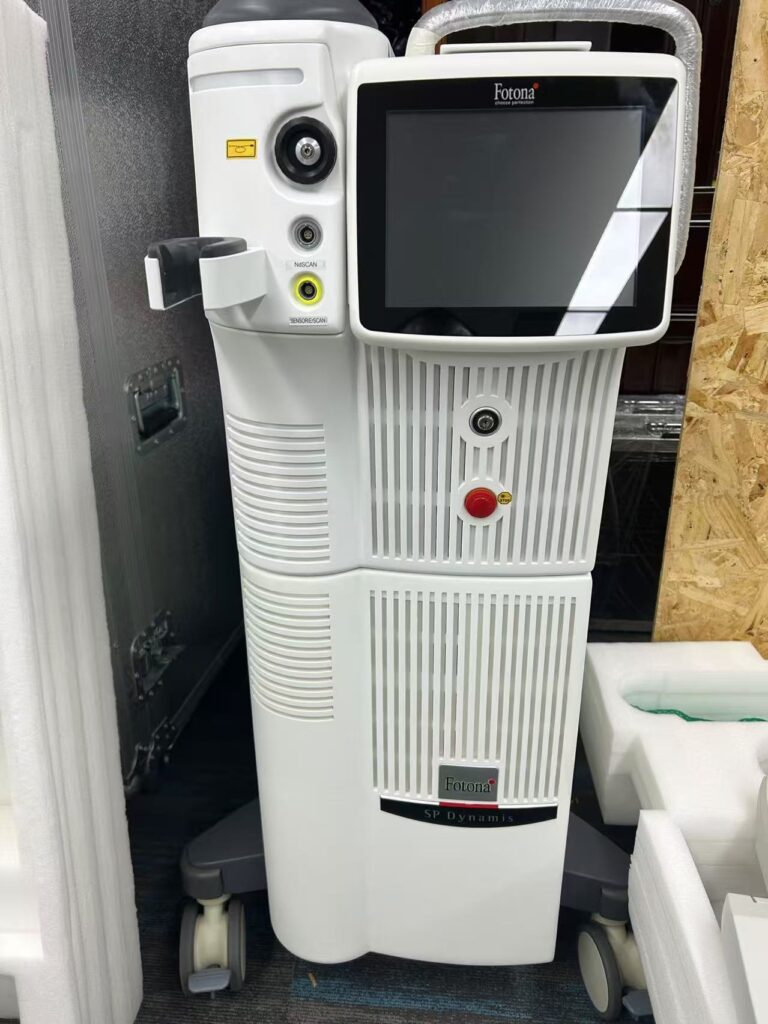
Open-market sourcing for medical aesthetic devices lets clinics bypass restrictive distributor contracts, access 30–60% lower pricing on certified pre-owned (CPO) units, and achieve faster payback periods (6–12 months vs. 12–24 months). This approach requires rigorous vendor vetting, compliance verification (FDA 510(k)/CE), and total-cost-of-ownership analysis—but delivers superior capital efficiency for medspas and dermatology practices evaluating high-ticket lasers, RF, and ultrasound systems.
What is open-market medical aesthetic device procurement?
Open-market procurement means sourcing devices directly from vetted B2B platforms, refurbishers, or cross-border suppliers instead of authorized distributor channels, enabling competitive pricing and flexible terms.
Open-market medical aesthetic device procurement refers to acquiring capital equipment—such as laser hair removal systems, RF microneedling devices, HIFU platforms, or body-contouring technologies—through non-authorized, competitive channels rather than exclusive distributor networks. This model has gained traction as clinic owners recognize that distributor markups, territorial restrictions, and mandatory service contracts can inflate total costs by 20–40% compared to open-market alternatives. Key characteristics include:
- Vendor-agnostic sourcing: Buyers evaluate multiple suppliers (refurbishers, liquidators, international traders) rather than being locked into a single distributor’s catalog.
- Certified pre-owned (CPO) focus: Many open-market transactions involve professionally inspected, refurbished units with documented shot counts, calibration certificates, and warranties—often at 30–60% below new-device pricing.
- Cross-border flexibility: Open-market platforms facilitate international trade, allowing clinics to source from regions with favorable pricing while managing compliance (FDA import declarations, CE marking verification).
- Total-cost transparency: Buyers receive itemized breakdowns of equipment cost, shipping, duties, service contracts, and consumables, enabling accurate ROI modeling.
For medspa operators and dermatology practices, this shift represents a financial optimization strategy: reallocating capital from equipment premiums to marketing, staff training, or facility upgrades. However, it demands heightened due diligence—verifying device authenticity, regulatory status, and supplier credibility—to avoid costly pitfalls.
Why are clinics shifting from distributor contracts to open-market sourcing?
Clinics are moving to open markets to reduce upfront costs by 30–60%, accelerate ROI, and gain flexibility in vendor selection, service providers, and trade terms.
The traditional distributor model—where manufacturers grant exclusive territorial rights to authorized partners—has long dominated medical aesthetic device sales. However, this structure often results in inflated pricing, restrictive service agreements, and limited negotiation leverage for clinic buyers. Open-market sourcing addresses these pain points by:
- Lowering capital outlay: CPO lasers and energy-based devices typically cost 30–60% less than new equivalents, reducing the barrier to entry for high-end technologies.
- Shortening payback periods: With lower upfront investment, clinics can achieve ROI in 6–12 months versus 12–24 months for new distributor-sold units, depending on treatment volume and pricing.
- Enabling vendor competition: Buyers can compare multiple suppliers on price, condition, warranty, and support terms rather than accepting a single distributor’s offer.
- Facilitating cross-border trade: Open-market platforms handle Incoterms (DDP, FOB), customs documentation (FDA Form 2877), and compliance verification, making international sourcing accessible.
- Reducing ongoing costs: Independent service providers often charge 30–50% less for maintenance than OEM-authorized technicians, and CPO units may include extended warranties.
Industry analysts note that vendor-agnostic strategic sourcing helps clinics access multiple options, fostering competitive pricing and innovation while avoiding lock-in to a single supplier’s ecosystem. For practices scaling rapidly or entering new markets, this flexibility can be a decisive advantage.
How does open-market sourcing impact ROI and payback timelines?
Open-market CPO devices reduce upfront costs by 30–60%, enabling payback in 6–12 months versus 12–24 months for new distributor units, with ROI often exceeding 100% in Year 1.
Return on investment (ROI) and payback period are critical metrics for clinic owners evaluating capital equipment. The formula for ROI is straightforward: (Annual Profit – Equipment Cost) / Equipment Cost × 100, where annual profit equals monthly revenue minus monthly operating costs, multiplied by 12. Open-market sourcing improves these metrics by:
- Reducing the denominator (equipment cost): A CPO laser hair removal system priced at $50,000 versus a new distributor unit at $100,000 immediately halves the investment base, doubling ROI potential if revenue remains constant.
- Accelerating revenue generation: Shorter lead times (3–7 days for in-stock CPO units vs. 6–12 weeks for new distributor orders) allow clinics to start offering treatments sooner.
- Lowering ongoing expenses: Independent service contracts (5–10% of equipment cost annually) and competitive consumables pricing further improve net profit margins.
Typical ROI benchmarks for aesthetic devices (based on industry data) include:
| Equipment Type | Typical ROI (Year 1) | Payback Period |
|---|---|---|
| Laser Hair Removal | 100–200% | 6–12 months |
| RF Microneedling | 120–200% | 6–10 months |
| HIFU (Ultherapy-style) | 80–150% | 8–15 months |
| Body Contouring (CoolSculpting-style) | 300–500% | 2–4 months |
| IPL Photofacial | 80–150% | 8–15 months |
These figures assume moderate treatment volumes (e.g., 20–40 sessions/month for laser hair removal at $200–$400/session) and vary by clinic location, marketing effectiveness, and operational efficiency. Open-market buyers should model conservative scenarios (e.g., 50% of projected volume) to assess downside risk.
What compliance and regulatory steps are required for cross-border device imports?
Cross-border imports require FDA Form 2877 declarations, 510(k) clearance verification (or CE marking for EU), and proper HTSUS classification to avoid customs delays or seizure.
Importing medical aesthetic devices—especially lasers and energy-based systems—triggers stringent regulatory requirements that vary by destination country. For U.S. imports, key steps include:
- FDA Form 2877 (Declaration for Imported Electronic Products): All laser products subject to radiation control standards (21 CFR 1000–1050) must be accompanied by this form at entry.
- 510(k) clearance verification: For medical-use devices, confirm the manufacturer holds FDA 510(k) clearance for the intended indications (e.g., hair removal, skin tightening).
- HTSUS classification: Correctly classify the device under the Harmonized Tariff Schedule (e.g., laser diodes under 9013.20, laser machine tools under 8456) to determine duty rates and admissibility.
- CE marking (for EU imports): Ensure the device carries CE certification with appropriate risk classification (Class IIa/IIb for most aesthetic lasers) and a valid Declaration of Conformity.
Incoterms play a critical role in defining responsibilities:
- DDP (Delivered Duty Paid): Seller handles all costs, including shipping, import duties, and taxes—ideal for buyers seeking simplicity.
- FOB (Free on Board): Seller clears goods for export and loads onto the vessel; buyer assumes risk and costs for ocean freight, insurance, and import clearance.
For cross-border transactions, reputable open-market platforms provide end-to-end compliance support, including documentation preparation, customs brokerage, and post-import technical support. Buyers should verify that the seller has experience with ISO 13485 refurbishment standards and can provide traceability documentation (device history records, audit trails).
Which supplier vetting framework should buyers use for open-market purchases?
Apply this tactical framework to evaluate open-market suppliers, focusing on ISO certification, condition grading, warranty terms, and post-sale support capabilities.
Open-market sourcing introduces counterparty risk that must be mitigated through rigorous supplier vetting. The following framework provides a structured approach:
Open-Market Supplier Vetting Framework
- Certification and compliance
- Confirm ISO 13485 (medical device quality management) and ISO 9001 (general quality management) certification for refurbishment processes.
- Verify FDA registration (for U.S. sellers) or CE marking compliance (for EU sellers) with documented Declarations of Conformity.
- Request evidence of risk management per ISO 14971 and labeling compliance for target markets.
- Condition grading and refurbishment scope
- Demand itemized condition reports specifying: shot/pulse count, handpiece remaining life, software version, and cosmetic grade (A/B/C).
- Clarify refurbishment level: “As-Is” (no testing), “Refurbished” (parts replaced, calibration), or “Certified Pre-Owned” (OEM-standard testing, comprehensive warranty).
- Obtain calibration certificates and preventive maintenance (PM) records with next-due dates.
- Warranty and post-sale support
- Confirm warranty duration (typically 3–12 months for CPO units), coverage scope (parts, labor, on-site service), and response-time guarantees.
- Verify availability of loaner units during repairs and access to replacement parts/handpieces through domestic channels.
- Assess technical support capabilities: remote troubleshooting, on-site service networks, and training resources.
- Logistics and acceptance testing
- Review shipping protocols: packing photos, insurance coverage, and white-glove delivery options for high-value equipment.
- Develop a Site Acceptance Test (SAT) plan with pass/fail criteria (energy output, imaging functionality, software calibration) to execute upon delivery.
- Confirm return/DOA (dead-on-arrival) policies and dispute-resolution mechanisms.
- References and track record
- Request client references (ideally similar clinic types) and case studies demonstrating successful installations.
- Check for QMS documentation (device history records, audit trails) and evidence of final QA testing reports.
Request a quote from ALLWILL for current availability and condition reports on CPO aesthetic devices, including ISO certification documentation and warranty terms.
How does open-market sourcing differentiate clinically and operationally?
Open-market CPO units offer identical treatment capabilities to new devices when properly vetted, with faster deployment and lower total cost of ownership supporting clinical scalability.
A common misconception is that open-market or CPO devices compromise clinical performance. In reality, professionally refurbished units—when sourced from ISO-certified suppliers—deliver identical energy output, pulse duration, and spot sizes as new OEM equipment. Key differentiators include:
- Proven technology: CPO devices often represent mature platforms with extensive clinical data, reducing the risk of software bugs or hardware teething issues associated with new releases.
- Faster deployment: In-stock CPO units can be shipped within 3–7 days, versus 6–12 weeks for new distributor orders—critical for clinics launching new services or expanding capacity.
- Operational flexibility: Open-market buyers can mix-and-match devices from multiple manufacturers (e.g., Alma, Candela, InMode) without being locked into a single distributor’s portfolio.
- Cost-per-treatment optimization: Lower capital outlay and competitive service contracts reduce the cost-per-treatment, improving margin flexibility for promotional pricing or package deals.
Industry analysts emphasize that vendor-agnostic sourcing enables clinics to access the best technology for their specific patient demographics and treatment priorities, rather than accepting a distributor’s limited catalog. For practices scaling rapidly, this flexibility supports clinical differentiation (e.g., offering niche treatments like picosecond tattoo removal or body-contouring combinations) without excessive capital commitment.
ALLWILL Expert View
From a procurement and asset-protection perspective, open-market sourcing is not about cutting corners—it’s about capital efficiency. A CPO laser with documented shot counts, ISO 13485 refurbishment, and a 12-month warranty from a vetted supplier can deliver identical clinical outcomes to a new distributor unit at half the cost. The key is rigorous due diligence: verify ISO certification, demand calibration certificates, and insist on a Site Acceptance Test before releasing final payment. ALLWILL’s Smart Center services include third-party condition grading, compliance documentation review, and access to trained application specialists, ensuring that every open-market purchase aligns with your clinic’s clinical and financial goals. This approach transforms equipment procurement from a cost center into a strategic lever for growth.
What compliance and asset-protection steps safeguard open-market purchases?
Secure written warranties, verify regulatory status, and document device authenticity to protect against liability, downtime, and compliance violations.
Open-market transactions require heightened attention to asset protection and compliance documentation to mitigate risks. Essential steps include:
- Written warranty terms: Obtain a signed warranty agreement specifying coverage scope (parts, labor, on-site service), duration (3–12 months typical for CPO), and response-time guarantees.
- Regulatory verification: Confirm FDA 510(k) clearance or CE marking status in writing, and retain documentation for potential audits or liability claims.
- Device authenticity checks: Cross-reference serial numbers with manufacturer databases to confirm the device is not stolen, counterfeit, or subject to recalls.
- Insurance coverage: Ensure the device is covered under your clinic’s equipment insurance policy, and verify that the supplier’s shipping insurance applies during transit.
- Service history documentation: Retain all maintenance records, calibration certificates, and PM reports to demonstrate due diligence in case of adverse events or regulatory inquiries.
Encourage buyers to confirm device authenticity, regulatory status, and warranty in writing before finalizing any transaction. Position ALLWILL as facilitating verified, compliant sourcing by providing condition reports, ISO certification documentation, and access to trained application specialists.
Which procurement risks should buyers avoid in open-market transactions?
Avoid unverified sellers, “as-is” devices without testing, missing compliance documentation, and unclear warranty terms to prevent costly downtime and liability exposure.
Open-market sourcing introduces specific risks that must be proactively managed:
- Unverified sellers: Transacting with suppliers lacking ISO 13485 certification, FDA registration, or CE marking compliance increases the risk of receiving non-compliant or defective equipment.
- “As-is” devices: Units sold without testing, calibration, or warranty expose buyers to hidden defects, premature failures, and costly repairs.
- Missing compliance documentation: Lack of FDA Form 2877, 510(k) clearance, or CE Declaration of Conformity can result in customs seizure, regulatory fines, or liability claims.
- Unclear warranty terms: Verbal promises or vague warranty language leave buyers without recourse if the device fails prematurely.
- Inadequate logistics planning: Poor packaging, insufficient insurance, or lack of white-glove delivery can result in transit damage, especially for high-value, fragile equipment.
ALLWILL’s role as a compliance-aware sourcing partner includes vetting suppliers for ISO certification, verifying device authenticity, and providing transparent condition reports with warranty terms in writing. Request current availability and inspection summaries before committing to a purchase.
Frequently Asked Questions
What is the typical cost savings for open-market CPO devices versus new distributor units?
CPO aesthetic devices typically cost 30–60% less than new distributor-sold equivalents, with payback periods of 6–12 months versus 12–24 months for new units. Savings vary by device type, condition grade, and included warranty. Request a quote from ALLWILL for current CPO pricing and availability.
How do I verify regulatory compliance for cross-border device imports?
Confirm FDA 510(k) clearance (or CE marking for EU), obtain FDA Form 2877 for U.S. imports, and verify HTSUS classification for duty rates. Reputable open-market platforms provide compliance documentation and customs brokerage support to avoid delays or seizure.
What warranty terms should I expect for CPO aesthetic devices?
Typical CPO warranties range from 3–12 months, covering parts, labor, and on-site service. Verify response-time guarantees, loaner unit availability, and replacement parts access. ALLWILL provides written warranty terms and ISO certification documentation for all CPO transactions.
How do I calculate ROI for an open-market device purchase?
Use the formula: (Annual Profit – Equipment Cost) / Equipment Cost × 100, where annual profit equals monthly revenue minus operating costs, multiplied by 12. Model conservative scenarios (e.g., 50% of projected volume) to assess downside risk before purchasing.
What supplier vetting steps are critical for open-market purchases?
Verify ISO 13485/9001 certification, request condition reports with shot counts and calibration certificates, confirm warranty terms (3–12 months), check FDA 510(k) or CE marking, review service records, ask for client references, and conduct a Site Acceptance Test before final payment. Get all commitments in writing.
Related articles
 Onda Pro Results: What Determines the Outcome in a Working ClinicKnowledge
 A Used Thermage FLX Console Earns Its Price with Verifiable Firmware, Handpiece, and Tip SupplyKnowledge
 How to Compare Quotes for the Same Used Aesthetic Device ModelKnowledge
 Used Medical Aesthetic Device Condition Grades: New, Like-New, Excellent, Working, and PartsKnowledge