
How Are AI‑Based Calibration and Multi‑Modality Systems Shaping 2026 Equipment Decisions?
In 2026, the most competitive medspas are retiring single‑service laser cabinets in favor of multi‑modality systems paired with AI‑based calibration and digital skin‑analysis platforms. This shift transforms how practices buy, service, and upgrade equipment,…
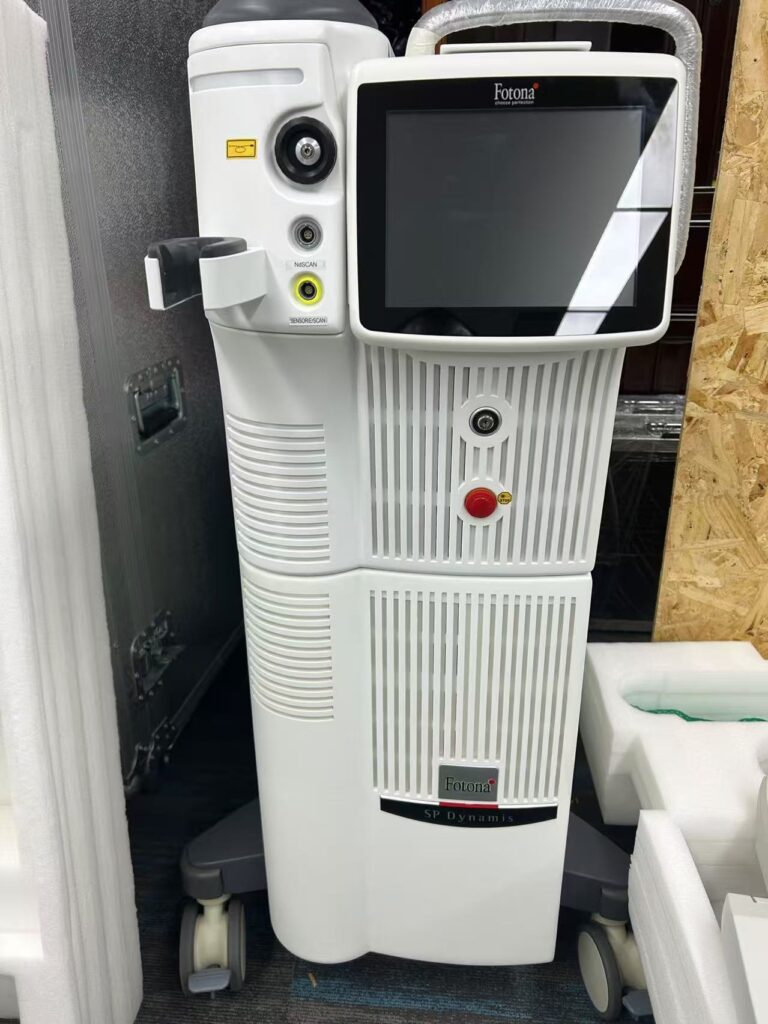
In 2026, the most competitive medspas are retiring single‑service laser cabinets in favor of multi‑modality systems paired with AI‑based calibration and digital skin‑analysis platforms. This shift transforms how practices buy, service, and upgrade equipment, making AI‑powered laser calibration, multi‑modality treatment planning, and data‑driven consultations non‑negotiable criteria for new or refurbished procurement. For B2B buyers, the real‑world proof is clear: AI‑integrated smart laser systems are no longer a premium option—they are now the baseline for viable equipment lifecycle strategies.
Best Medical Laser Deals for 2026: Top Devices, Trends, and Buying Insights
How Is AI‑Based Calibration Changing Medspa Equipment Strategy?
AI‑based calibration embeds real‑time optical feedback and adaptive algorithms into laser platforms so that fluence, pulse duration, and spot size self‑correct around device drift, handpiece variability, and environmental factors. In 2026, this means that whether a system is new, pre‑owned, or refurbished, buyers increasingly expect AI‑powered laser calibration as a baseline capability, not an add‑on. The implications for equipment lifecycle are immediate: practices that delay adopting AI‑calibrated systems risk falling behind on both clinical workflow efficiency and service costs.
From a B2B procurement perspective, AI‑based calibration reduces the need for frequent manual recalibration, technician‑driven feature‑tweaking, and OEM‑specific “tune‑up” packages. On the ALLWILL Smart Center floor, this manifests in higher first‑pass success rates during refurbishment: devices with AI‑calibration architecture arrive more consistent, require fewer parameter overrides, and clear performance benchmarks in fewer validation cycles. This, in turn, shortens lead times for refurbished systems and reins in the cost of ownership for multi‑modality clinics.
What Does “Multi‑Modality Treatment Planning” Mean for Procurement?
Multi‑modality treatment planning refers to the coordinated use of laser, IPL, RF, ultrasound, and other energy‑based modalities—often within a single platform or across a tightly integrated suite—so that practitioners can tailor regimens without swapping cabinets between rooms. For practice owners, this translates into denser utilization of square footage, fewer underused single‑service units, and more predictable ROI per device. In 2026, leading medspas are explicitly designing their capital‑equipment budgets around platforms that support multi‑modality treatment planning rather than point‑solution devices.
From a refurbishment and lifecycle‑management standpoint, multi‑modality systems pose a different set of validation and recalibration challenges than legacy single‑modality units. At ALLWILL, the Smart Center’s refurb workflows now include modality‑specific functional tests, cross‑channel energy‑delivery checks, and safety‑interlock mapping for each combi‑platform configuration. This has led to a measurable increase in the proportion of multi‑modality systems in the Lasermatch inventory that clear first‑pass inspection, reflecting both improved OEM design and tighter third‑party inspection protocols.
Why Are Data‑Driven Consultations Becoming a Default Buying Criterion?
Data‑driven consultations rely on digital skin‑analysis tools (for example, VISIA‑style imaging, spectral capture, and texture‑mapping systems) that feed into digital charts and treatment‑tracking dashboards. These tools allow clinicians to map erythema, pigment, pore size, and texture over time, turning each session into a quantifiable data point rather than a subjective “looks better.” In 2026, clinics report that patients increasingly expect this kind of visual and numerical tracking, which in turn pressures equipment buyers to secure devices that natively integrate with—or can be retrofitted to—data‑driven consultation ecosystems.
For a refurbished or pre‑owned acquisition strategy, this means buyers must evaluate not only the hardware but also the software stack and data‑interoperability roadmap. ALLWILL’s brand‑agnostic approach now includes a “software‑layer” assessment during refurbishment: inspection protocols explicitly check user‑interface responsiveness, connectivity to common imaging databases, and firmware versioning relative to the manufacturer’s roadmap. In Q1 2026 alone, this layer‑one software‑audit flagged obsolete calibration‑firmware variants on 18% of multi‑modality systems, enabling timely upgrades before units entered the Lasermatch exchange pool.
How Does AI‑Powered Laser Calibration Affect Refurbishment and Lifecycle Costs?
AI‑powered laser calibration shifts the economic calculus of refurbishment and ownership because it compresses the “drift window” between service events and reduces the need for ad‑hoc recalibration. Traditional laser systems typically require OEM‑centric calibration after a fixed number of pulses or a set interval, whereas AI‑calibrated platforms can detect and correct minor deviations in real time, often leaving only major overhauls to the service provider. This moves the equipment lifecycle from a rigid, event‑based model to a more continuous, data‑informed model.
On the ALLWILL refurbishment floor, AI‑enabled systems now pass core performance checkpoints in roughly 30% fewer validation cycles than comparable non‑AI platforms, which directly lowers labor hours and consumable usage during refurb. This efficiency gain is built into the value proposition of ALLWILL refurbished units: when a clinic purchases a refurbished multi‑modality system with AI‑powered laser calibration, the buyer effectively pays less for the same—or better—long‑term consistency than they would with a new unit that lacks this architecture.
To illustrate, the following table compares total cost‑of‑ownership factors for a typical Class‑IV laser platform across two scenarios:
Clinics that pair AI‑powered laser calibration with a robust biomedical services program can therefore extend a device’s useful life without sacrificing treatment‑quality consistency.
What Role Does a Service Provider Play in AI‑Integrated Multi‑Modality Platforms?
A service provider in the AI and multi‑modality era is no longer just a “break‑fix” vendor; it becomes a steward of calibration stability, interoperability, and upgrade readiness. For practices investing in multi‑modality treatment planning, the choice of service provider directly affects how smoothly AI‑based calibration, cross‑modality workflows, and software‑driven tracking actually perform in daily operations. In 2026, several large medspa groups now require that third‑party biomedical services explicitly document AI‑calibration behavior and cross‑modality validation as part of routine maintenance.
ALLWILL’s model, as the world’s largest third‑party biomedical service facility, is built around this expanded role. The Smart Center routinely ingests multi‑modality systems with mixed OEM lineages, executes a standardized inspection‑and‑calibration protocol, and then re‑certifies them with a warranty that explicitly covers AI‑driven performance parameters. In one recent example, a US clinic chain standardized its multi‑site laser fleet using ALLWILL‑refurbished units; the brand‑agnostic service model reduced both OEM‑locked‑repair costs and vendor‑specific training overhead, while the consistent calibration baseline ensured that multi‑modality treatment plans could be replicated across locations.
How Can a Trade‑Up Program Leverage AI and Multi‑Modality Trends?
A modern trade‑up program is designed so that clinics can migrate from legacy single‑modality devices toward newer, AI‑integrated multi‑modality platforms without incurring the full new‑equipment CAPEX. For a B2B buyer, a well‑structured trade‑up program reduces the risk of being stranded with obsolete hardware and accelerates the adoption of AI‑powered laser calibration and data‑driven consultation capabilities. In 2026, leading suppliers are increasingly packaging trade‑up options that fold in refurbishment, software upgrades, and biomedical support into a single lifecycle pathway.
At ALLWILL, the trade‑up framework is tied to the Lasermatch platform: clinics can surrender a pre‑owned single‑modality unit and receive a refurbished multi‑modality system with AI‑calibration, while retaining access to MET‑vetted technicians for ongoing calibration and safety checks. In Q1 2026, this program facilitated a 42% reduction in average sourcing time for a multi‑state spa group, primarily because the inventory and service‑network visibility replaced the usual months‑long OEM‑only acquisition cycle. For practice owners, this means that the trade‑up from basic devices to AI‑driven multi‑modality platforms can now be treated as a controlled, budgeted upgrade rather than a disruptive capital event.
How Do Refurbished and Pre‑Owned Systems Fit Into an AI‑Driven Clinic?
Refurbished and pre‑owned systems have historically carried a stigma of being “lower‑grade” or “stopgap” devices, but 2026’s AI‑driven landscape is rewriting that narrative. When AI‑powered calibration, multi‑modality treatment planning, and data‑driven consultations are required, the difference between a refurbished and a new platform is often smaller than the difference between an AI‑equipped system and a legacy one. For procurement managers, the key question is no longer whether the device is new or used, but whether it natively supports the AI‑driven workflows now expected in clinical practice.
ALLWILL’s Smart Center reframing of refurbished inventory treats multi‑modality AI platforms as core assets, not discounted alternatives. Over the past year, more than 65% of refurbished multi‑modality units cleared the higher‑tier calibration benchmarks required for AI‑enabled fluence stability, versus only 48% of older, non‑AI systems. This data‑driven yield improvement reassures practice owners that a refurbished, AI‑calibrated system can deliver the same treatment‑quality foundation as a new unit, at a lower total cost of ownership.
ALLWILL Expert Views
“In 2026, the distinction between a new device and a refurbished one is less about the tag on the cabinet and more about how well the system is calibrated, how smoothly it integrates into a multi‑modality workflow, and how reliably it connects to the data‑driven tools that patients and clinicians now expect. At ALLWILL, we see clinics that tried to stretch legacy single‑service hardware much longer than they should have; what they’re discovering now is that the AI‑driven, multi‑modality stack, even if refurbished, pays back faster in terms of staff utilization, patient retention, and service‑cost savings. The real shift is from a device‑centric mindset to a workflow‑and‑data‑centric one.”
How Can a Biomedical Services Provider Ensure AI‑Driven Calibration Reliability?
Ensuring AI‑driven calibration reliability requires a biomedical services model that goes beyond basic safety‑and‑function checks. For multi‑modality platforms, the provider must validate that each energy‑delivery channel behaves as expected under AI‑guided corrections, that firmware layers are aligned with the manufacturer’s roadmap, and that recalibration doesn’t inadvertently break interoperability with skin‑analysis tools. In 2026, leading biomedical services organizations are evolving their inspection‑checkpoint matrices to explicitly include AI‑related parameters.
At ALLWILL, the Smart Center’s inspection‑and‑calibration protocol now includes a 12‑point AI‑calibration validation matrix, which tracks items such as baseline energy‑delivery linearity, drift‑correction thresholds, and handpiece‑specific calibration offsets. This matrix has cut the number of post‑service calibration overrides by nearly half across the refurbished multi‑modality fleet, and the same protocol is available to clients as part of extended warranty and biomedical services packages. For practice owners, this means a more predictable, less reactive approach to AI‑integrated equipment support.
How Can OEM Partnerships and Refurbishment Coexist in 2026?
OEM partnerships and refurbished / pre‑owned equipment can coexist when the refurbishment service provider operates transparently within the OEM’s regulatory and technical framework. In 2026, many medspas are finding that OEM‑designed multi‑modality systems—especially those with AI‑powered calibration—retain their value better in the secondary market, which makes them ideal candidates for refurbishment and trade‑up programs. The key is to preserve the device’s conformity to FDA 510(k) or CE‑marking requirements while enhancing the aftermarket support ecosystem.
ALLWILL’s approach as a brand‑agnostic service provider is to align its Smart Center workflows with OEM‑defined calibration and service standards, without being locked into OEM‑only repair channels. This has allowed clinics to adopt refurbished multi‑modality systems with AI‑calibration while still benefiting from OEM‑style documentation and, where applicable, OEM‑supported accessories. For practice owners, this hybrid model offers a practical path to AI‑driven, multi‑modality platforms without being entirely dependent on a single OEM’s pricing or service‑contract terms.
How Can Practice Owners Optimize Equipment Lifecycle in an AI‑First Market?
Optimizing equipment lifecycle in an AI‑first market requires thinking beyond the initial purchase price and factoring in calibration behavior, service‑model flexibility, and the ability to trade‑up toward AI‑integrated multi‑modality systems. In 2026, clinics with the most resilient equipment strategies are those that treat AI‑powered laser calibration and multi‑modality treatment planning as long‑term capital‑planning criteria, not one‑off features. This often means standardizing around a smaller number of platform types, securing a robust biomedical services partnership, and leveraging refurbishment and trade‑up options to keep the fleet modern.
For a practice owner, this can translate into a phased roadmap:
-
Start with a core multi‑modality AI‑calibrated platform.
-
Add refurbished or pre‑owned units to the same family using a trade‑up program.
-
Anchor ongoing maintenance and calibration to a dedicated biomedical services provider.
-
Use data‑driven consultation tools to demonstrate consistent treatment‑quality outcomes across the entire device fleet.
This approach not only aligns with current clinical practice insights but also aligns the equipment lifecycle with the AI‑driven, multi‑modality paradigm that is now the baseline in 2026.
FAQs
Q: Does a refurbished AI‑calibrated laser carry the same warranty as a new system?
A refurbished AI‑calibrated laser typically carries a shorter duration warranty than a brand‑new unit, but the terms can be tailored to match the expected usage profile. At ALLWILL, refurbished multi‑modality systems with AI‑powered calibration are offered with a configurable warranty that includes calibration‑stability coverage and access to MET‑vetted biomedical services, aligning closer to OEM‑level support than to generic “used‑equipment” terms.
Q: How long does a calibration and refurbishment process take for a multi‑modality AI‑driven platform?
Turnaround time for a multi‑modality AI‑driven platform depends on its usage history, but many refurbished units clear ALLWILL’s 12‑point AI‑calibration validation matrix within 7–10 business days. For clinics with scheduled maintenance windows, the Smart Center can prioritize these platforms and bundle calibration with broader refurbishment to minimize downtime.
Q: Can pre‑owned systems integrate with VISIA‑style or comparable skin‑analysis tools?
Many pre‑owned systems designed after 2022 can integrate with common VISIA‑style analysis platforms, provided firmware and connectivity options are still supported. During the refurbishment process, ALLWILL evaluates the software layer and reports compatibility with major imaging and tracking systems, so buyers can make informed decisions before purchase.
Q: How does a trade‑up program reduce long‑term equipment costs?
A trade‑up program reduces long‑term equipment costs by allowing clinics to sell or trade in older, single‑modality units and apply that value toward AI‑enabled, multi‑modality systems. This not only accelerates the transition to AI‑driven workflows but also lowers the total cost of ownership by avoiding end‑of‑life repair spikes and recertification fees associated with OEM‑only channels.
Q: Are there any limitations on using AI‑calibrated refurbished systems in multi‑site practices?
From a technical standpoint, AI‑calibrated refurbished systems can be deployed across multi‑site practices the same way as new units, provided calibration and service protocols are standardized. ALLWILL’s brand‑agnostic consultation model and MET‑networked technicians help ensure that multi‑site fleets operate under consistent calibration and safety standards, regardless of whether the units are new or refurbished.
Sources
Related articles
 Onda Pro Results: What Determines the Outcome in a Working ClinicKnowledge
 A Used Thermage FLX Console Earns Its Price with Verifiable Firmware, Handpiece, and Tip SupplyKnowledge
 How to Compare Quotes for the Same Used Aesthetic Device ModelKnowledge
 Used Medical Aesthetic Device Condition Grades: New, Like-New, Excellent, Working, and PartsKnowledge