
Candela Aesthetic Platforms: What to Verify Before You Buy Used or Refurbished
Verify a gentlemax pro candela laser before buying: serial and service history, handpiece hours, calibration records, warranty scope and refurbished cost lines.
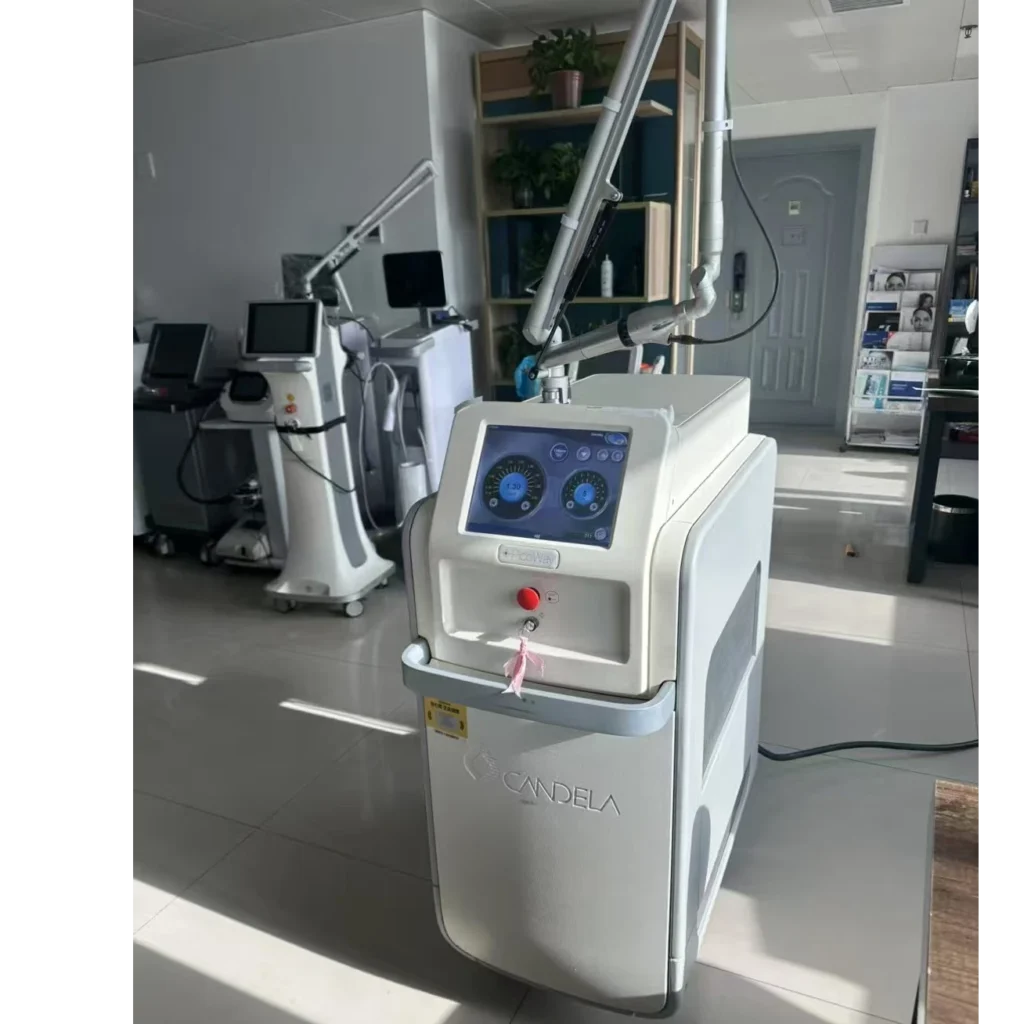
A used gentlemax pro candela laser that lists far below the price of a new unit is rarely a bargain or a trap on price alone. It is a documentation problem. Candela platforms sit in a small group of energy devices that trade constantly on the secondary market, and the difference between a profitable acquisition and an expensive lesson is almost never the number on the invoice. It is the serial number history, the hours on the optical assembly, the state of the delivery systems, and whether the platform can still be serviced, calibrated and supported at a cost your clinic can absorb over five years.
This guide is written for the person who has to justify the purchase to a partner or a finance committee: it sets out what each Candela family actually treats, which configurations change the clinical mix, and the specific records to hold before money moves.
What This Platform Actually Treats, and Who It Suits
Buy a Candela platform when your case mix is built on hair removal, vascular lesions and pigment, not when you are trying to cover every indication in one cabinet.
The Candela aesthetic range splits into long-pulsed systems for hair and vascular work and picosecond systems for pigment and tattoo clearance, so the first question is which of those two revenue lines your schedule actually supports.
The Gentle family, including GentleLase and GentleMax configurations, is built around long-pulsed alexandrite and Nd:YAG delivery for hair reduction across a wide range of skin types, with the Nd:YAG side used where melanin absorption makes an alexandrite-only approach unsuitable. That dual-wavelength arrangement is why the platform appears in so many mixed-panel clinics: one cabinet, two wavelength families, and a delivery system that can be swapped between them. The engineering detail that matters commercially is that the two wavelengths share a single optical path and cooling circuit, which means wear on one side is not isolated from the other.
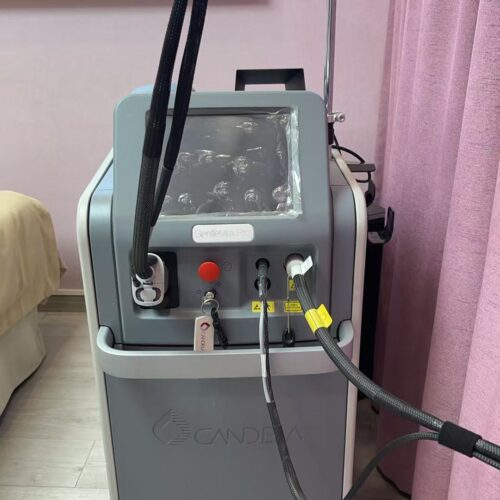
PicoWay sits on the other side of the range, using picosecond pulses for pigment and tattoo work where pulse duration, not average power, drives the clinical result. Clinics that buy a picosecond system for tattoo removal and then market it as a general rejuvenation platform usually under-utilise it: the economics depend on booking enough pigment and tattoo volume to amortise the capital, and that volume is concentrated in specific markets and neighbourhoods.
Who it does not suit: a clinic whose revenue depends on skin tightening or body contouring has the wrong category entirely, and a single-practitioner practice with fewer than a few hair-removal sessions a week will struggle to justify a dual-wavelength console. Measure your own booking history first, then match the platform to it.
Configurations and Handpieces Buyers Compare
Two used Candela listings with the same model name can differ by tens of thousands of dollars because of what is in the case. The console is the cheapest part of the deal to compare; the delivery systems are where the value sits.
For long-pulsed platforms, buyers normally compare the number of delivery systems included, whether the alexandrite and Nd:YAG paths are both present, the cooling or contact-cooling arrangement, the spot size options, and whether the system reports accumulated pulses per handpiece. A configuration that arrives with one high-usage delivery system and no spare has a materially different five-year cost from one that arrives with two lower-usage units. Ask for the reported pulse count on every handpiece, not a summary figure for the machine.
| What to compare | Why it changes the decision | Evidence to request |
|---|---|---|
| Delivery systems included | Determines whether you can run a full week without a replacement purchase | Itemised handpiece list with part numbers |
| Reported pulses or hours per handpiece | Drives remaining useful life and the timing of the next consumable spend | Screenshot or service report of the counter values |
| Wavelength paths present | Sets which skin types and indications you can accept | Configuration sheet matching the serial number |
| Cooling arrangement and condition | Contact cooling affects throughput and patient comfort | Photographs of the delivery window and cooling interface |
| Software version and accessories | Older software can limit available parameters | Firmware version from the system information screen |
For picosecond systems, compare the available wavelengths, the handpiece or zoom optics supplied, the maximum fluence settings the console permits, and the condition of the articulated arm or fibre delivery. Record the comparison in a single table across every offer you receive so the decision is visible to whoever signs off on it.
What to Verify Before You Buy: Serial, Software and Service History
Three records decide most disputes after delivery: the serial number, the software state and the service history.
Start with the serial number and confirm that it appears consistently on the console, the invoice, the manufacturer records and any service documentation, because mismatched identification is the single clearest warning in the pre-owned market.
Serial integrity is the anchor for everything else. A serial number lets you check whether the model was cleared for the United States market, whether it appears in the FDA recall and early alert listings, and whether the cosmetic and functional description in a listing matches the actual build. Ask for a photograph of the manufacturer’s plate rather than a typed number, and compare the plate against the configuration sheet. Where a platform has been rebuilt, the rebuild documentation should identify which assemblies were replaced and on what date.
Software state matters because it governs parameter ranges, error logging and sometimes the diagnostic functions a service engineer can use. Request the current firmware version and ask whether updates remain available for that generation. On older builds, a service provider may be able to maintain the device mechanically while the software stays frozen; that is workable, but it should be priced in rather than discovered later. Where a platform logs errors internally, ask for an export of the event or error history, which is far more informative than a verbal assurance that the unit runs well.
Service history should be a sequence of dated entries with the engineer or facility named, the fault reported, the work performed and the parts used. A device with three well-documented interventions in five years is normally a better buy than one described as never needing service, because the second claim usually means the records were never kept. Bring the sequence to your own biomedical contact and ask whether it describes a pattern or a one-off.
New, Certified Refurbished or Pre-Owned: The Cost and Risk Split
These three categories are not a quality ranking; they are three different risk allocations, and the right choice depends on how much engineering support you can absorb internally.
A new unit carries the manufacturer’s warranty, current software and a clean parts channel, at the highest capital cost. A certified refurbished unit has been inspected, calibrated and performance tested to match new-device specifications by the refurbishing provider, with the provider’s own warranty behind it. An as-is pre-owned unit is sold on the facts available, usually at the lowest price, with the buyer owning the discovery risk.
| Purchase route | What you are buying | Risk you carry | Best fit |
|---|---|---|---|
| New | Manufacturer warranty, current software, full parts support | Lowest technical risk, highest capital outlay | High-volume clinics needing predictable uptime from day one |
| Certified refurbished | Inspection, calibration and performance testing, provider warranty | Moderate, bounded by the warranty terms | Clinics balancing capital cost against documented condition |
| Pre-owned as-is | Device on the facts disclosed by the seller | Highest; undisclosed wear transfers to you | Buyers with in-house biomedical capability and spare capacity |
Where a clinic has a biomed engineer on staff and a service partner on call, an as-is platform with a complete history can be the strongest commercial choice. Where the device is the only hair-removal asset in the building, the uptime risk of as-is condition is usually unacceptable regardless of price.
What Drives the Price of This Platform
Price tracks condition and completeness far more than the model year printed on the label.
Two identical models from the same year can differ by a wide margin once delivery systems, service history, warranty scope and remaining consumable life are priced in, which is why comparing headline figures alone misleads buyers.
The strongest upward drivers are a complete set of low-usage delivery systems, a continuous service record from a recognised provider, a recent calibration that matches new-device specifications, and warranty terms that cover parts and labour rather than parts alone. Recency of software and the availability of the manufacturer’s current consumables also hold value, because a platform whose consumables are being phased out becomes progressively harder to run.
Downward drivers are equally concrete: missing handpieces, undocumented rebuilds, cosmetic damage to the console, inoperative cooling, error histories that have not been cleared, and sellers who cannot produce an invoice chain showing how the device reached them. A very low price on a platform with an incomplete file is not a discount; it is the market pricing the missing records.
The practical method is to build the total acquisition figure before comparing offers: purchase price, any required handpieces, delivery and installation, electrical work, calibration, operator training hours, and the first twelve months of consumables. Offers that look far apart on price often converge once those lines are included, and occasionally the apparent premium disappears entirely.
Service, Consumables and Running Cost Over Five Years
Running cost on a long-pulsed platform is dominated by consumables and the timing of the first major service, not by electricity.
Optical delivery systems, flashlamps, filters, cooling fluids and contact windows are the recurring lines, and their useful life depends on how hard the platform is driven rather than on calendar age, so a five-year model should be built from your own projected session volume.
Build the model in three blocks. First, consumables: estimate sessions per month, multiply by pulses or shots per session, and compare that against the rated life of the delivery system you are buying. Second, preventive service: ask what a standard inspection and calibration interval looks like for the platform and what it costs, then decide whether the interval is realistic for your throughput. Third, contingency: set aside a figure for one unexpected intervention, because even a well-maintained platform occasionally needs a laser rod, a power supply or a control board.

If you are comparing a service contract from a manufacturer against an independent service route, compare what is actually included: response time, whether a loan unit is provided, whether calibration is certified in writing, and whether the contract covers the specific assemblies that fail on that platform. Ask too whether the provider follows the operator safety guidance published by the Laser Institute of America and whether laser safety training is part of the handover. ALLWILL operates its own Smart Center inspection and repair hub and its certified refurbishment process covers detailed inspection, precision calibration and performance testing to match new-device specifications, which is the level of detail worth asking for from any provider you shortlist.
Compliance and Documentation to Ask For
Compliance paperwork should be requested as a set, not as individual documents, because each item only makes sense against the others.
The core file is the 510(k) clearance reference for the model, the manufacturer registration and device listing entry, the device label with the model and serial number, and the electrical safety and calibration records generated by the most recent service visit.
Laser products sold in the United States are regulated under the federal performance standard for light-emitting products, which is set out in 21 CFR Part 1040; the manufacturer’s report and product accession number are the documents that link a specific model to that standard. The FDA 510(k) premarket notification database and the registration and listing database let you confirm both the clearance and the establishment details independently, which is the fastest way to validate a claim you cannot otherwise verify.
Ask for the labelling exactly as it appears on the device, because laser class, wavelength and maximum output are stated there, and a label that does not match the configuration sheet is a substantive problem rather than a clerical one. In markets outside the United States, ask for the equivalent conformity documentation and confirm which economic operator holds it.
Finally, confirm ownership: an invoice chain that shows the device moving from the original purchaser to the current seller is the simplest evidence that the equipment is not leased, financed or subject to a security interest. A device that is still under a financing agreement cannot be transferred cleanly, and discovering that at delivery is expensive.
Common Misrepresentations and How to Detect Them
Most problems in this market are omissions rather than outright falsehoods, and each omission has a cheap test.
Refurbished is the most stretched word in the category. A device that has been cleaned and cosmetically restored is not refurbished in any meaningful engineering sense; a refurbishment should include inspection, replacement of worn assemblies, calibration and performance testing, with the test results recorded.
Counterfeit and cloned delivery systems are the second recurring issue, particularly for high-turnover consumable parts. The reliable checks are the packaging and labelling detail, the traceability of the part number, whether the seller will name the source, and whether the price is inconsistent with the rest of the market. ALLWILL publishes counterfeit-identification material through its education and training library precisely because visual comparison against a known-good part is the fastest practical test.

A third pattern is the borrowed history: a service record that describes a different serial number, or a calibration certificate that names a site rather than the unit. Check that every document carries the same serial number as the console plate. A fourth is the model-year claim, where a console assembled from mixed-generation assemblies is presented as a single later build. The configuration sheet and the internal software version normally expose that quickly.
When a seller cannot or will not produce a document, treat the gap as a price term. Either the price reflects the missing evidence, or the offer should be set aside.
FAQ
Can a clinic buy a used Candela platform without a service history?
It is possible but the price must reflect the risk. Without a documented service history you cannot verify optical assembly hours, flashlamp replacement or calibration intervals, so budget for a full inspection, a calibration pass and at least one consumable set before the device enters your treatment schedule.
What handpiece information should appear on a Candela quotation?
The quotation should list every handpiece and delivery system by part number, state whether it is original manufacturer stock or a compatible alternative, and give the shot count or hours remaining where the platform reports it. Ask for the same list in writing before the deposit is paid.
How long should a refurbishment warranty on a used Candela laser run?
Warranty length is a commercial term, not a fixed standard, so compare what each offer actually covers: parts only, parts and labour, on-site attendance, consumables and software. ALLWILL writes custom warranty terms on pre-owned lasers, and the exact wording is confirmed in the quotation.
Does a pre-owned Candela device still need FDA clearance documentation?
Yes. The clearance belongs to the device type and the manufacturer’s submission, and it travels with the model rather than the seller. Ask for the 510(k) number and the corresponding registration and listing entry, then confirm both in the FDA databases before the device ships.
What adds the most hidden cost to a used Candela purchase?
Delivery, installation, operator training, electrical work, consumables and the first service intervention are the lines buyers most often leave out of the budget. Add them to the purchase price before comparing two offers, because a lower purchase price with an uncertified service history often costs more across five years.
Across the platforms in this range, the decision comes down to three verifiable things: what the delivery systems are worth, what the service history proves, and what your own booking volume can support. Buy the documentation first and the device second, and the platform stops being a gamble and becomes a capital decision you can defend.
Request a specification and condition review
Send the model, serial number and the handpiece list you are considering, and the ALLWILL team will confirm what the configuration includes, what the service records should contain, and what a comparable certified refurbished or pre-owned unit looks like. You can reach the team at info@allwillgroup.com or on +852 6589 2977.
Request a quote or contact the team to start the review.
Related articles
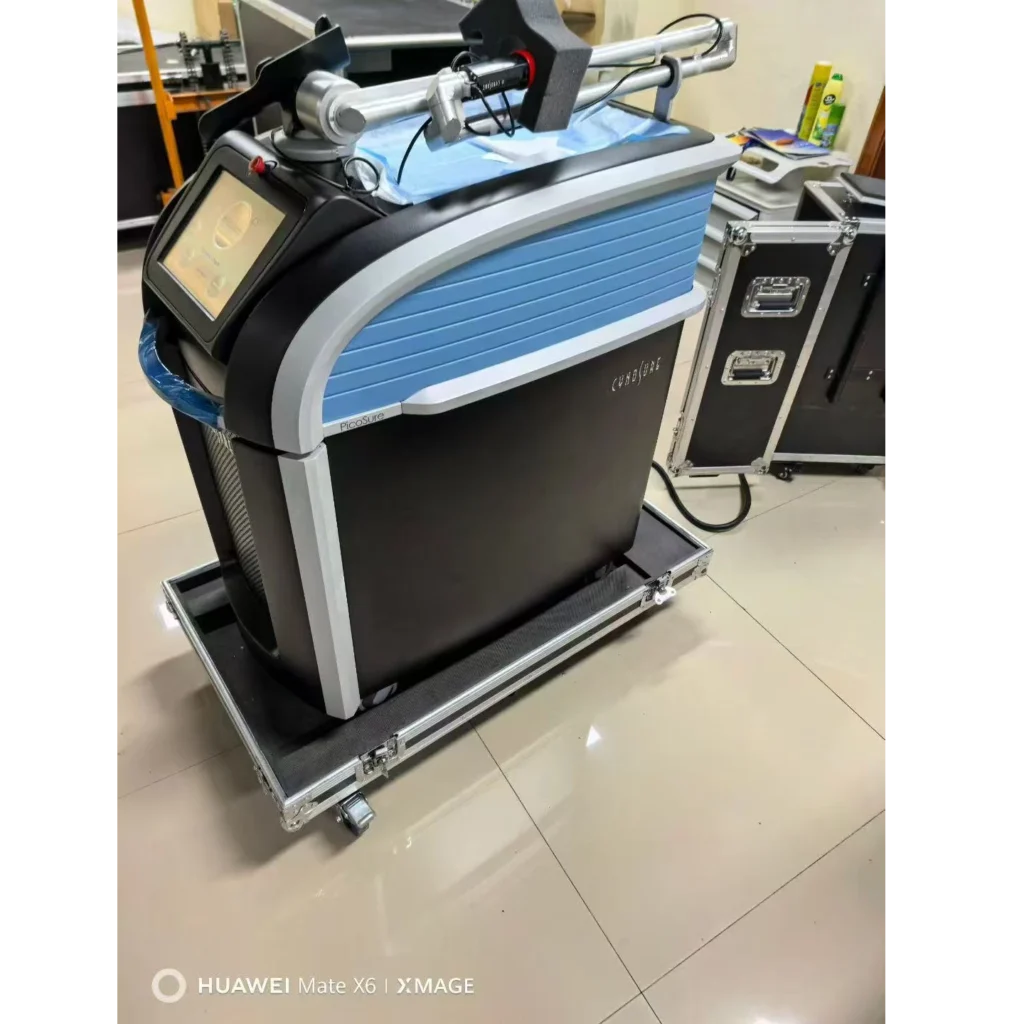 Cynosure Aesthetic Platforms: What to Verify Before You Buy Used or RefurbishedBrand and Model Buying Guides
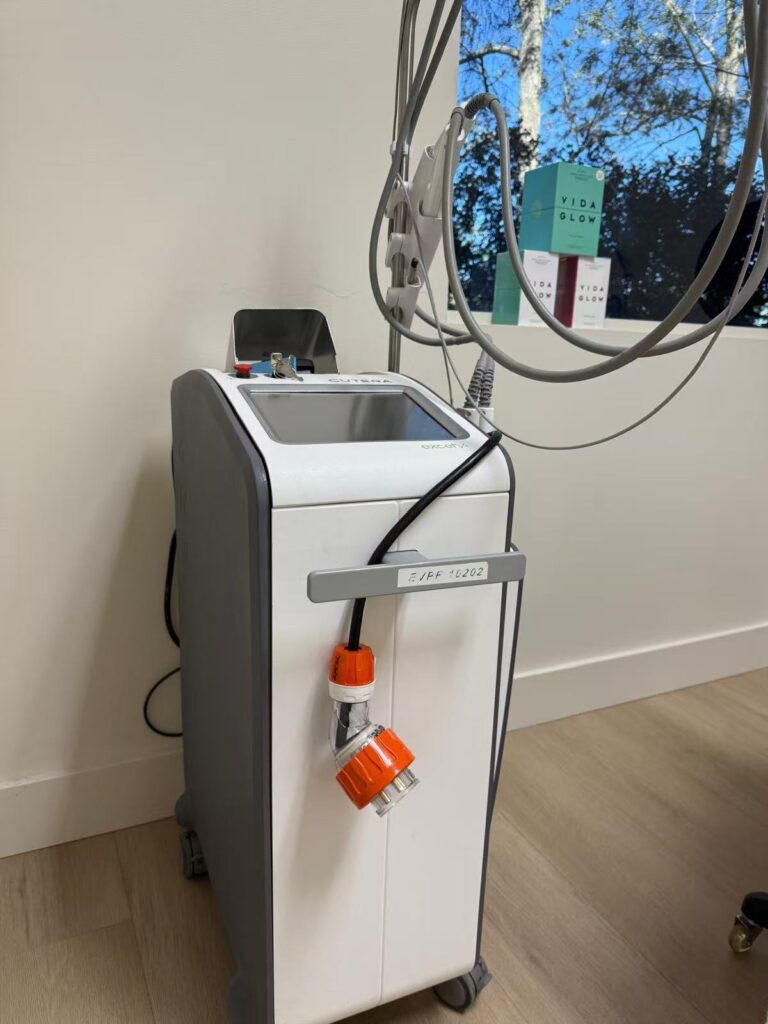 Cutera Aesthetic Platforms: What to Verify Before You Buy Used or RefurbishedBrand and Model Buying Guides
 Lumenis Aesthetic Platforms: What to Verify Before You Buy Used or RefurbishedBrand and Model Buying Guides
 Sciton Aesthetic Platforms: What to Verify Before You Buy Used or RefurbishedBrand and Model Buying Guides